Understanding symmetry Worksheets for Ages 5-9 - Page 2
38 filtered results
-
From - To
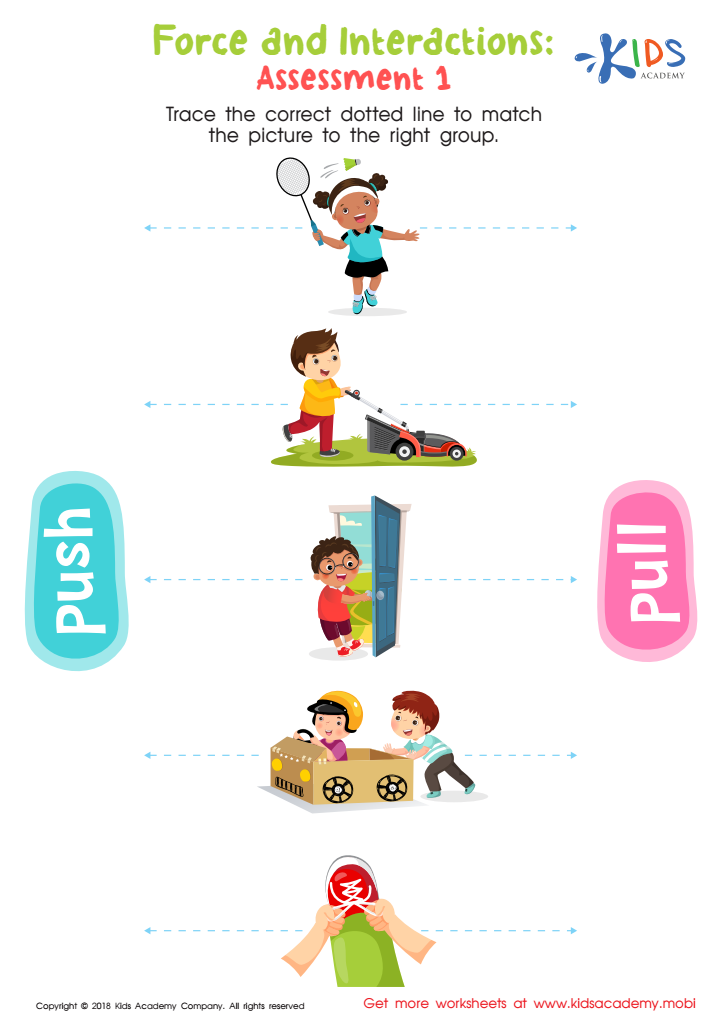
Force and Interactions: Assessment 2 Worksheet
 Assign to My Students
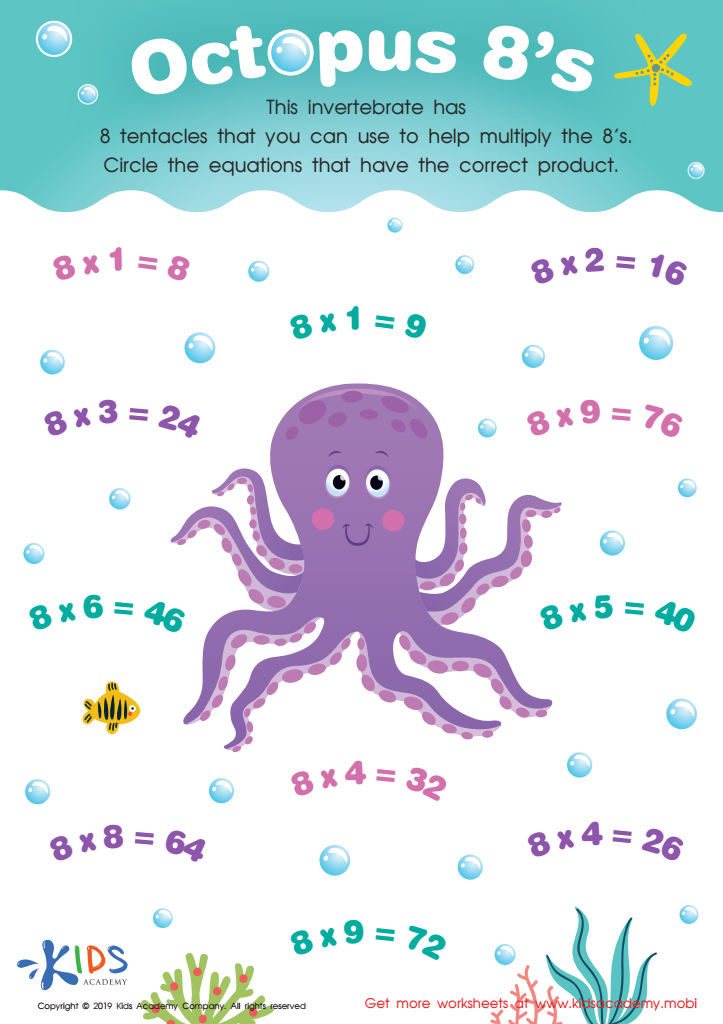
Octopus 8’s Worksheet







Understanding symmetry for children aged 5-9 plays a vital role in their cognitive and developmental growth. Symmetry isn't just a mathematical concept; it's a foundational element that can enhance their problem-solving abilities, spatial awareness, and aesthetic appreciation.
Firstly, exploring symmetry helps develop a child's critical thinking and reasoning skills. By recognizing symmetrical patterns, children learn to observe details, make comparisons, and identify relationships. These skills are integral in subjects like math and science, where observing patterns and relationships is crucial.
Secondly, symmetry supports the development of spatial awareness. It encourages children to think about space, shapes, and how objects fit together or mirror each other. This foundational understanding is essential in a variety of real-world contexts, from navigation to understanding geometric concepts in higher-level mathematics.
Additionally, symmetry has a deep connection with art and nature, making it a bridge between creative and analytical thinking. It can foster a child’s aesthetic sense, allowing them to appreciate design, architecture, and natural beauty, which can enrich their artistic endeavors and broader world understanding.
In essence, symmetry is more than just a concept; it is a tool that nurtures versatile thinking and creativity. Helping children grasp symmetry from a young age sets the stage for them to excel in multiple facets of their educational journey and beyond.








