
Word formation skills Worksheets for Ages 5-9
3 filtered results
Difficulty Level
Grade
Age
-
From - To
Subject
Activity
Standards
Explore our engaging Word Formation Skills Worksheets designed specifically for children aged 5-9! These interactive printables enhance vocabulary and spelling as young learners embark on exciting language journeys. Each worksheet encourages children to develop essential skills such as word recognition and construction, fostering creativity and critical thinking. From identifying prefixes and suffixes to crafting new words, these resources provide a fun-filled approach to mastering the building blocks of language. Ideal for both classroom and home use, our worksheets cater to various learning styles and can easily integrate into any lesson plan. Start enhancing your child's literacy skills today!
Favorites
With answer key
Interactive
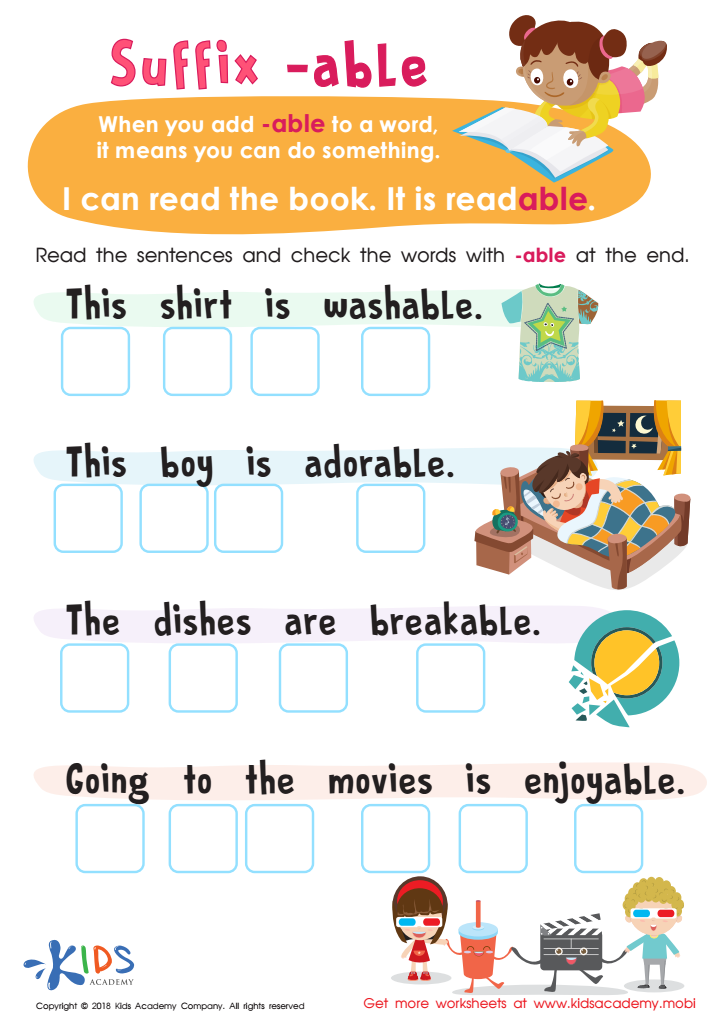
Suffix -Able Worksheet
Suffix -able means you can do something. Example: readable - means you can read it. Give kids examples then check this worksheet. Read sentences with kids, looking for words with -able at the end.
 Assign to My Students
Suffix -Able Worksheet
Worksheet
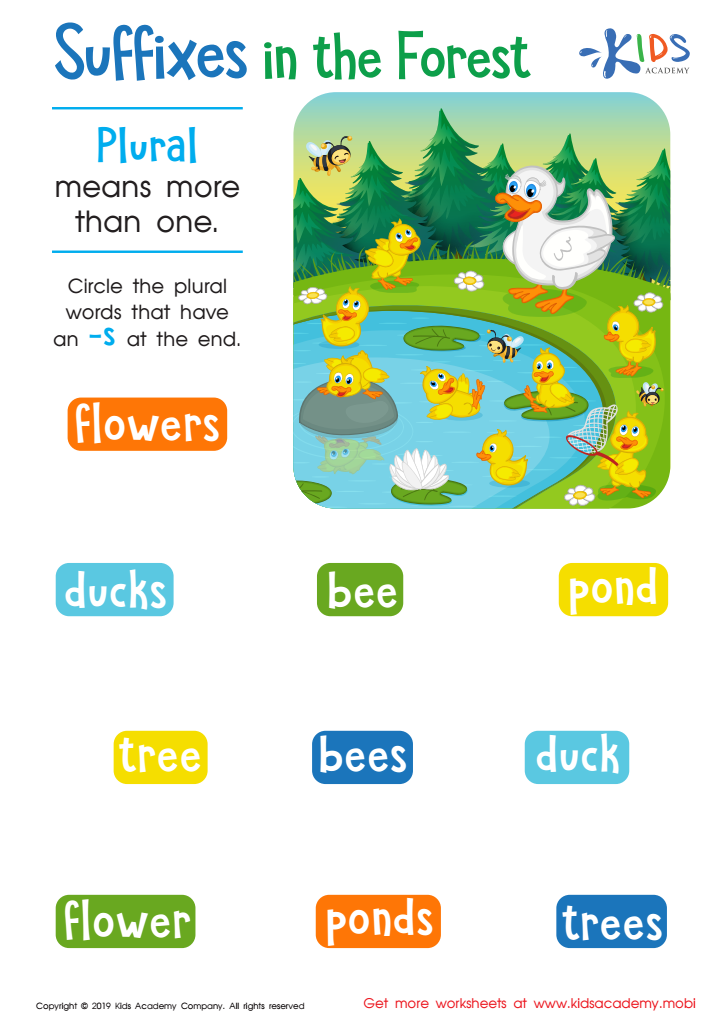
Suffixes in the Forest Worksheet
Suffixes are letters added to the end of words to form new words. These can be used to denote one who does something (e.g. reader) or more than one (e.g. adding -s). This worksheet helps kids practice pluralizing words they know by circling the plural words ending with -s.
Suffixes in the Forest Worksheet
Worksheet
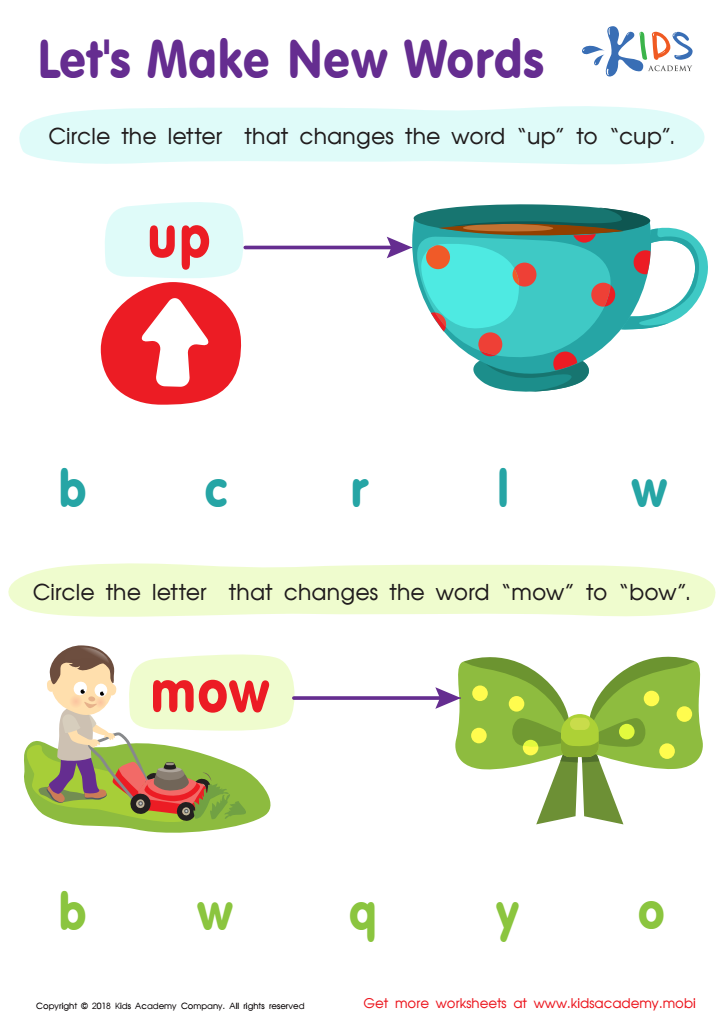
Let's Make New Words Worksheet
This fun and colorful downloadable worksheet is perfect for helping young readers to build confidence and practice their skills. They'll circle the letters to magically make new words, while developing fine motor skills. It'll be so much fun, they won't even realize they're honing their reading skills!
Let's Make New Words Worksheet
Worksheet
Join Kids Academy for Free
Who is primarily going to use this learning content?





.jpg)
Word formation skills are crucial for children aged 5 to 9 as they lay the foundation for reading and writing proficiency. During this developmental stage, children are rapidly acquiring language, and understanding how words are formed helps them decode and spell new vocabulary. A strong grasp of word formation combines knowledge of prefixes, suffixes, and root words, enabling students to expand their vocabulary efficiently.
When children comprehend word formation, they not only enhance their linguistic abilities but also develop critical thinking skills. They learn to categorize words, recognize patterns, and infer meanings, leading to improved comprehension when reading diverse texts. Furthermore, these skills empower them to manipulate language creatively, allowing them to construct sentences and express their thoughts more clearly.
Parents and teachers play a pivotal role in fostering these essential skills. Engaging children in playful activities such as word games, storytelling, and phonics exercises can make learning enjoyable and effective. By emphasizing word formation, caregivers equip children with tools to navigate their academic journey confidently, enhancing their overall literacy skills and setting the stage for lifelong learning. Thus, investing in word formation skills at this early age is crucial for a child’s future educational success.








