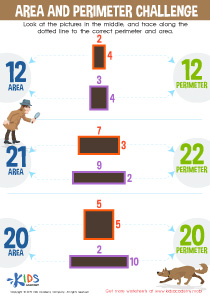
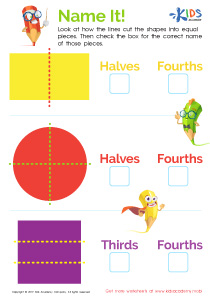
Recognizing shapes 2D Shapes Worksheets for Ages 5-9
5 filtered results
-
From - To
Discover a captivating collection of "Recognizing 2D Shapes Worksheets" designed for children ages 5-9 on Kids Academy. These engaging worksheets are perfect for young learners to master basic geometric concepts. Through fun activities and interactive exercises, children will identify and classify various shapes like circles, squares, triangles, and rectangles. Boost your child's cognitive development and visual-spatial skills while making learning joyful and comprehensive. Explore our vibrant, expertly crafted worksheets to enhance your child's math foundation and foster a love for learning. Join Kids Academy today to unlock a world of educational fun!
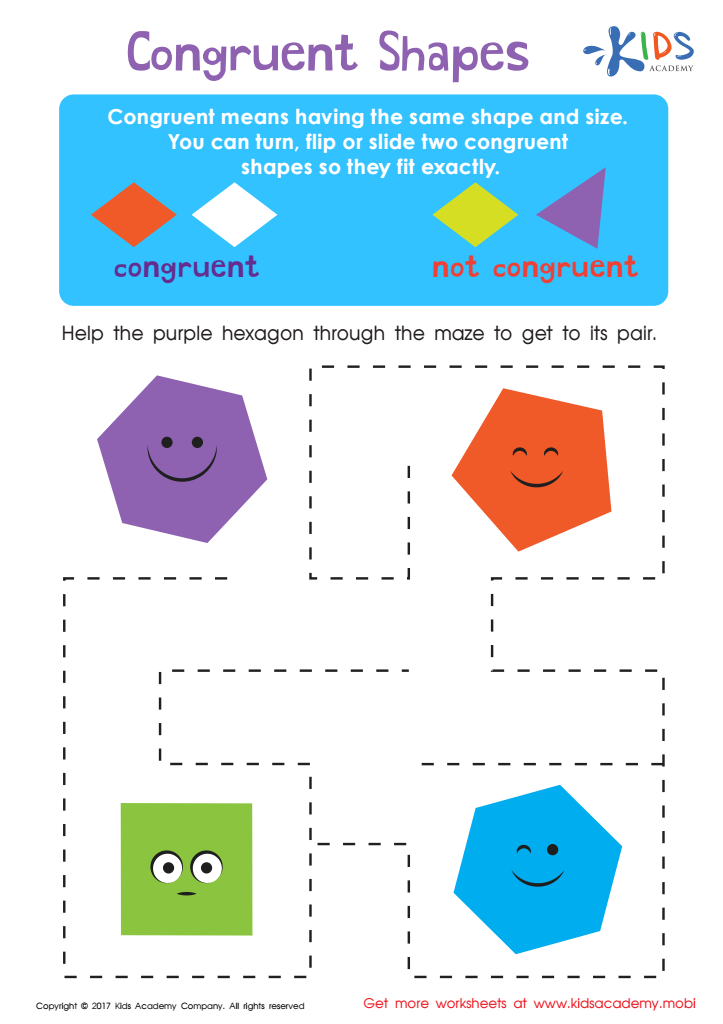
Congruent Shapes Worksheet
 Assign to My Students











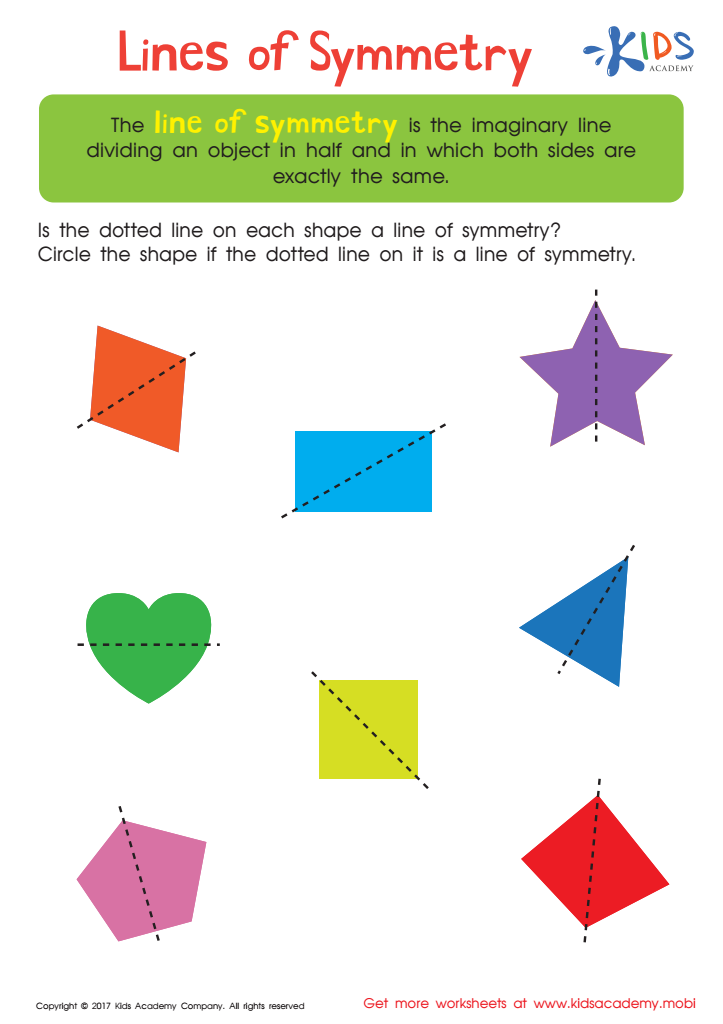
Lines of Symmetry Printable
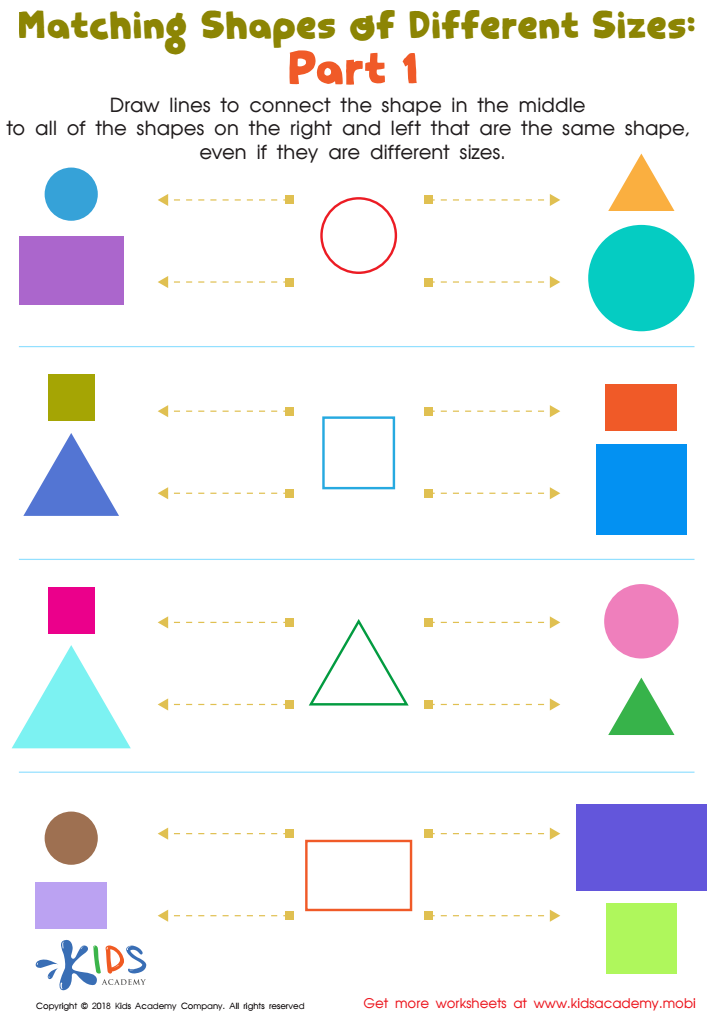
Geometry: part 1 Worksheet
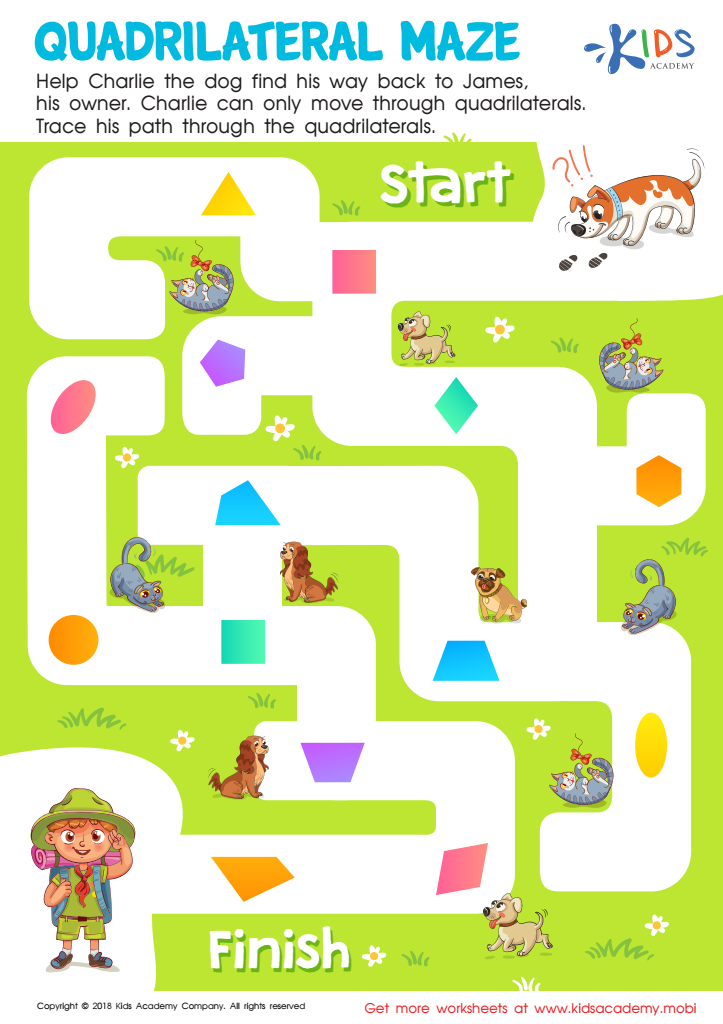
Quadrilateral Maze Worksheet
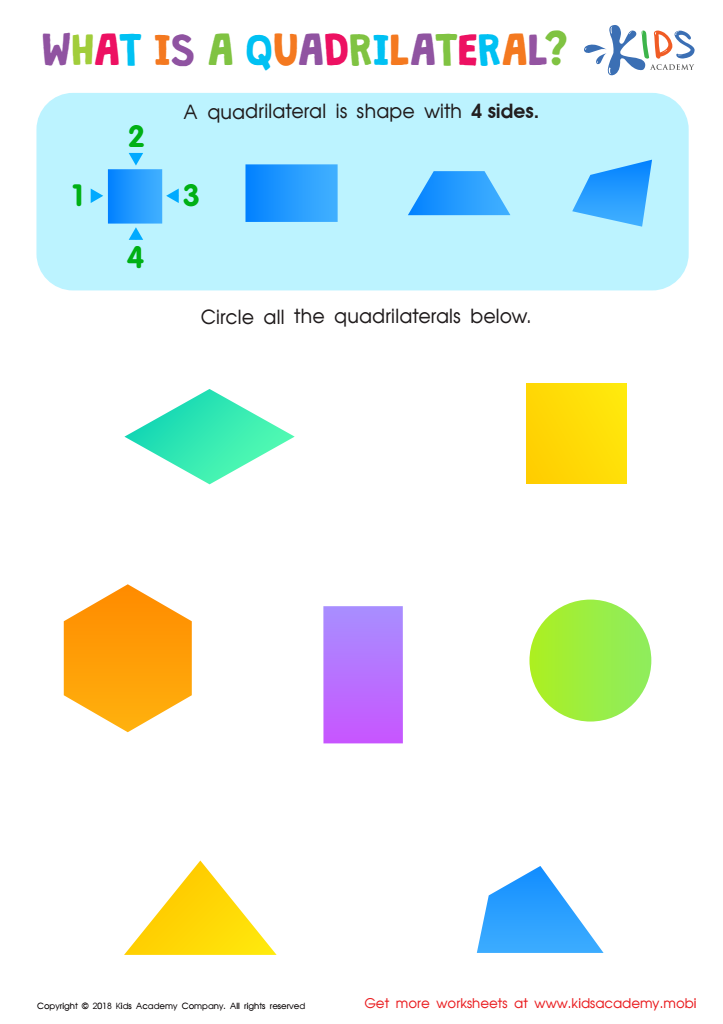
What Is a Quadrilateral? Worksheet








Recognizing 2D shapes is a fundamental skill for children aged 5-9 that lays the groundwork for more complex mathematical learning. For parents and teachers, fostering this skill is crucial because it benefits cognitive, academic, and everyday activities.
Firstly, understanding 2D shapes enhances cognitive development. When children analyze and differentiate shapes, they improve their visual-spatial awareness and categorization abilities. This early practice helps the brain organize and process visual information more effectively, which is essential in all areas of learning.
Academically, mastering 2D shapes forms the foundation of geometry, a core component of math education. It leads to understanding spatial relationships, symmetry, and basic properties of objects, which are essential for more advanced mathematical concepts such as area, perimeter, and volume. Consistent practice with shapes also strengthens problem-solving abilities and critical thinking, valuable skills in all academic areas.
Moreover, recognizing shapes has practical implications in everyday life. From identifying traffic signs to organizing toys and distinguishing objects, shape recognition helps children navigate their world safely and efficiently. It also enhances their fine motor skills and coordination through activities like drawing and building.
For these reasons, parents and teachers should encourage young learners to explore and recognize 2D shapes, emphasizing play-based and hands-on activities to make learning enjoyable and effective.