Filters

18 filtered results

Clear all filters
Favorites
With answer key
Interactive

18 filtered results

Difficulty Level

Grade


Subject

    Introduce fun and learning together with our "Cognitive Development Adding at the Zoo Worksheets" designed for kids aged 5-9. These engaging worksheets transport young learners on a virtual visit to the zoo, using animal-themed addition problems to enhance their cognitive development. As children solve the math challenges, they also strengthen critical thinking, problem-solving, and memory skills. Each worksheet is vibrantly illustrated to capture their imagination while making learning enjoyable. These activities not only improve math fluency but also boost cognitive skills essential for academic success. Prepare your child for a bright future with interactive, zoo-themed math fun!
    Check out this FREE Trial Lesson on Adding at the Zoo for age 5-9!

    Match Exactly the Same

    Favorites
    With answer key
    Interactive
    • 5-9
    • Cognitive Development
    • Adding at the Zoo
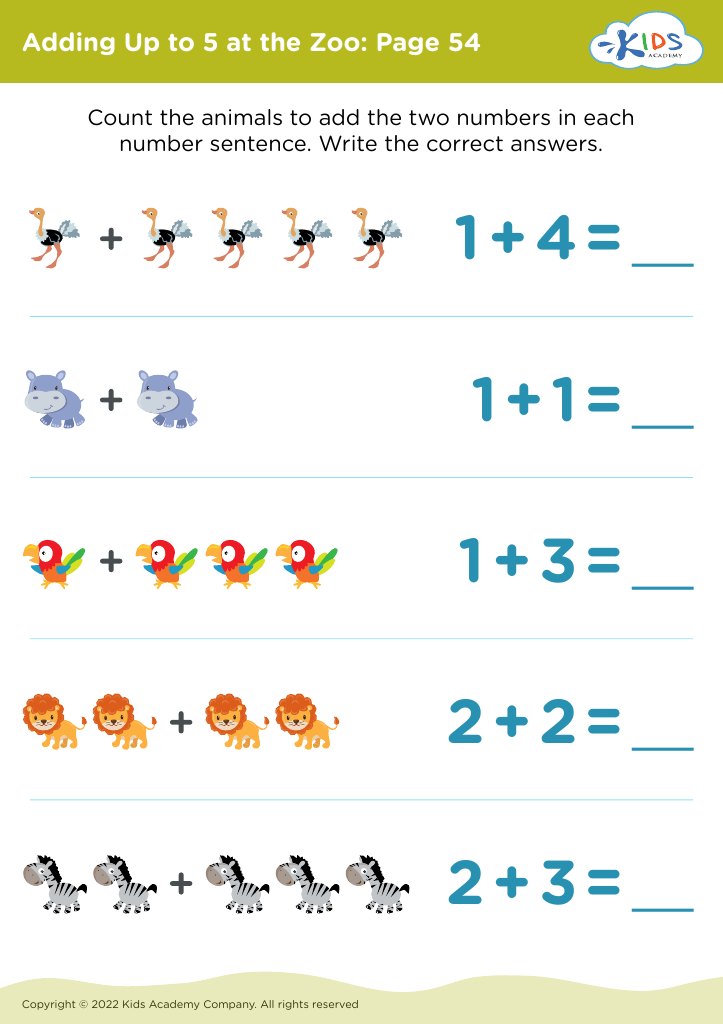
    Adding Up to 5 at the Zoo: Page 54
    Adding Up to 5 at the Zoo: Page 54
    Adding Up to 5 at the Zoo: Page 54
    Worksheet
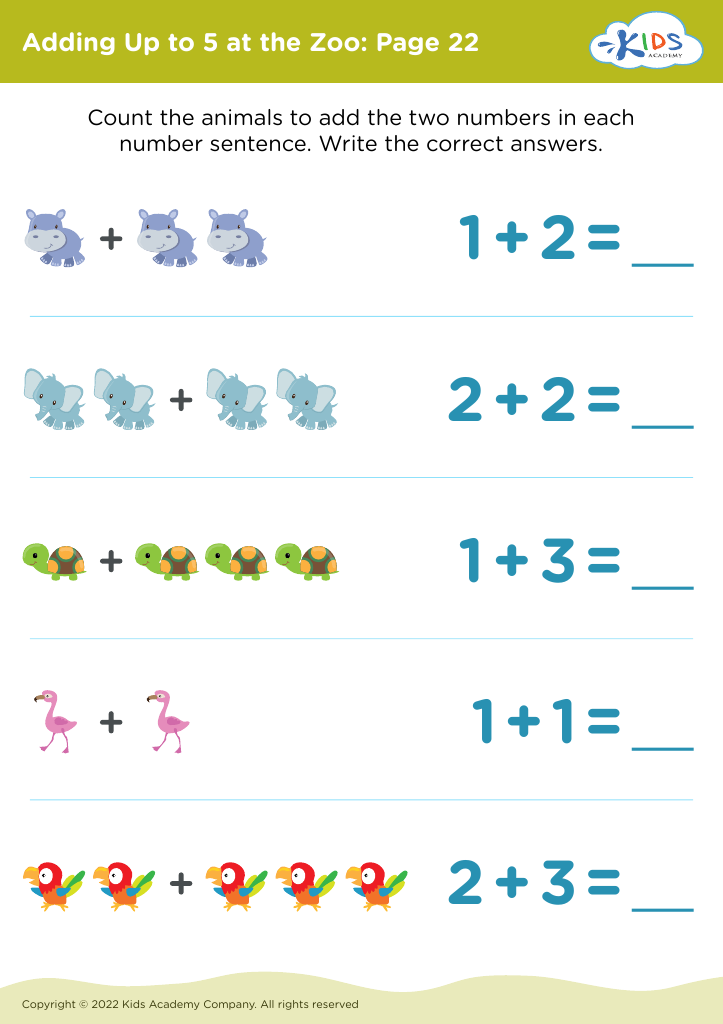
    Adding Up to 5 at the Zoo: Page 22
    Adding Up to 5 at the Zoo: Page 22
    Adding Up to 5 at the Zoo: Page 22
    Worksheet
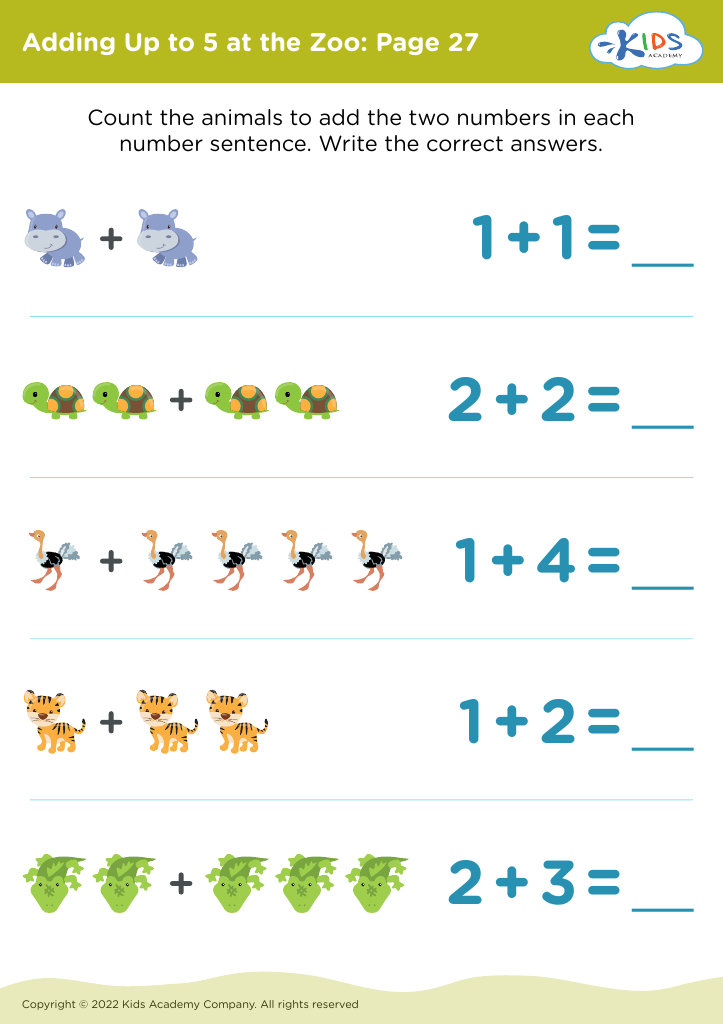
    Adding Up to 5 at the Zoo: Page 27
    Adding Up to 5 at the Zoo: Page 27
    Adding Up to 5 at the Zoo: Page 27
    Worksheet
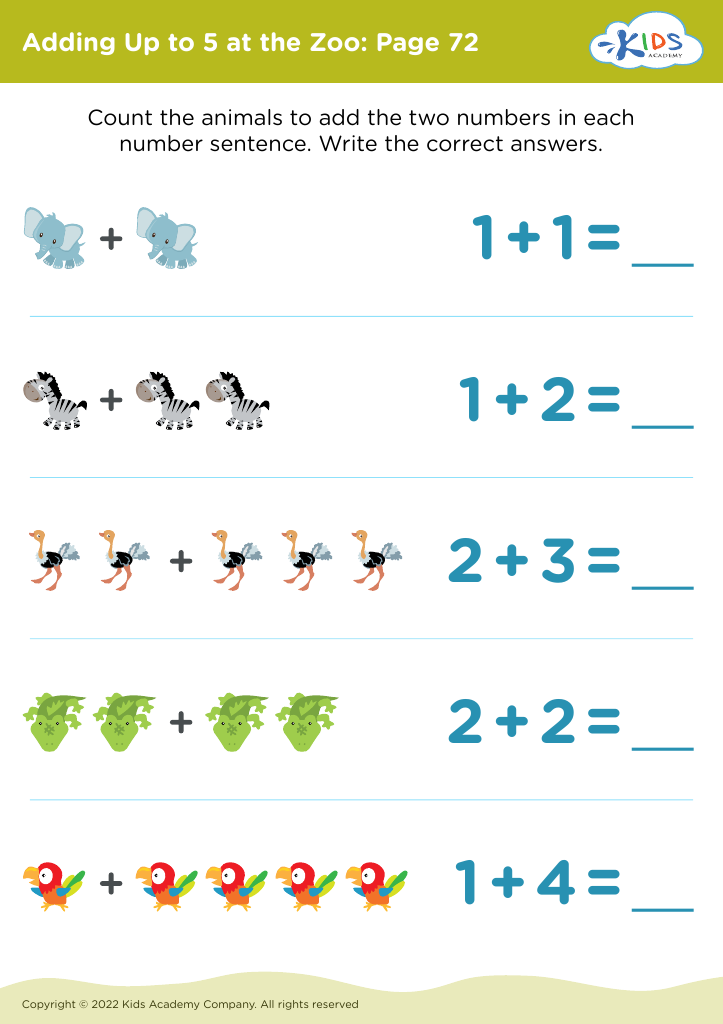
    Adding Up to 5 at the Zoo: Page 72
    Adding Up to 5 at the Zoo: Page 72
    Adding Up to 5 at the Zoo: Page 72
    Worksheet
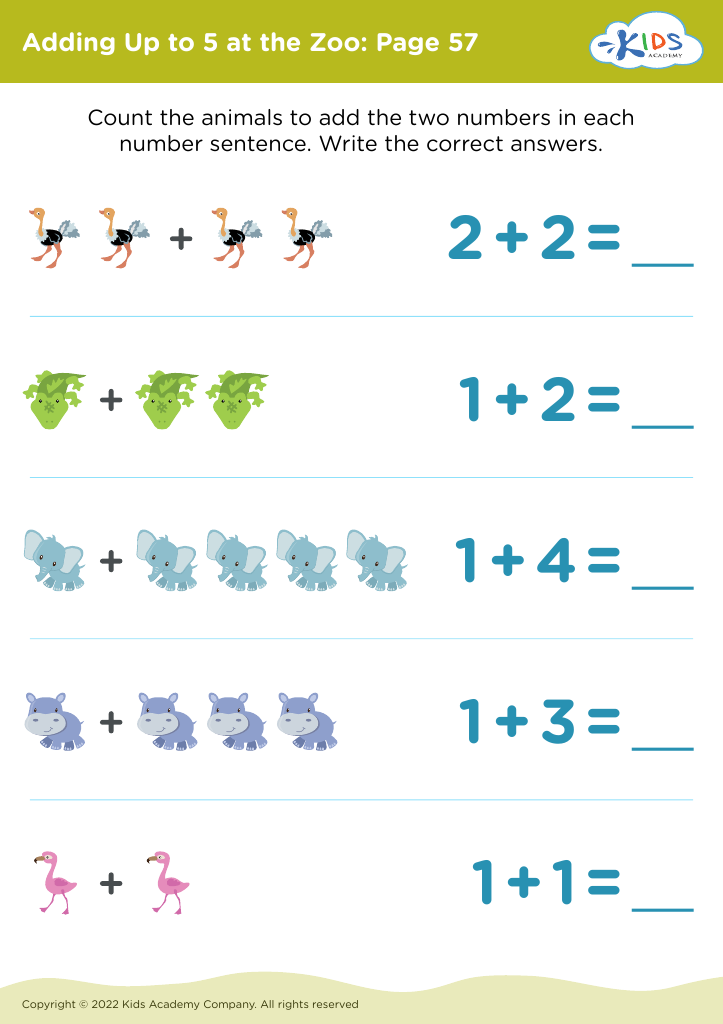
    Adding Up to 5 at the Zoo: Page 57
    Adding Up to 5 at the Zoo: Page 57
    Adding Up to 5 at the Zoo: Page 57
    Worksheet
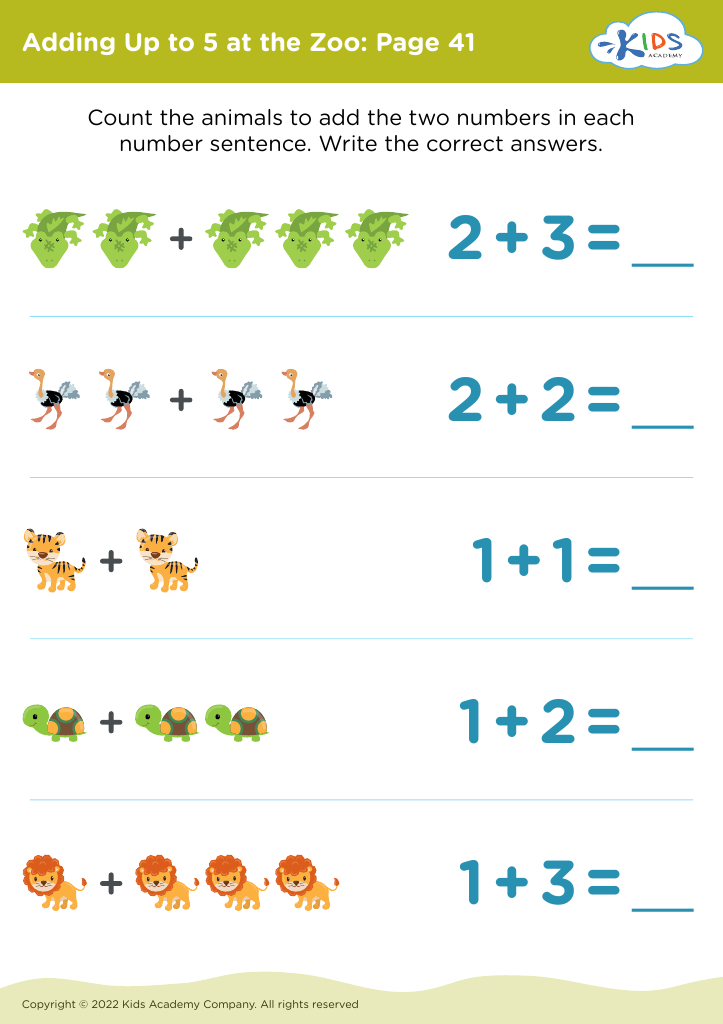
    Adding Up to 5 at the Zoo: Page 41
    Adding Up to 5 at the Zoo: Page 41
    Adding Up to 5 at the Zoo: Page 41
    Worksheet
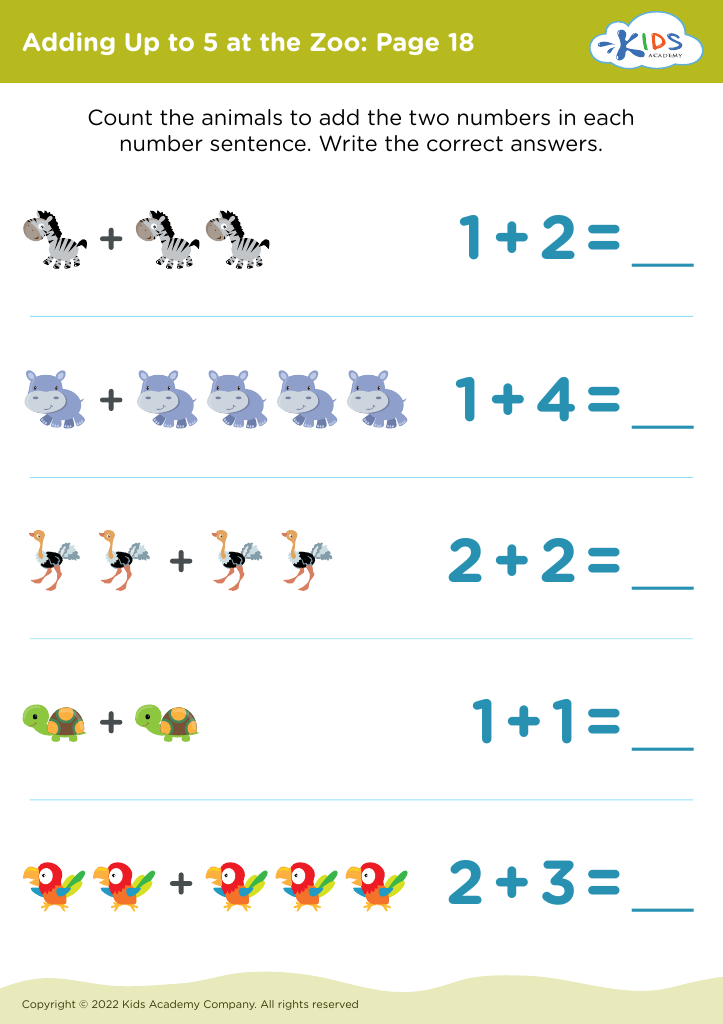
    Adding Up to 5 at the Zoo: Page 18
    Adding Up to 5 at the Zoo: Page 18
    Adding Up to 5 at the Zoo: Page 18
    Worksheet
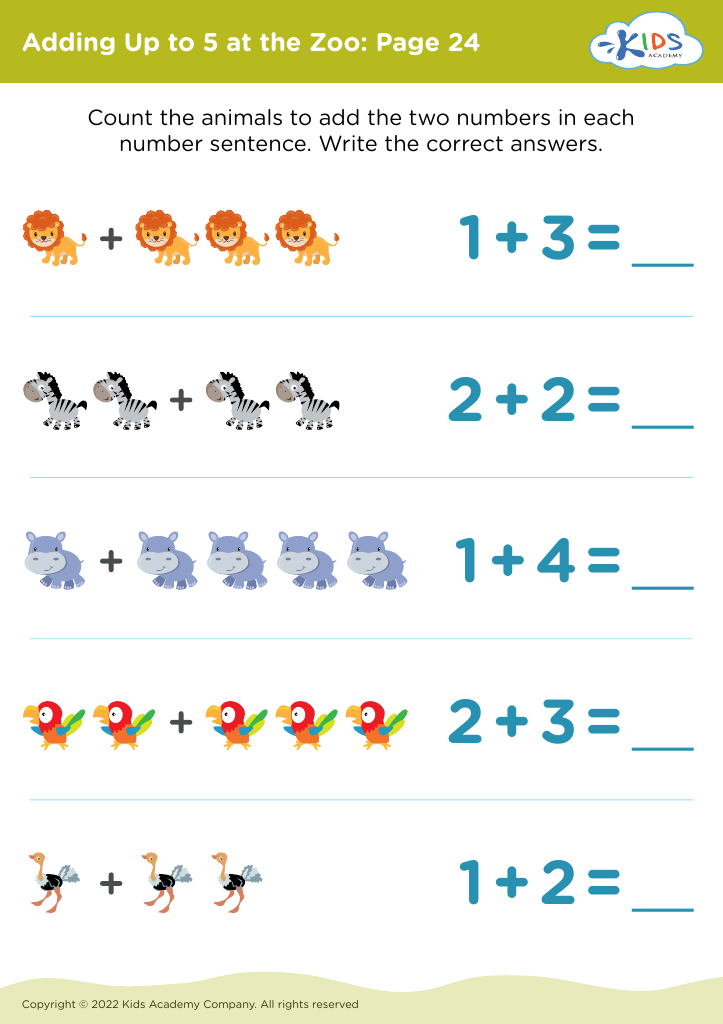
    Adding Up to 5 at the Zoo: Page 24
    Adding Up to 5 at the Zoo: Page 24
    Adding Up to 5 at the Zoo: Page 24
    Worksheet
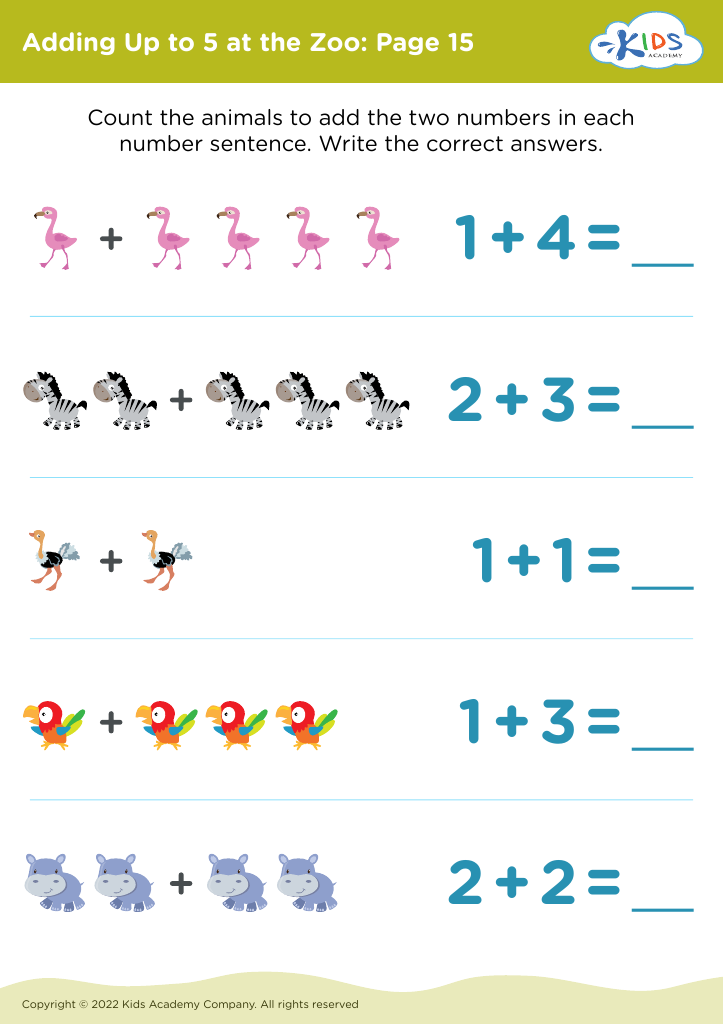
    Adding Up to 5 at the Zoo: Page 15
    Adding Up to 5 at the Zoo: Page 15
    Adding Up to 5 at the Zoo: Page 15
    Worksheet
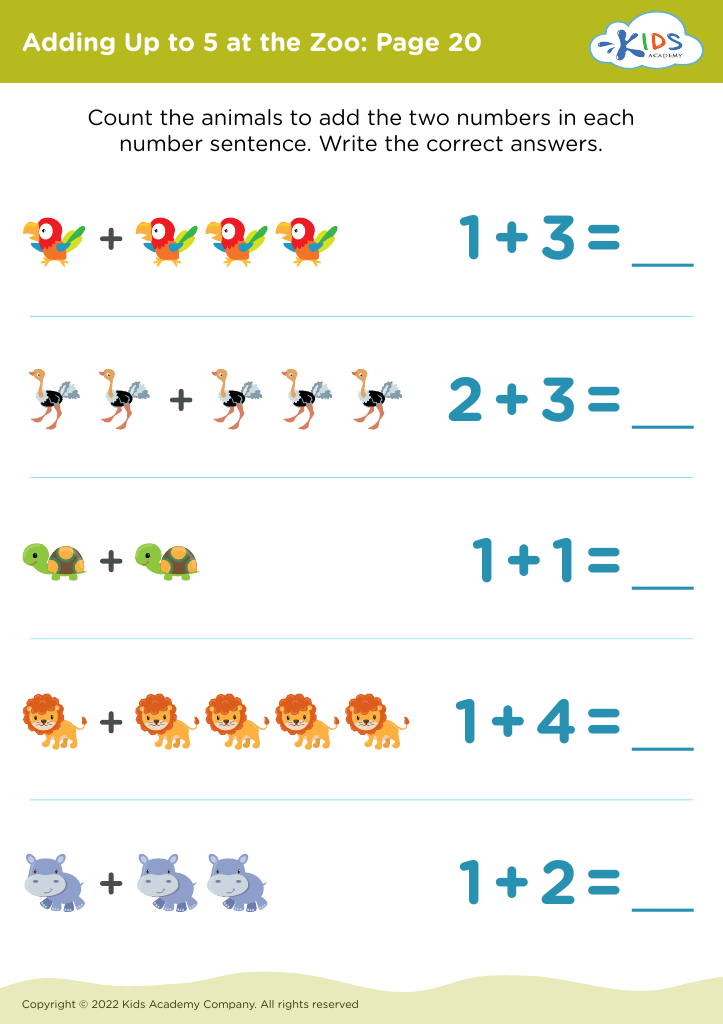
    Adding Up to 5 at the Zoo: Page 20
    Adding Up to 5 at the Zoo: Page 20
    Adding Up to 5 at the Zoo: Page 20
    Worksheet
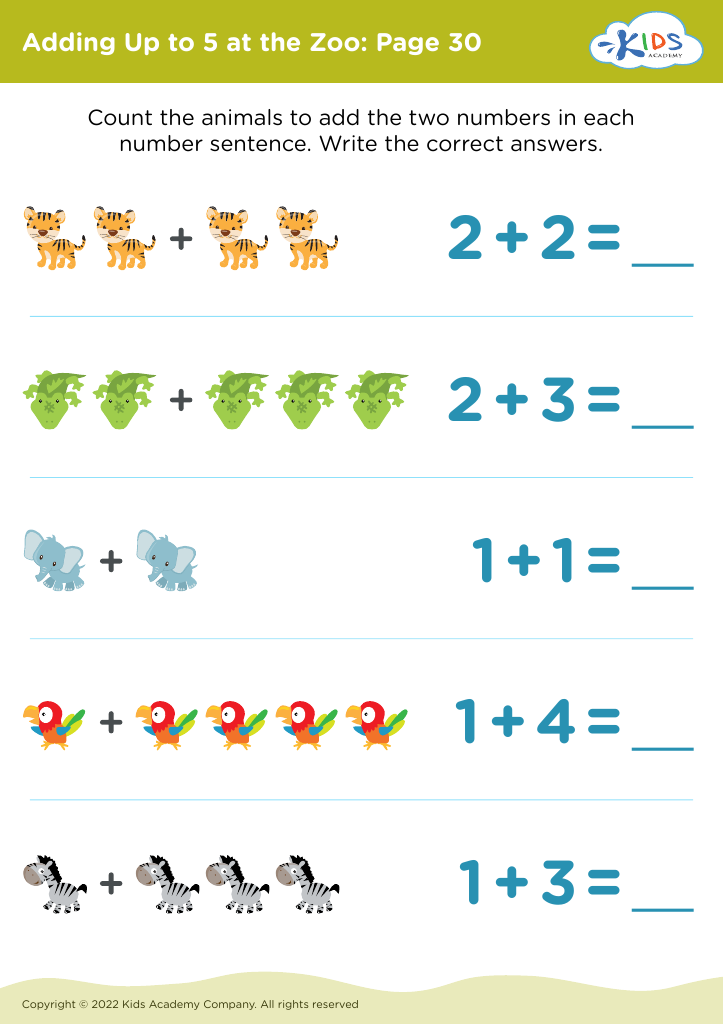
    Adding Up to 5 at the Zoo: Page 30
    Adding Up to 5 at the Zoo: Page 30
    Adding Up to 5 at the Zoo: Page 30
    Worksheet
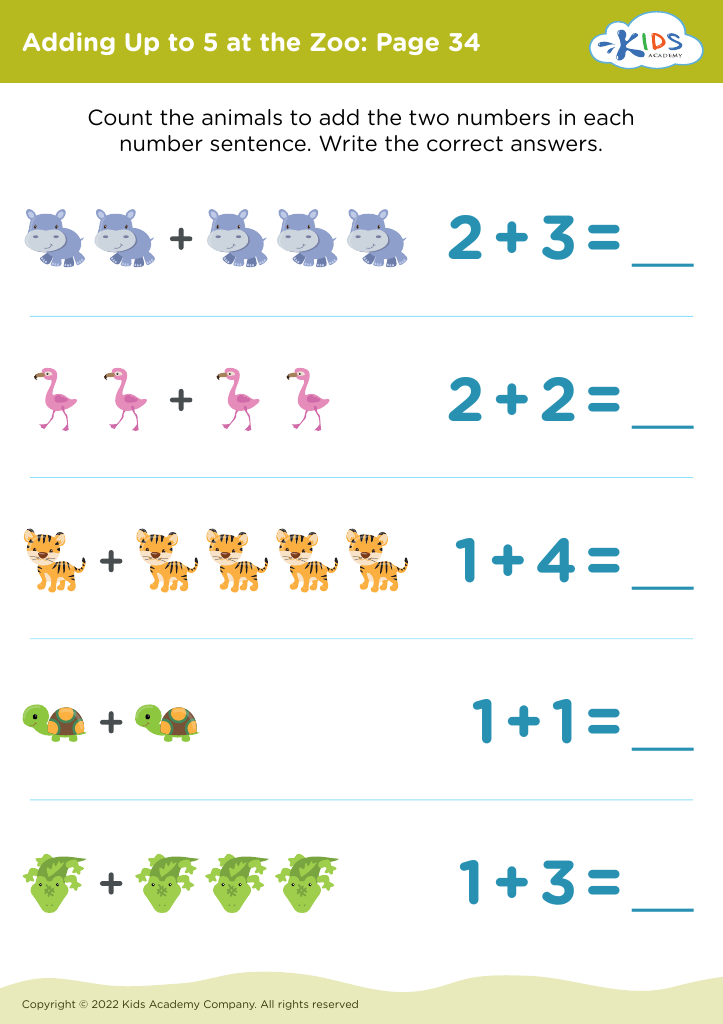
    Adding Up to 5 at the Zoo: Page 34
    Adding Up to 5 at the Zoo: Page 34
    Adding Up to 5 at the Zoo: Page 34
    Worksheet
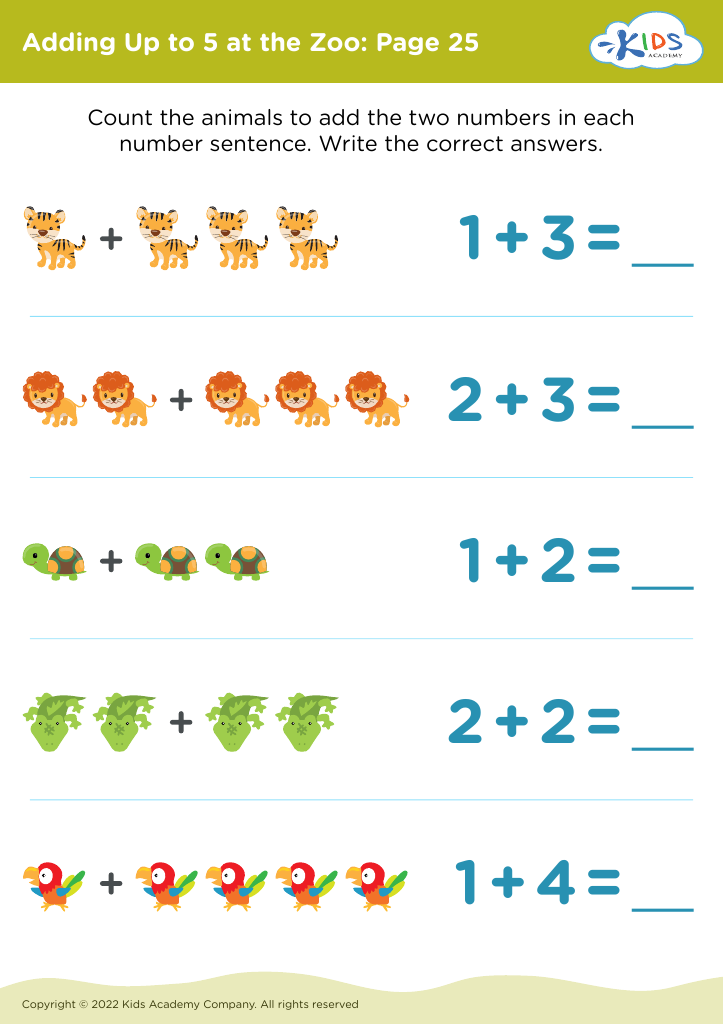
    Adding Up to 5 at the Zoo: Page 25
    Adding Up to 5 at the Zoo: Page 25
    Adding Up to 5 at the Zoo: Page 25
    Worksheet
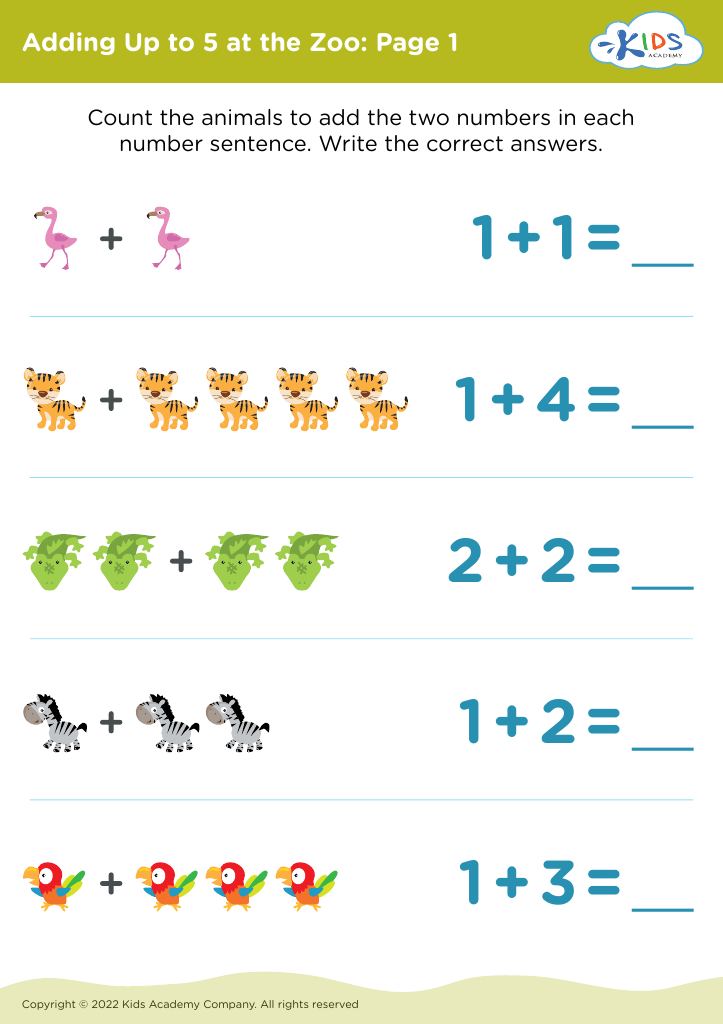
    Adding Up to 5 at the Zoo: Page 1
    Adding Up to 5 at the Zoo: Page 1

    Adding Up to 5 at the Zoo: Page 1

    Adding Up to 5 at the Zoo: Page 1
    Worksheet
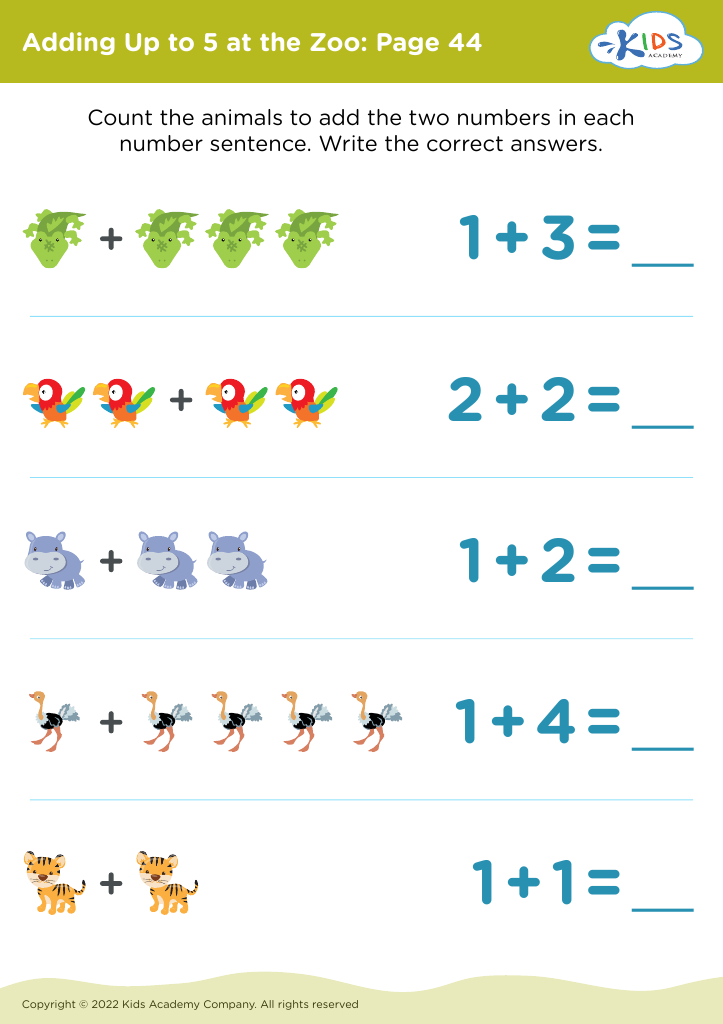
    Adding Up to 5 at the Zoo: Page 44
    Adding Up to 5 at the Zoo: Page 44
    Adding Up to 5 at the Zoo: Page 44
    Worksheet
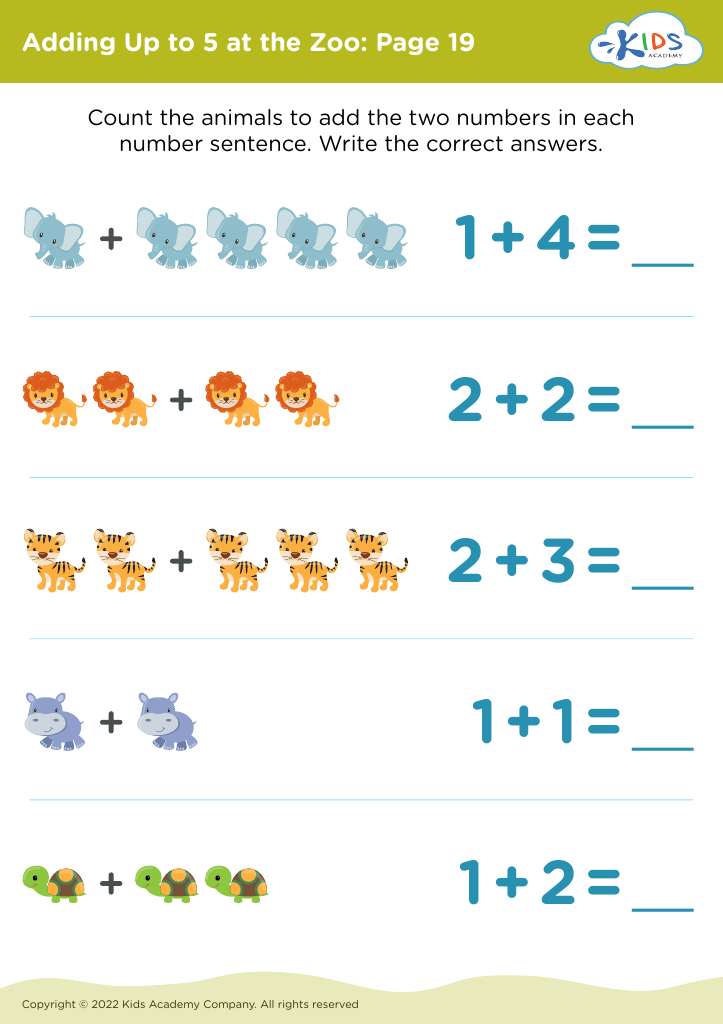
    Adding Up to 5 at the Zoo: Page 19
    Adding Up to 5 at the Zoo: Page 19
    Adding Up to 5 at the Zoo: Page 19
    Worksheet
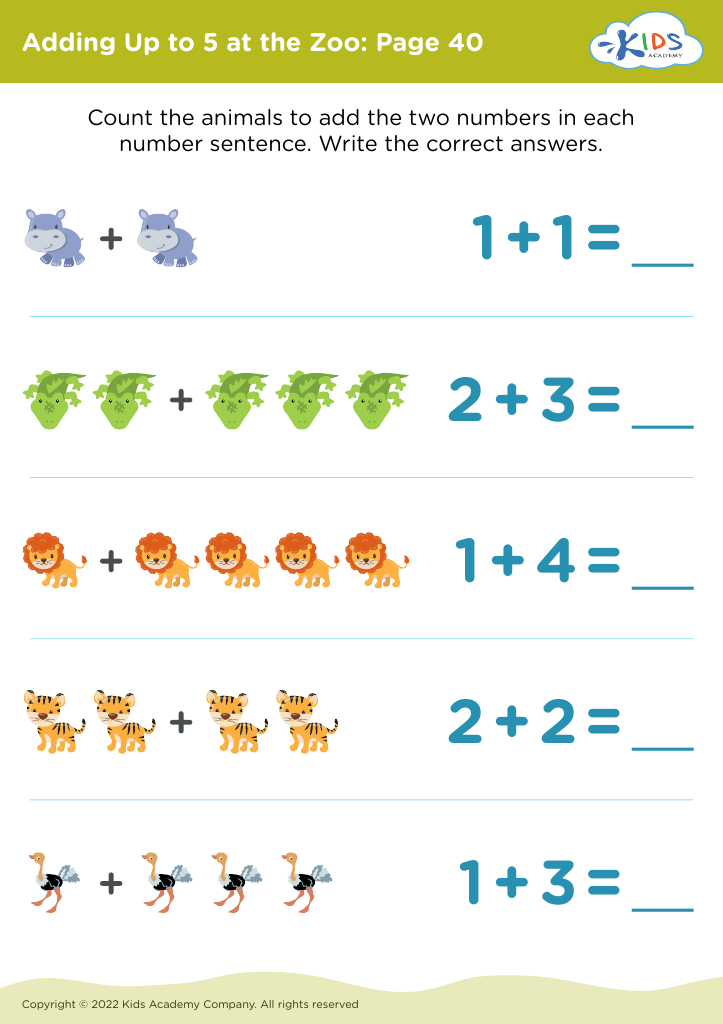
    Adding Up to 5 at the Zoo: Page 40
    Adding Up to 5 at the Zoo: Page 40
    Adding Up to 5 at the Zoo: Page 40
    Worksheet
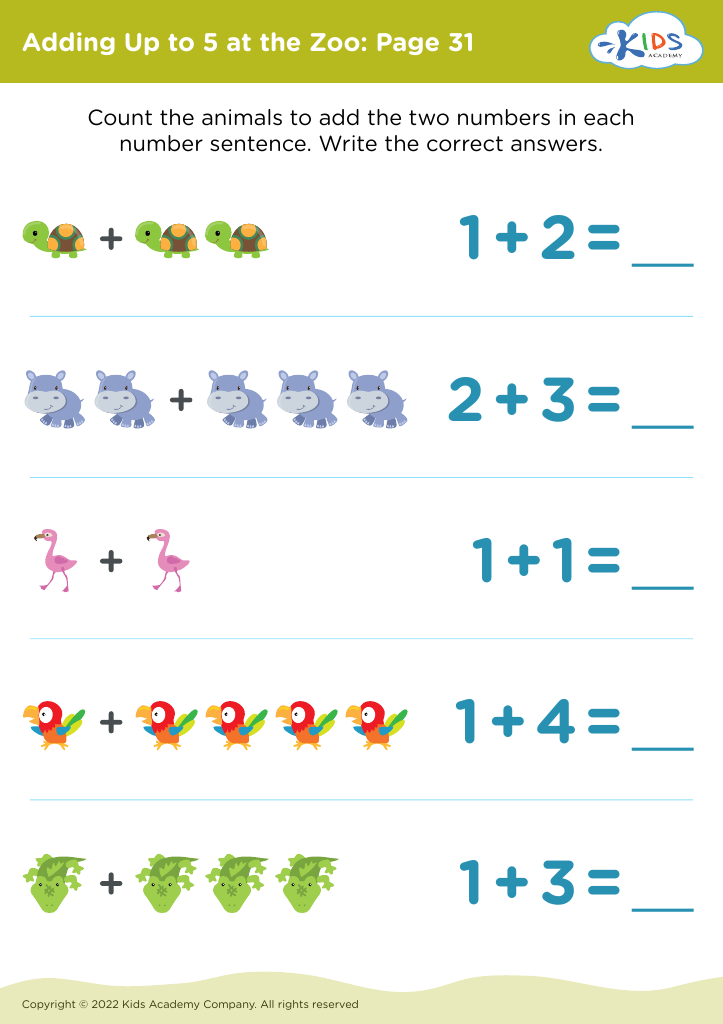
    Adding Up to 5 at the Zoo: Page 31
    Adding Up to 5 at the Zoo: Page 31
    Adding Up to 5 at the Zoo: Page 31
    Worksheet


    Cognitive development is a crucial aspect of a child's growth, particularly between the ages of 5 and 9. Integrating this into a real-world setting, like a zoo, can make learning more engaging and effective. During these formative years, children's brains are highly receptive to new information and experiences. Participating in activities such as "Cognitive Development Adding at the Zoo" leverages their natural curiosity and love for play, fostering foundational math and reasoning skills in an interactive environment.

    Parents and teachers should care because this approach blends education with excitement. When children are engaged in counting animals, adding up legs, or determining the difference in group sizes, they’re building vital numerical skills without even realizing they're "studying." Additionally, being in the zoo sets a stage for experiential learning; children are more likely to retain information learned in such stimulating environments.

    Moreover, these activities support the development of problem-solving skills and logical thinking. They also enhance spatial awareness, observation, and classification abilities, critical cognitive skills that form the groundwork for later academic and life success. Encouraging early cognitive development in unique settings not only makes learning enjoyable but ensures that children are developing essential skills that will benefit them throughout their educational journey and life.