Counting practice Adding at the Zoo Worksheets for Ages 5-9
41 filtered results
-
From - To
Welcome to our "Counting Practice: Adding at the Zoo" worksheets, designed for children ages 5-9! These engaging worksheets combine the excitement of zoo animals with essential math skills. Through fun, themed activities, children will explore addition while counting their favorite creatures, reinforcing their understanding of numbers in an enjoyable way. Each worksheet offers a variety of problems to challenge young learners, build their confidence, and improve their counting and addition skills. Perfect for home or classroom use, these printable resources make math interactive and entertaining, helping kids build a strong foundation in arithmetic while discovering the wonders of the animal kingdom!
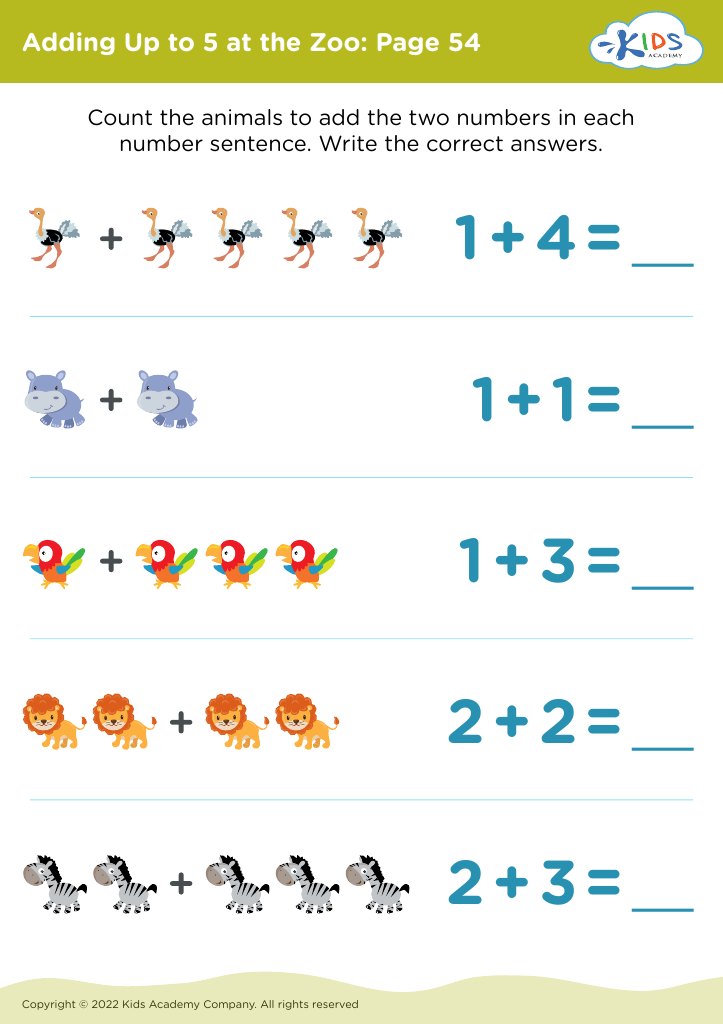
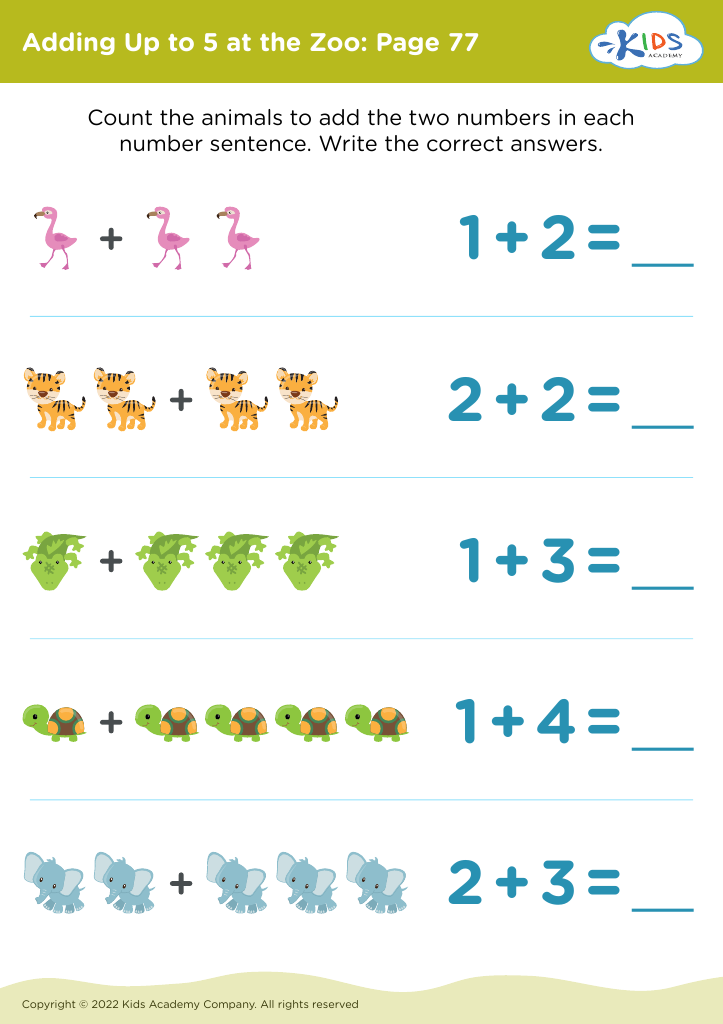
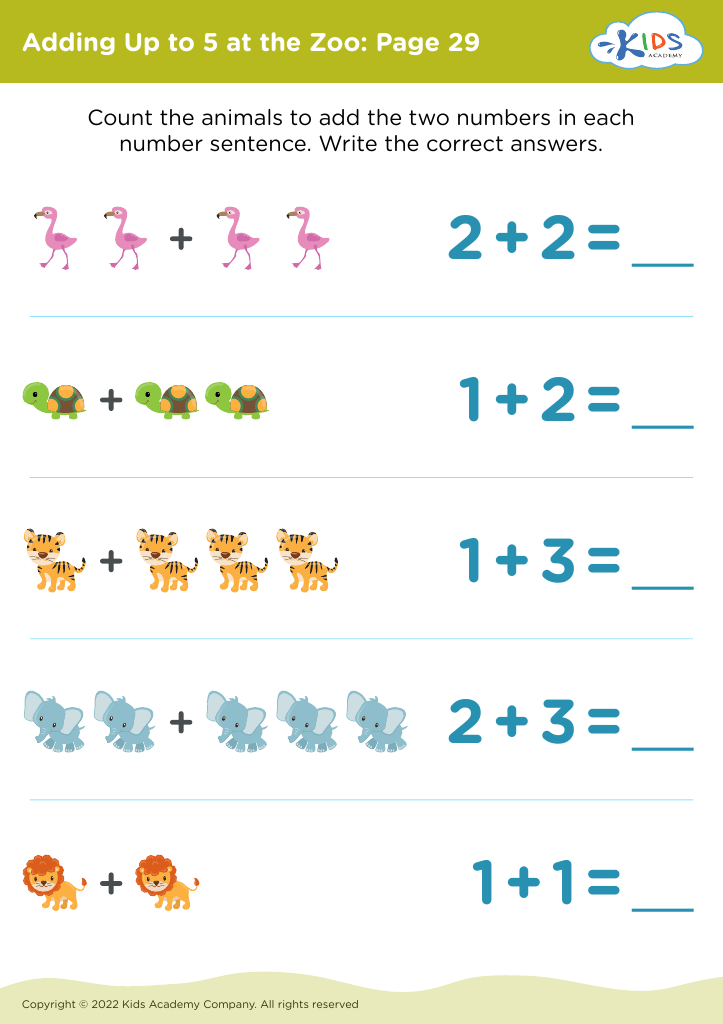
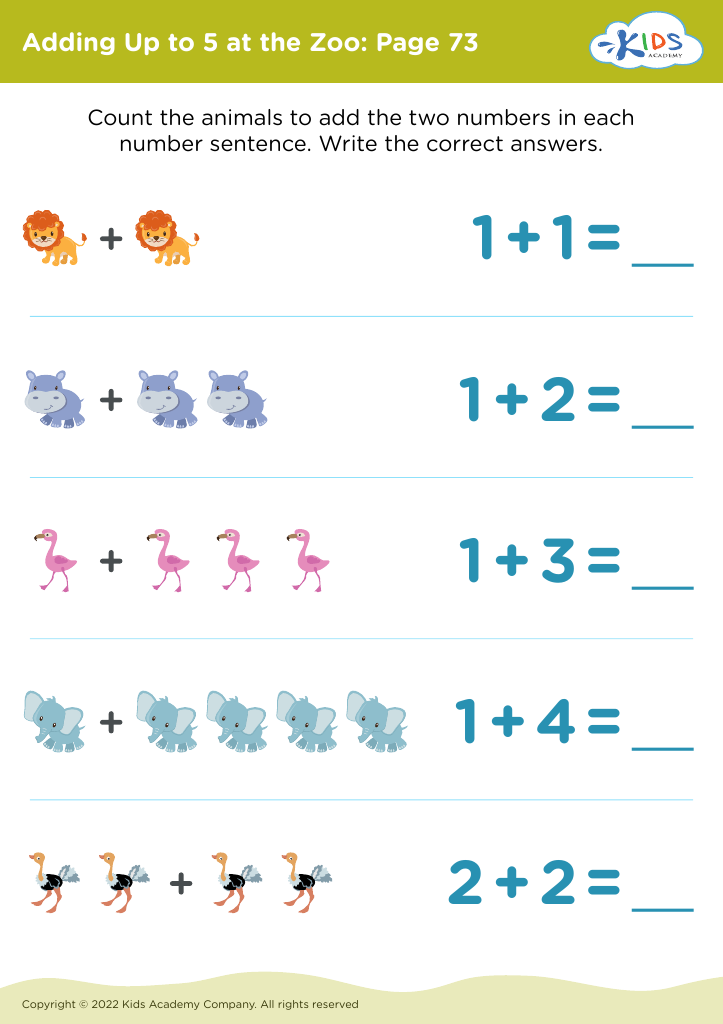
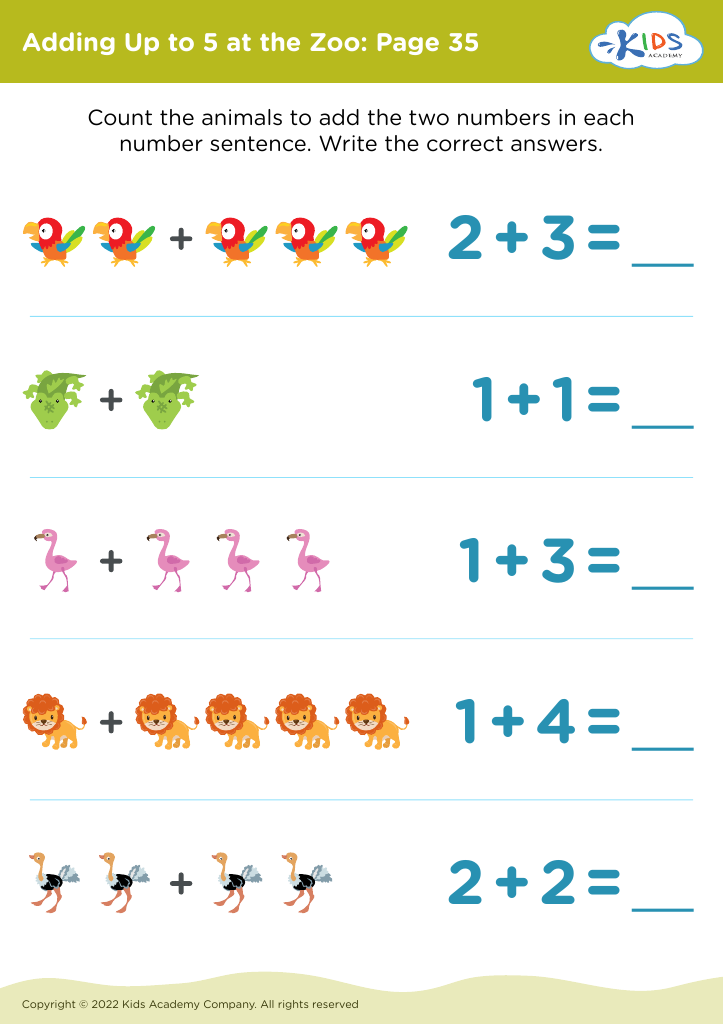
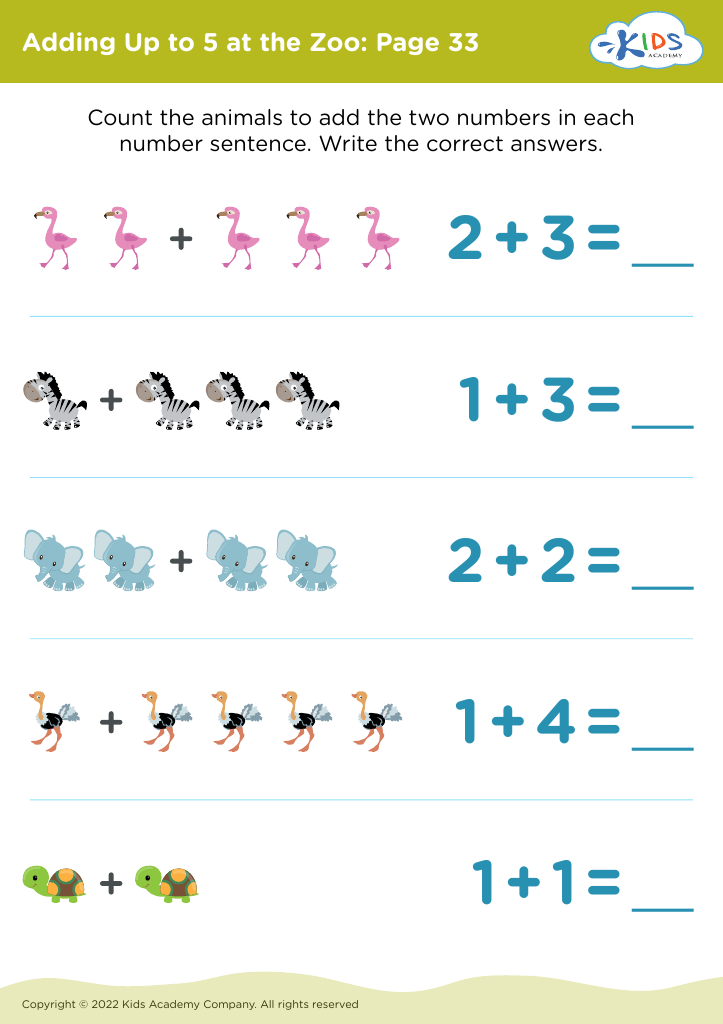
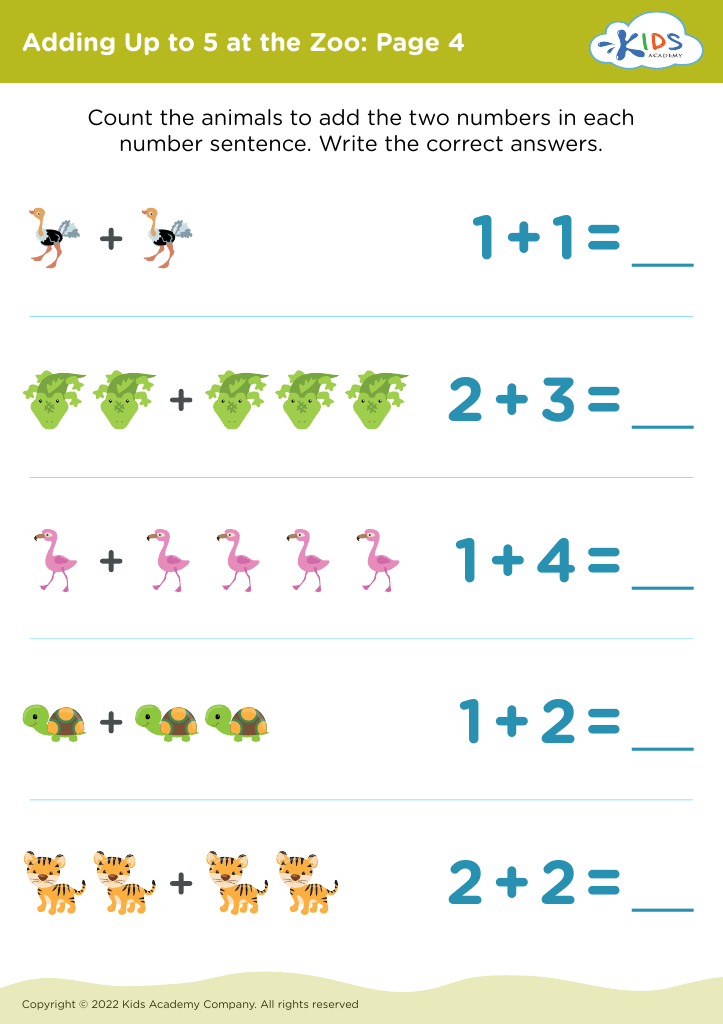
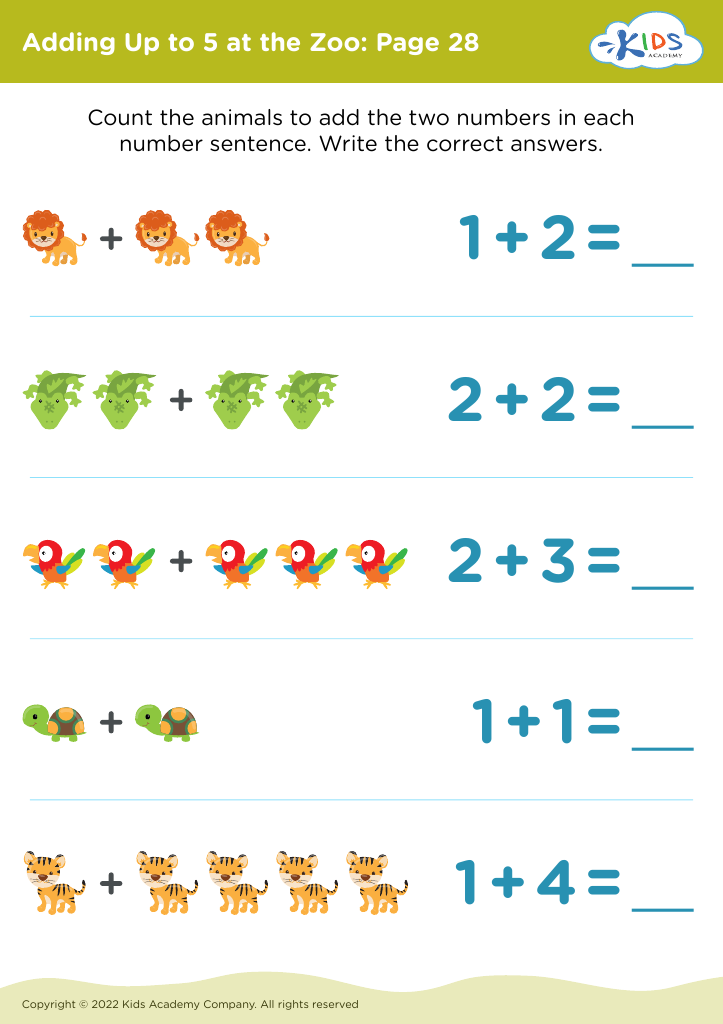
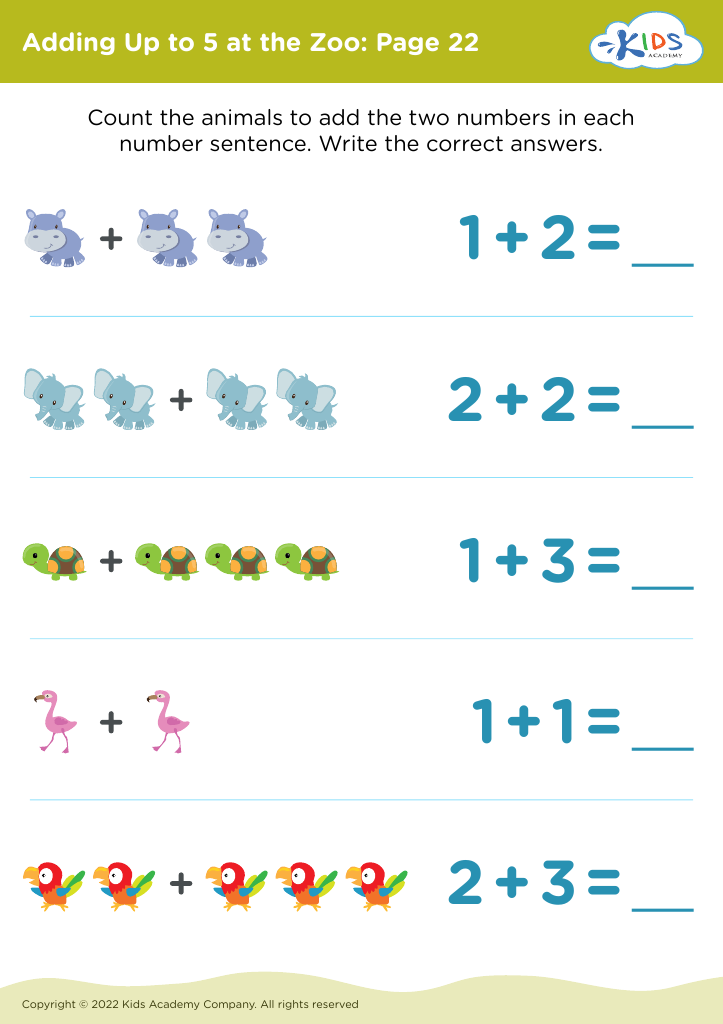
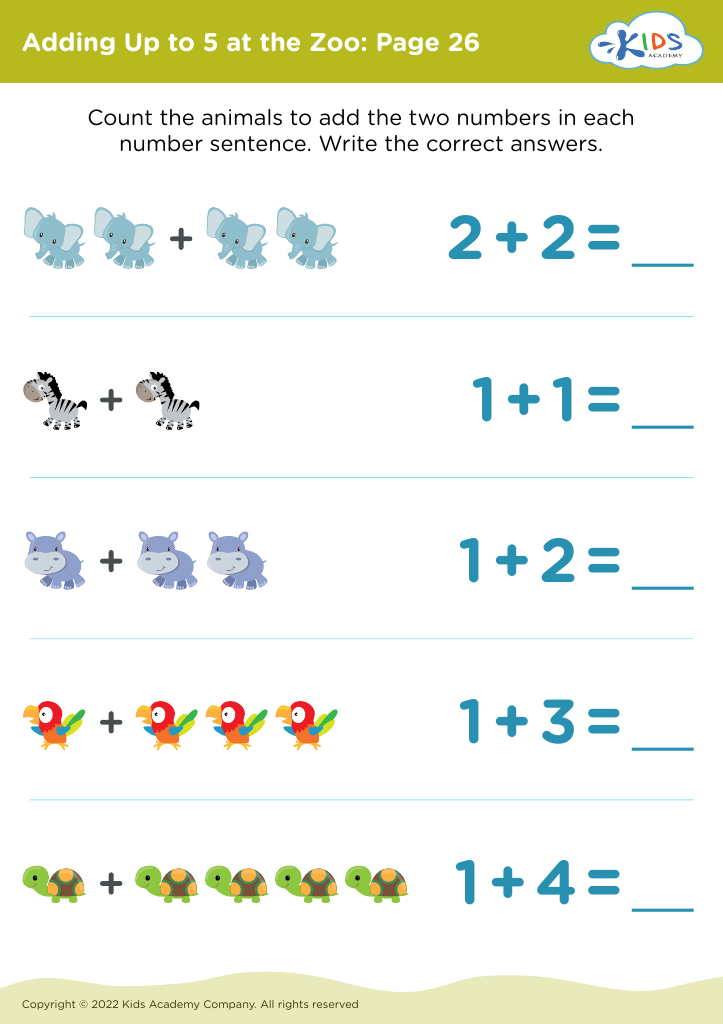
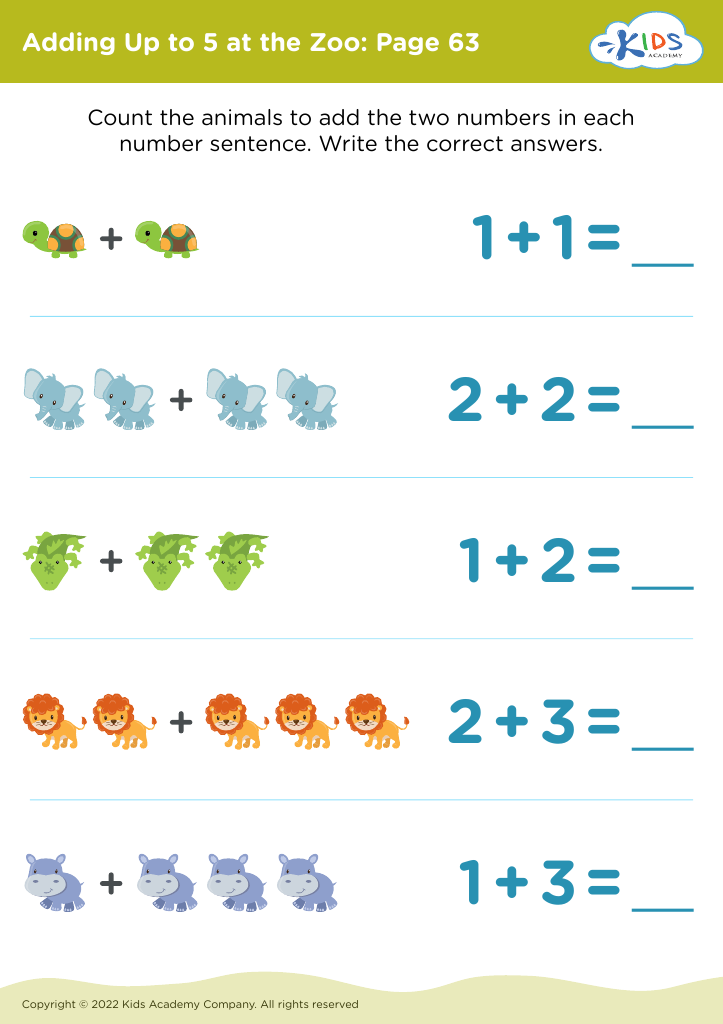
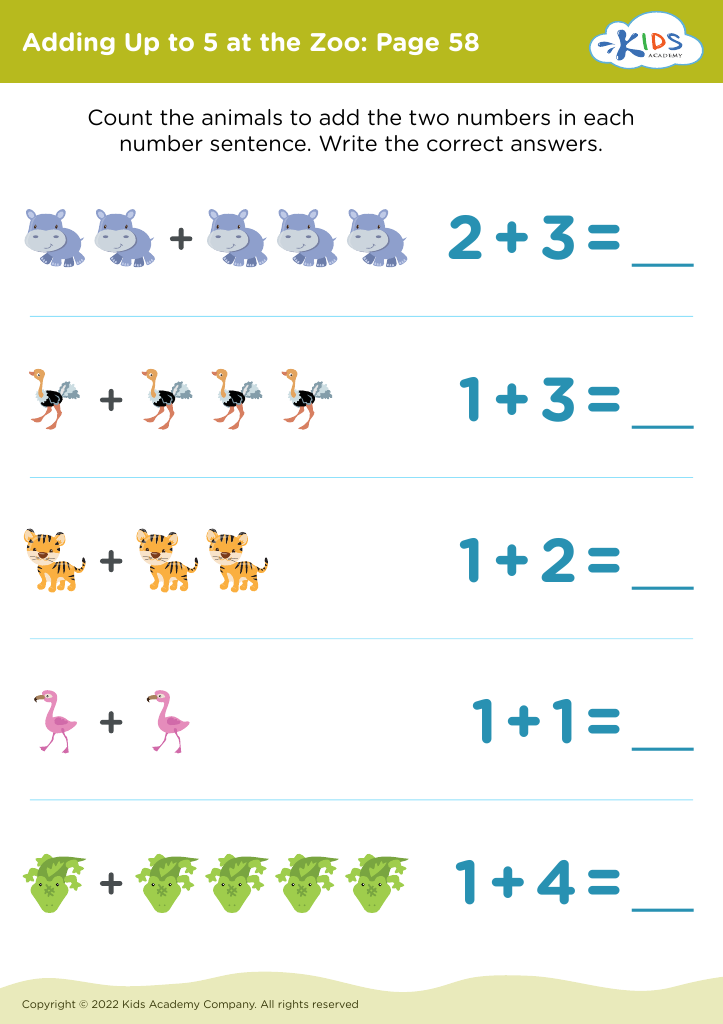
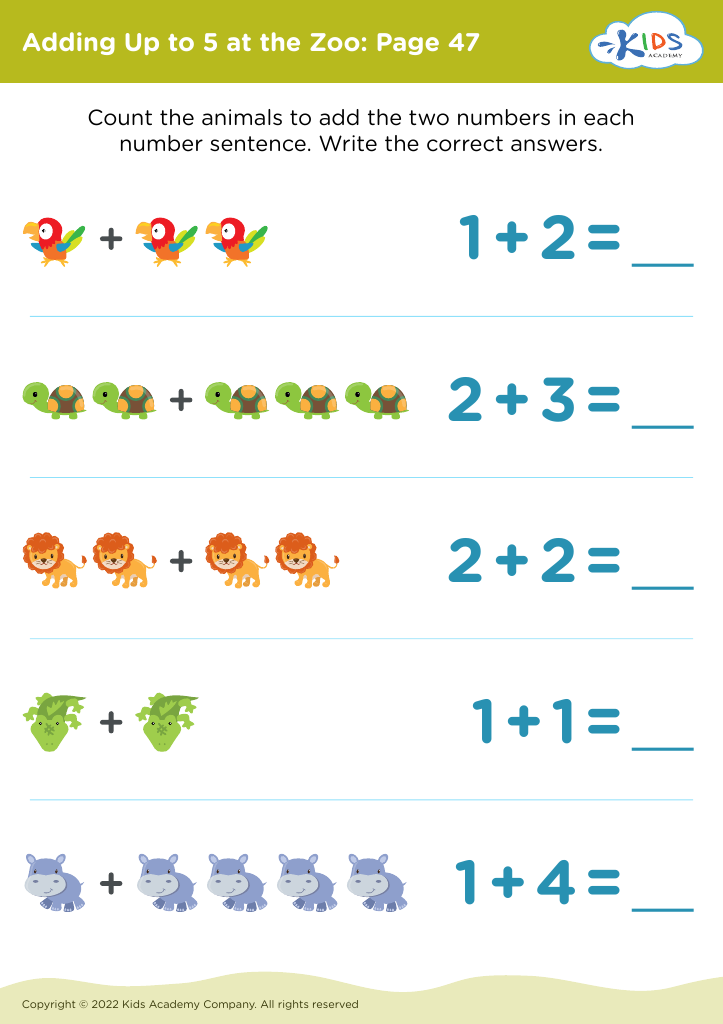
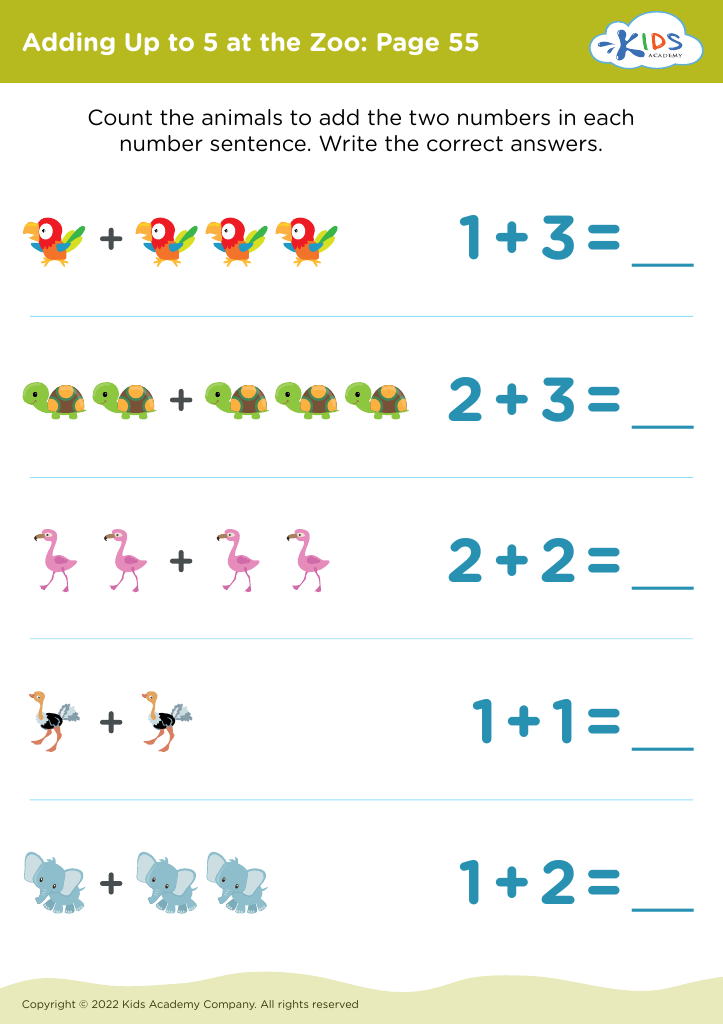
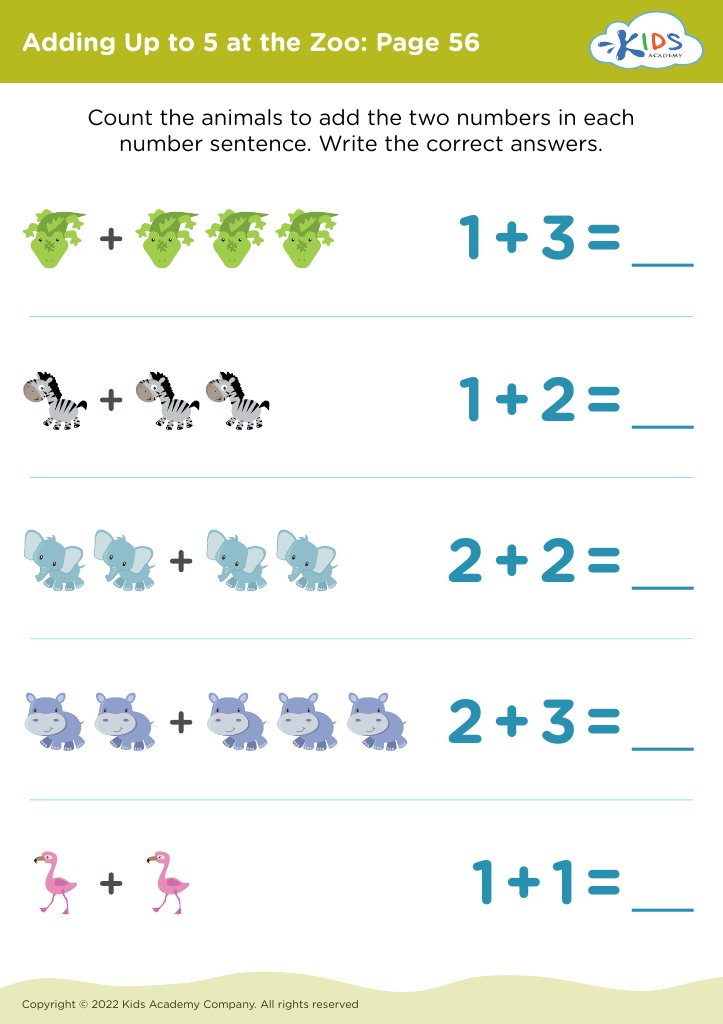
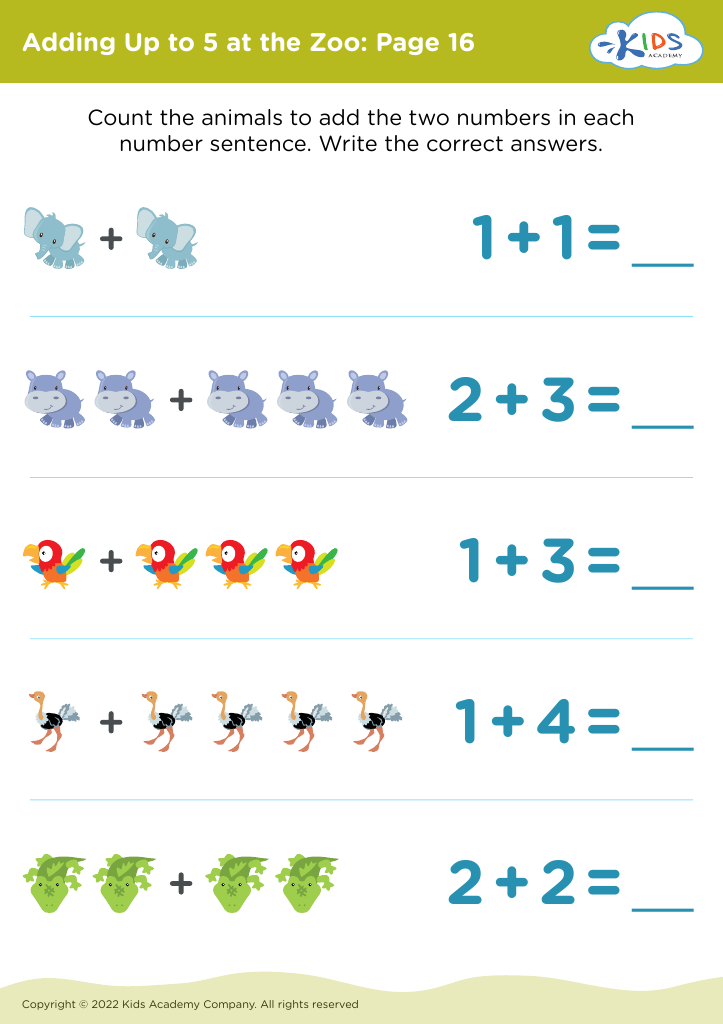
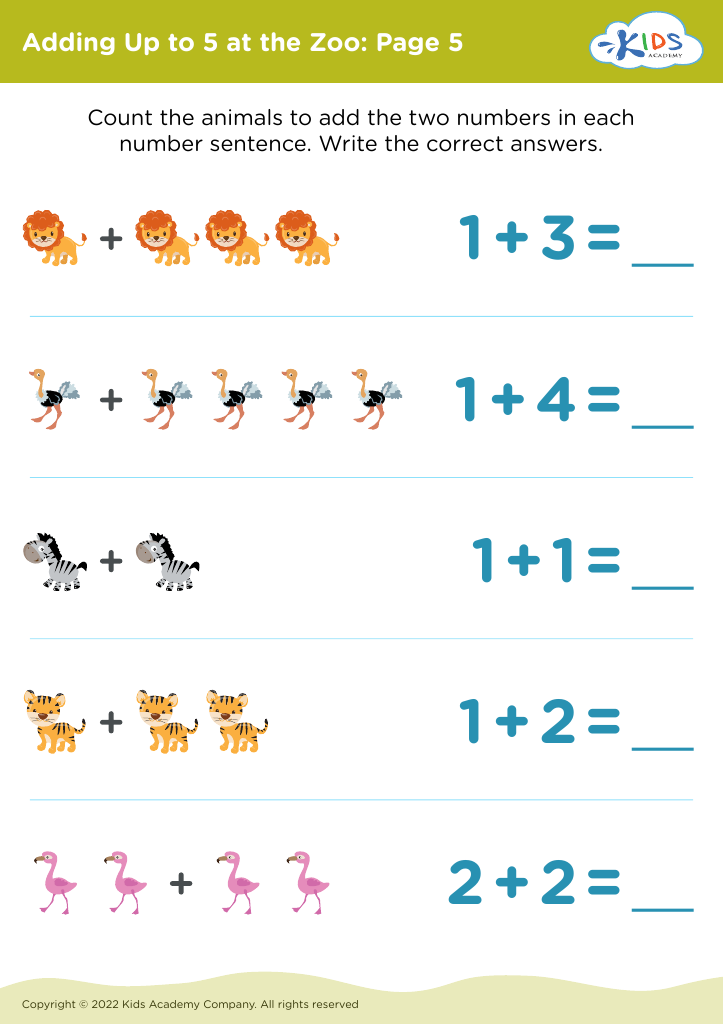
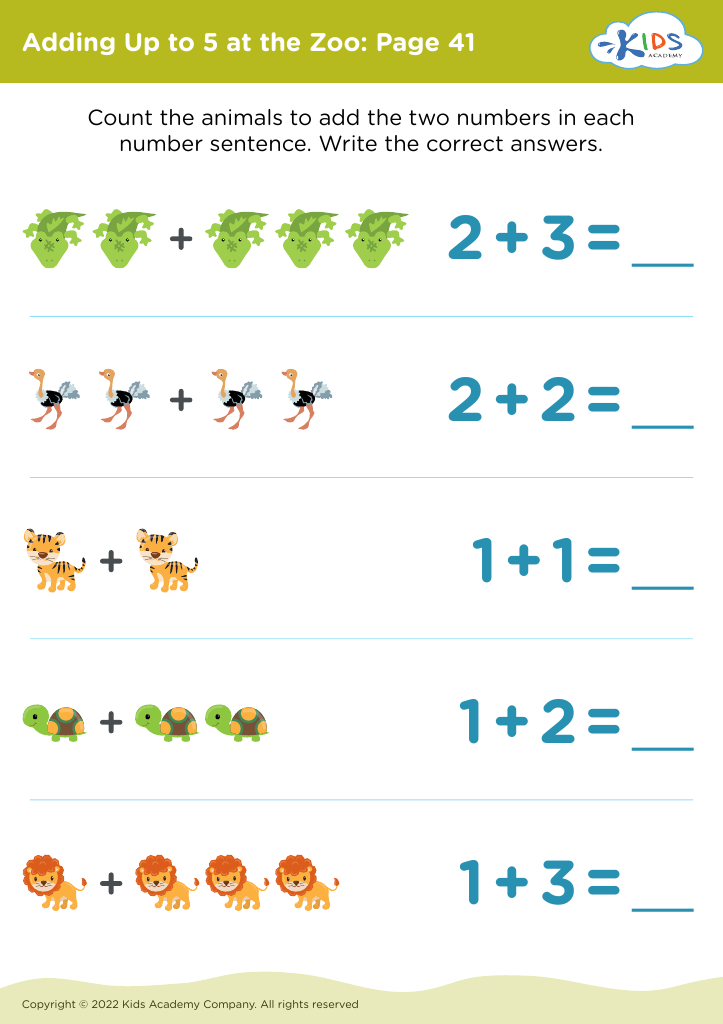
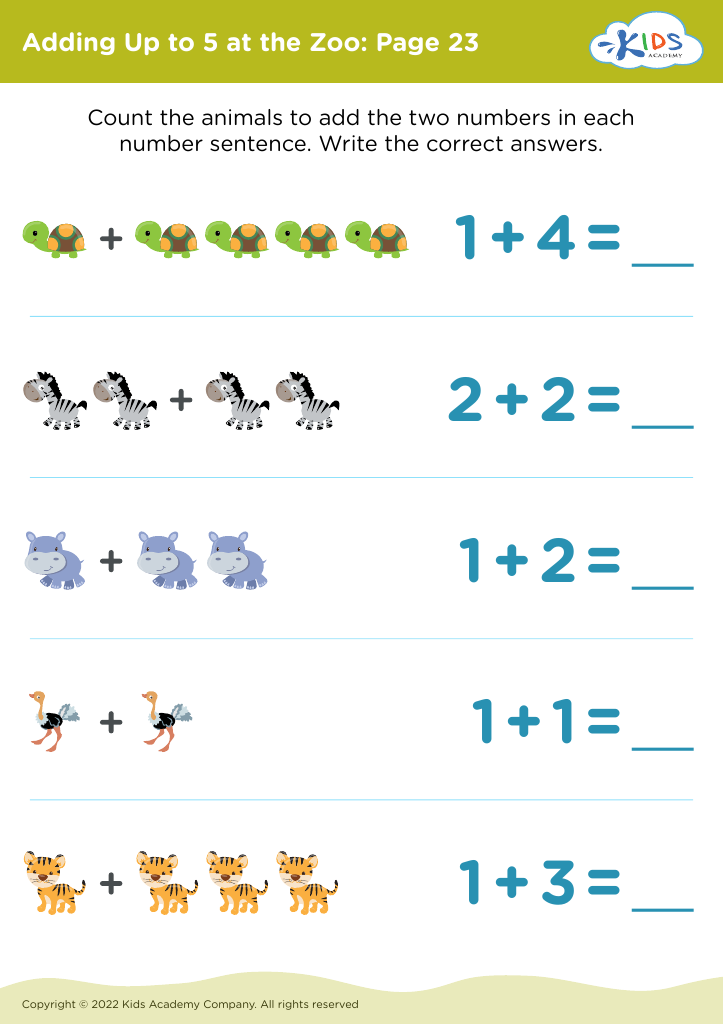
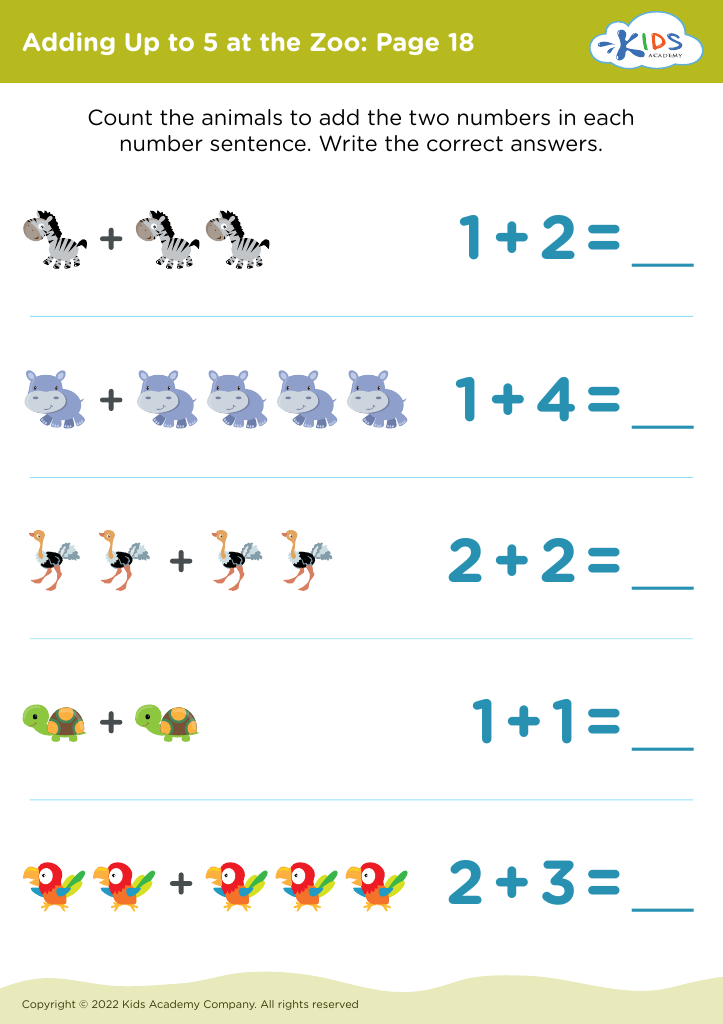
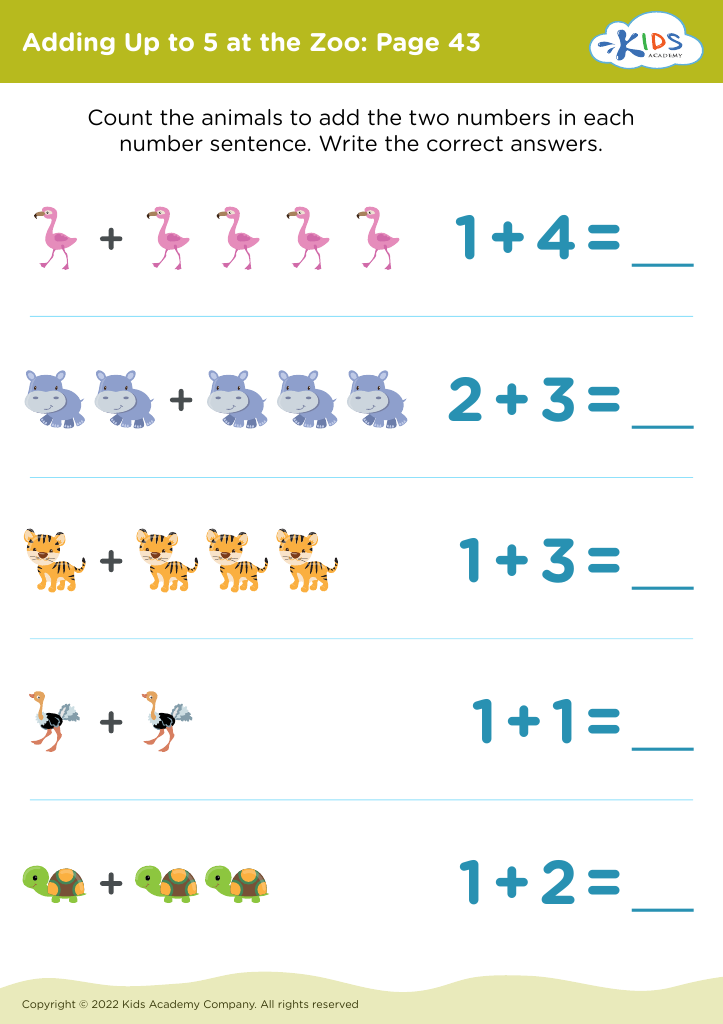
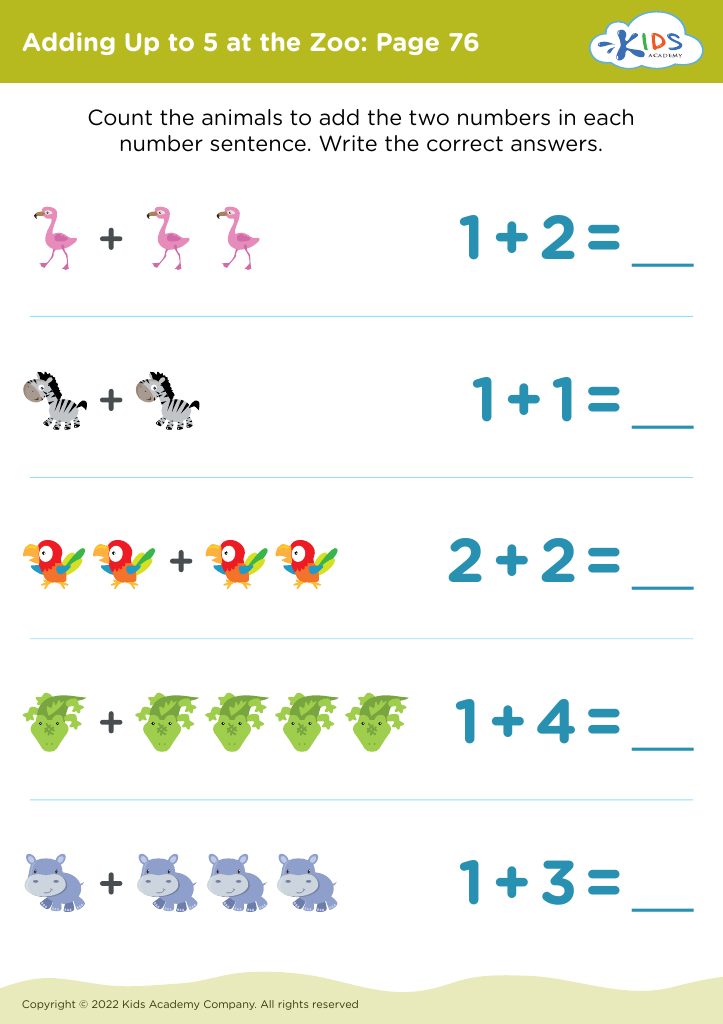
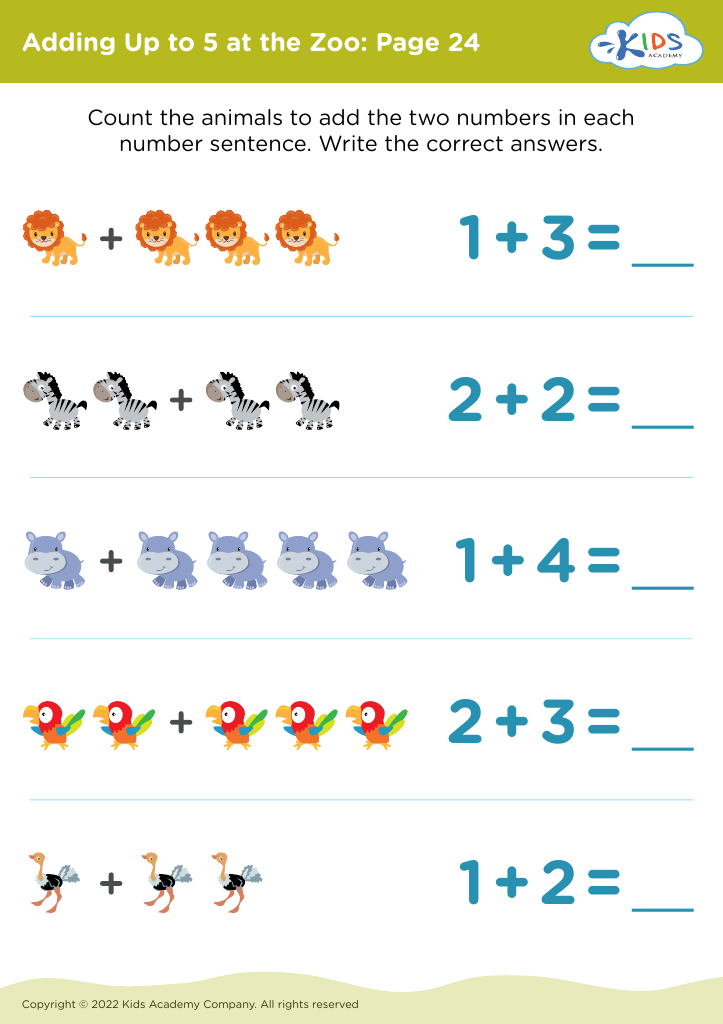
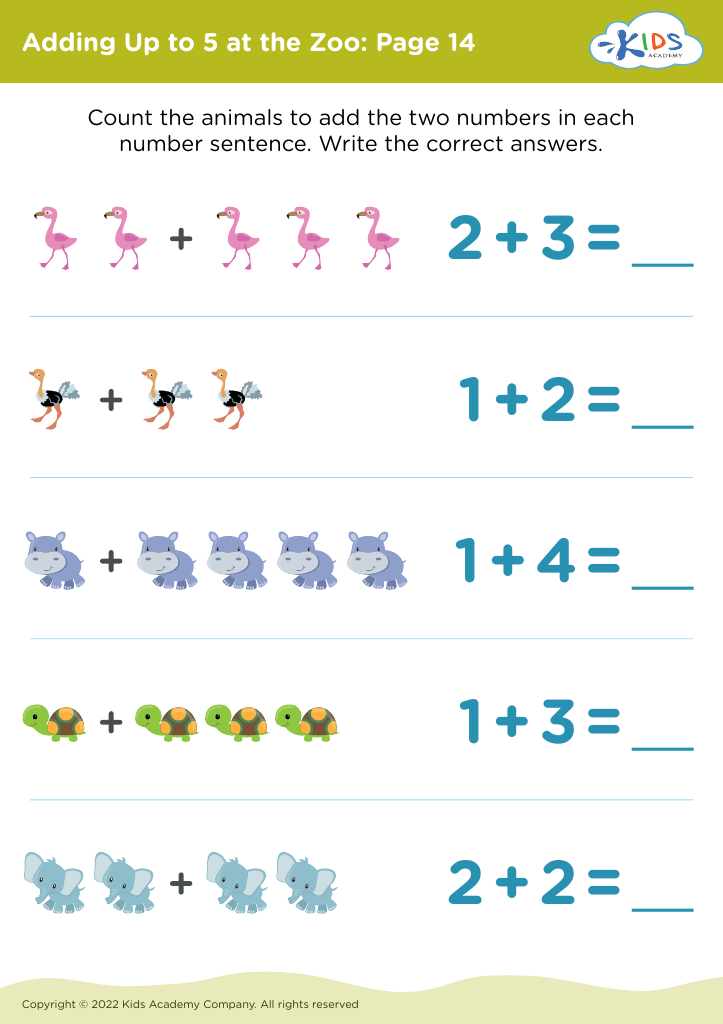



Counting practice, such as "Adding at the Zoo," is essential for children aged 5-9 for several reasons. First, it reinforces foundational math skills essential for future academic success. Young learners develop their number sense through engaging, hands-on experiences, making counting not only enjoyable but also meaningful.
Engaging children in activities that involve counting objects, like animals at the zoo, makes abstract concepts more concrete. It allows them to visualize and categorize, enhancing cognitive development and critical thinking. This context also instills a sense of curiosity and wonder about the world around them, fostering a love for learning.
Furthermore, such activities support the development of social and emotional skills, as children often collaborate with peers or family members during group play. It encourages communication, teamwork, and problem-solving. Parents and teachers who introduce counting in fun, relatable scenarios lie at the heart of effective early learning strategies.
Lastly, integrating these practices into everyday activities, like visiting a zoo, enriches children's experiences, helping them connect mathematics to real-life contexts. By prioritizing counting practice in engaging ways, parents and teachers lay the groundwork for strong math skills, encouraging lifelong learning and confidence in their abilities.