Problem-Solving Skills Adding at the Zoo Worksheets for Ages 5-9
4 filtered results
-
From - To
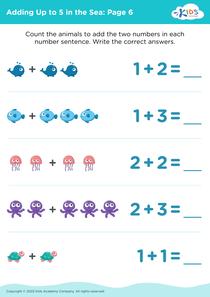
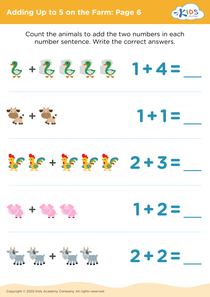
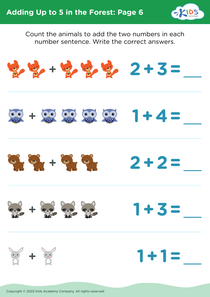
Foster your child's mathematical abilities with our engaging Problem-Solving Skills Adding at the Zoo Worksheets, designed for ages 5-9. These captivating worksheets combine the excitement of the zoo with the challenge of addition, helping children develop crucial problem-solving skills. Each worksheet is crafted to enhance their understanding of addition through fun, zoo-themed puzzles and activities. Perfect for young learners, these worksheets encourage critical thinking and boost confidence in math. Whether at home or in the classroom, our adding at the zoo sheets make learning enjoyable and effective. Start exploring today and watch your child’s math skills soar!
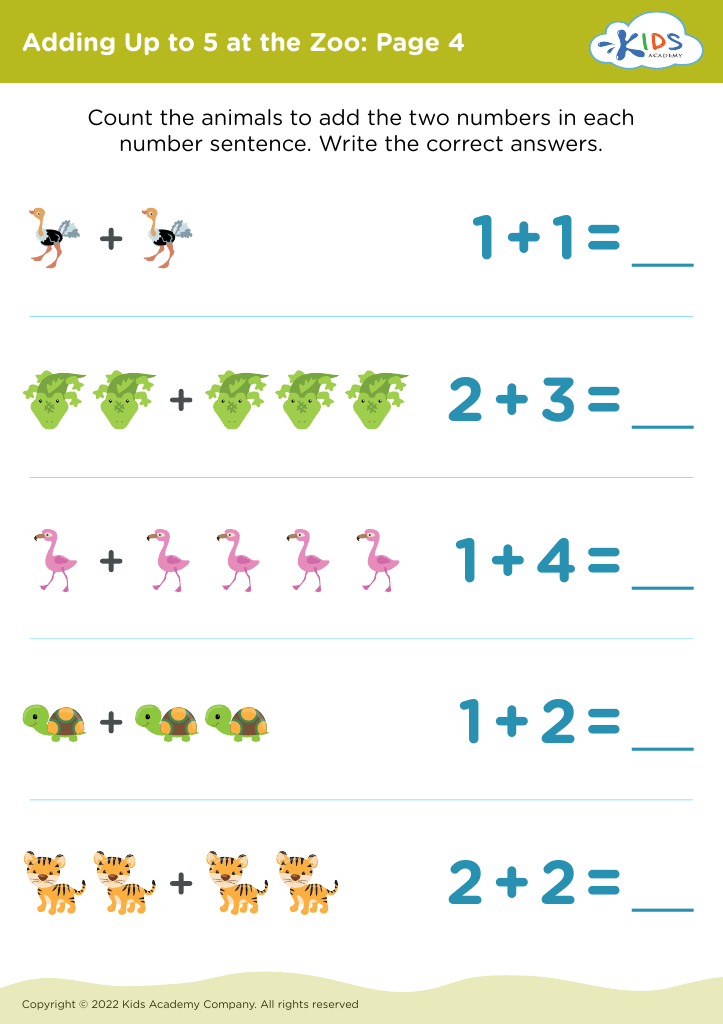
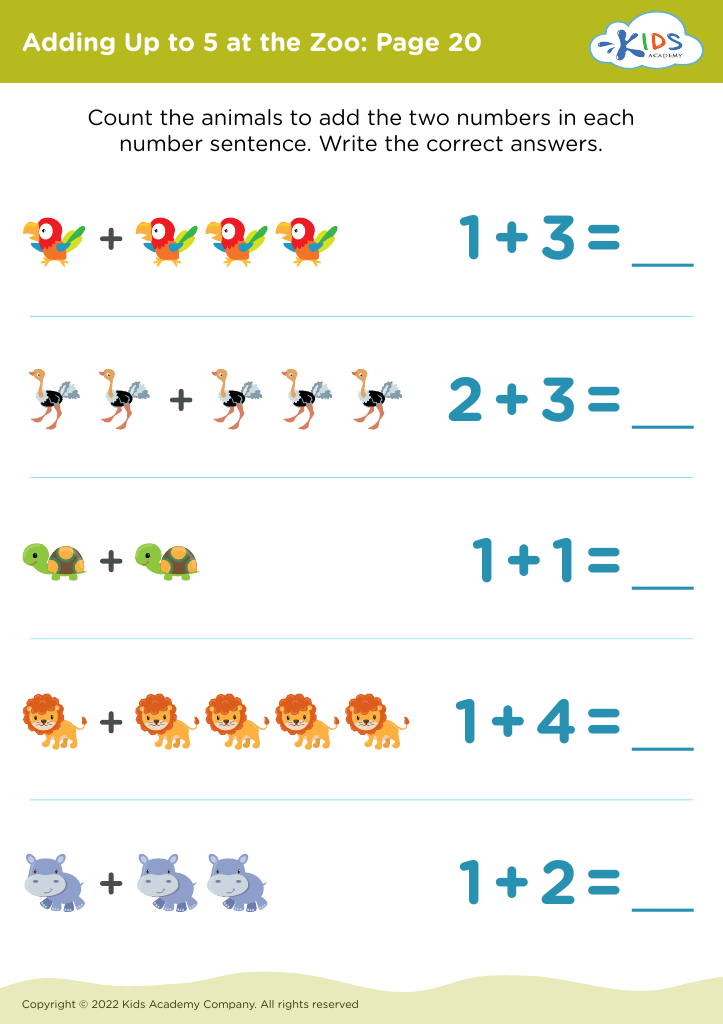
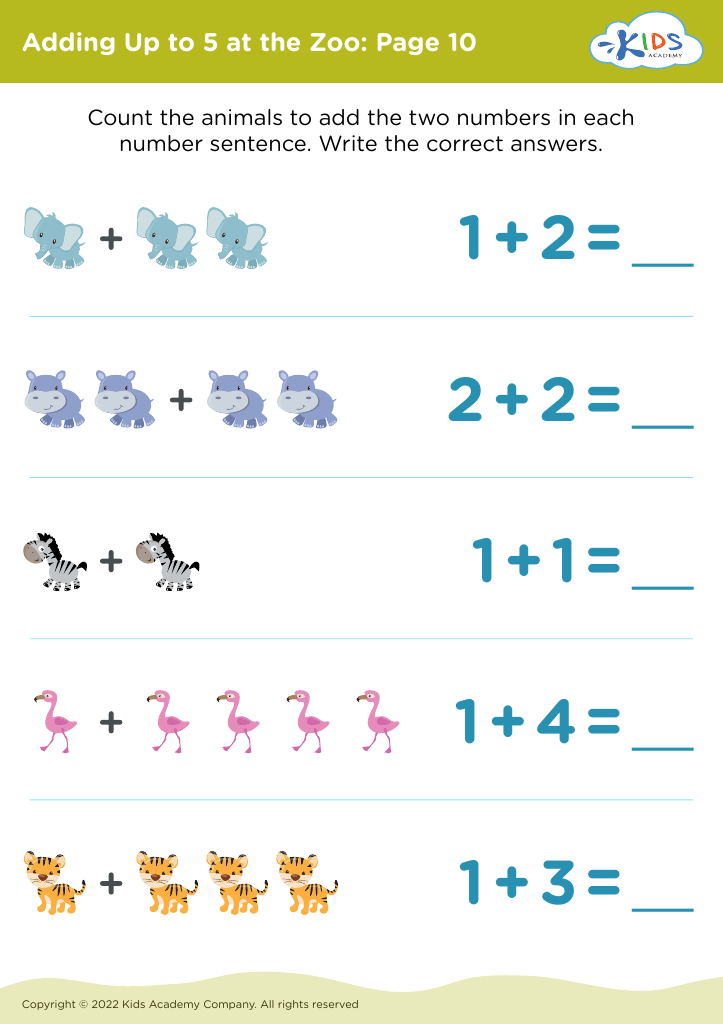
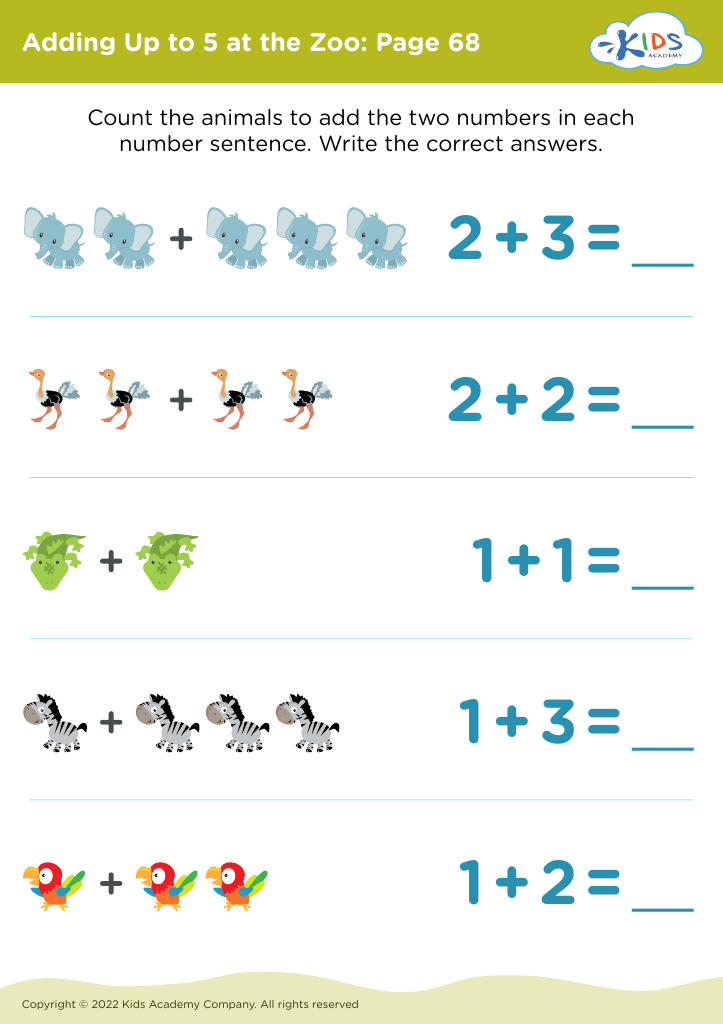



Investing time in activities like "Problem-Solving Skills Adding at the Zoo" for children aged 5-9 is essential for multiple reasons. At this developmental stage, children actively expand both their cognitive abilities and social skills, making it a perfect time to introduce complex thinking in a fun and engaging setting.
First, integrating problem-solving with a zoo theme captivates children's imagination. Associating mathematical problems with animals and their habitats makes the lesson relatable and exciting, encouraging active participation. This thematic approach helps children to easier retention and understanding of core concepts.
Second, these activities foster critical and analytical thinking. Solving word problems, for example, requires kids to comprehend the scenario, pick out the important information, and apply mathematical knowledge to find the solution. These skills are invaluable as they transit into more challenging stages of education.
Moreover, teaching problem-solving at an early age boosts children’s confidence. They develop a sense of accomplishment when they solve problems correctly, fostering a positive attitude towards learning and tackling challenges autonomously.
Lastly, these problem-solving exercises often include social interactions, promoting teamwork and communication. As children work in groups or discuss solutions, they build essential soft skills like cooperation and empathy, setting a foundational ability to work harmoniously with others.
In summary, activities like "Problem-Solving Skills Adding at the Zoo" enrich children's intellectual and social landscapes, preparing them for broader academic and life challenges.