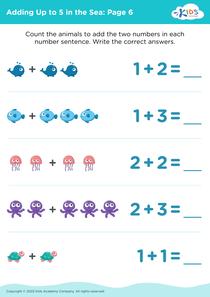
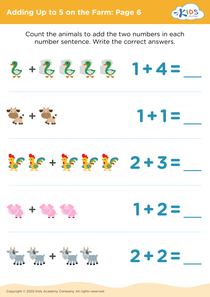
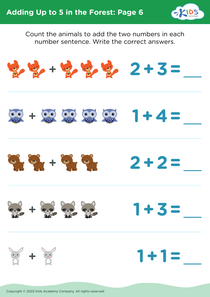
Understanding Quantities Adding at the Zoo Worksheets for Ages 5-9
6 filtered results
-
From - To
"Understanding Quantities Adding at the Zoo Worksheets for Ages 5-9" is a delightful collection of educational worksheets designed to make learning math fun for young learners. Set against the engaging backdrop of a zoo, these worksheets help students grasp the concept of quantities and improve their addition skills. Perfect for children ages 5-9, this resource combines colorful graphics with age-appropriate challenges to enhance mathematical thinking. By interacting with cute zoo animals and their environments, kids enjoy a captivating way to practice addition, ensuring a solid foundation for future math success. Discover the joy of learning with our zoo-themed addition worksheets!
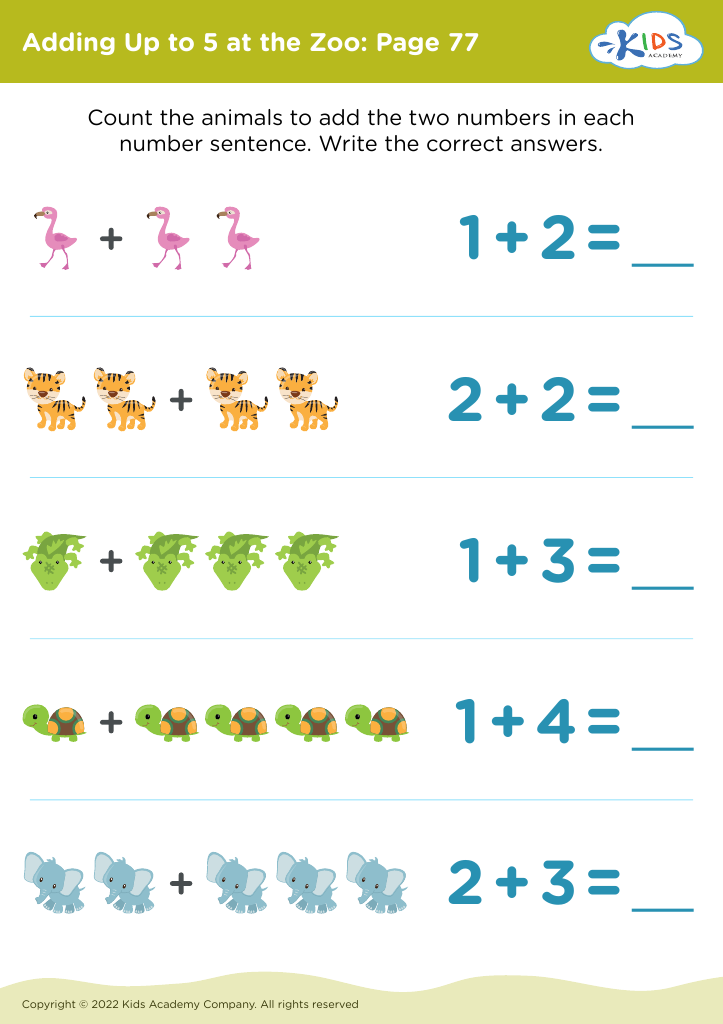
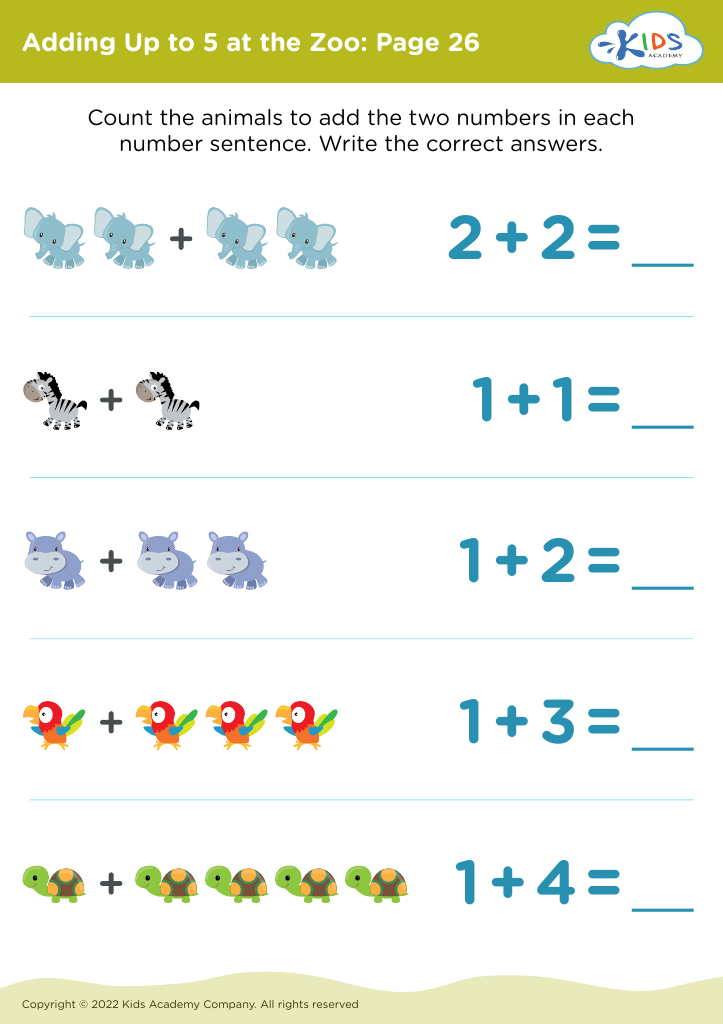
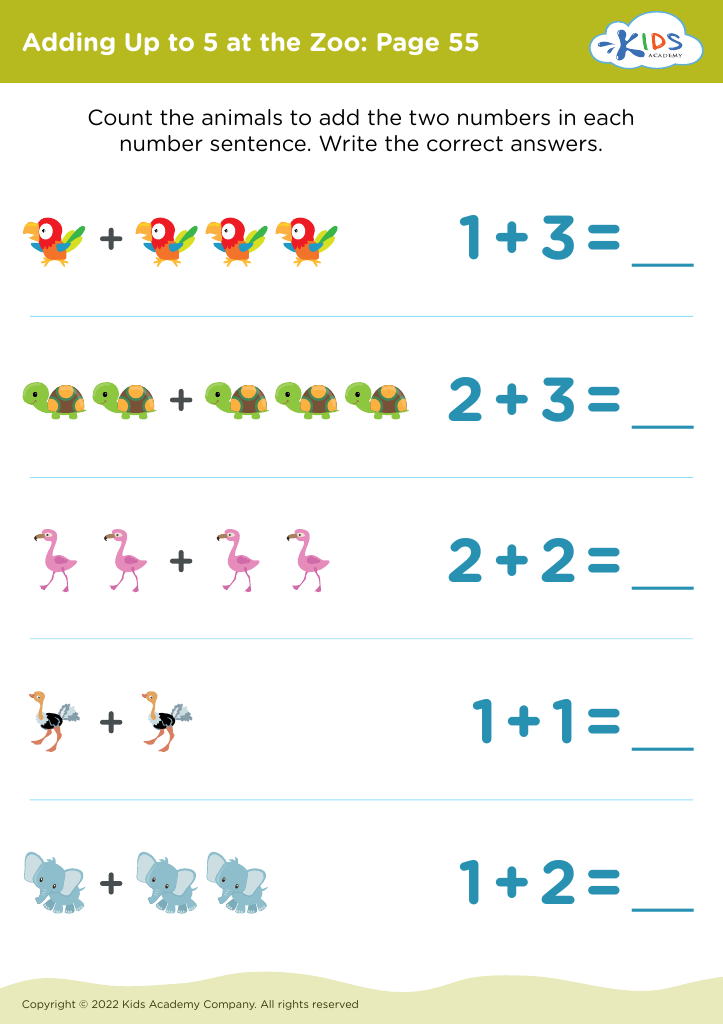
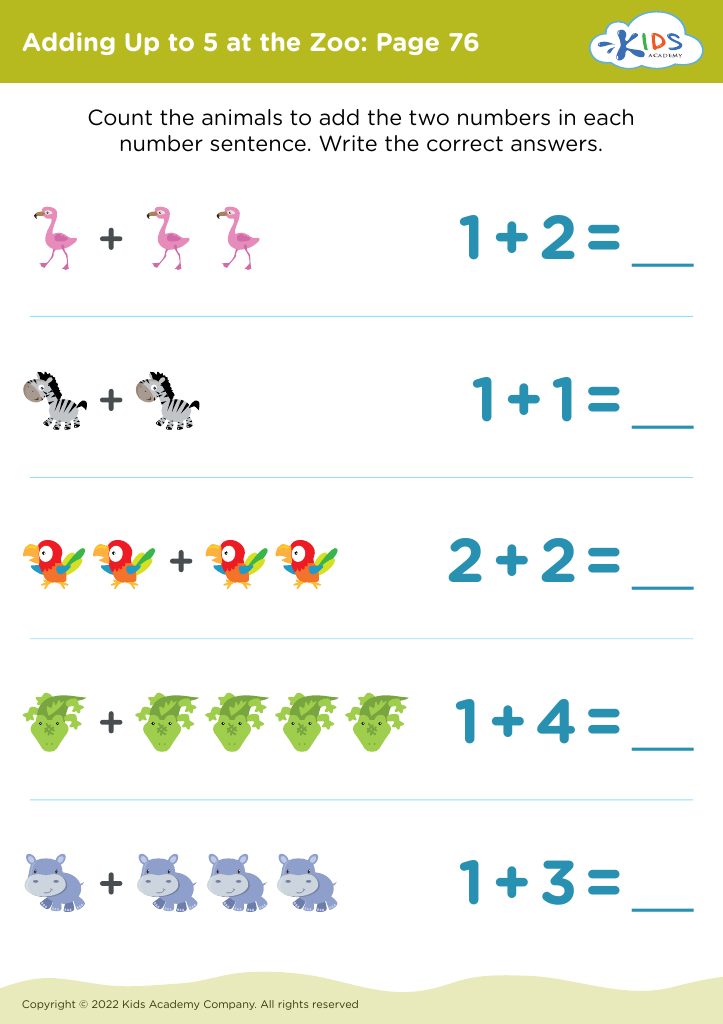
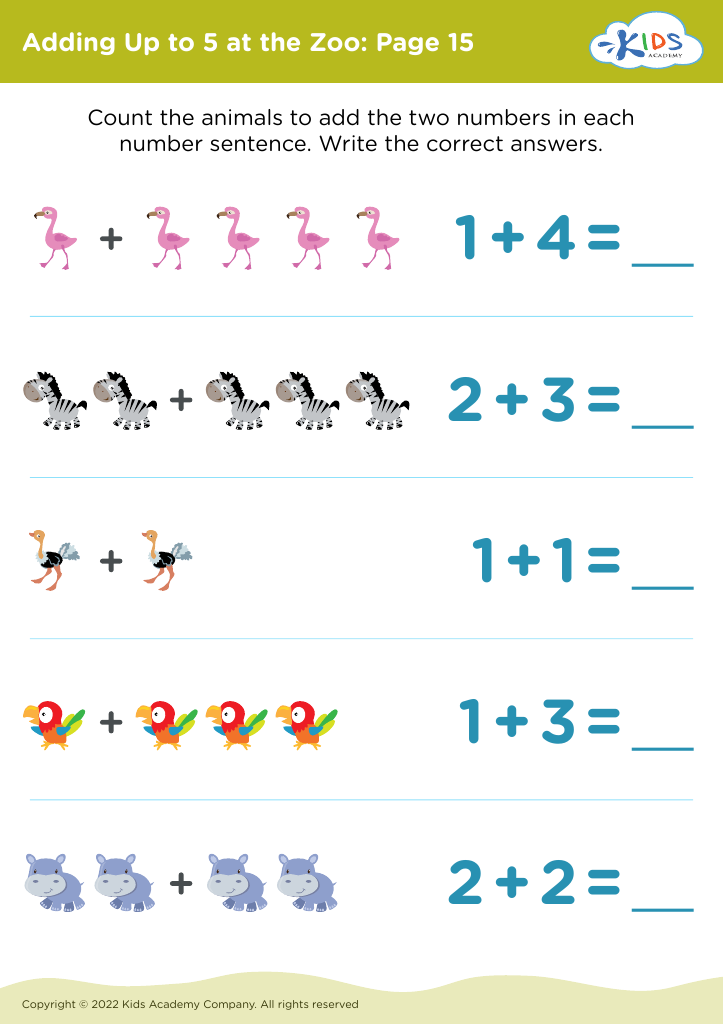
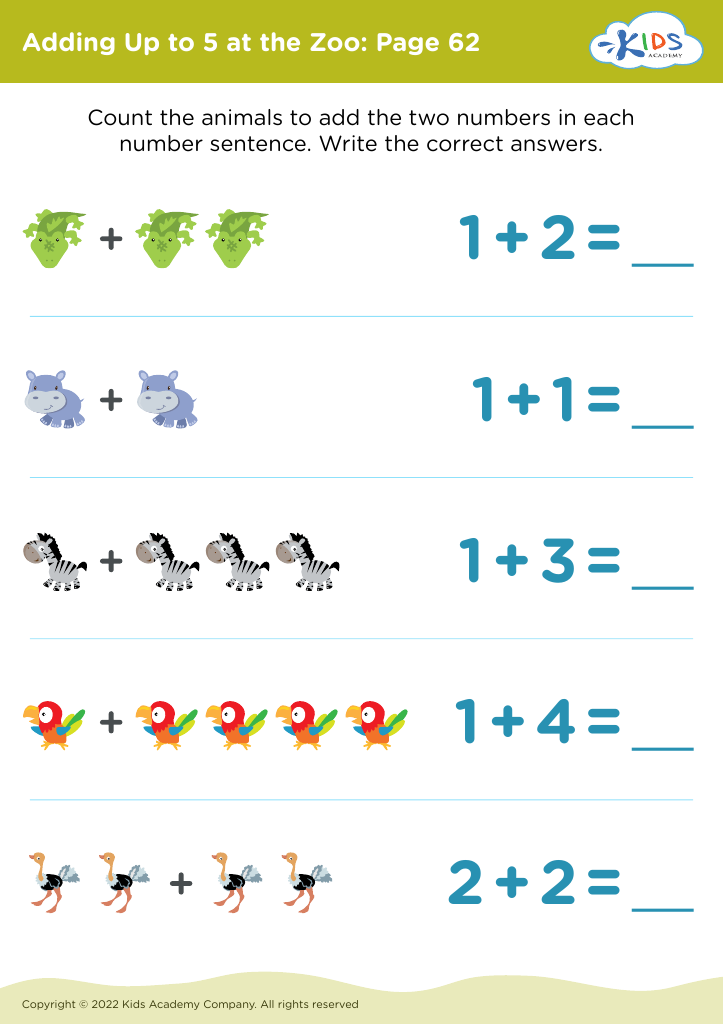



Understanding quantities and adding is fundamental for a child’s early mathematical development. Engaging with relatable and exciting environments, like a zoo, can make learning these concepts more meaningful and enjoyable for children aged 5-9. The zoo setting stimulates a child's natural curiosity about animals, making abstract mathematical concepts more concrete by involving tangible examples, such as counting the number of monkeys or adding groups of flamingos and penguins.
Parents and teachers should focus on this interactive method because it leverages children’s innate love for animals, providing a fun and memorable context for learning. This relevance helps children better grasp quantities, thereby laying a strong foundation for more advanced math skills in the future. Additionally, activities like these can enhance observational skills, spatial reasoning, and even promote empathy by associating math with living creatures.
Furthermore, teaching through real-world scenarios, such as a zoo visit or themed classroom activities, keeps children engaged and motivated. It integrates learning with play, fostering a positive attitude towards math. As children measure, compare, and tally various animals, they build confidence in their numerical abilities, reducing math anxiety and fostering a lifelong appreciation for the subject. Parents and teachers who prioritize these interactive, meaningful experiences set children up for academic success and cognitive development.