Cognitive Development Adding in the Sea Worksheets for Ages 5-9 - Page 2
28 filtered results
-
From - To
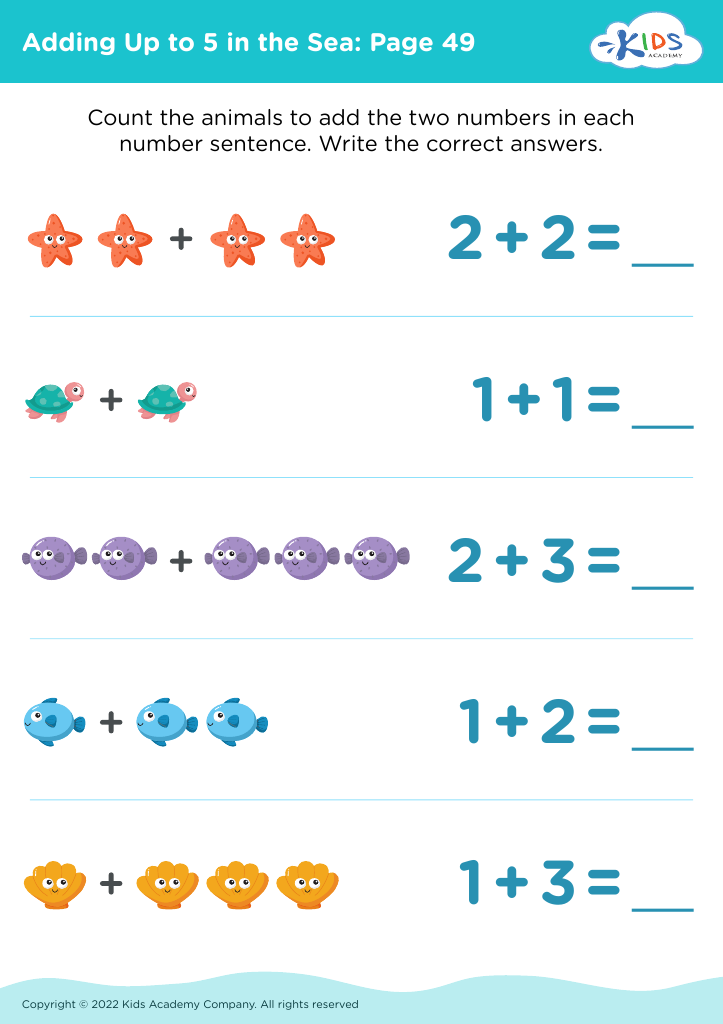
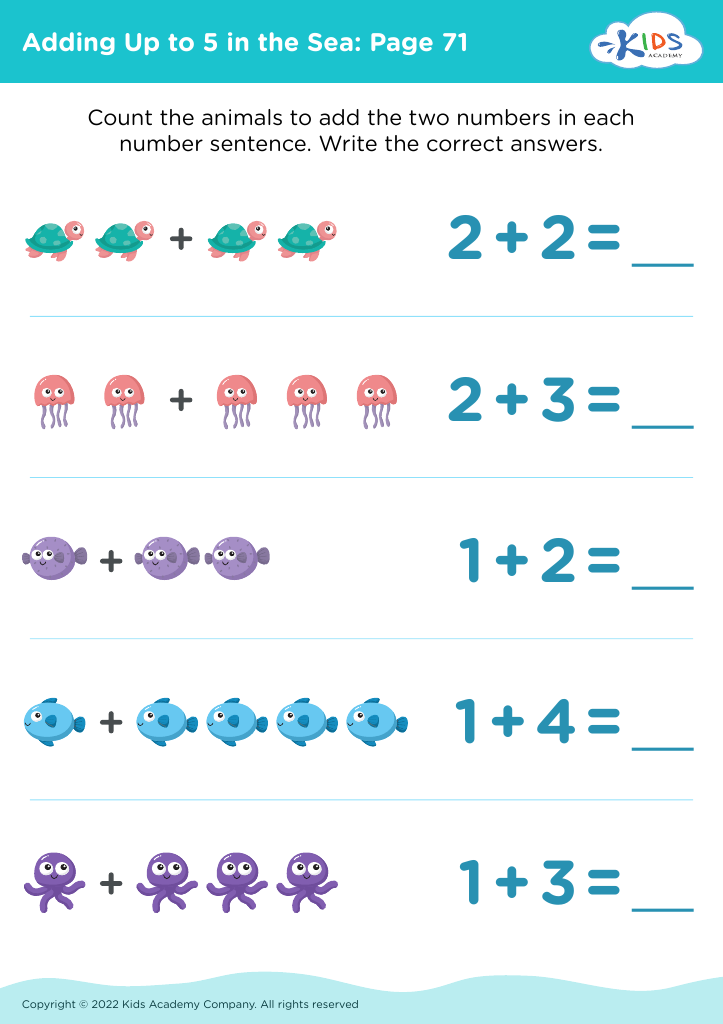
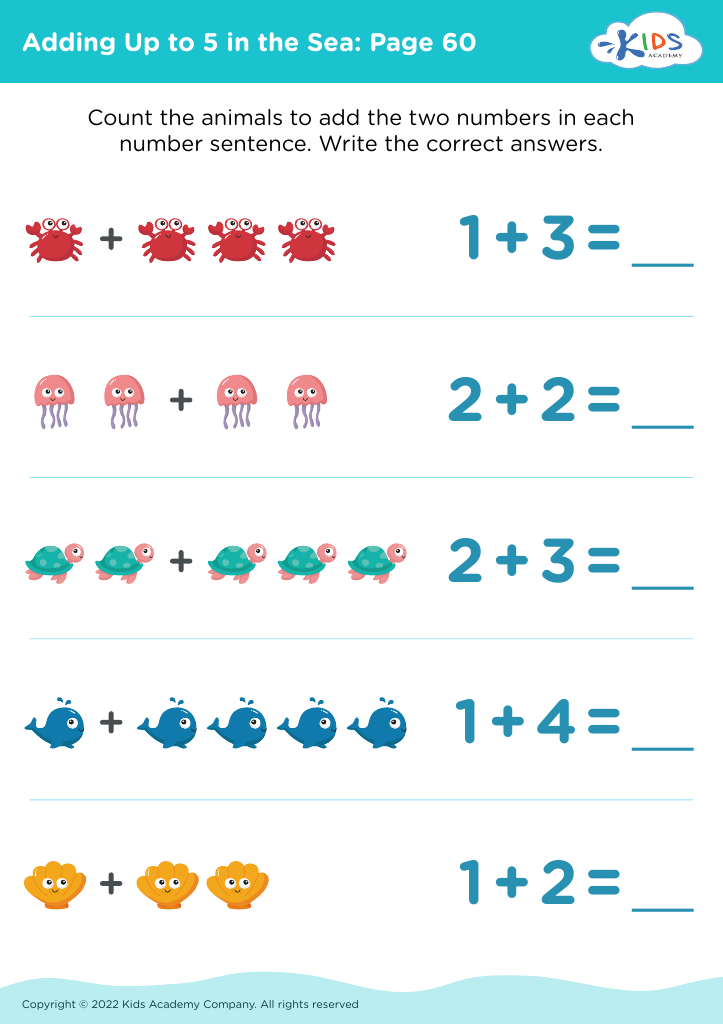
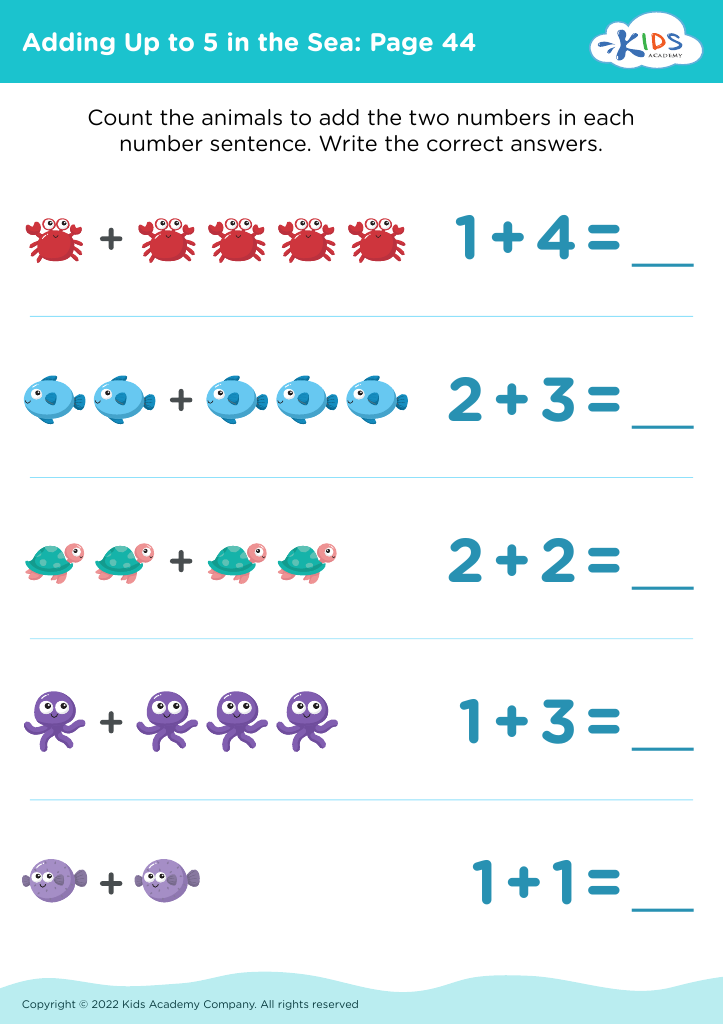



Cognitive development is crucial for children aged 5-9 as it lays the foundation for their future learning, problem-solving skills, and overall academic success. During this stage, children's brains are highly adaptable, making it essential for parents and teachers to engage them in activities that stimulate cognitive growth. Key aspects of cognitive development include critical thinking, memory, reasoning, and the ability to understand complex concepts.
When parents and teachers prioritize cognitive development activities, such as puzzles, storytelling, and interactive games, they assist children in developing executive functions like attention, planning, and decision-making. These skills are vital not only for academic achievement but also for social interactions and emotional regulation.
Furthermore, cognitive development during these formative years sets the stage for lifelong learning habits. Engaging children intellectually fosters a love for learning, boosts self-esteem, and encourages curiosity. It also helps in identifying and addressing learning difficulties early, ensuring that no child is left behind.
Incorporating Cognitive Development Additions in the curriculum and home activities cultivates a stimulating environment that nurtures creativity, resilience, and innovation—skills essential for children to thrive in an increasingly complex world. Parents and teachers play a pivotal role in fostering this environment, making their involvement imperative.