Visual perception Adding in the Sea Worksheets for Ages 5-9
3 filtered results
-
From - To
Dive into a world of fun learning with our "Visual Perception Adding in the Sea Worksheets" designed for ages 5-9! These engaging activities blend visual skills with basic addition, featuring colorful underwater scenes to keep kids entertained. By identifying and adding sea creatures, children enhance their visual perception and math abilities. Exciting illustrations captivate young minds, making learning an adventurous journey. Perfect for classroom or home use, these worksheets help your child boost focus, accuracy, and confidence in math. Explore our printable resources to turn learning into a delightful ocean expedition!
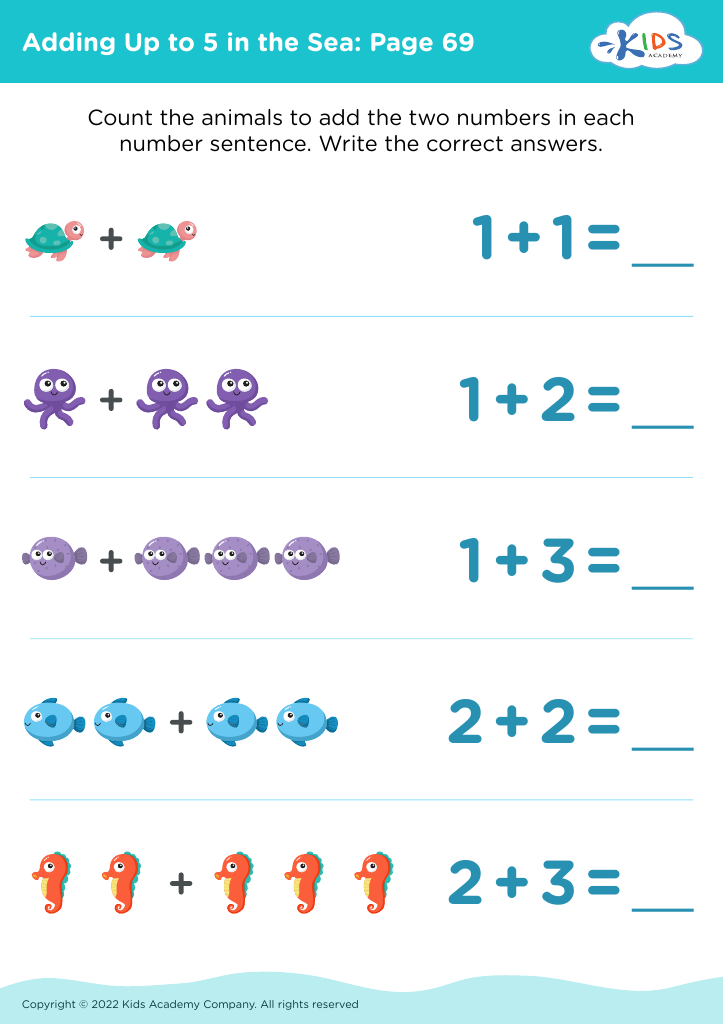
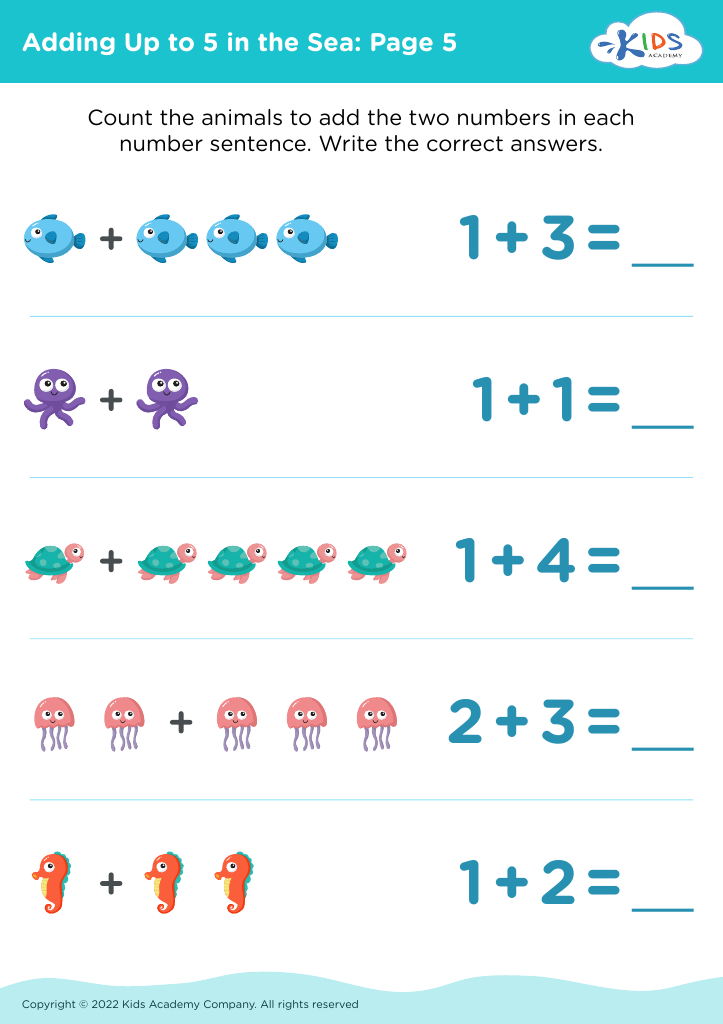
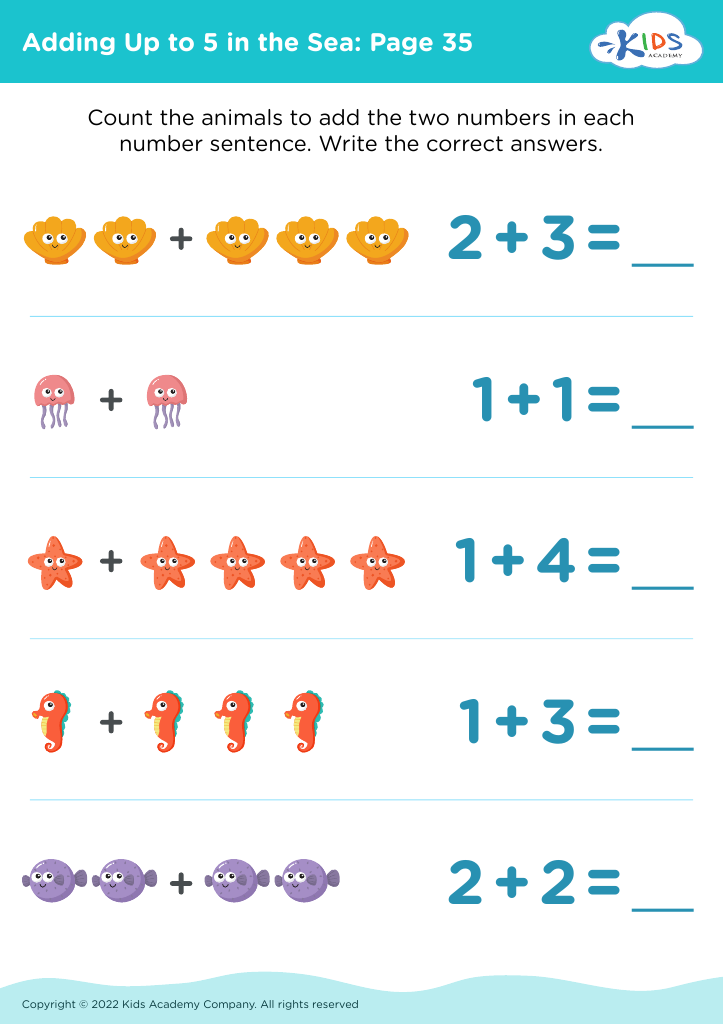



Visual perception is a fundamental cognitive skill that enables children to make sense of the world around them. It's especially crucial during the early years of a child’s development, from ages 5 to 9. "Adding in the Sea" is an engaging way to leverage visual perception by connecting it to a subject many children find fascinating: the ocean.
Firstly, visual activities involving sea creatures and underwater scenes can help improve a child’s ability to recognize, compare, and organize forms and shapes. This boosts their skill in identifying and memorizing numbers, letters, and words, which are essential for reading and math.
Secondly, it promotes better hand-eye coordination. For example, adding colorful drawings or puzzles within an oceanic setting allows children to practice fine motor skills while having fun. This is critical for tasks such as writing, cutting, and dressing, which all necessitate strong visual-motor integration.
Finally, the enchanting sea-themed exercises captivate children’s imaginations, making learning an adventure rather than a chore. This emotional engagement is crucial because children learn better and retain more information when they are excited and interested.
In sum, integrating visual perception activities focused on the sea in curricula for young children holistically nurtures their cognitive development, motor skills, and imaginative capacities, setting a strong foundation for future learning.