Animal recognition Adding on the Farm Worksheets for Ages 5-9 - Page 2
31 filtered results
-
From - To
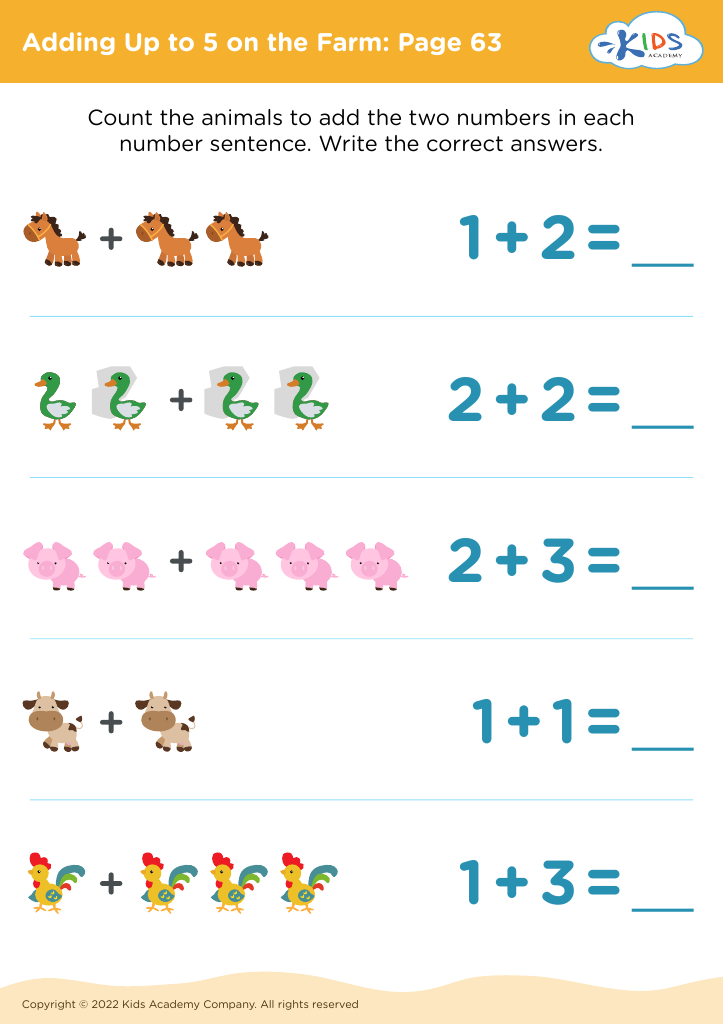
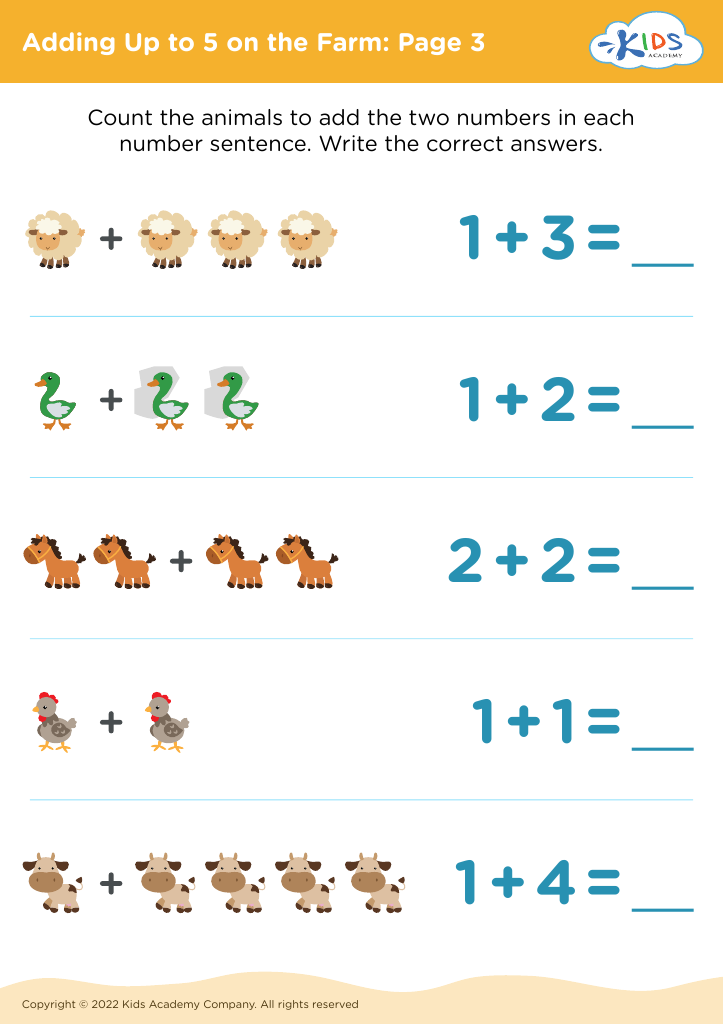
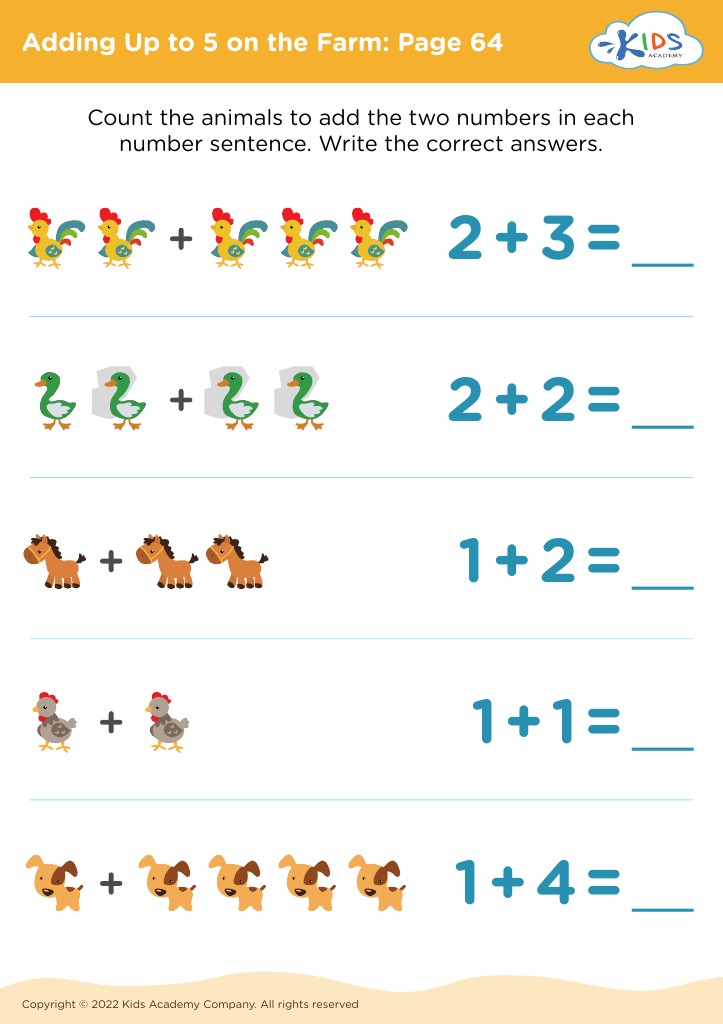
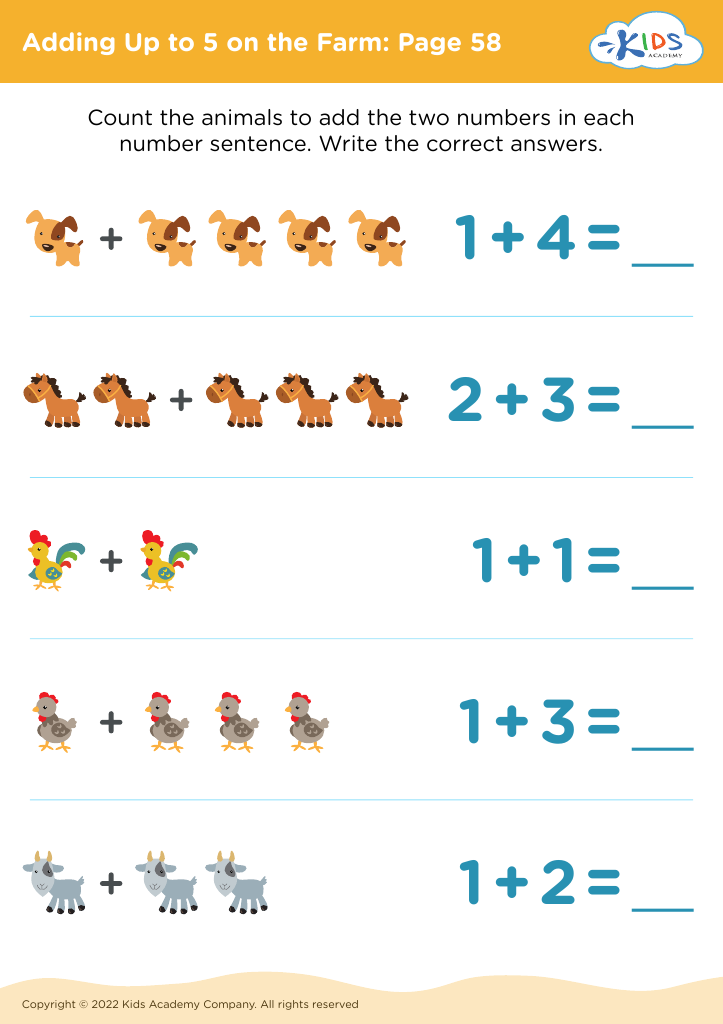
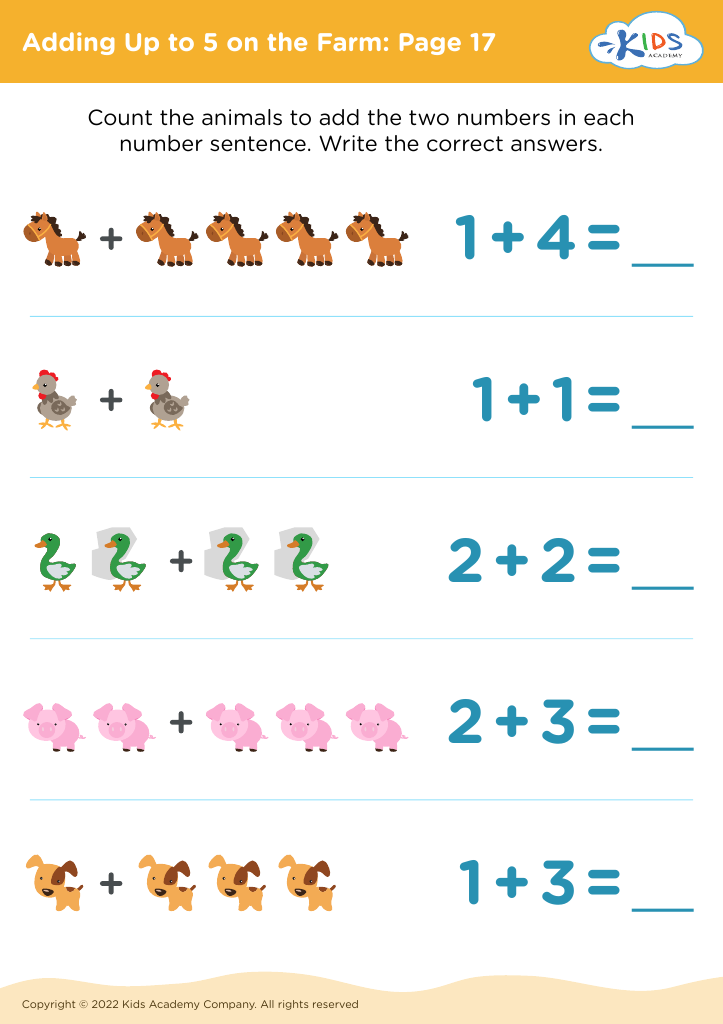
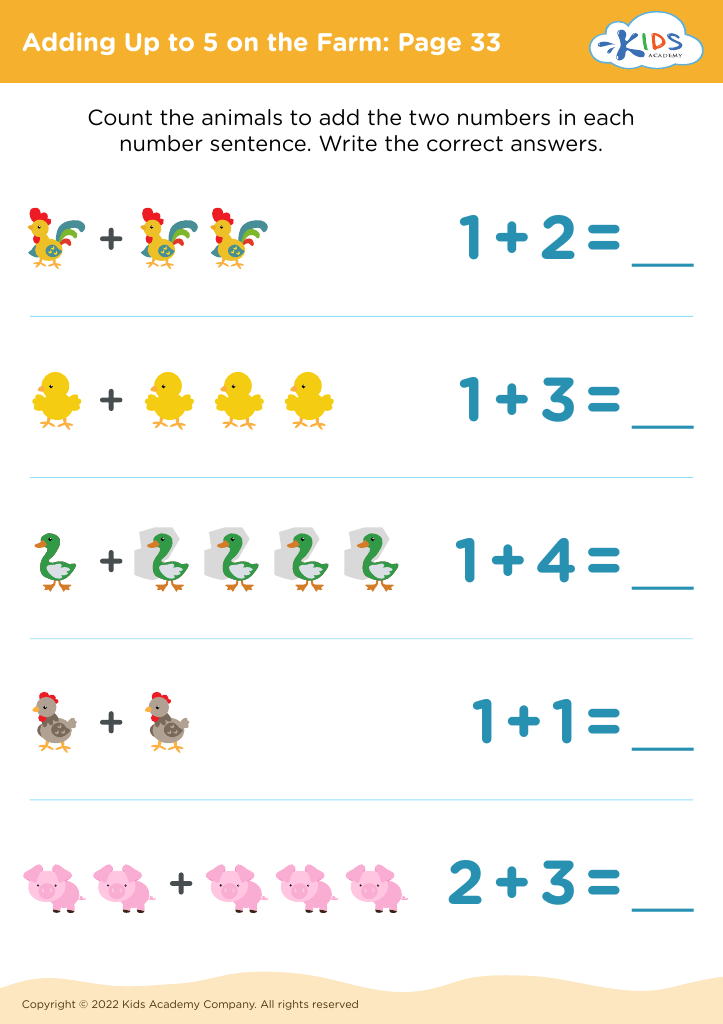
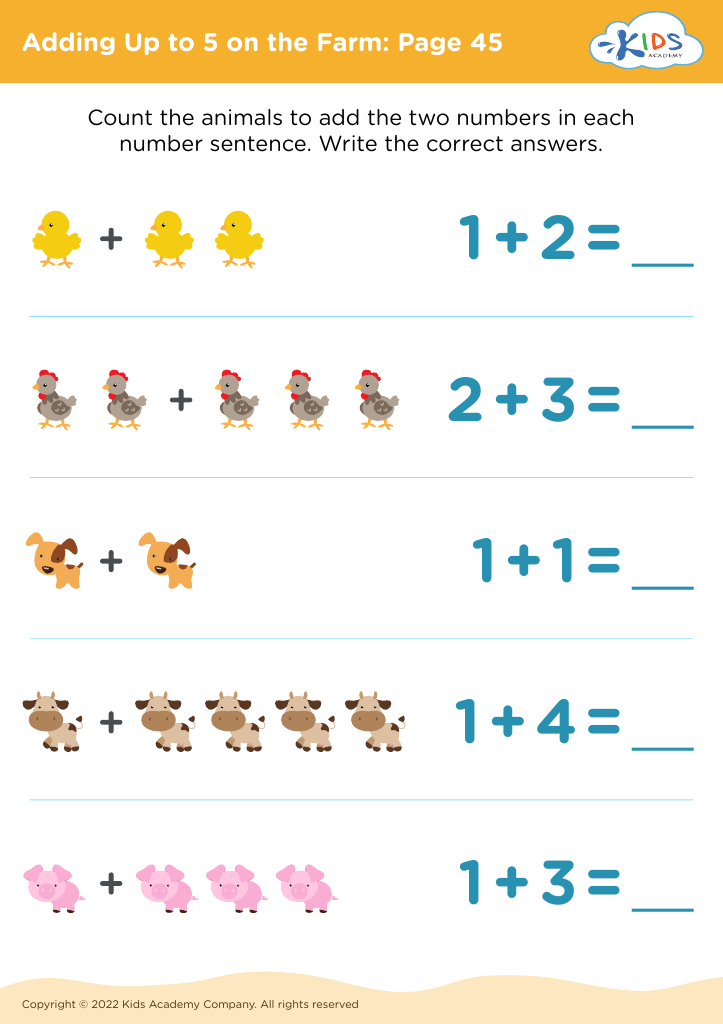



Animal recognition is an essential aspect of early childhood education, particularly for children aged 5-9. Understanding various farm animals not only enriches children's vocabulary and language skills but also lays the foundation for critical thinking and cognitive development. Recognizing animals and their sounds helps young learners make connections to the world around them, fostering curiosity and respect for nature.
Additionally, farm animals play a vital role in agricultural education. By learning to identify animals such as cows, pigs, chickens, and sheep, students gain insights into where their food comes from and the importance of farming practices. This awareness encourages responsibility and stewardship towards animals and their environments.
Farm animal recognition can also enhance social skills as children work collaboratively in groups or pairs during activities themed around the farm. Furthermore, engaging in such educational topics can provoke discussions at home, where families can collectively explore books, videos, or trips to farms. These shared experiences allow parents and teachers to reinforce positive educational concepts, noting how animals contribute to our lives.
Ultimately, teaching animal recognition not only nurtures academic growth but also fosters emotional and social development, making it a vital concern for both parents and educators.