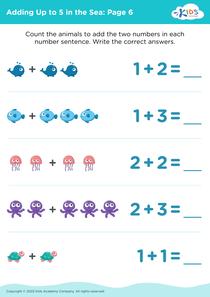
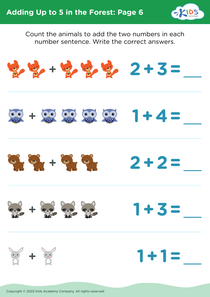
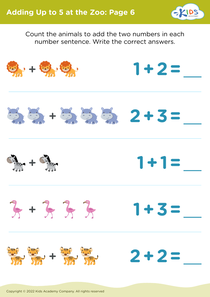
Fine motor skills (writing) Adding on the Farm Worksheets for Ages 5-9
5 filtered results
Difficulty Level
Grade
Age
-
From - To
Subject
Activity
Standards
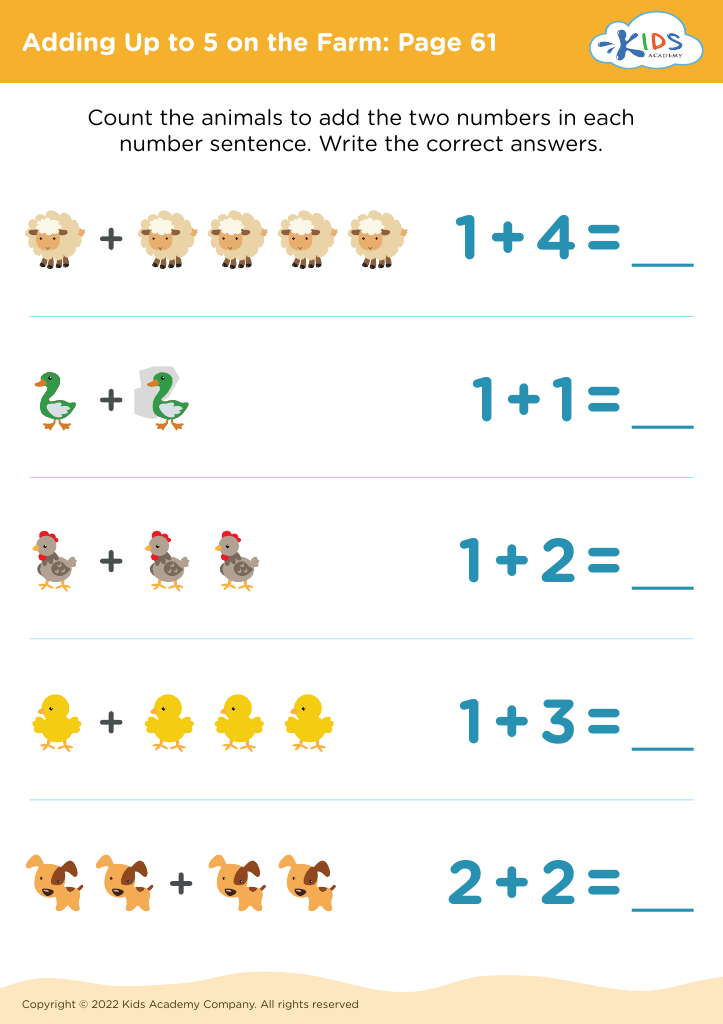
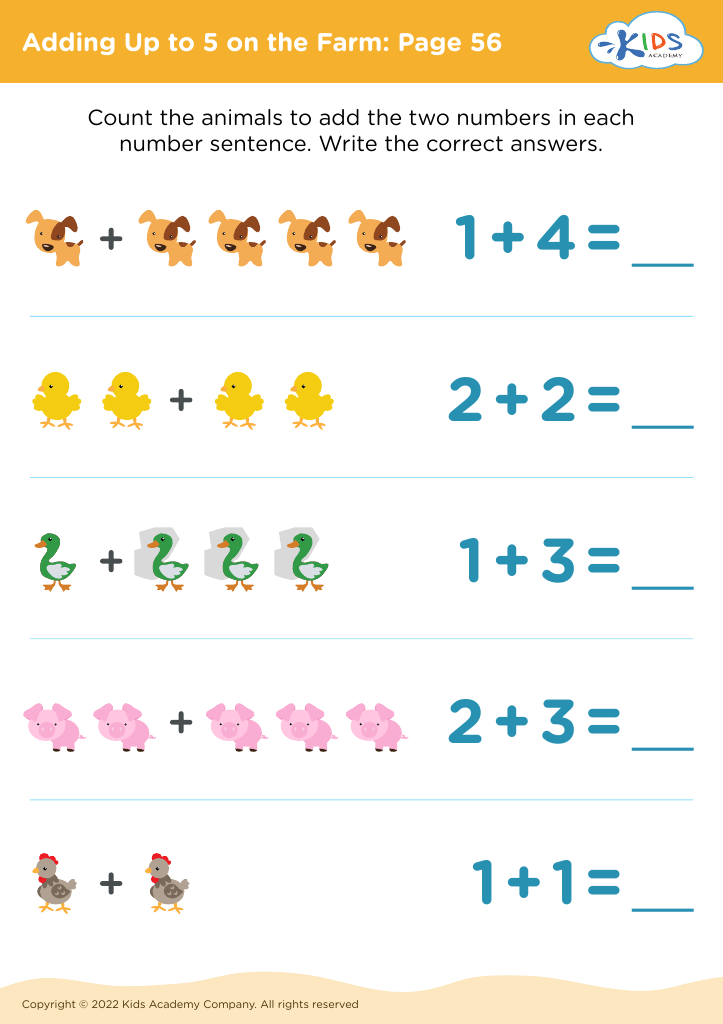
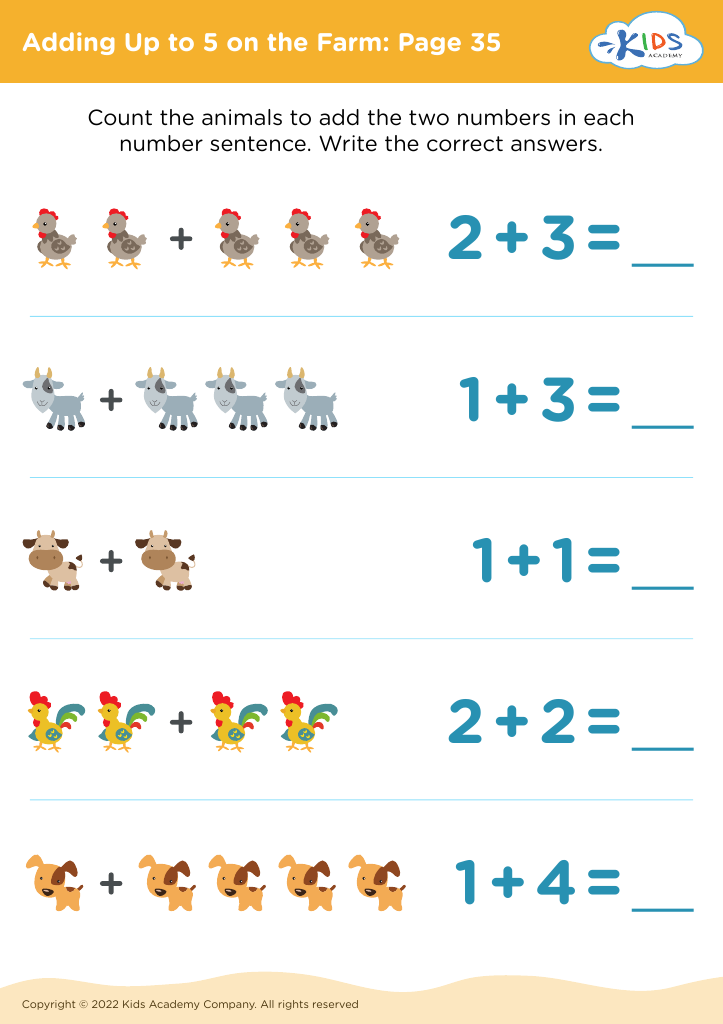
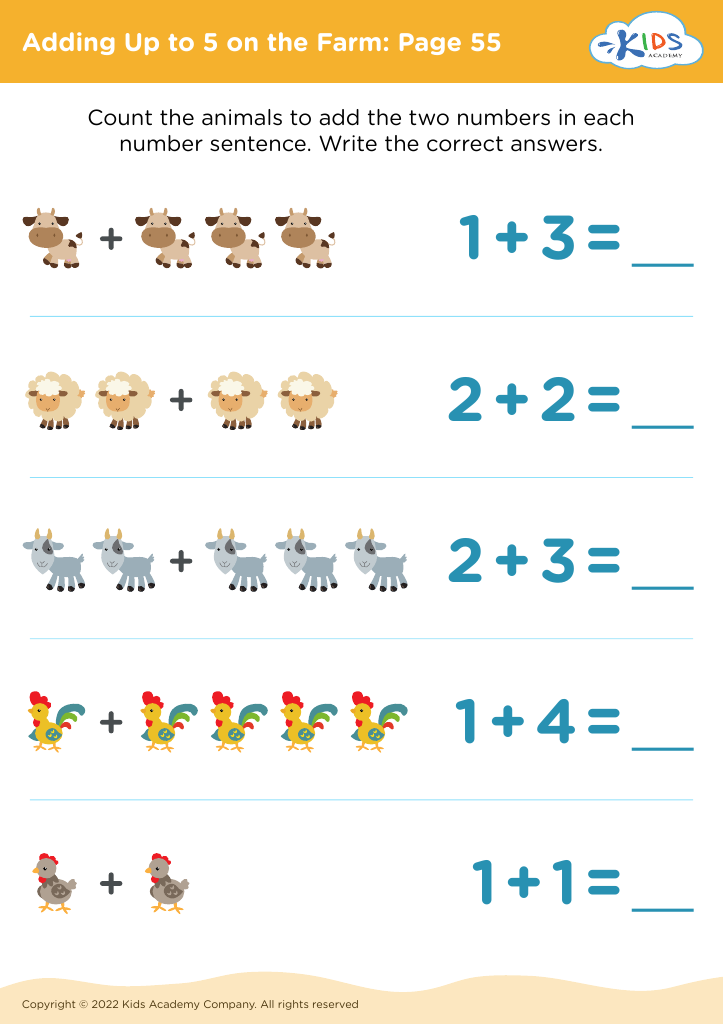
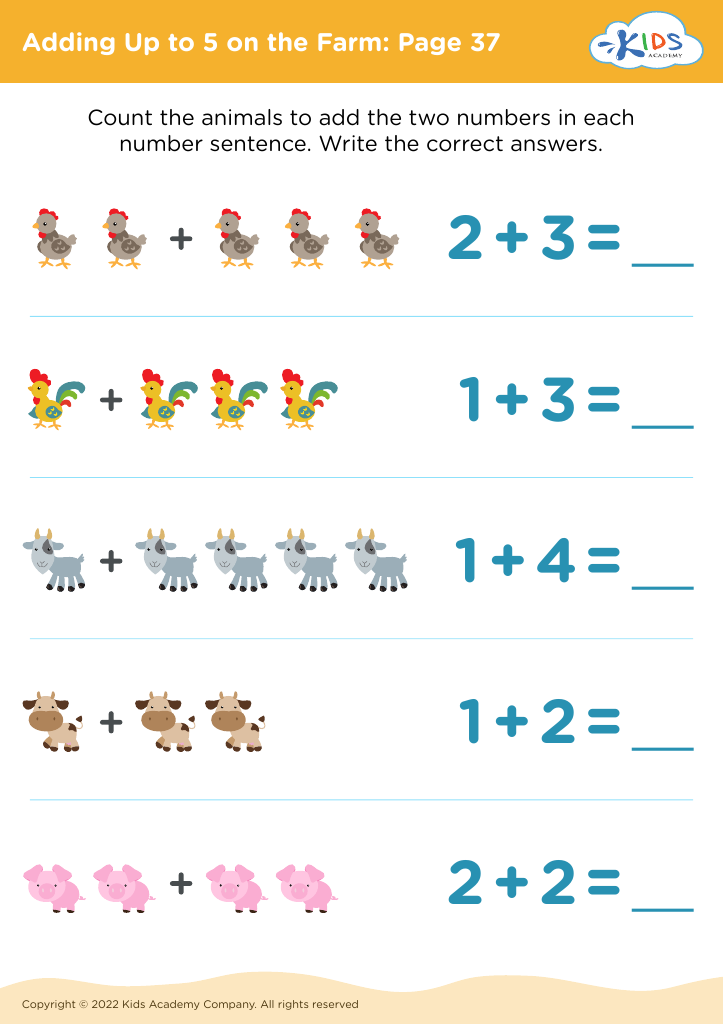
Enhance your child’s fine motor skills with our "Adding on the Farm" worksheets, designed specifically for ages 5-9. These printables combine math and motor skill development, making learning fun and engaging. Your child will practice writing numbers while solving simple addition problems set in a charming farm environment. With illustrations of animals and farm scenes, these worksheets transform math practice into an exciting adventure. Our well-structured activities ensure kids improve their hand-eye coordination and pencil control, essential skills for writing. Perfect for at-home learning or classroom use, these worksheets can make math challenges captivating and educational. Start their journey towards better motor skills today!
Favorites
With answer key
Interactive
Join Kids Academy for Free
Who is primarily going to use this learning content?



Fine motor skills are crucial for children aged 5-9 as they encompass the coordination of small muscle movements in the hands and fingers, pivotal for activities like writing, drawing, and cutting. When teachers or parents emphasize the development of fine motor skills, they lay a foundational block for a child’s academic and everyday success.
An activity such as "Adding on the Farm," combines learning and fun, encouraging fine motor skill enhancement through hands-on practice. Children not only learn mathematical concepts like addition, but they also engage in tasks that require the use of pencil, crayon, or other writing instruments. For instance, coloring farm animals or tracing numbers helps strengthen finger muscles, improving control and dexterity.
In the context of early writing, these activities significantly impact a child's confidence and ability in the classroom. Well-developed fine motor skills enable clearer handwriting, which is directly linked to academic performance and self-esteem. Furthermore, these activities also stimulate cognitive functions such as problem-solving and concentration, essential for their overall development.
In sum, ensuring children participate in engaging educational activities that improve fine motor skills provides them with the tools necessary for continuous learning, effective communication, and increased independence, setting them on a path toward reaching their full potential.