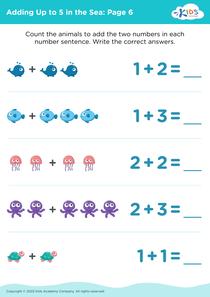
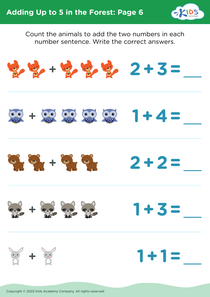
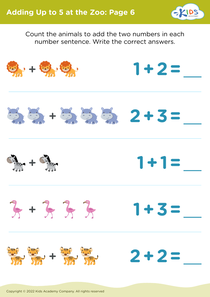
Problem Solving Adding on the Farm Worksheets for Ages 5-9
3 filtered results
-
From - To
Discover our engaging "Problem Solving Adding on the Farm Worksheets" specially designed for children ages 5-9! These interactive worksheets blend a fun farm theme with essential math skills, helping young learners enhance their addition abilities through real-life scenarios. Your little ones will solve problems involving farm animals, crops, and everyday farm activities, promoting critical thinking and mathematical reasoning. Perfect for home or classroom use, our worksheets are colorful, easy to understand, and support early math education. Boost your child's confidence in problem-solving while enjoying the charm of farm life—download and print today to sow the seeds of learning!
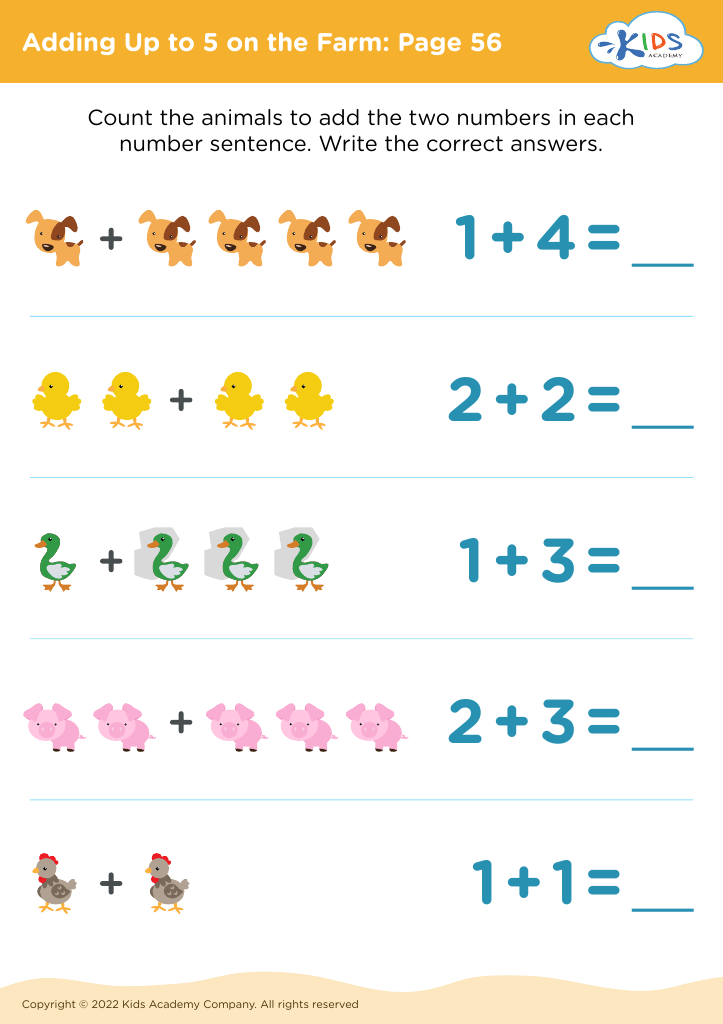
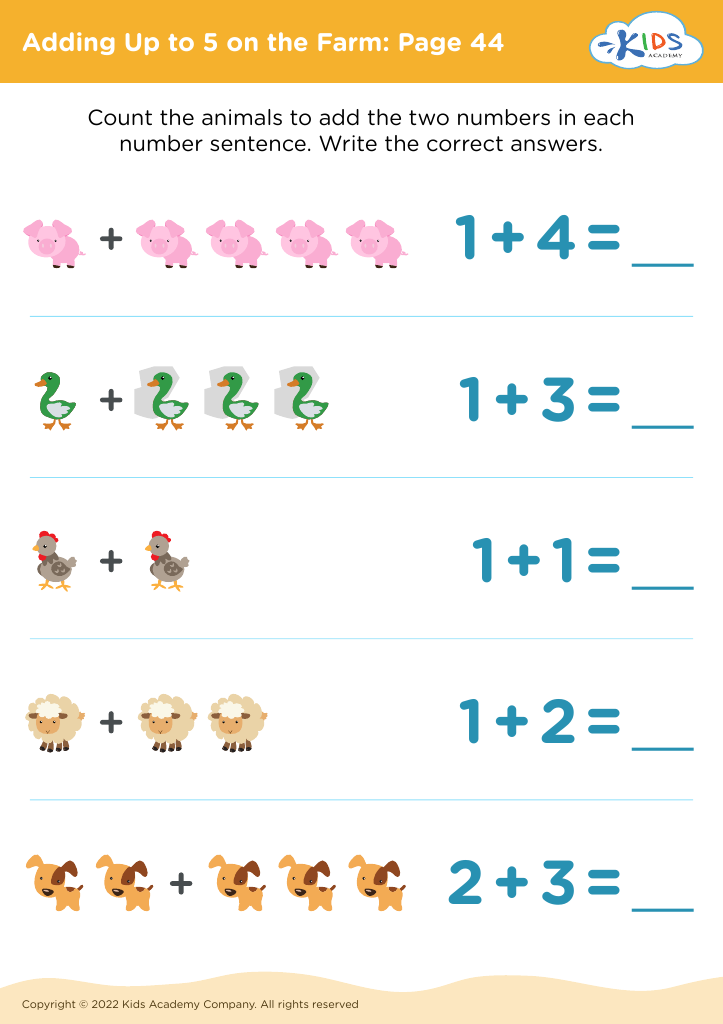
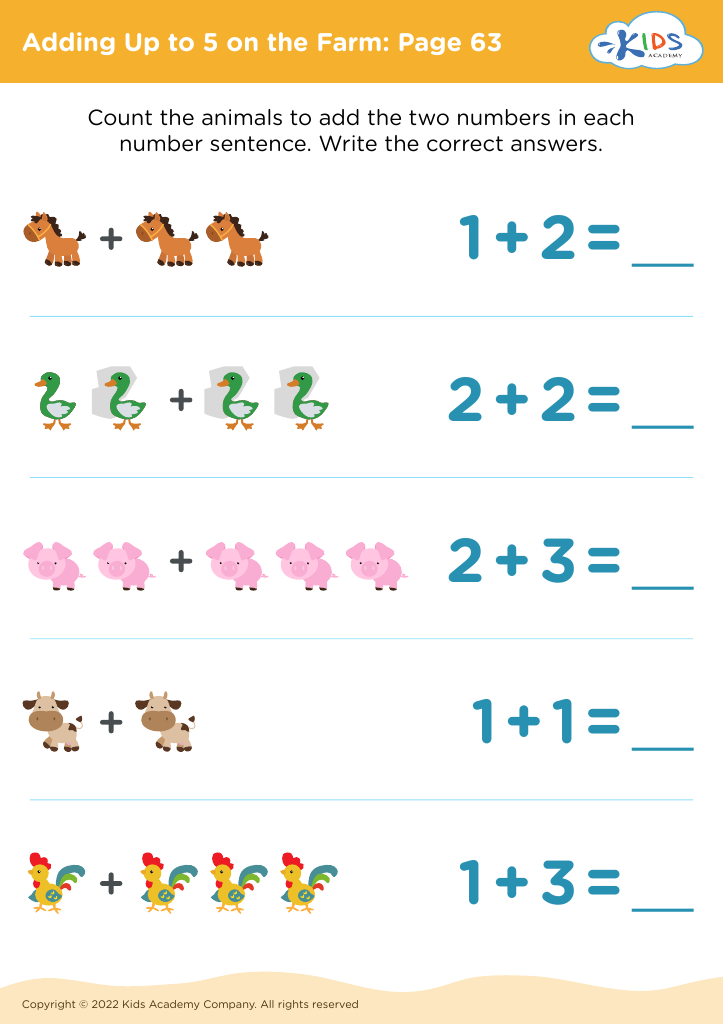



Problem Solving Adding on the Farm for children ages 5-9 is essential because it fosters critical thinking, enhances mathematical skills, and connects learning to real-world contexts. Engaging young learners with farm-related scenarios, such as counting animals or adding up crops, introduces basic arithmetic in a fun and relatable way. This not only makes math enjoyable but also encourages children to see the practicality of numbers in their daily lives.
Furthermore, farm-themed problem-solving helps develop key cognitive skills such as reasoning and decision-making. As children tackle problems, they learn to analyze situations, make predictions, and evaluate solutions. These skills are not only fundamental to mathematics but also lay the groundwork for broader analytical thinking.
Additionally, this approach promotes collaborative learning. When parents and teachers guide children through these activities, they create opportunities for discussion and teamwork, strengthening social skills and communication. This collaborative process reinforces the learning experience, making it more impactful.
Ultimately, by prioritizing problem-solving activities related to familiar themes like farms, we draw children into the enchanting world of mathematics, equipping them with skills that will serve them throughout their educational journey and beyond.