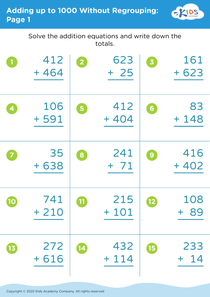
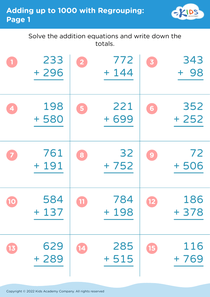
Understand fractions Adding up to 1000 Misc Worksheets for Ages 5-9
3 filtered results
-
From - To
Dive into the world of fractions with our practical, age-appropriate worksheets designed for young learners aged 5-9! Our "Understand Fractions Adding up to 1000" activities make learning fun and effective. They can improve crucial math skills by offering interactive tasks that visually break down complex concepts into manageable steps. These resources help children grasp the basics of fractions and addition, enabling a seamless and enjoyable progression of their mathematics journey. Aligning with core educational standards, these worksheets are ideal for both classroom use and at-home learning. Help your child build a solid math foundation with ease!
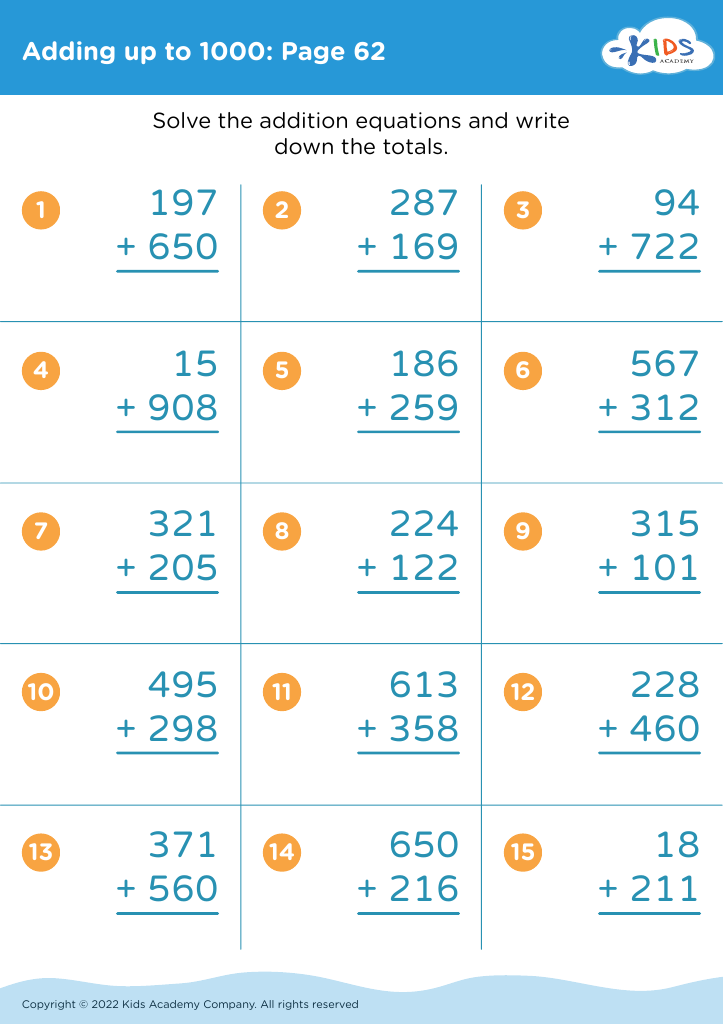
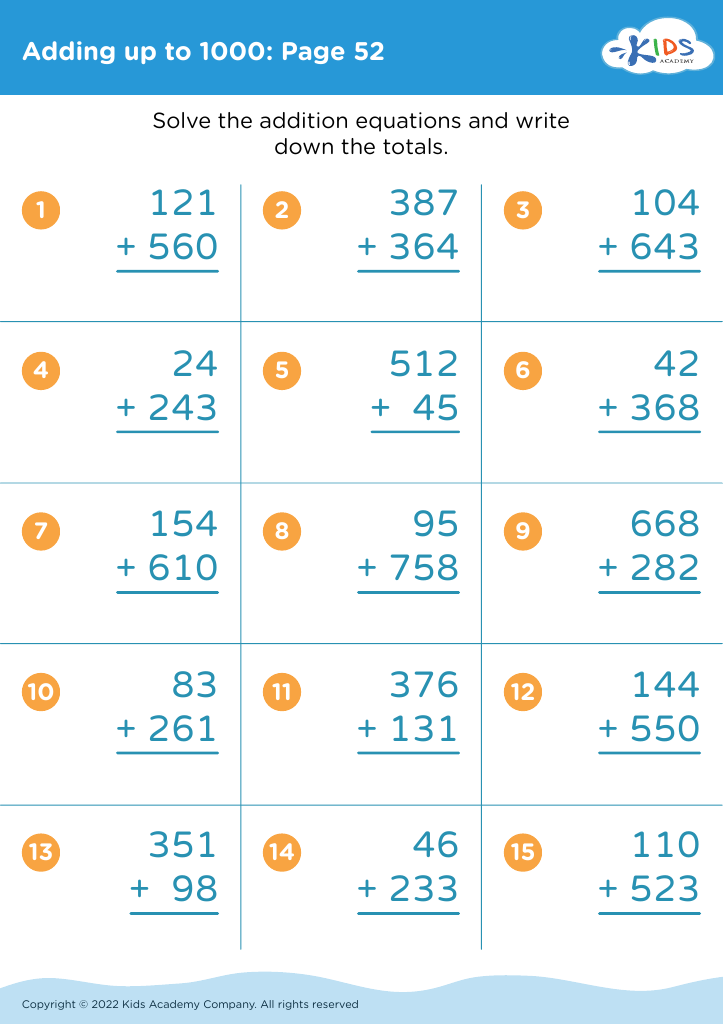
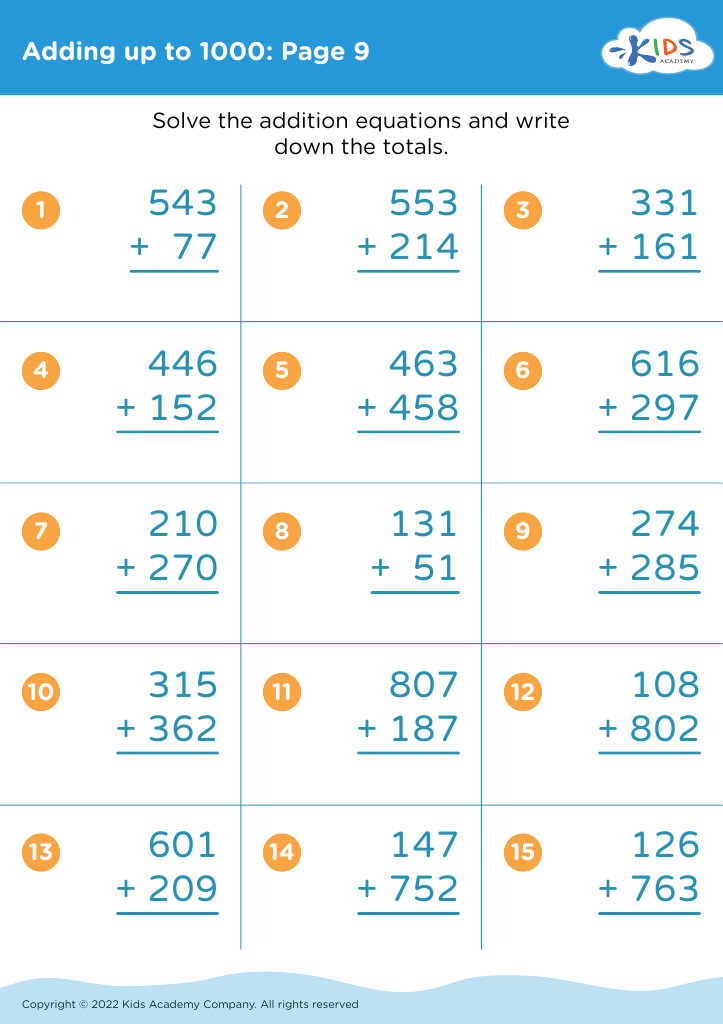


Understanding fractions and large numbers is fundamental for young children aged 5-9 as it sets the foundation for mathematical proficiency and critical thinking skills. First, grasping the concept of fractions helps kids comprehend parts of a whole, which is vital for everyday activities like sharing food or dividing tasks. This early exposure simplifies more complex math concepts they'll encounter later, such as ratios, percentages, and algebra.
Dealing with numbers up to 1000 enhances their number sense—a crucial skill for recognizing patterns, estimating, and comparing quantities. Such familiarity boosts cognitive development, gearing their brains to solve problems efficiently. Additionally, this comprehension fosters confidence, thus reducing math anxiety and nurturing a positive attitude towards learning.
From a practical standpoint, mastery of these concepts allows kids to handle day-to-day situations involving measurements, money, and time. For example, knowing fractions can help decode recipes or craft projects, while recognizing larger numbers enables them to understand the calendar or manage small allowances.
Ultimately, focusing on these areas equips children with crucial life skills, making them better prepared for future academic endeavors and real-world challenges. Therefore, teachers and parents play a pivotal role in encouraging and supporting young learners in these essential math areas, ensuring their all-round development and success.