Recognizing Patterns Adding up to 1000 with Regrouping Worksheets for Ages 5-9
4 filtered results
-
From - To
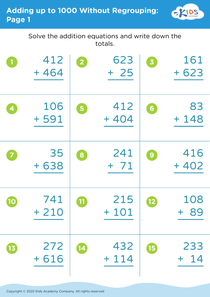
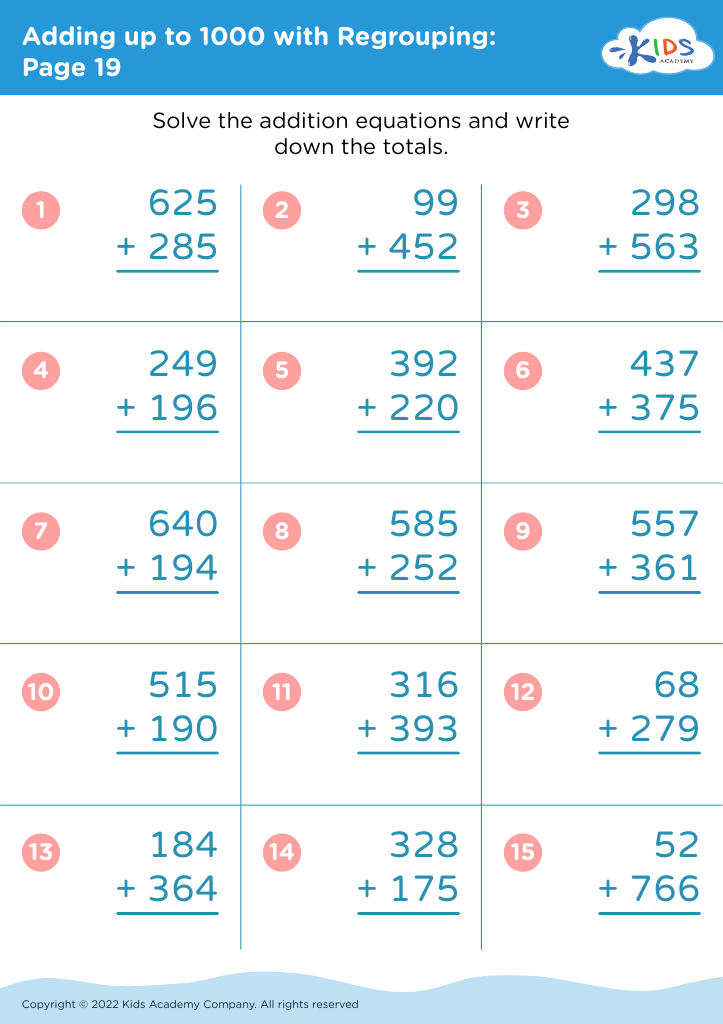
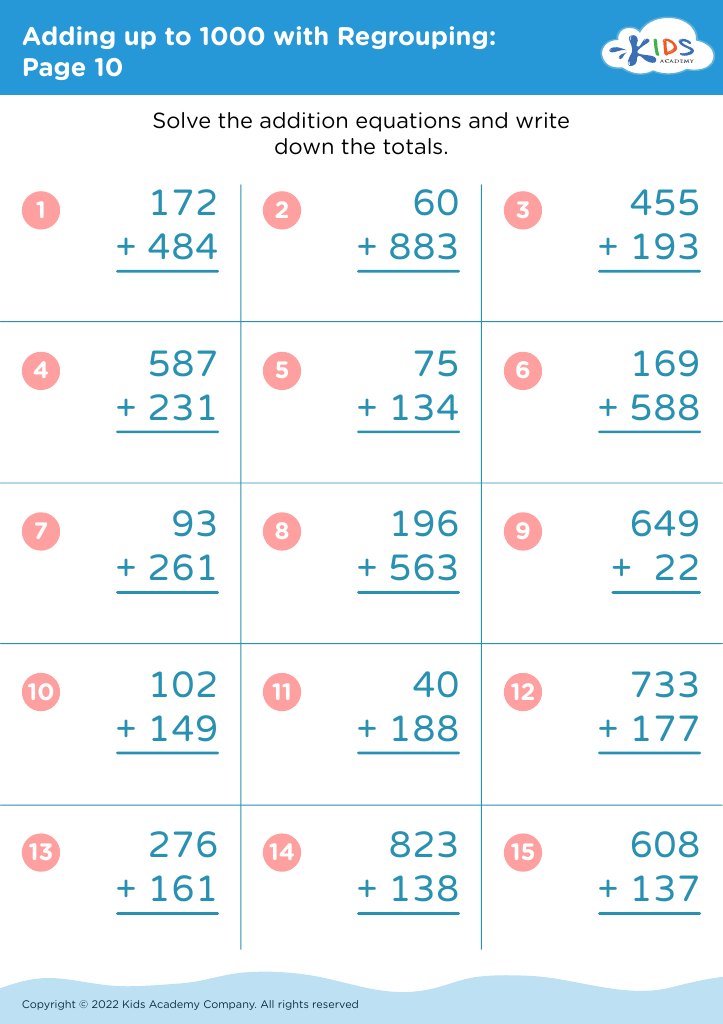
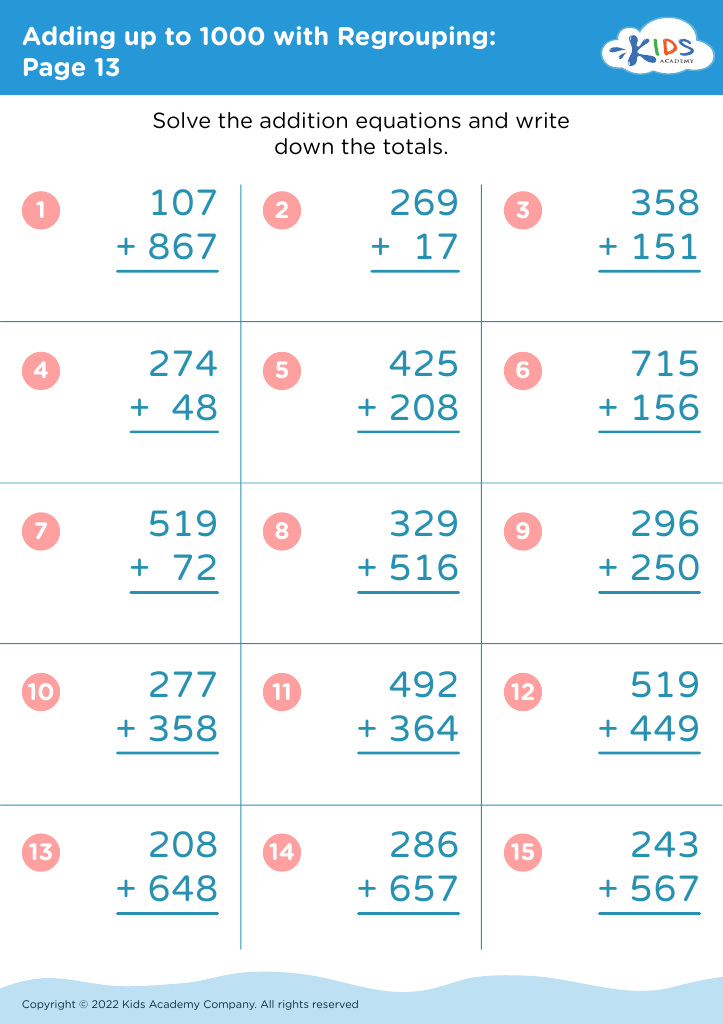
Enhance your child's mathematical skills with our "Recognizing Patterns Adding up to 1000 with Regrouping Worksheets" designed specifically for ages 5-9. These engaging worksheets help young learners identify numerical patterns and improve their addition skills by using regrouping techniques. By practicing with these curated activities, children will develop a deeper understanding of numbers, build confidence in their problem-solving abilities, and strengthen their foundational math concepts. Perfect for classroom use or fun at-home learning, our worksheets make math enjoyable and accessible. Help your child master addition while recognizing important patterns that lay the groundwork for future mathematical success!
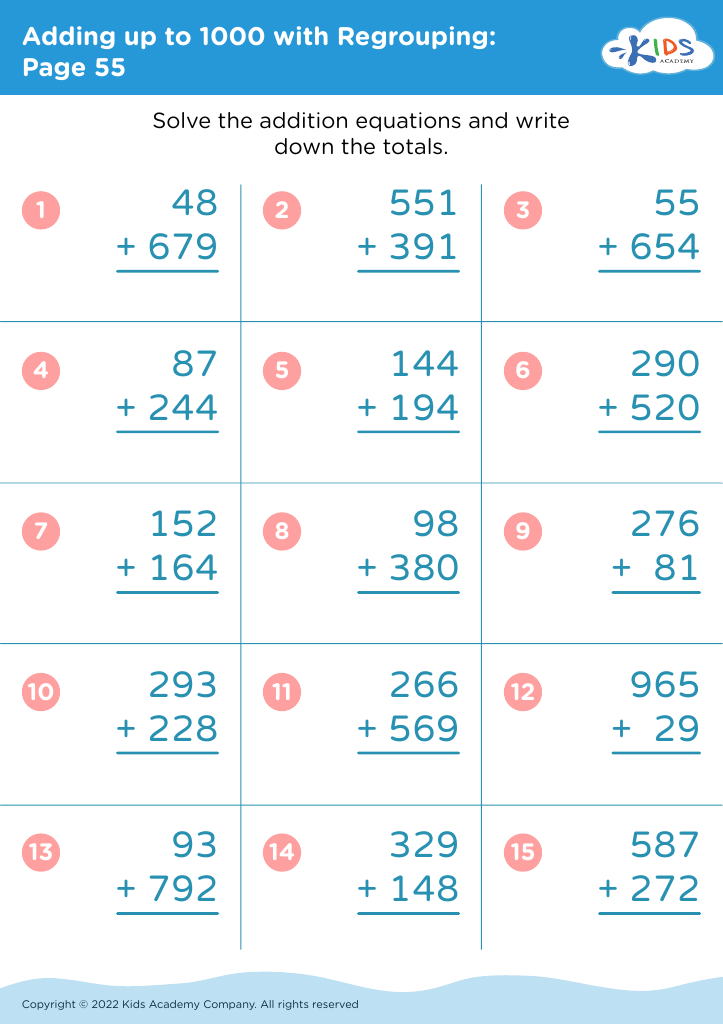


Recognizing patterns while adding up to 1000 with regrouping is crucial for children aged 5-9, as it lays the foundation for their mathematical proficiency. During these formative years, children develop essential number sense and problem-solving skills that will support their learning throughout their academic journey. When children learn to identify patterns in numbers, such as understanding that adding 10 to any number consistently progresses in a predictable manner, they gain a level of confidence that enhances their mathematical fluency.
Regrouping, or carrying over digits, further reinforces this understanding when dealing with larger numbers. By mastering this skill, children learn how to break down complex problems into manageable steps, fostering critical thinking. This process not only sharpens their arithmetic abilities but also helps establish a mindset for handling more advanced mathematics in subsequent years.
Moreover, recognizing patterns aids in developing memory strategies, promoting cognitive connections that benefit other areas of learning. For teachers and parents, encouraging these skills fosters a supportive environment where children can explore mathematics actively and joyfully. Ultimately, it empowers them to become not just competent mathematicians, but confident learners, which is essential for their overall academic success.