Basic Addition Adding up to 1000 Worksheets for Ages 5-9
6 filtered results
-
From - To
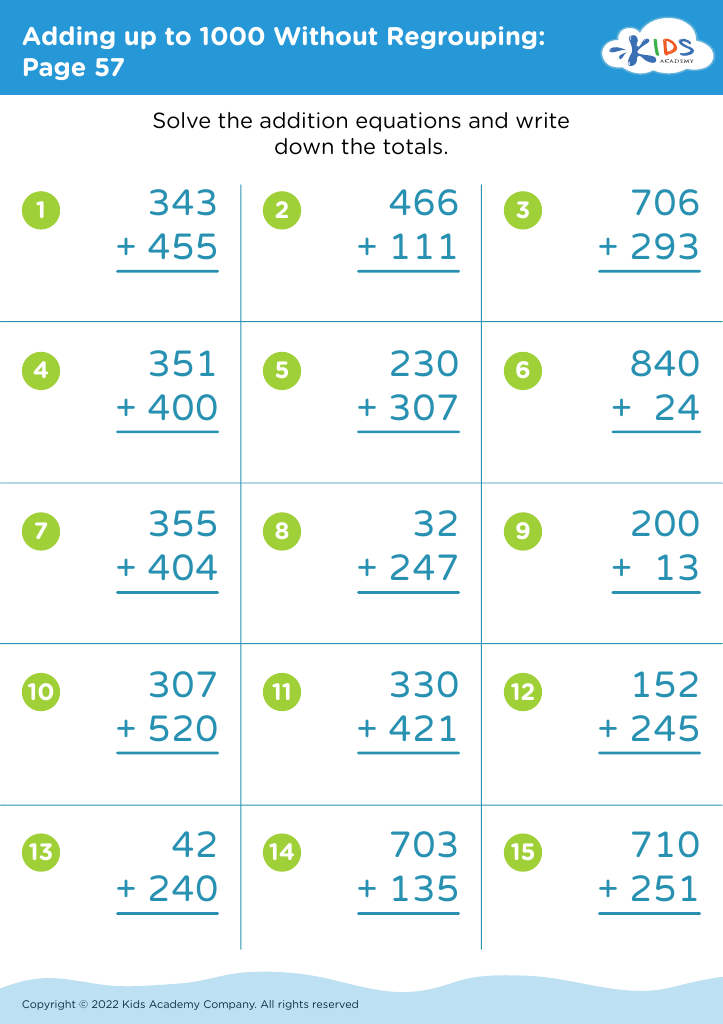
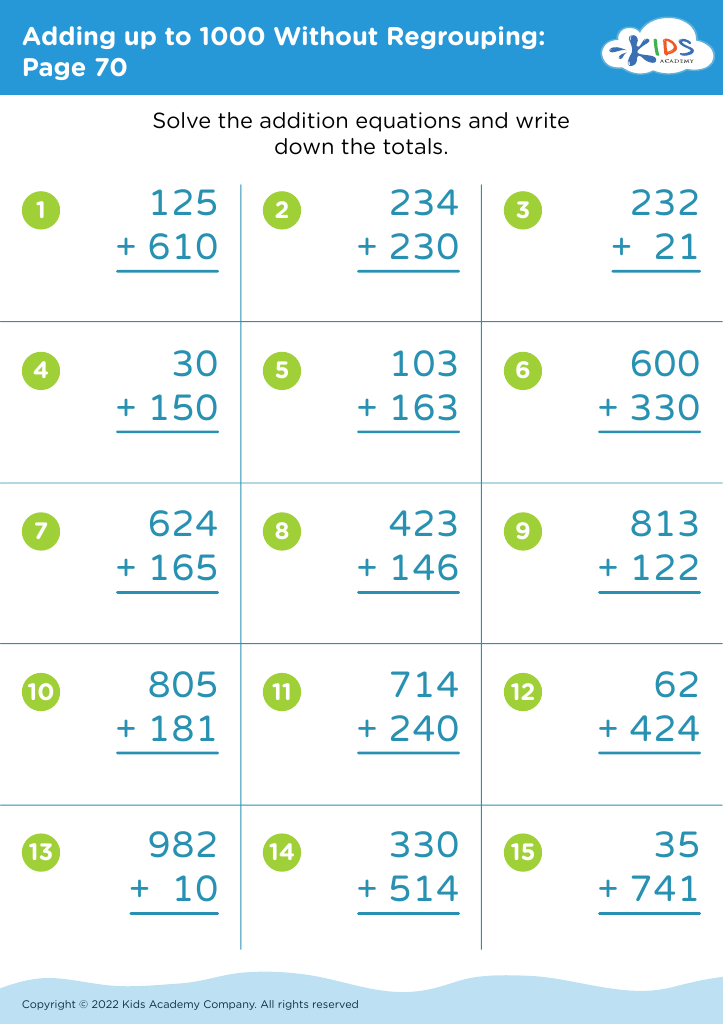
Introducing our engaging "Basic Addition Worksheets for Ages 5-9," perfect for helping young learners master foundational math skills! These specially designed worksheets focus on addition problems that add up to 1000, allowing children to practice and enhance their arithmetic abilities. Featuring colorful visuals and age-appropriate exercises, your little learners will enjoy a fun-filled and interactive way to strengthen their understanding of addition. As they complete each worksheet, they’ll build confidence and develop problem-solving skills essential for their educational journey. Ideal for homeschooling or classroom use, these worksheets provide a solid base for future mathematical concepts. Start their math adventure today!
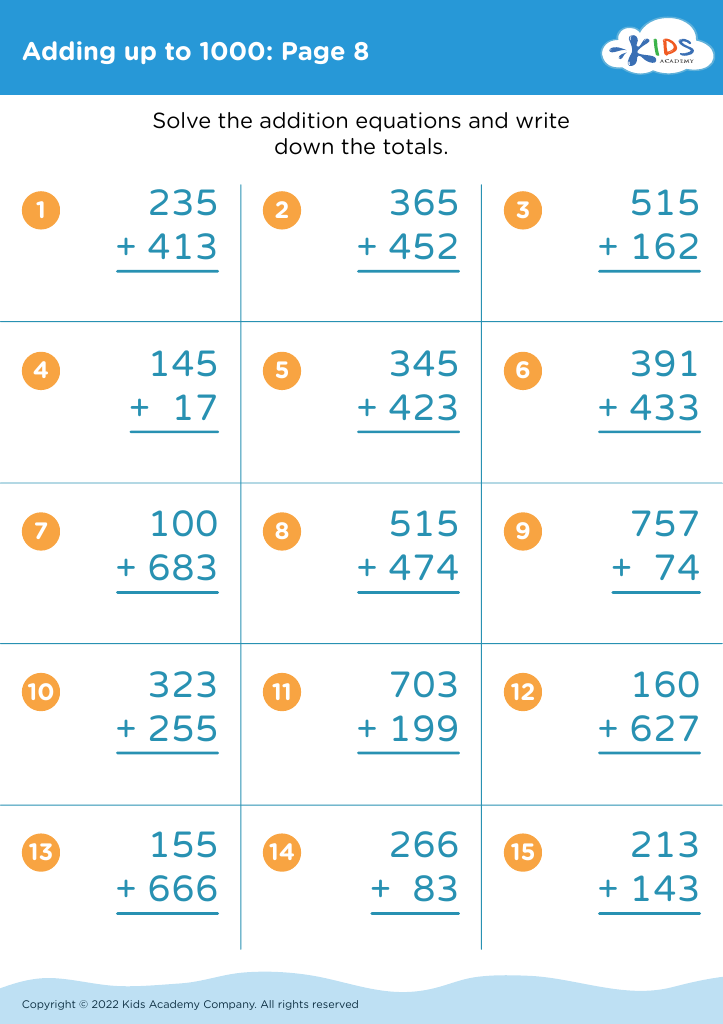
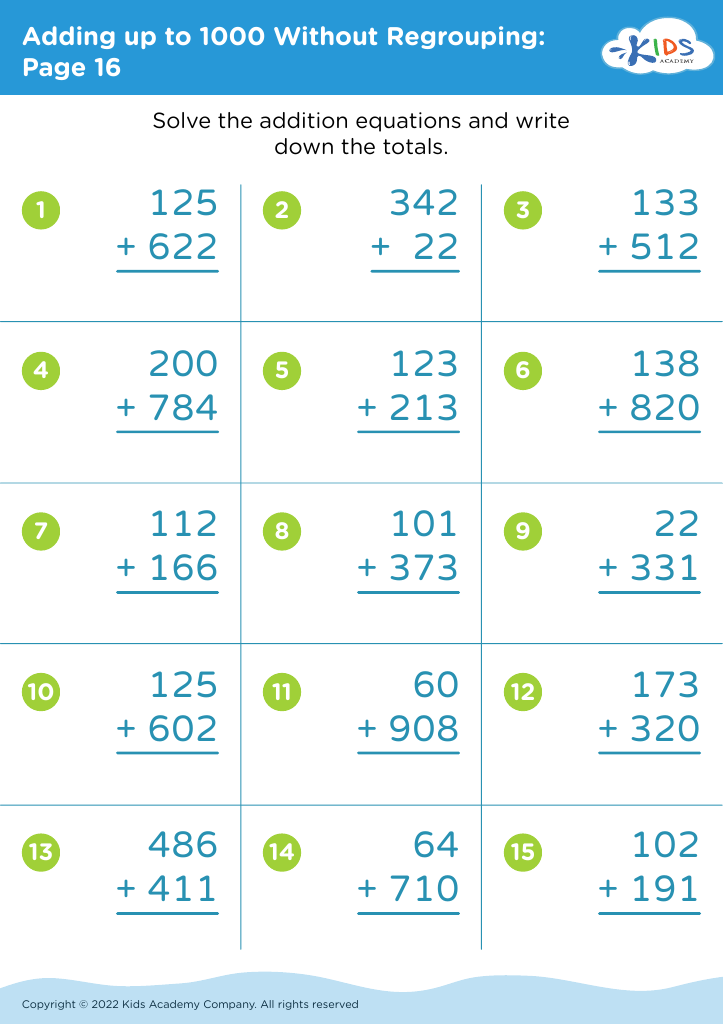
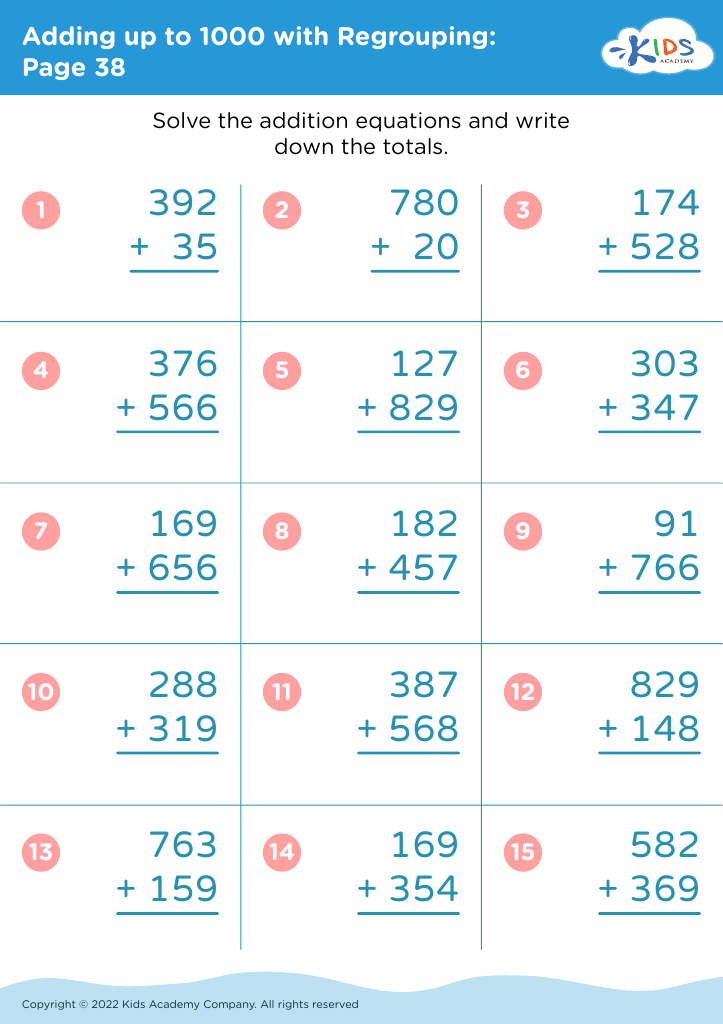
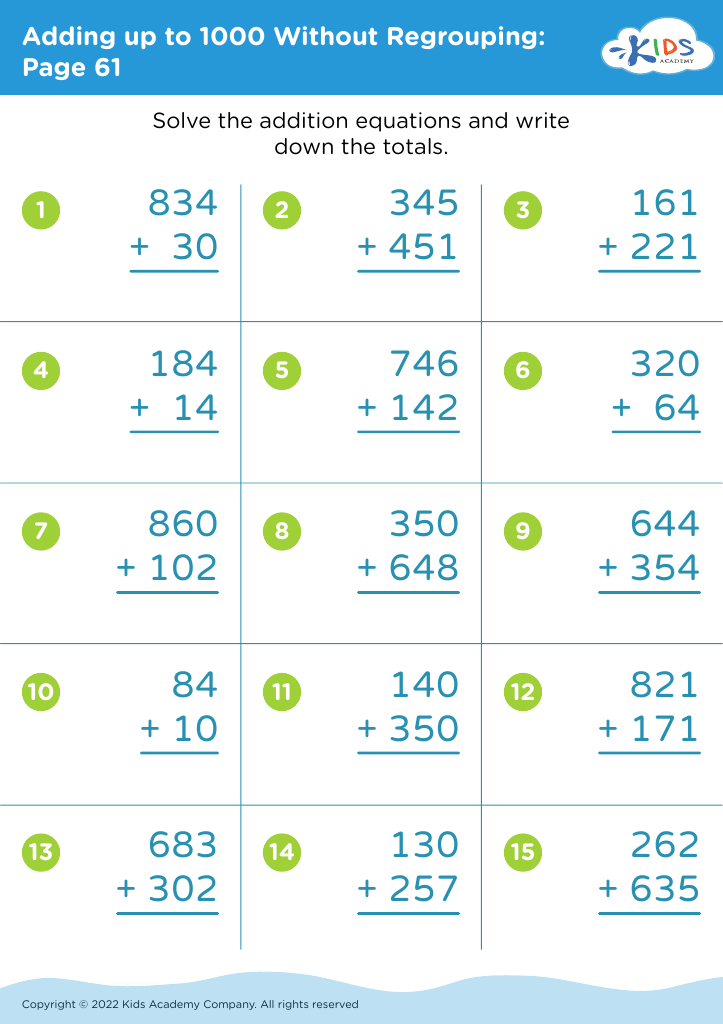



Basic addition skills are crucial for children aged 5-9 as they lay the foundation for their mathematical understanding. Mastery of addition, especially skills involving numbers up to 1000, is essential for several reasons. First, this age group is at a critical developmental stage where conceptualizing numbers and their relationships is fundamental. Building addition skills enhances critical thinking, problem-solving, and reasoning abilities, which are applicable not only in math but across subjects.
Moreover, strong addition skills foster confidence in children. When they can efficiently and accurately perform mathematical operations, they are more likely to participate in classroom activities, engage with their peers, and tackle increasingly complex problems. Foundational knowledge in addition also prepares them for future concepts in mathematics such as subtraction, multiplication, and division.
Parents and teachers play a fundamental role in encouraging and guiding children through their learning journey. By cooperating to emphasize the importance of addition, they can provide a supportive environment that nurtures educational growth. Furthermore, as math becomes increasingly relevant in everyday life, understanding basic addition enables children to navigate real-world situations, from budgeting their allowance to understanding quantities in recipes. Thus, focusing on addition can significantly impact a child's academic success and self-esteem.








