Fraction comparison Adding up to 1000 Worksheets for Ages 5-9
13 filtered results
-
From - To
Discover engaging "Fraction Comparison Adding up to 1000 Worksheets for Ages 5-9" designed to make math fun and understandable! Our carefully crafted worksheets help young learners grasp essential math skills, such as comparing fractions and adding up to 1000, through playful, interactive exercises. Perfect for use at home or in the classroom, these worksheets cater to various learning styles and skill levels. Boost your child's confidence and proficiency in math with our expertly-designed materials, paving the way for their future academic success. Join Kids Academy today and watch your child flourish in their mathematical journey!
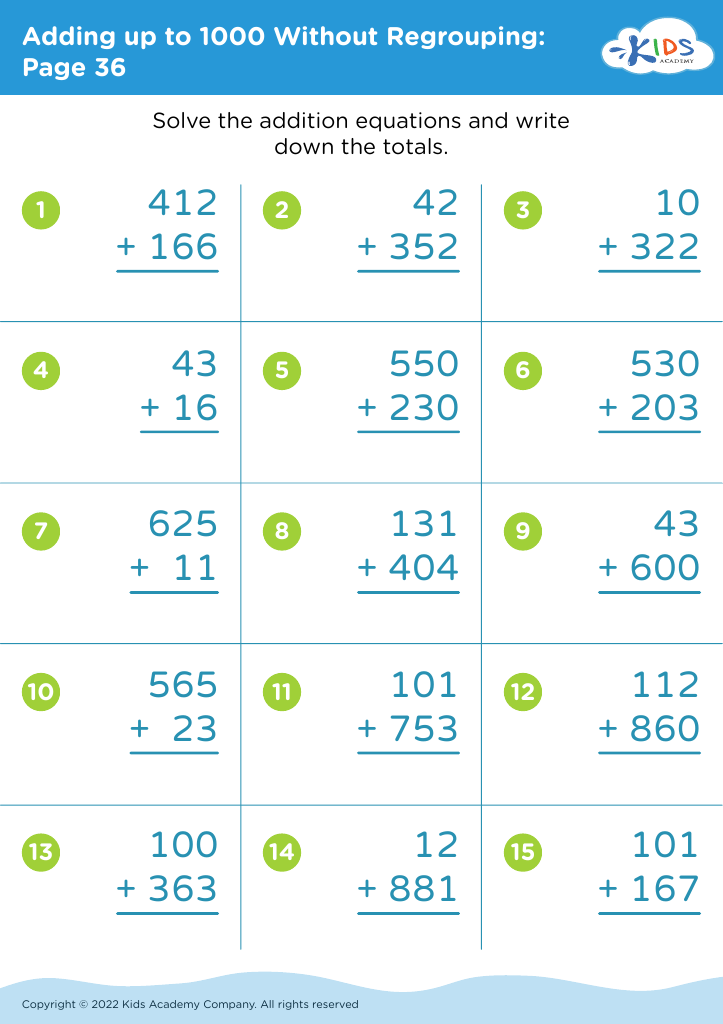
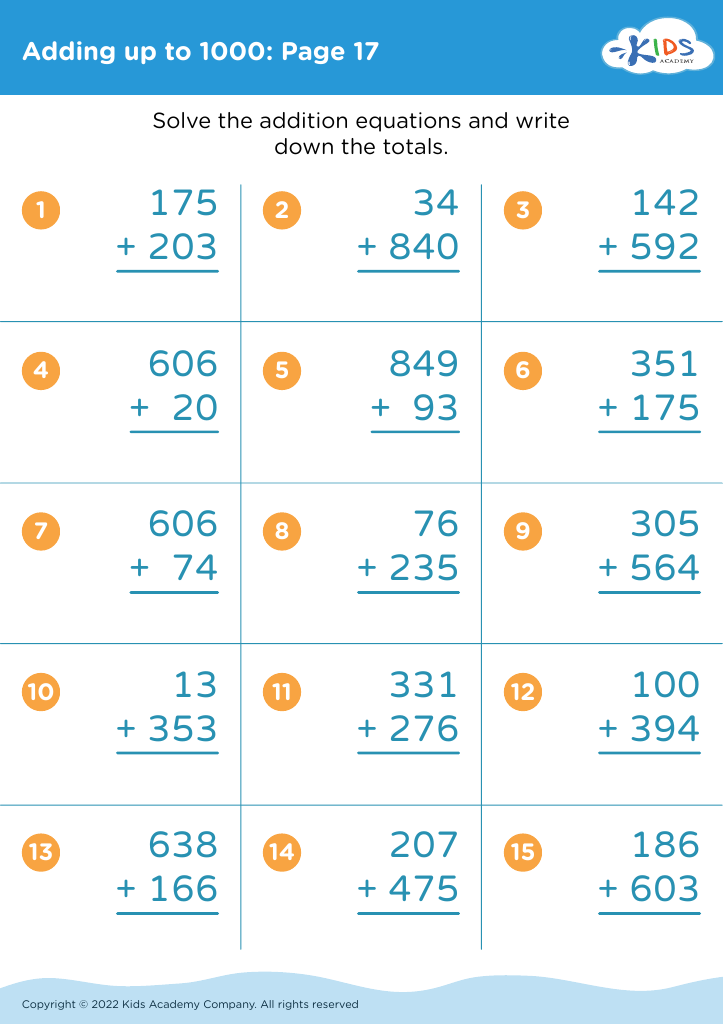
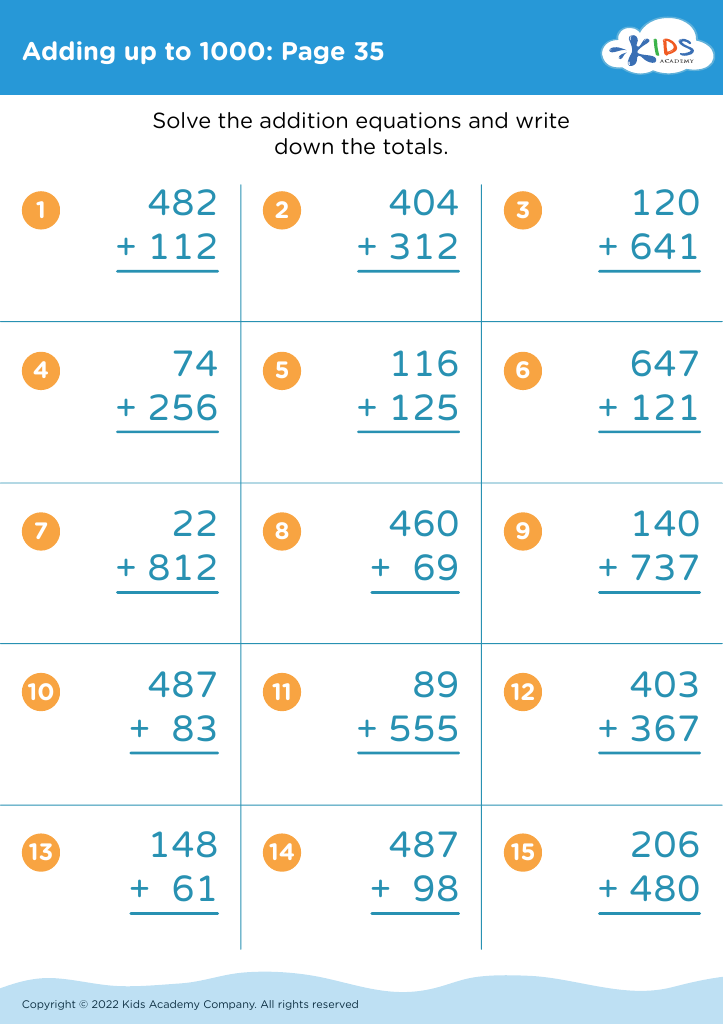
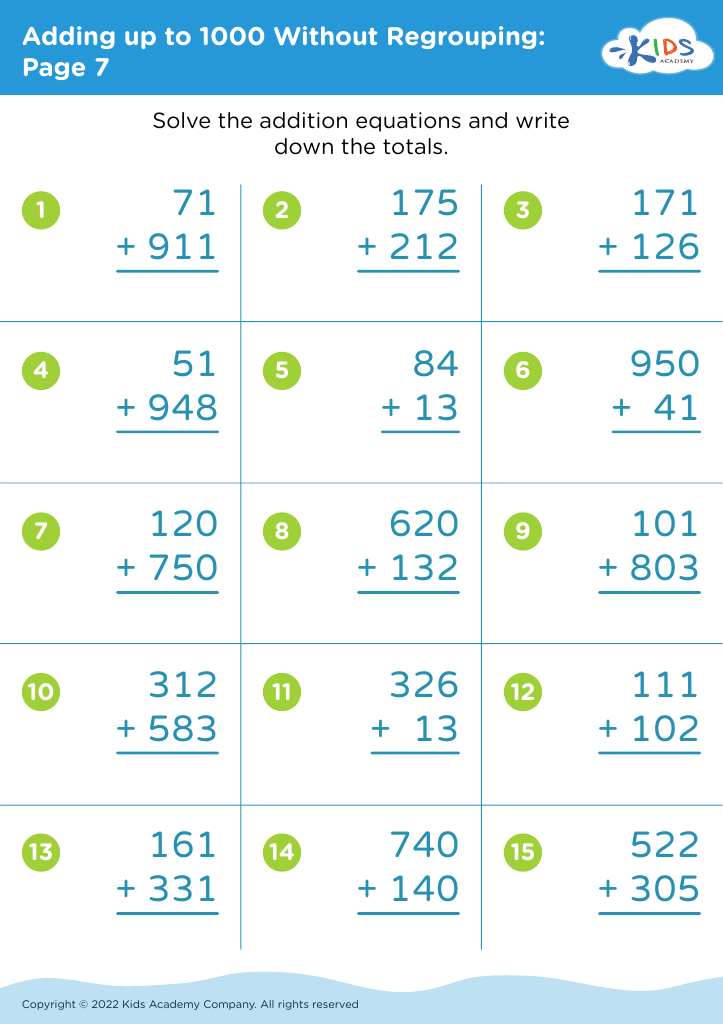
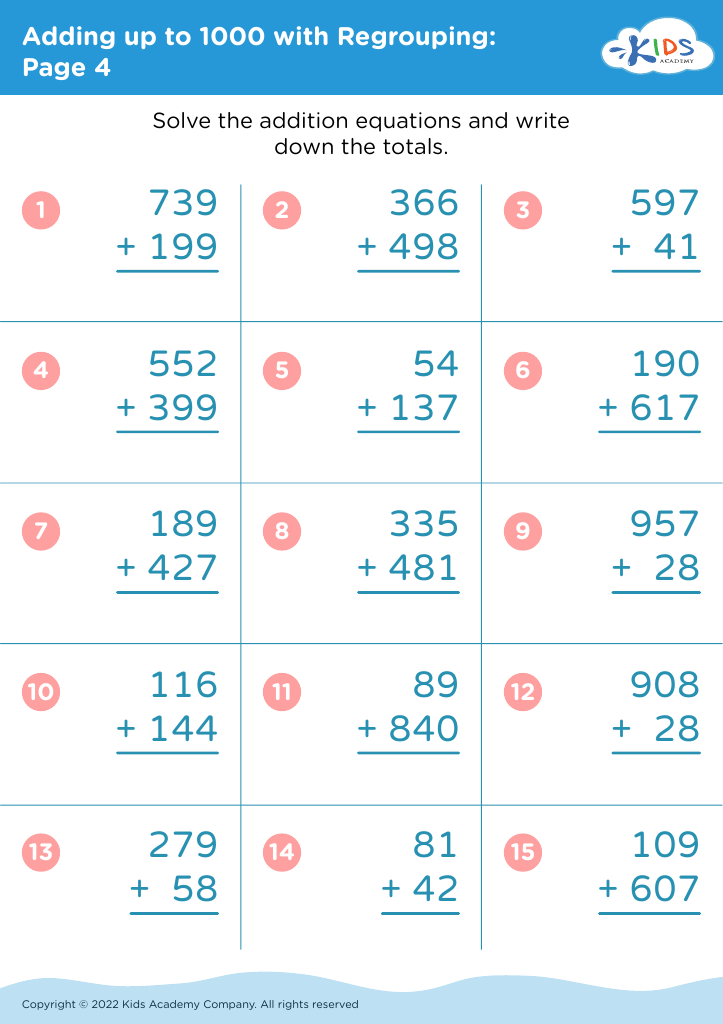
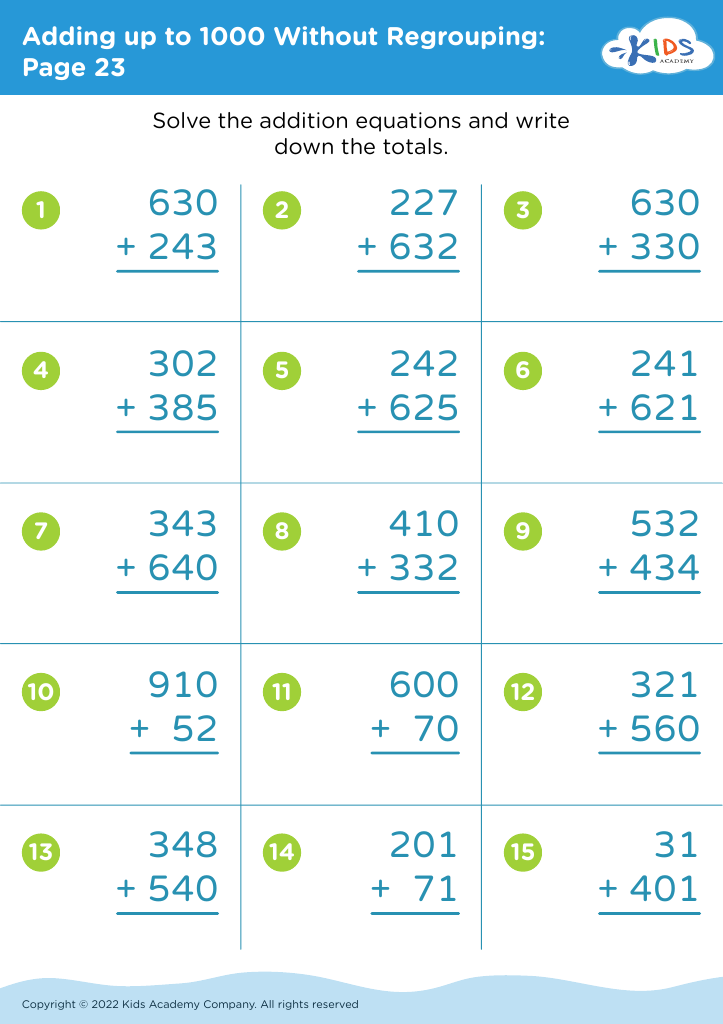
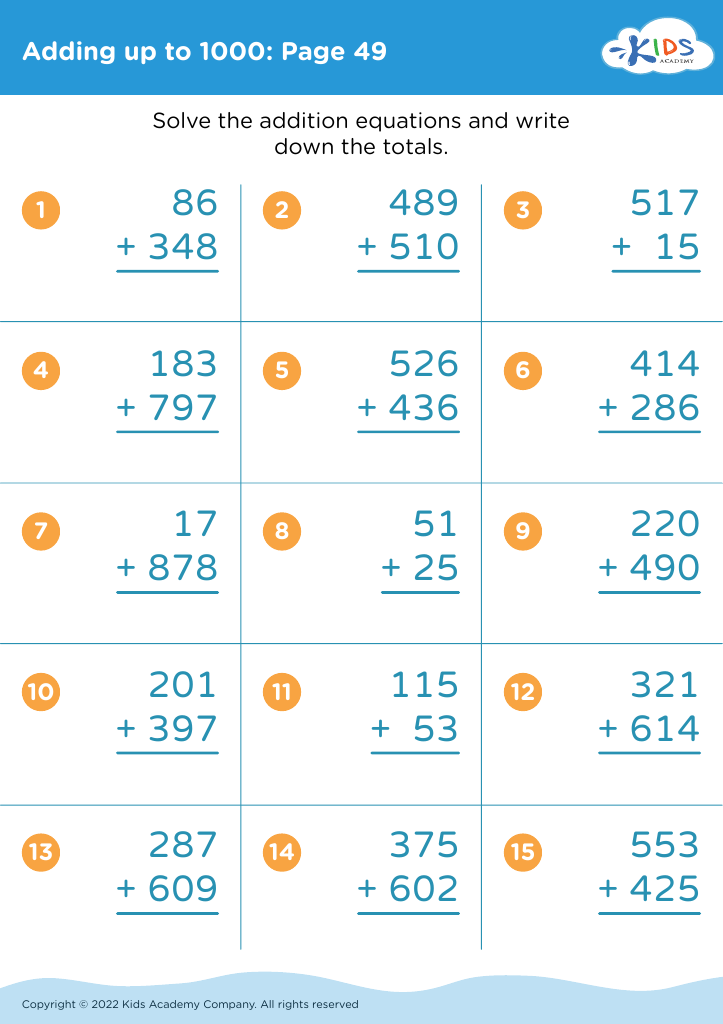
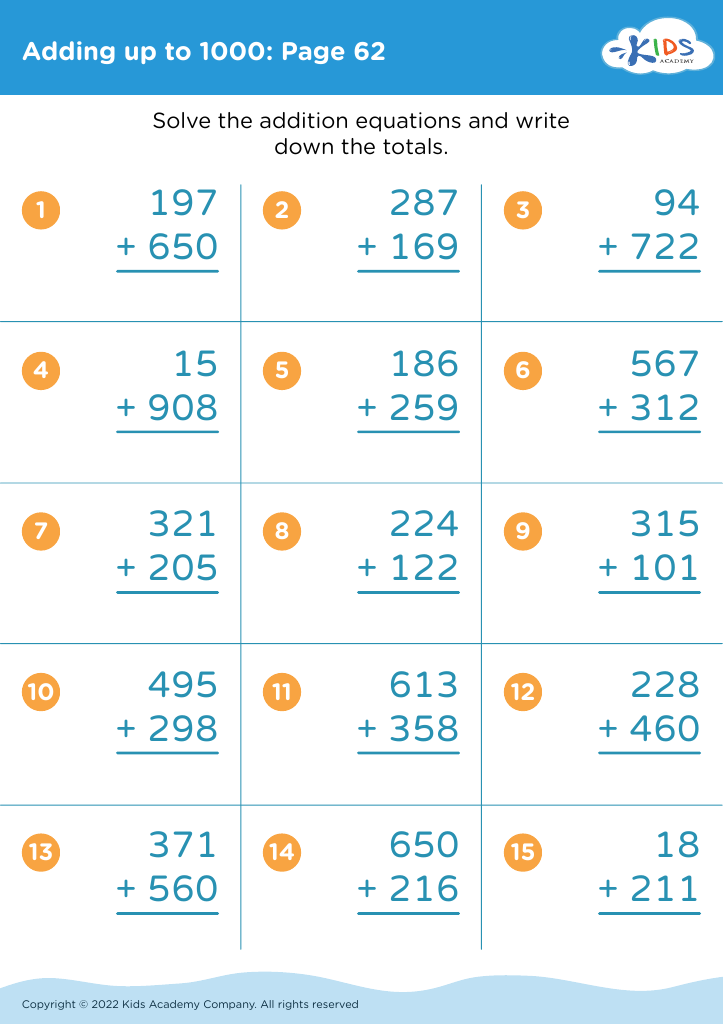
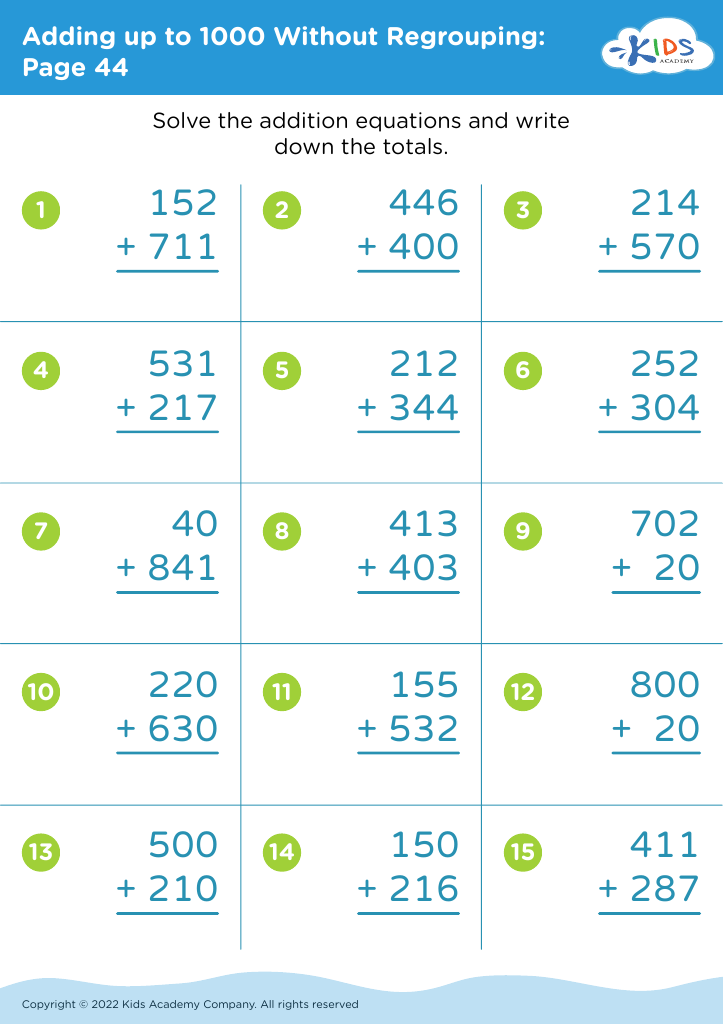
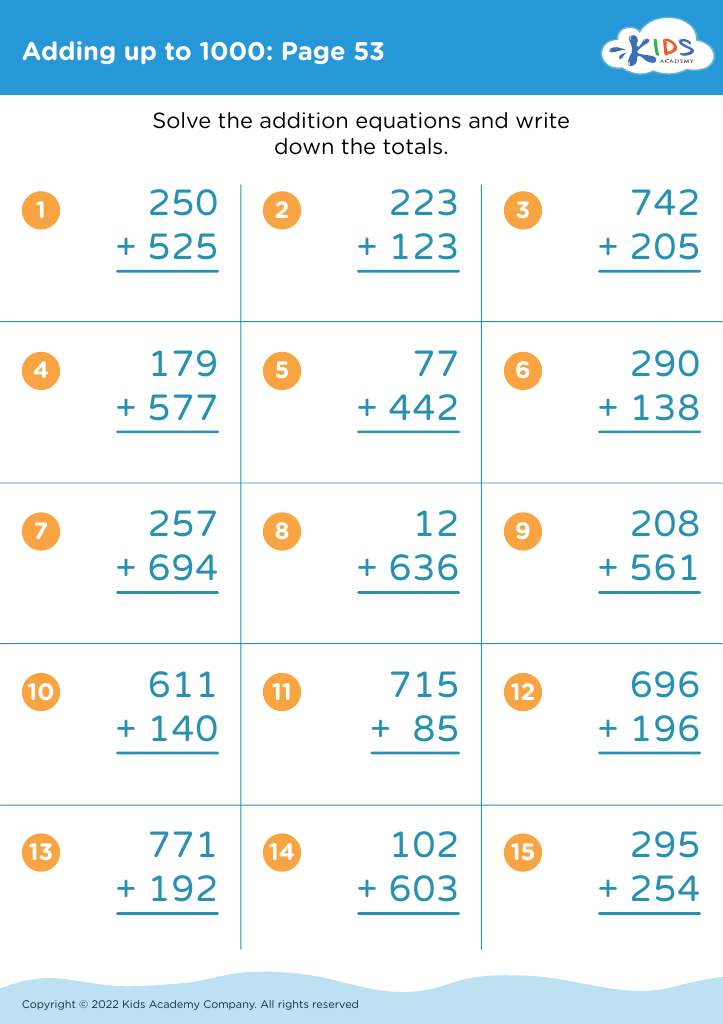
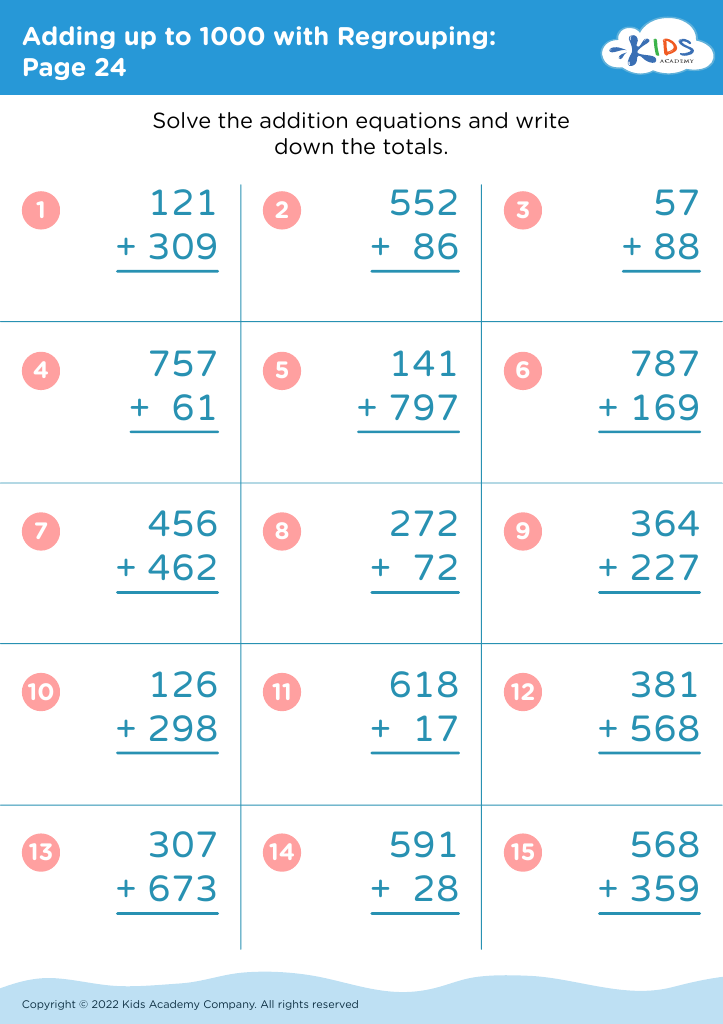
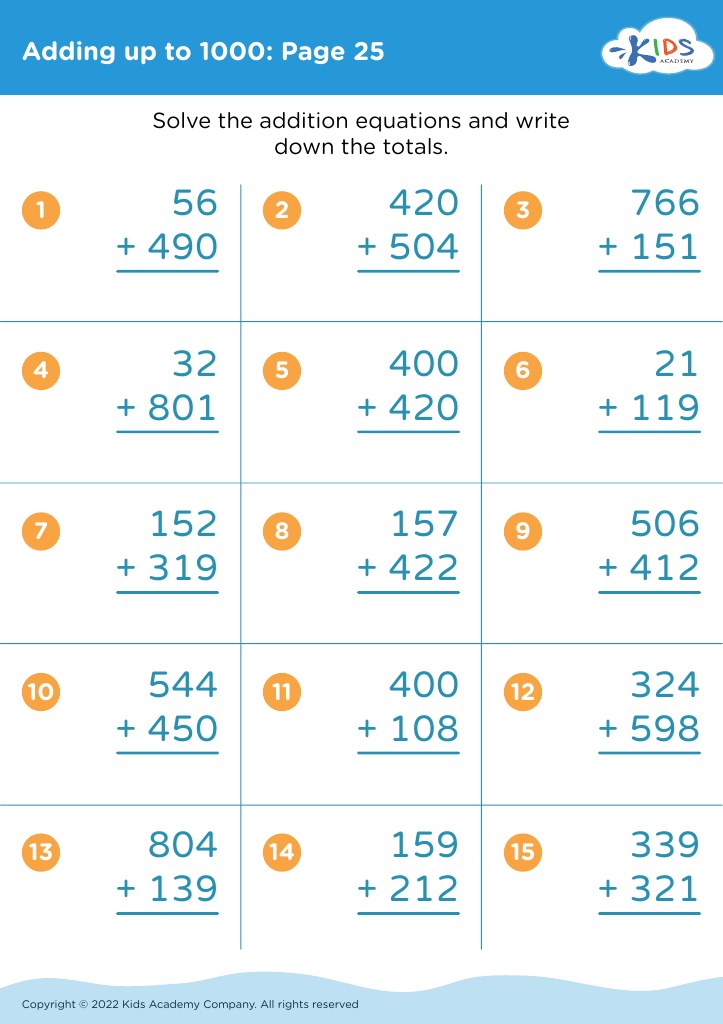
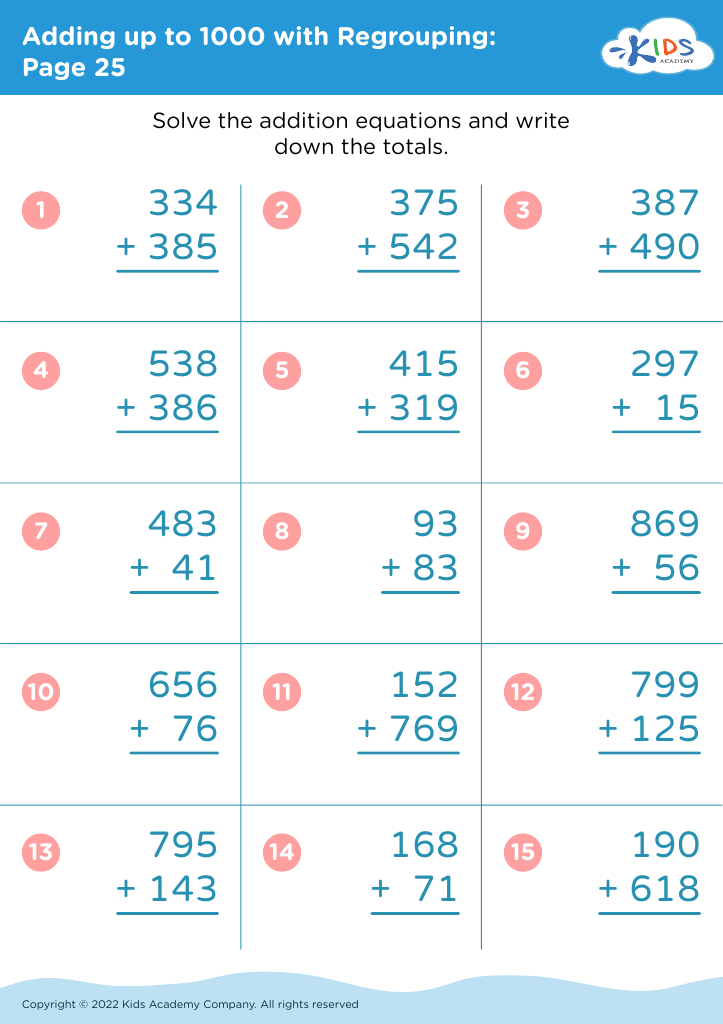



Fraction comparison and adding up to 1000 are fundamental math skills that are crucial for children aged 5-9. Understanding fractions helps young learners develop a sense of proportion and relationships between numbers, which are critical for more advanced math concepts. When children learn to compare fractions, they enhance their analytical thinking and problem-solving abilities, essential skills in both academic and real-life contexts.
Adding numbers up to 1000 builds a strong numerical foundation and fluency in basic arithmetic operations. This skill not only prepares children for more complex calculations as they advance in their education but also boosts their confidence in handling numbers. Being adept at addition also supports their understanding of other mathematical operations, such as subtraction, multiplication, and division.
For parents and teachers, fostering these skills early on can help bridge the gap between everyday math use and academic requirements, making math feel accessible and less intimidating. It sets a groundwork for future success in STEM subjects (science, technology, engineering, and mathematics).
Encouragement and practice in these areas can inspire a lifelong interest in math, ensuring that children are well-prepared for the challenges of higher education and for making informed decisions in daily life. That's why prioritizing these concepts during the ages of 5-9 is essential for a child's overall cognitive development.








