Recognizing Patterns Adding up to 1000 Worksheets for Ages 5-9
6 filtered results
-
From - To
Discover our engaging "Recognizing Patterns Adding Up to 1000 Worksheets" designed for children ages 5-9. These interactive worksheets foster critical math skills by helping young learners identify patterns in numbers, enhancing their ability to add up to 1000 confidently. With a variety of fun activities and visually stimulating layouts, students will enjoy exploring mathematical concepts while developing problem-solving techniques. Our resources are tailored to support early grade educators in promoting a strong foundation in mathematics. Download these worksheets and watch your child’s understanding of numerical relationships grow as they master recognizing patterns in numbers! Perfect for both classroom and home use!
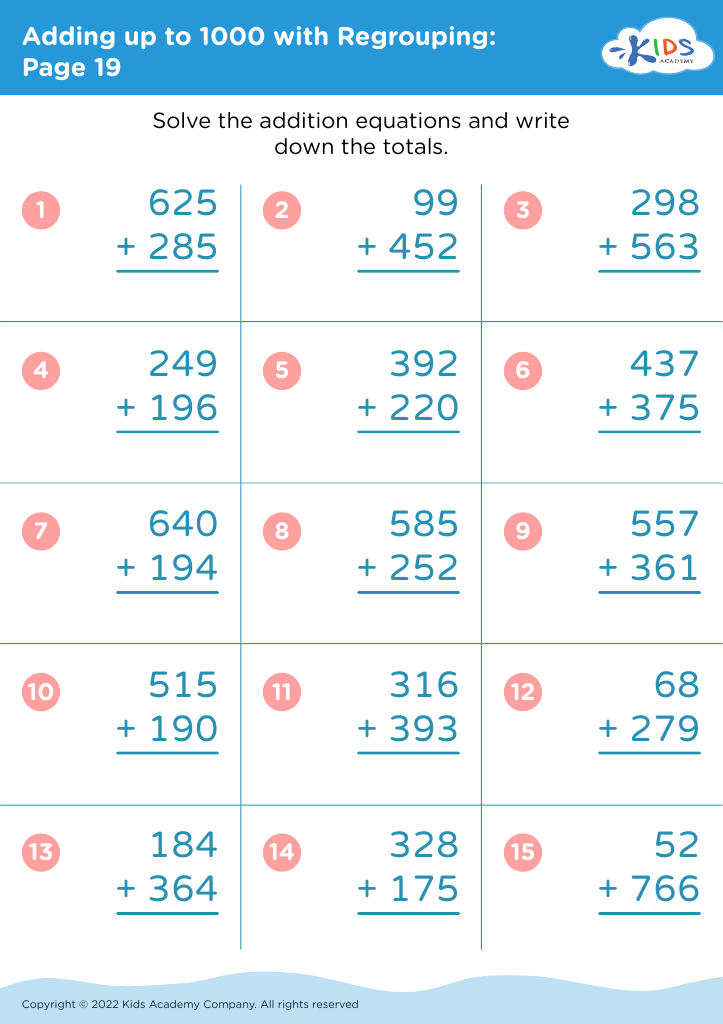
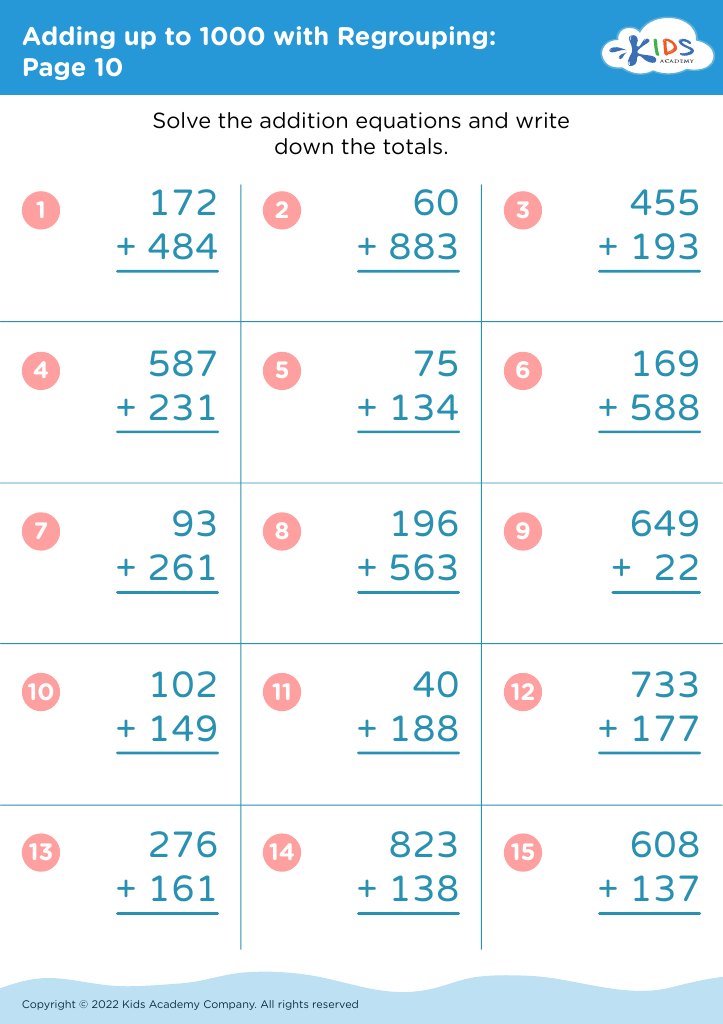
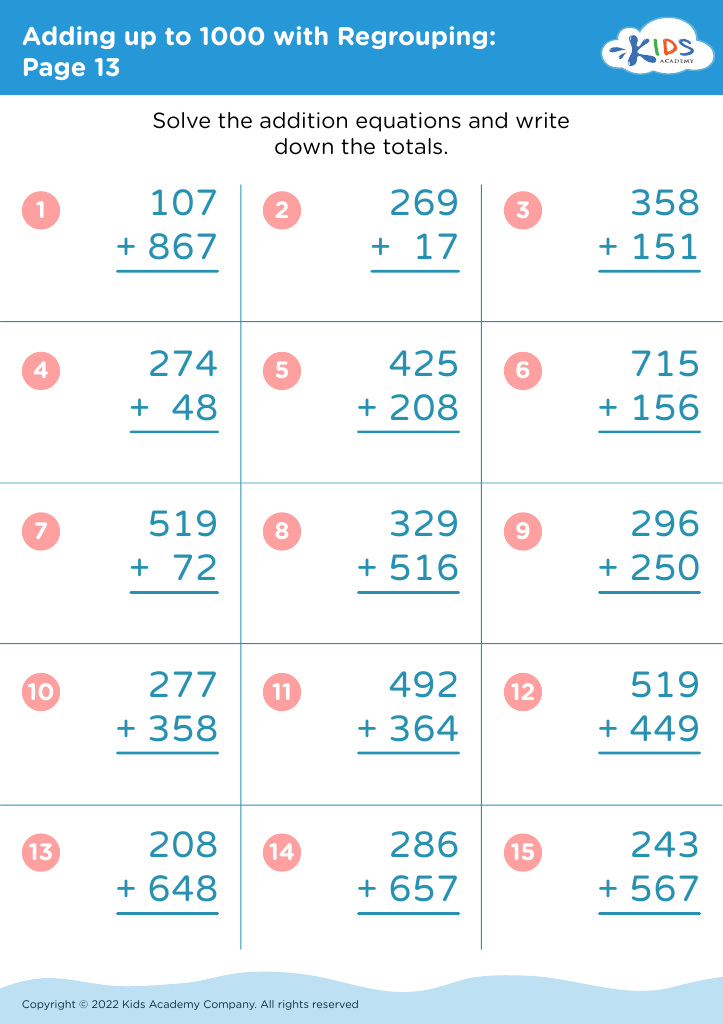
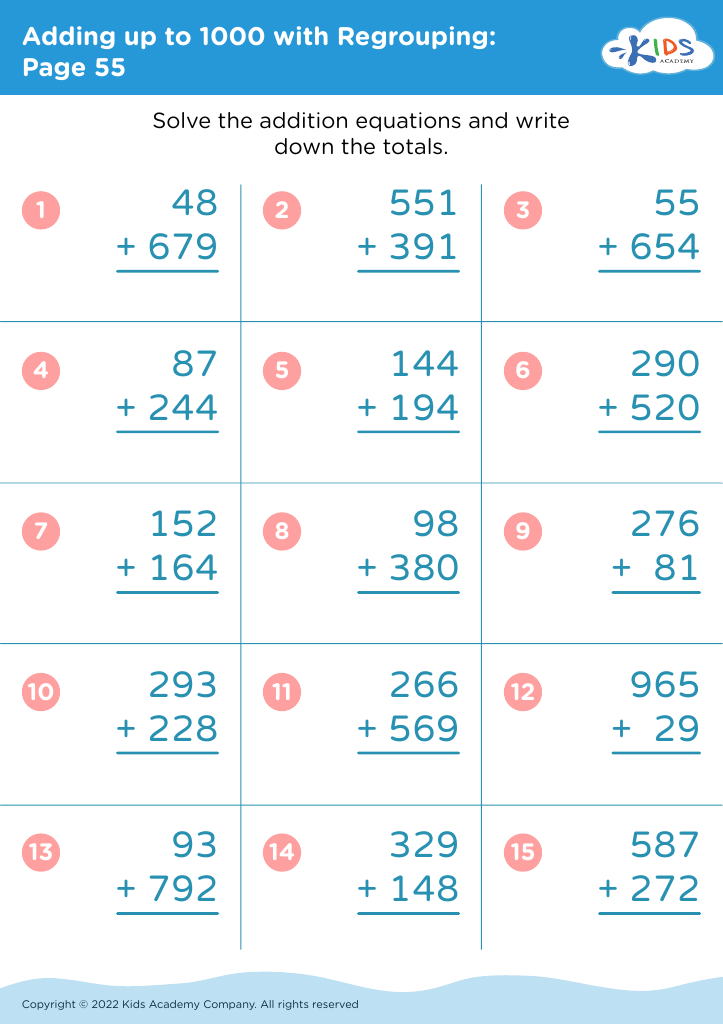
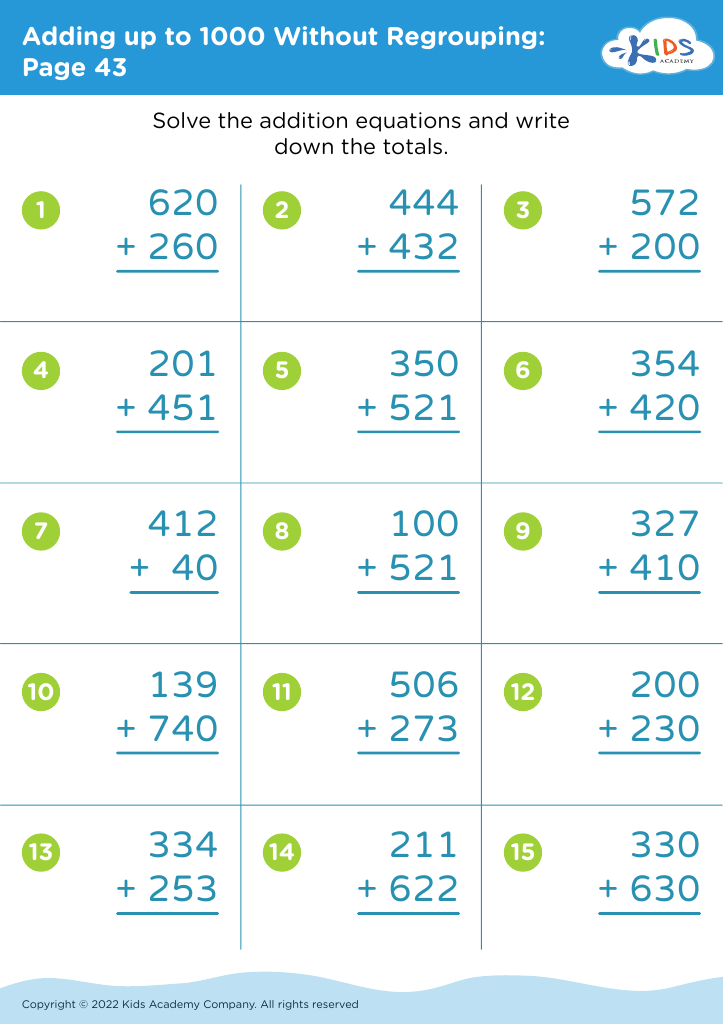
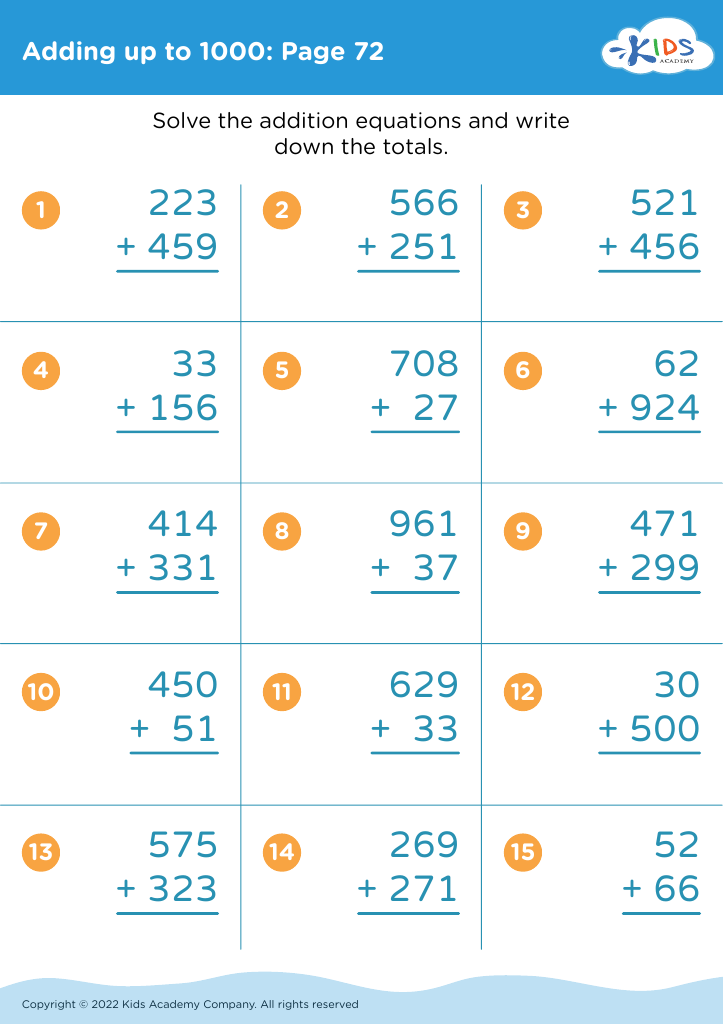



Recognizing patterns and mastering numerical concepts like adding up to 1000 is vital for children aged 5-9 as it lays the groundwork for their future mathematical understanding and problem-solving abilities. At this age, children are naturally curious and responsive to engaging learning experiences. Patterns help them grasp mathematical concepts more easily, as they learn to identify relationships between numbers and grasp the foundational principles of addition and subtraction.
Recognizing patterns fosters critical thinking and analytical skills. It encourages children to look for connections and apply their mathematical knowledge to real-world situations, enhancing their ability to make sense of complex ideas as they progress academically. Furthermore, engaging with patterns boosts confidence and makes learning enjoyable. When children perceive the logic in numeric relationships, they are more likely to develop a positive attitude towards math, reducing anxiety often associated with the subject.
As parents and teachers, understanding the significance of enabling children to recognize these patterns not only enhances their mathematical skills but also equips them with essential life skills. It encourages creativity, persistence, and adaptability, qualities necessary for success in a constantly evolving world. Investing in these early skills benefits children well beyond the classroom, shaping their overall development.








