Simplifying Fractions Adding up to 1000 Worksheets for Ages 5-9
6 filtered results
-
From - To
Our "Simplifying Fractions Adding up to 1000 Worksheets for Ages 5-9" are designed to make learning fractions fun and accessible for young students. Interactive exercises help kids grasp the fundamental concept of fractions by simplifying them into more understandable terms. These printables provide an engaging way to develop critical math skills, combining colorful illustrations and age-appropriate challenges. Whether used in the classroom or at home, these worksheets offer a comprehensive introduction to fractions, making complex numbers more relatable and boosting confidence in math. Perfect for early learners eager to conquer basic arithmetic while having loads of fun!
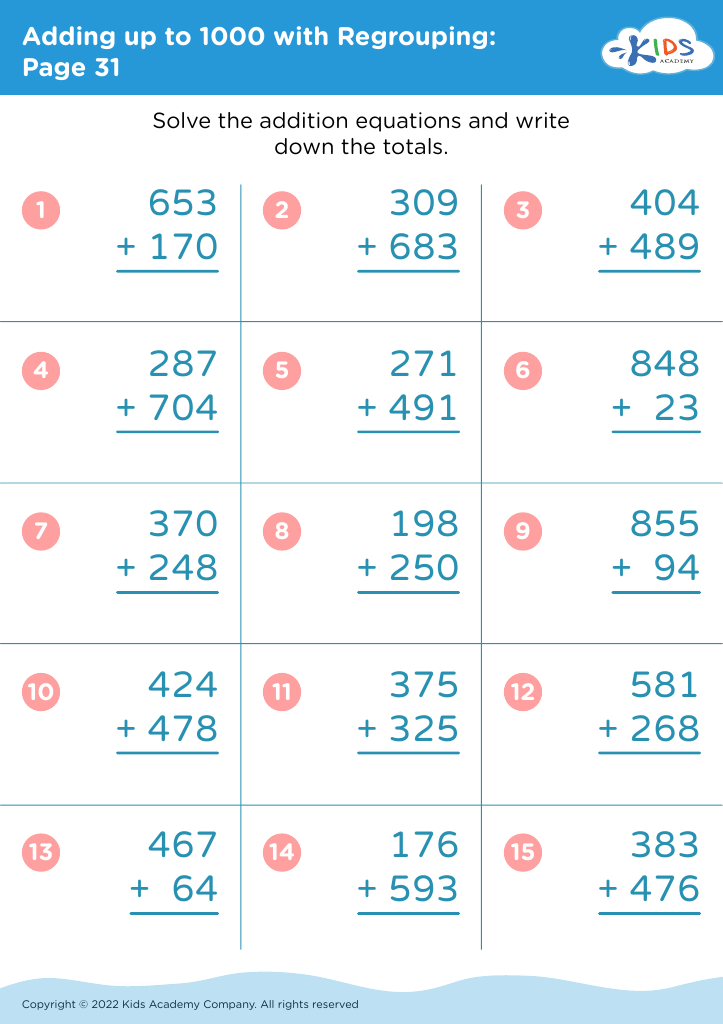
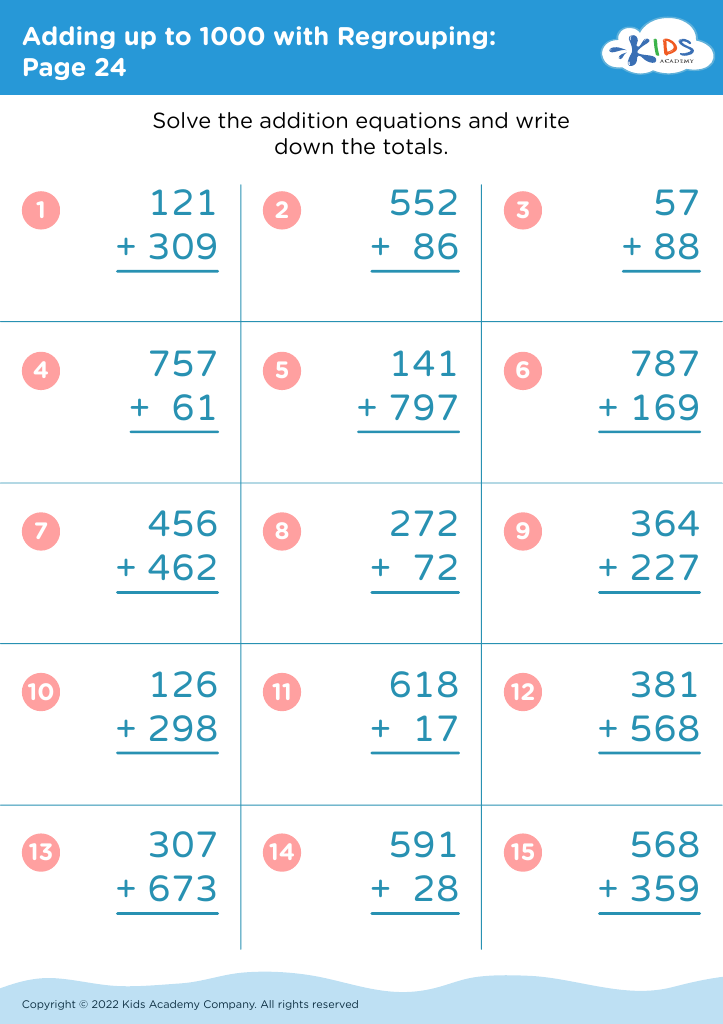
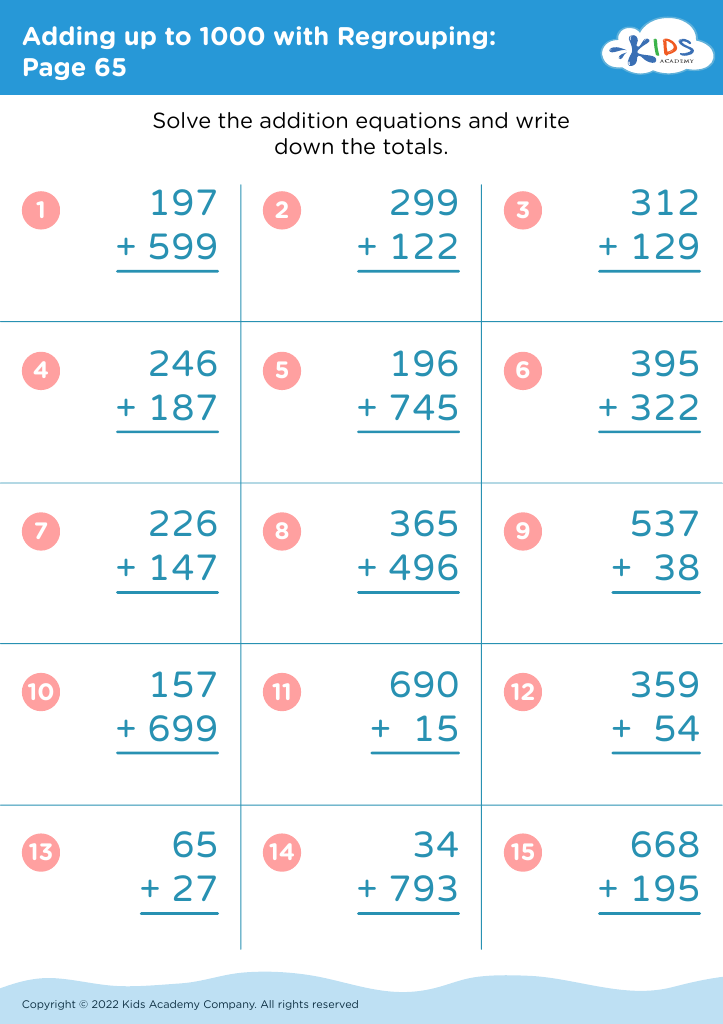
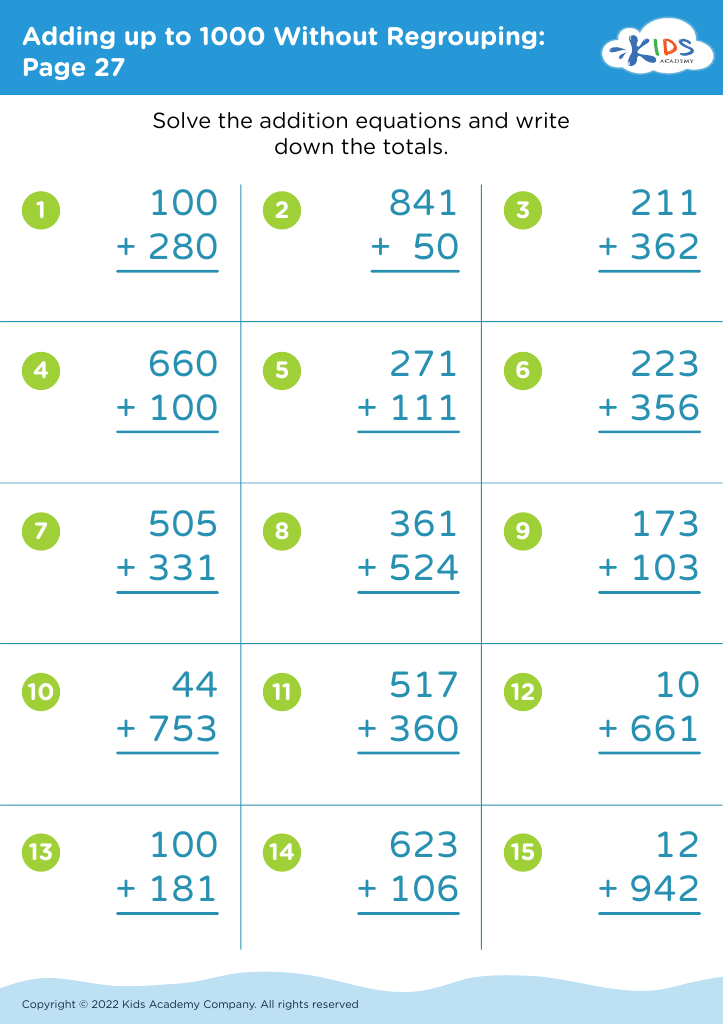
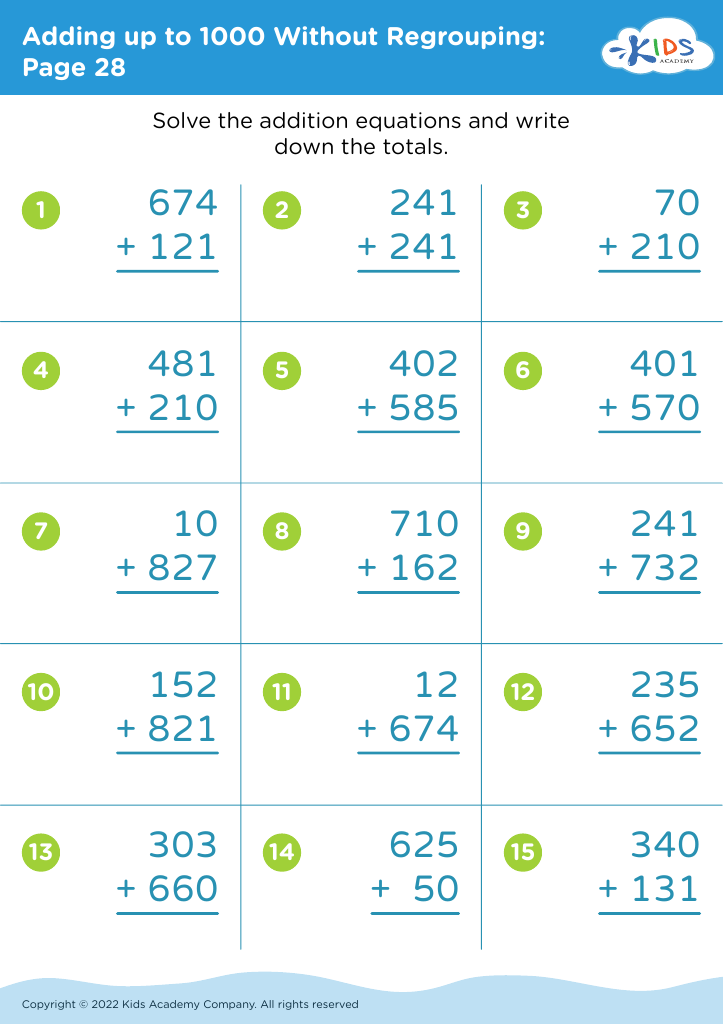
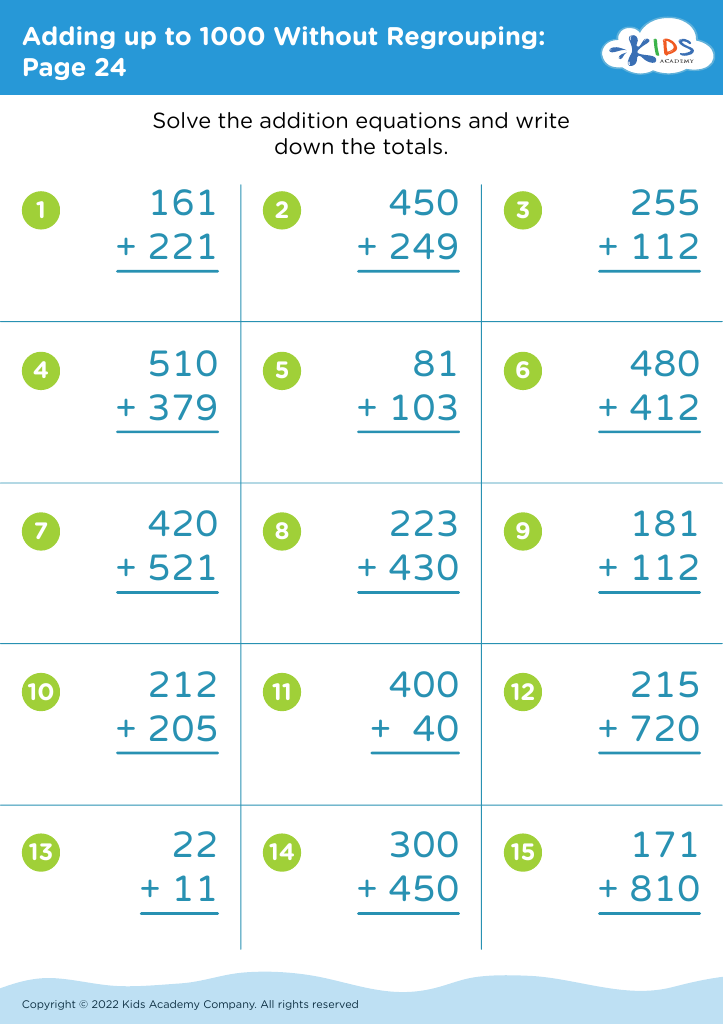



Simplifying fractions and working with large numbers, such as those adding up to 1000, is crucial for young children aged 5-9 for several reasons. First, learning to simplify fractions fosters strong foundational math skills. Understanding how to break down complex problems into simpler parts helps children grasp more advanced math concepts in the future.
Secondly, working with numbers up to 1000 expands their number sense and familiarity with larger values. At an early age, an intuitive grasp of scale, size, and the relative value of numbers sets them up for success in more advanced arithmetic and real-world problem-solving situations.
Furthermore, these skills promote cognitive development in areas such as critical thinking and analytical reasoning. Children learn to process information, make connections, and solve problems creatively. These skills are not just confined to math; they carry over into reading, writing, and day-to-day decision-making.
Finally, engaging with such concepts boosts confidence. When young learners tackle seemingly challenging tasks successfully, they build self-esteem and develop a growth mindset – the belief that abilities and intelligence can be developed through hard work. For parents and teachers, investing time in these lessons ensures children not only excel academically but also develop perseverance and confidence in their abilities.








