Understand fractions Adding up to 1000 Worksheets for Ages 5-9
4 filtered results
-
From - To
Enhance your child's math skills with our "Understand Fractions Adding up to 1000 Worksheets for Ages 5-9." These engaging, age-appropriate worksheets are designed to introduce young learners to the concepts of fractions and addition within 1000. Perfect for children aged 5-9, the activities in these worksheets simplify complex ideas, making math fun and accessible. Each exercise is crafted to build confidence and mastery in understanding fractions, while also reinforcing basic arithmetic skills. Set your child on the path to math proficiency and ensure they excel with these comprehensive and enjoyable learning tools. Explore and download now!
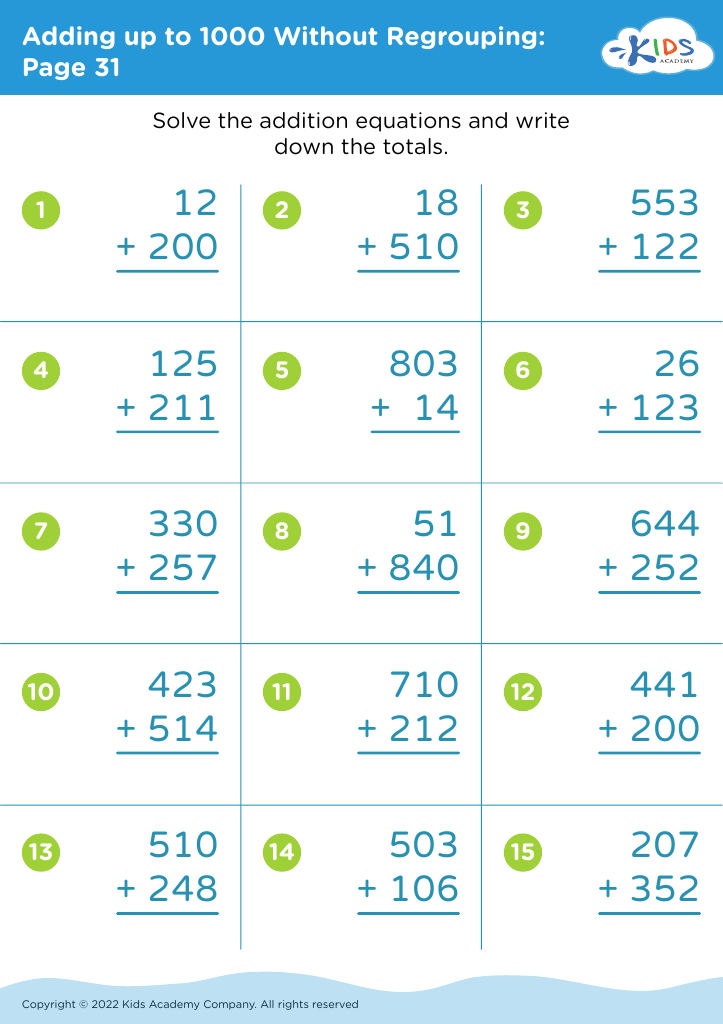
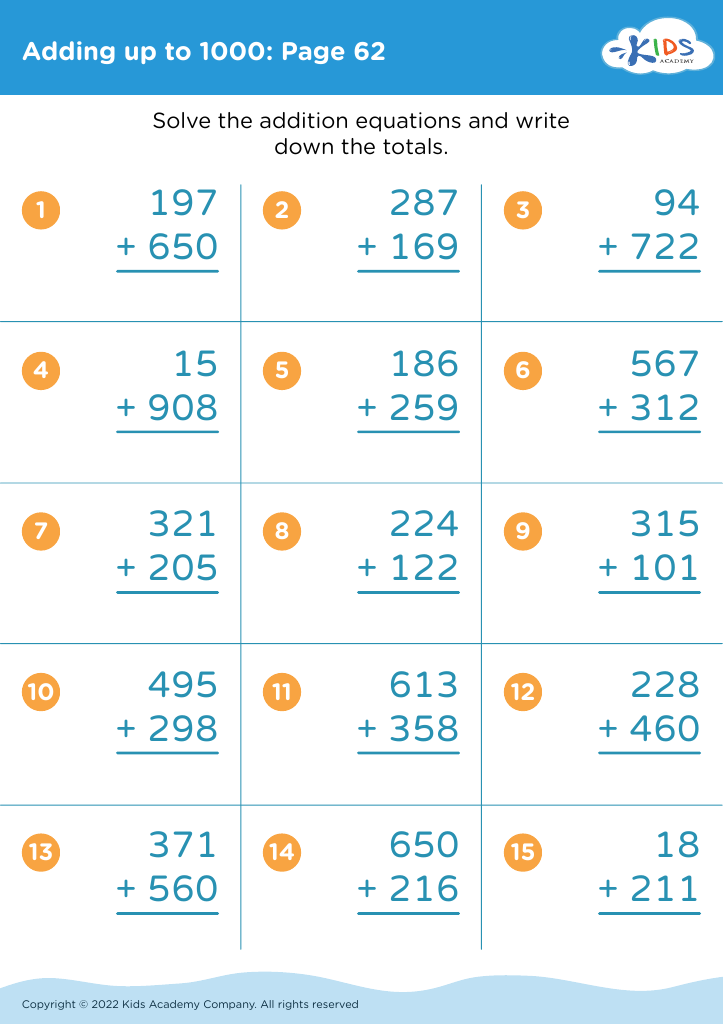
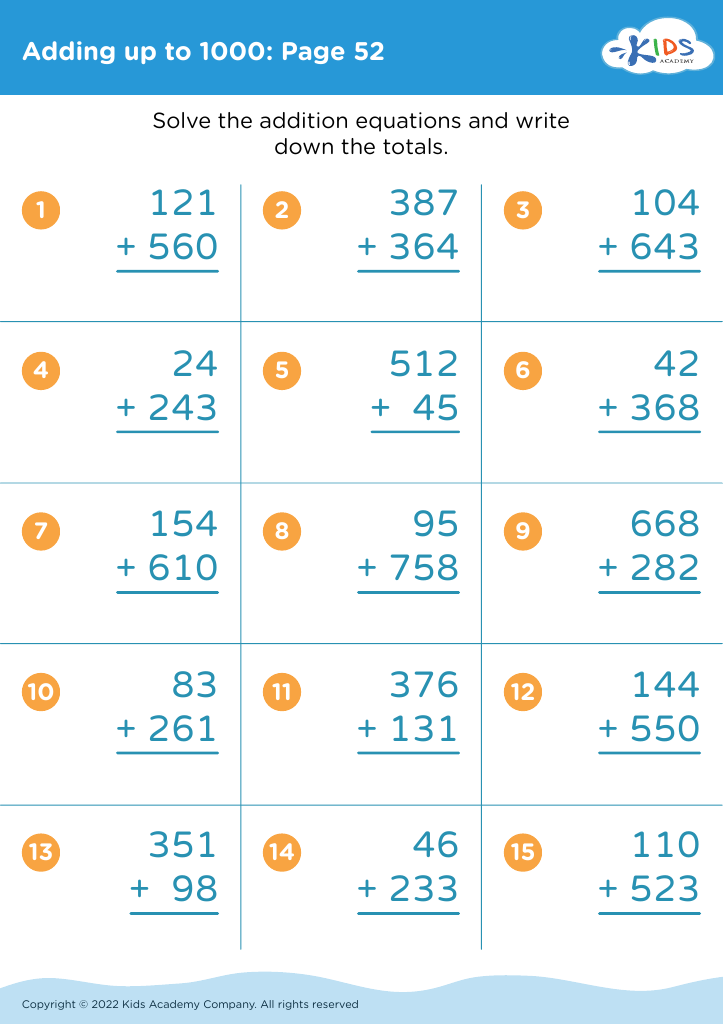
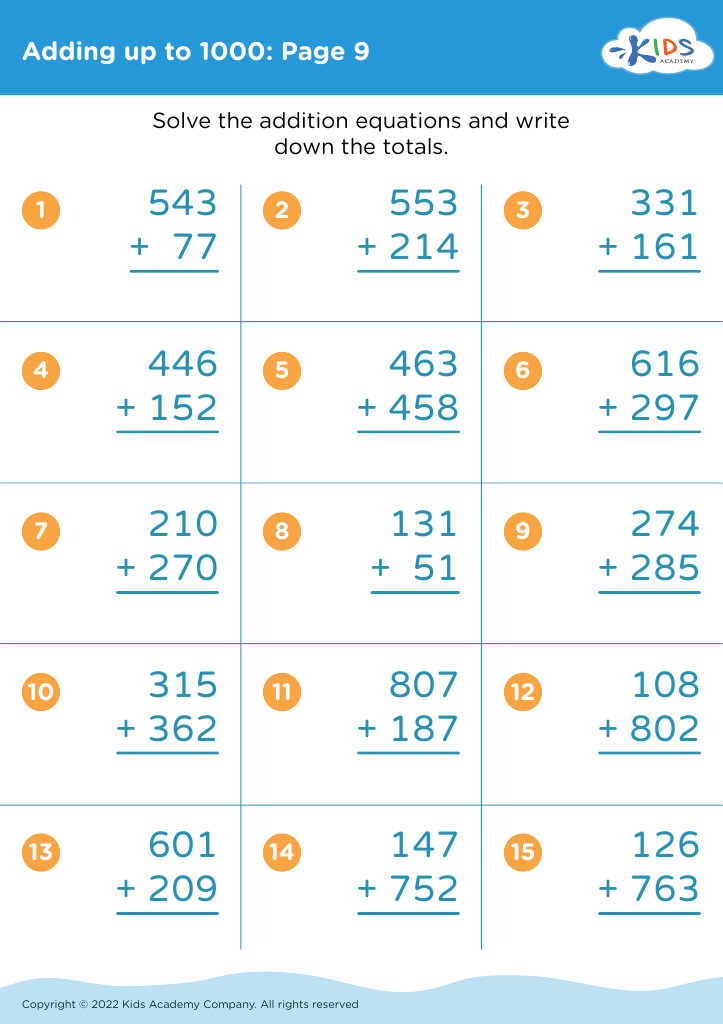



Understanding fractions and adding up to 1000 are crucial skills for children aged 5-9 because these concepts lay the foundation for advanced mathematical thinking. At this young age, children are highly receptive and can develop strong number sense. Understanding fractions helps youngsters grasp the idea of parts and wholes, enabling them to see how pieces fit together to form a complete entity. This is essential not only in math, where fractions are pervasive but also in everyday situations like cooking, dividing treats, and sharing.
Adding up to 1000 broadens their numerical comprehension, helping them to see and understand larger quantities while improving their addition skills. Mastery in these areas boosts their confidence and enthusiasm for math, reducing anxiety around the subject.
Moreover, these skills are interrelated: understanding that finding a common denominator is vital when adding fractions, cultivates logical thinking and problem-solving abilities.
Parents and teachers play a pivotal role in this learning phase. Supportive teaching materials, engaging educational games, and real-life contextual practice can make these concepts feel intuitive and fun. Focusing on these skills early helps prevent knowledge gaps, setting children up for success in higher-level math and other STEM subjects. Investing attention in these early-years concepts ensures a robust mathematical foundation for future learning.








