Filters

44 filtered results

Clear all filters
Favorites
With answer key
Interactive

44 filtered results

Difficulty Level

Grade


Check out this FREE Trial Lesson on Adding up to 1000 for age 5-9!

A

Favorites
With answer key
Interactive
  • 5-9
  • Understanding fractions
  • Adding up to 1000
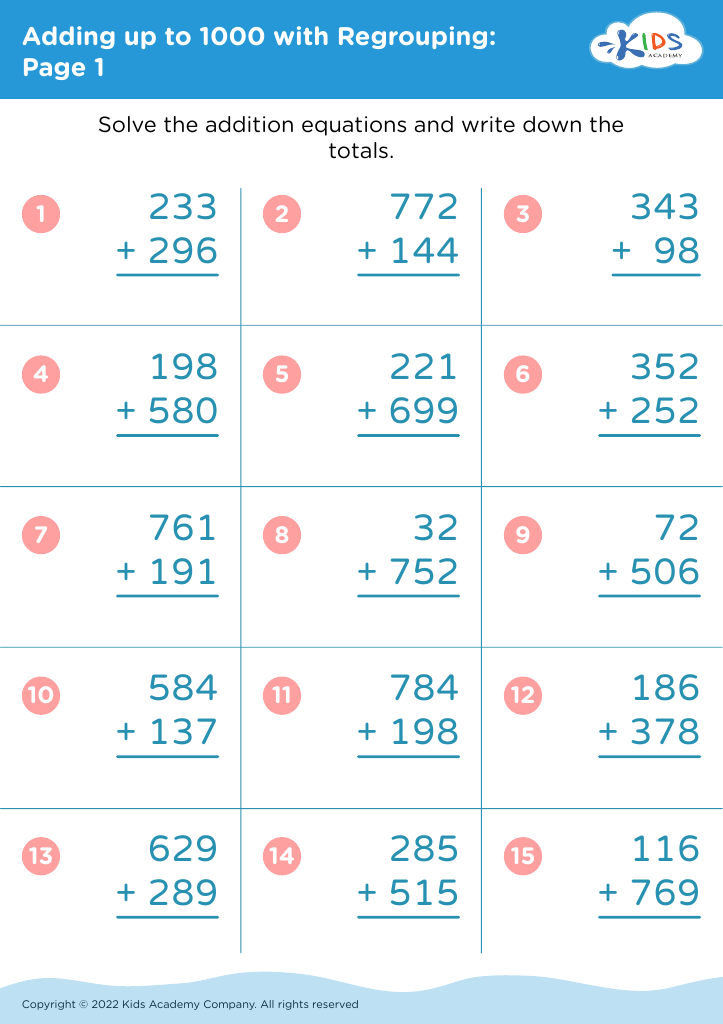
Adding up to 1000 with Regrouping: Page 1
Worksheet
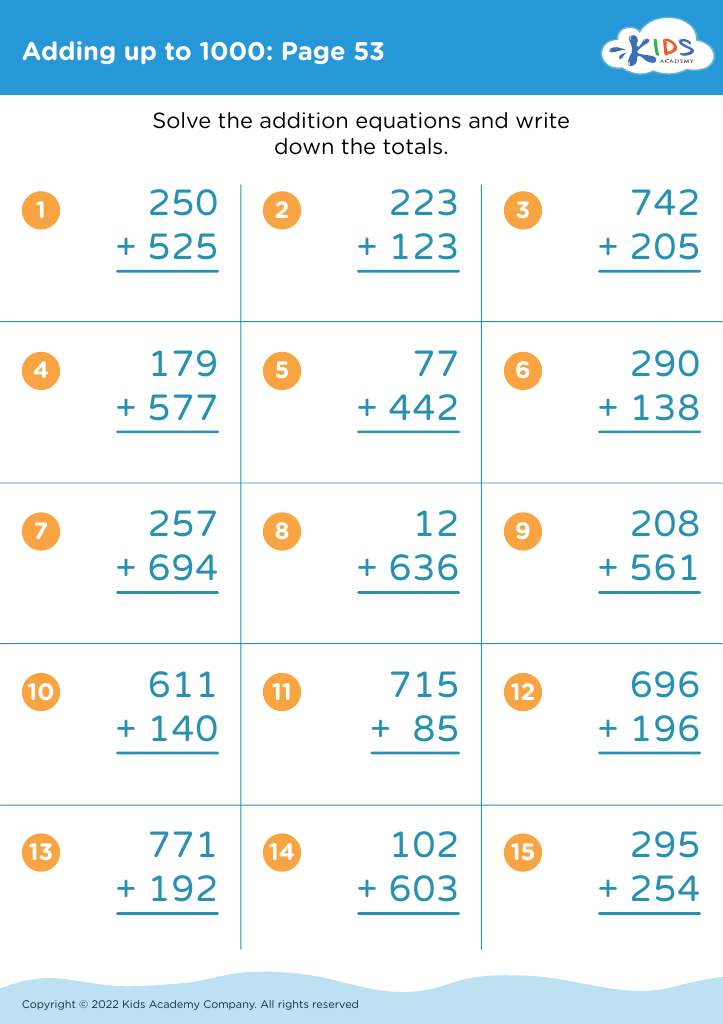
Adding up to 1000: Page 53

Adding up to 1000: Page 53

Adding up to 1000: Page 53
Worksheet
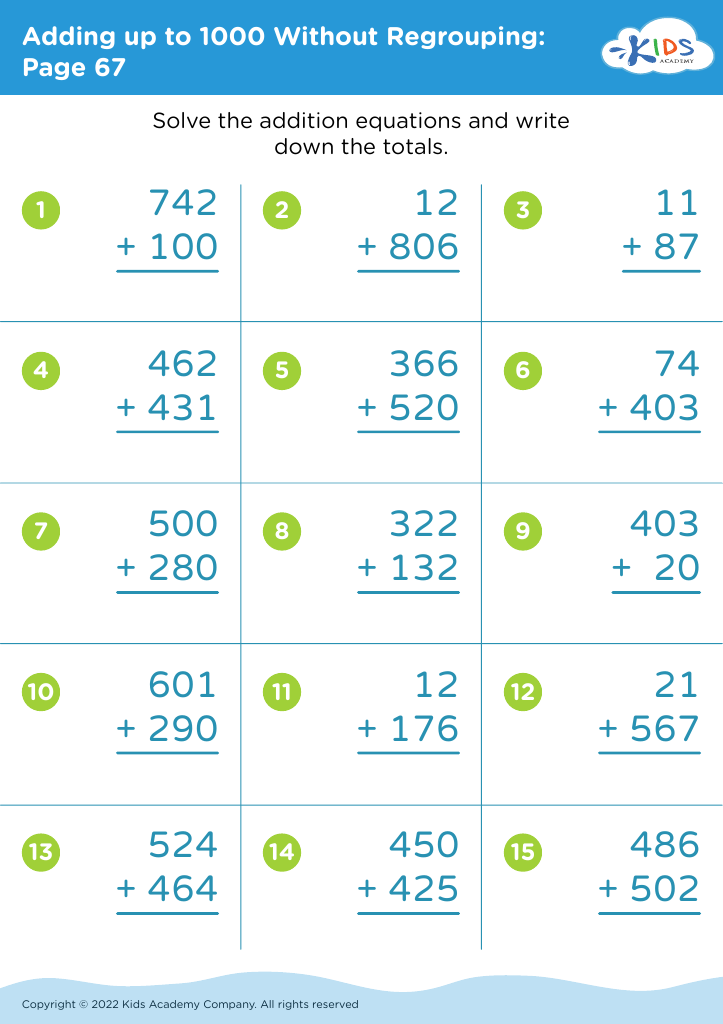
Adding up to 1000 Without Regrouping: Page 67
Worksheet
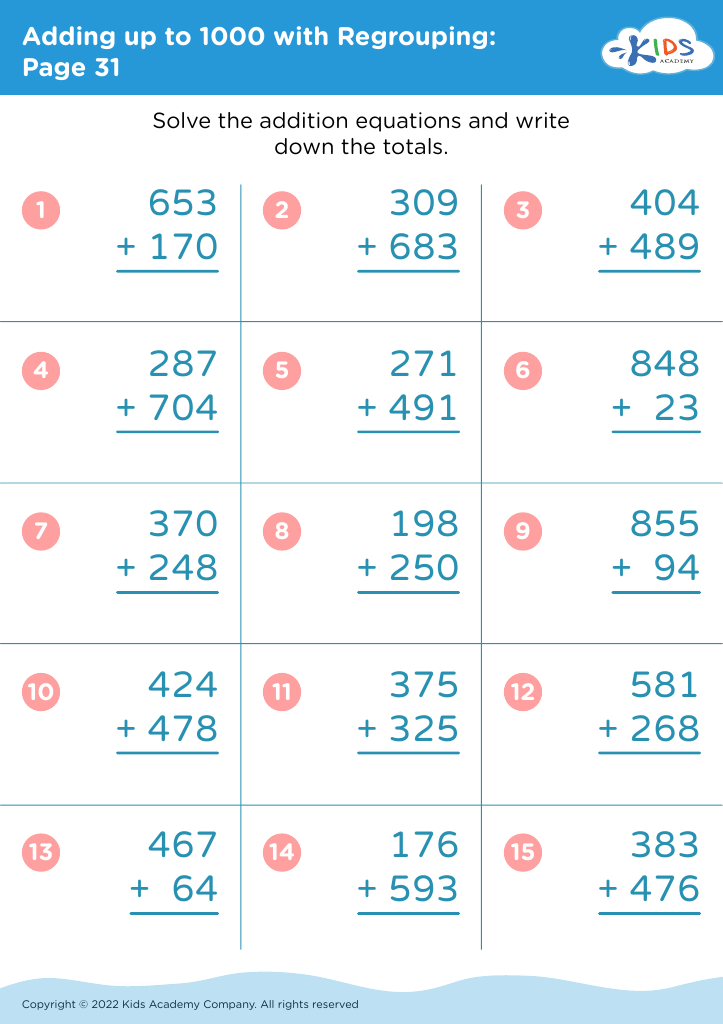
Adding up to 1000 with Regrouping: Page 31
Worksheet
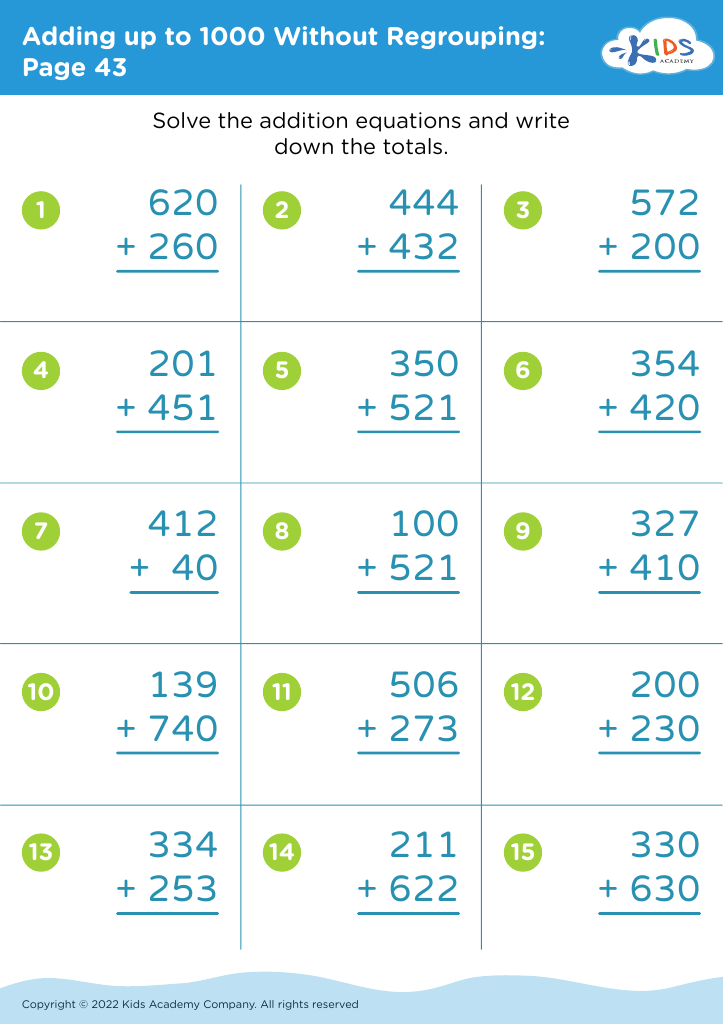
Adding up to 1000 Without Regrouping: Page 43
Worksheet
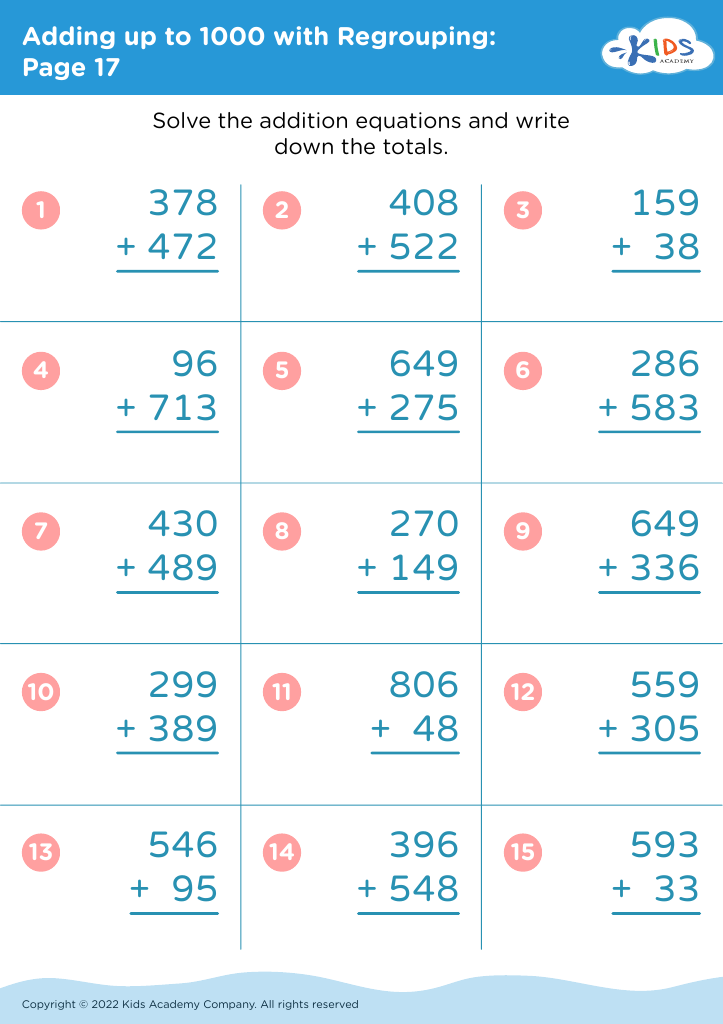
Adding up to 1000 with Regrouping: Page 17
Worksheet
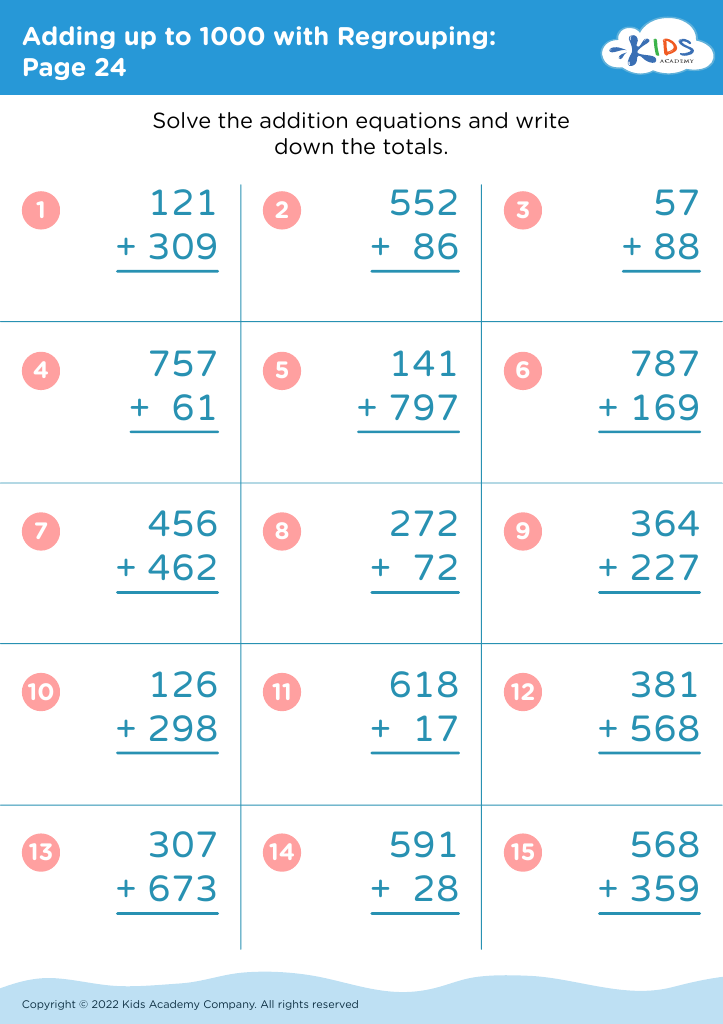
Adding up to 1000 with Regrouping: Page 24
Worksheet
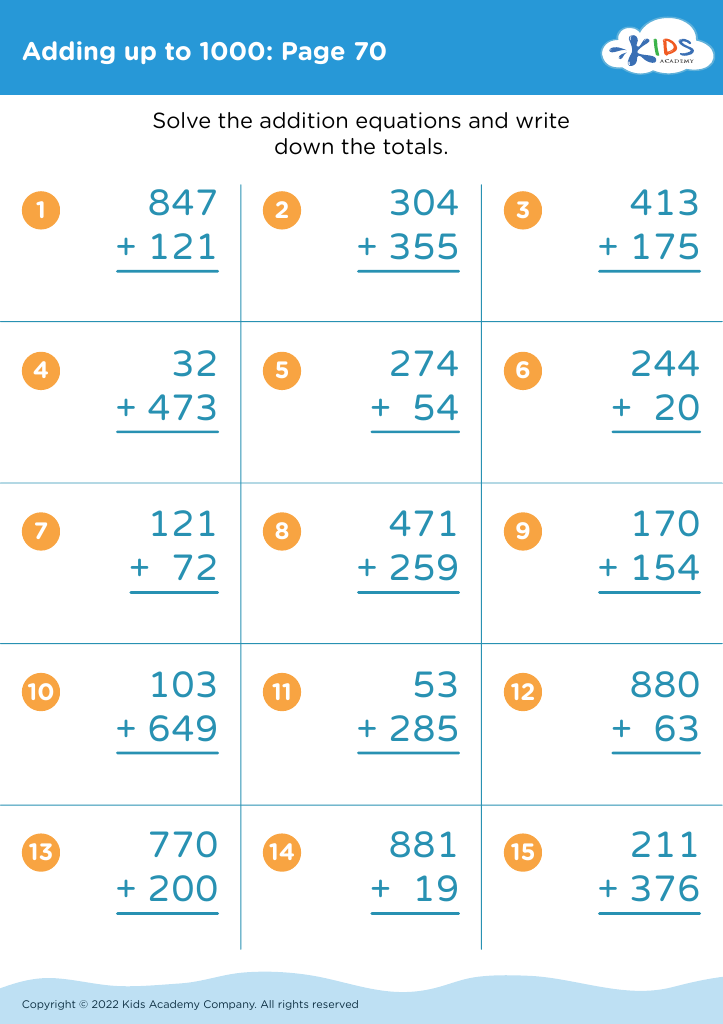
Adding up to 1000: Page 70

Adding up to 1000: Page 70

Adding up to 1000: Page 70
Worksheet
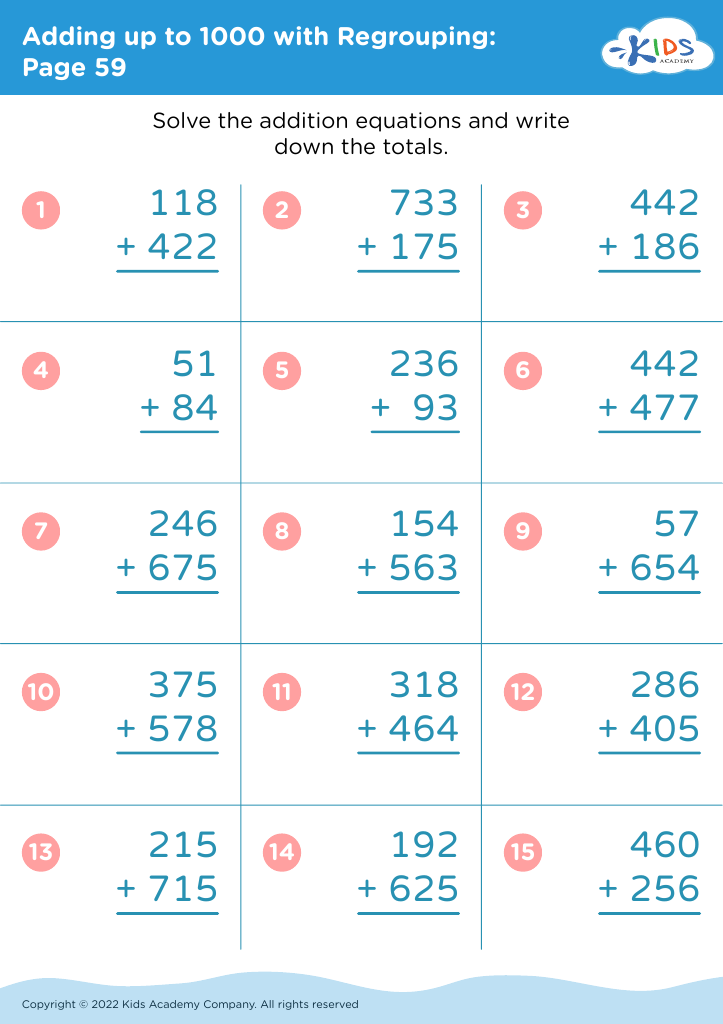
Adding up to 1000 with Regrouping: Page 59
Worksheet
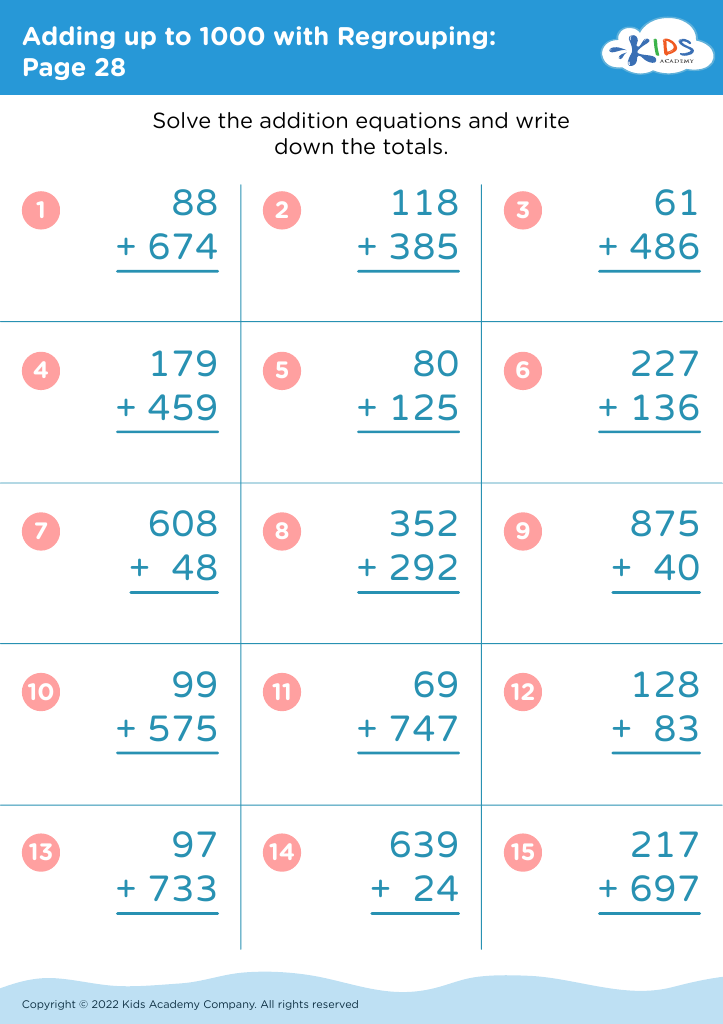
Adding up to 1000 with Regrouping: Page 28
Worksheet
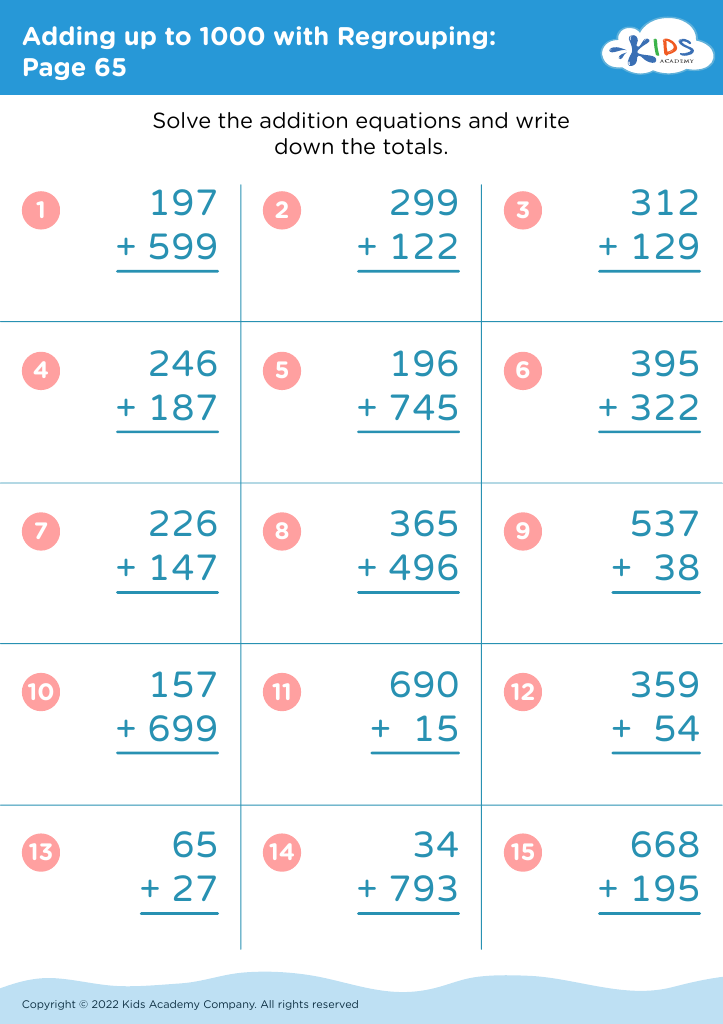
Adding up to 1000 with Regrouping: Page 65
Worksheet
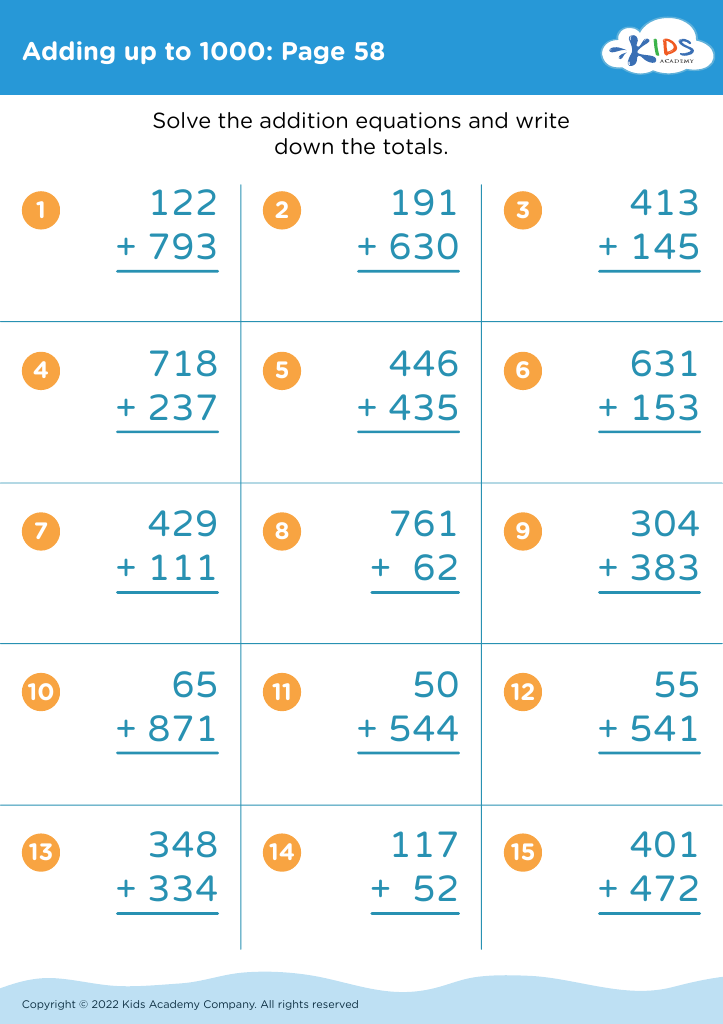
Adding up to 1000: Page 58

Adding up to 1000: Page 58

Adding up to 1000: Page 58
Worksheet
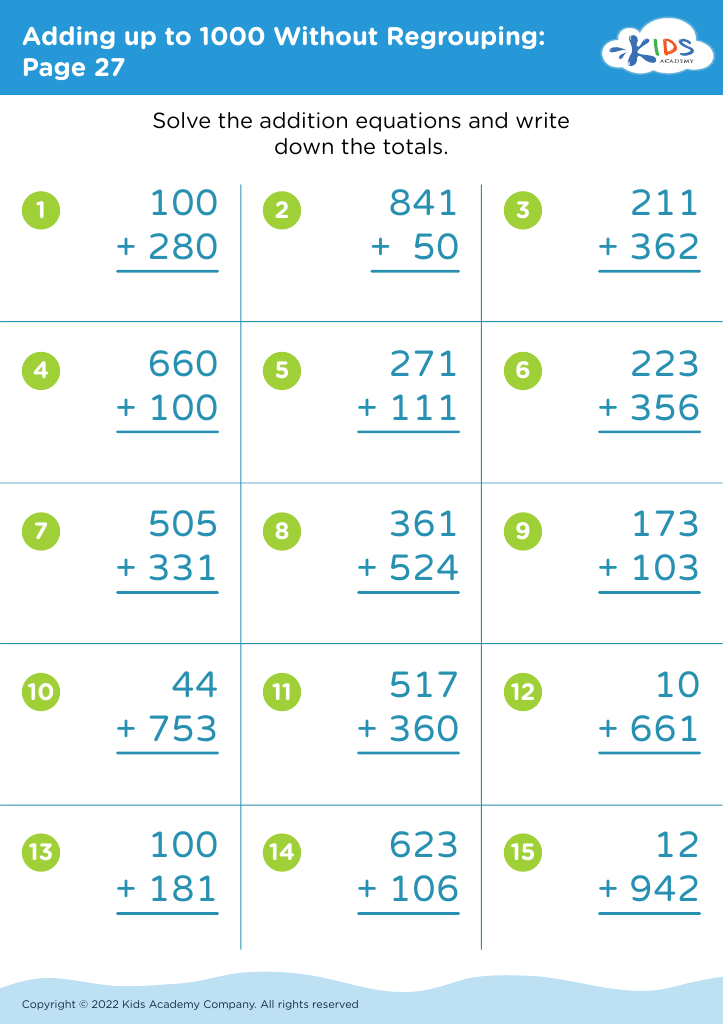
Adding up to 1000 Without Regrouping: Page 27
Worksheet
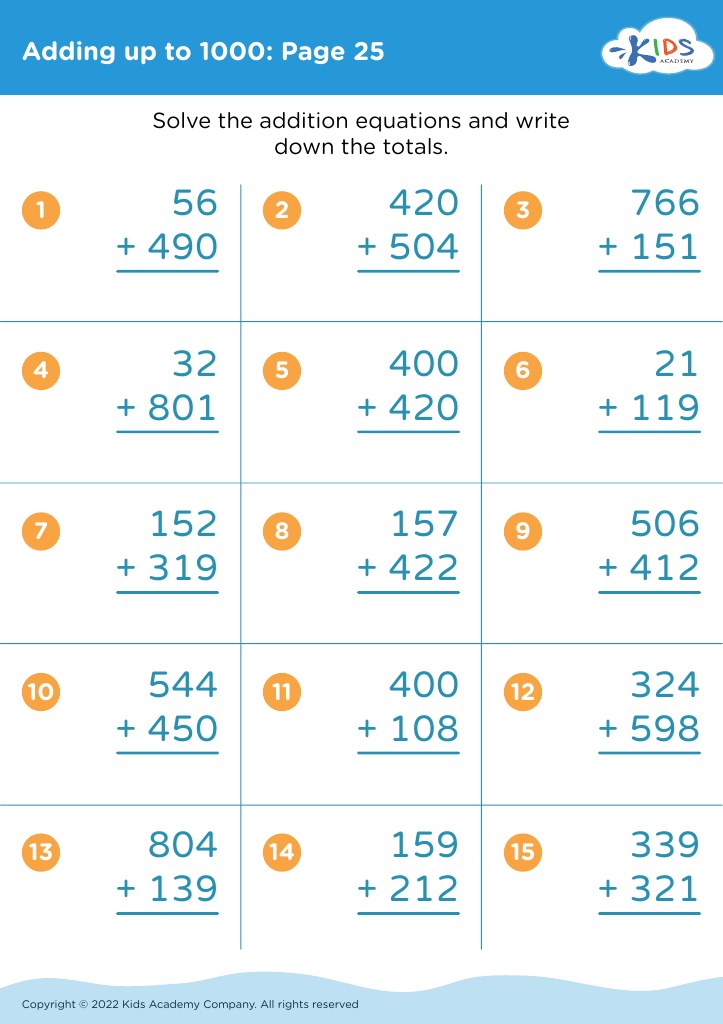
Adding up to 1000: Page 25

Adding up to 1000: Page 25

Adding up to 1000: Page 25
Worksheet
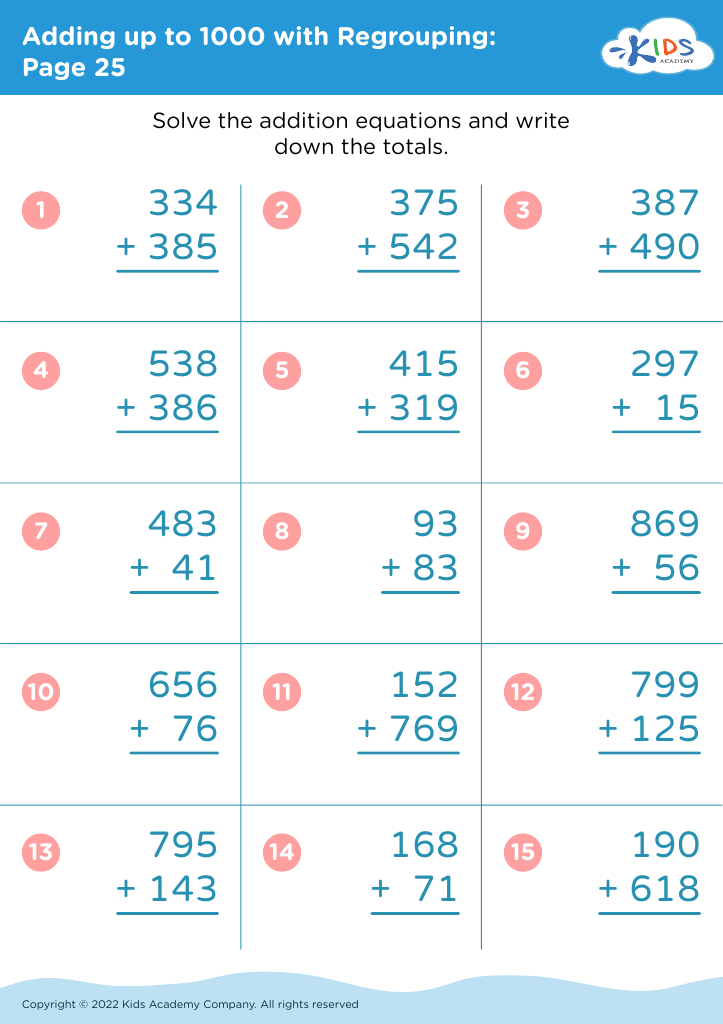
Adding up to 1000 with Regrouping: Page 25
Worksheet
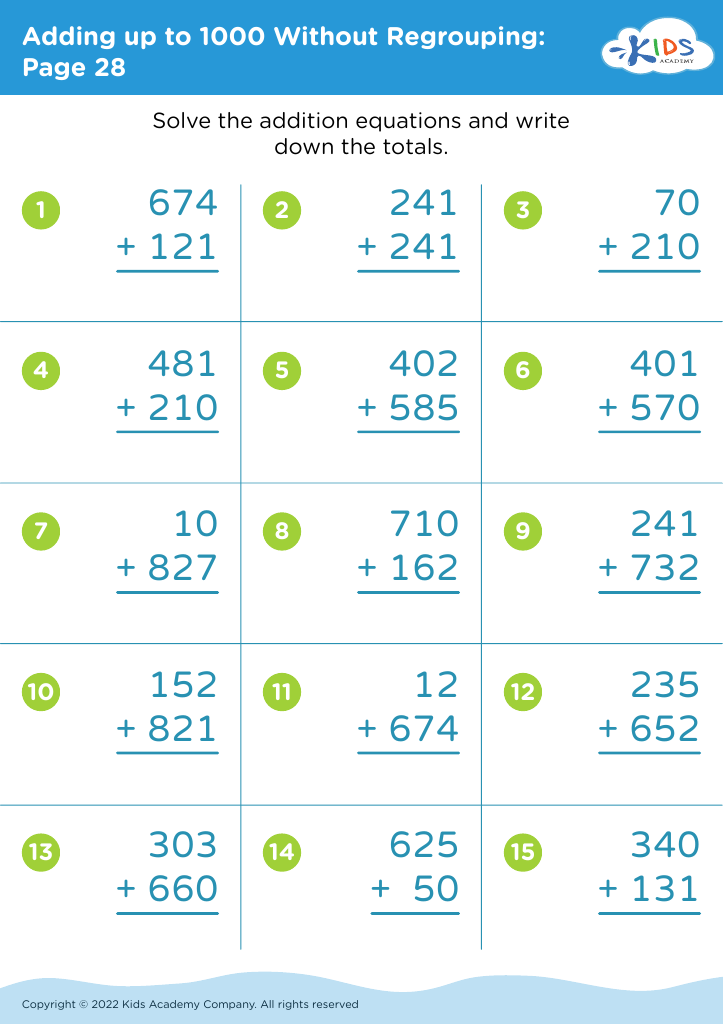
Adding up to 1000 Without Regrouping: Page 28
Worksheet
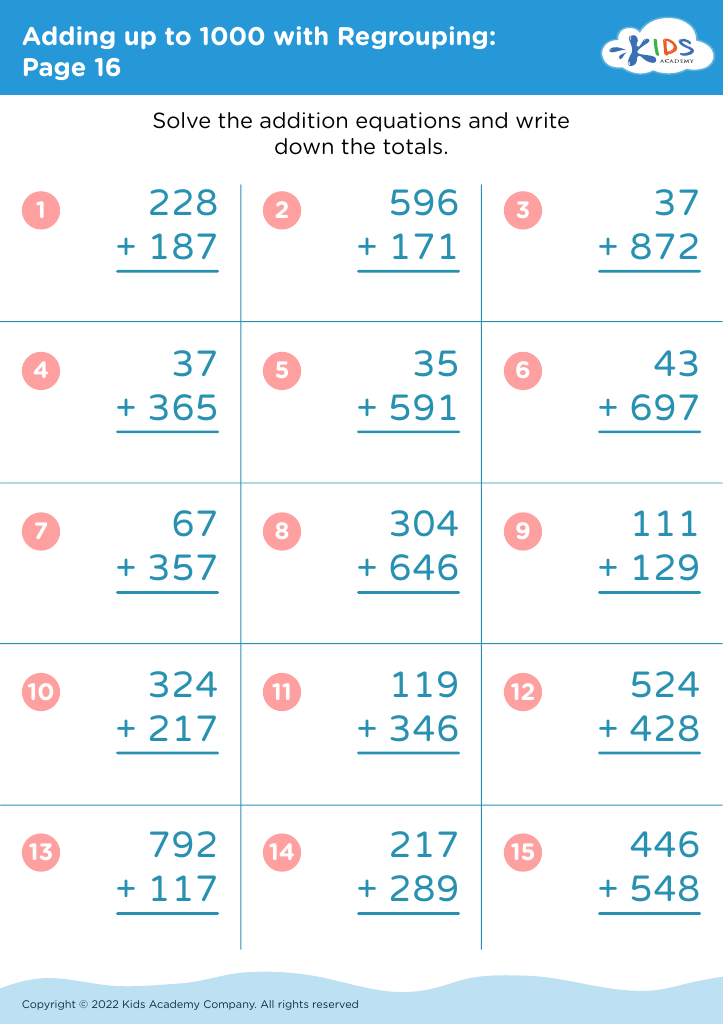
Adding up to 1000 with Regrouping: Page 16
Worksheet
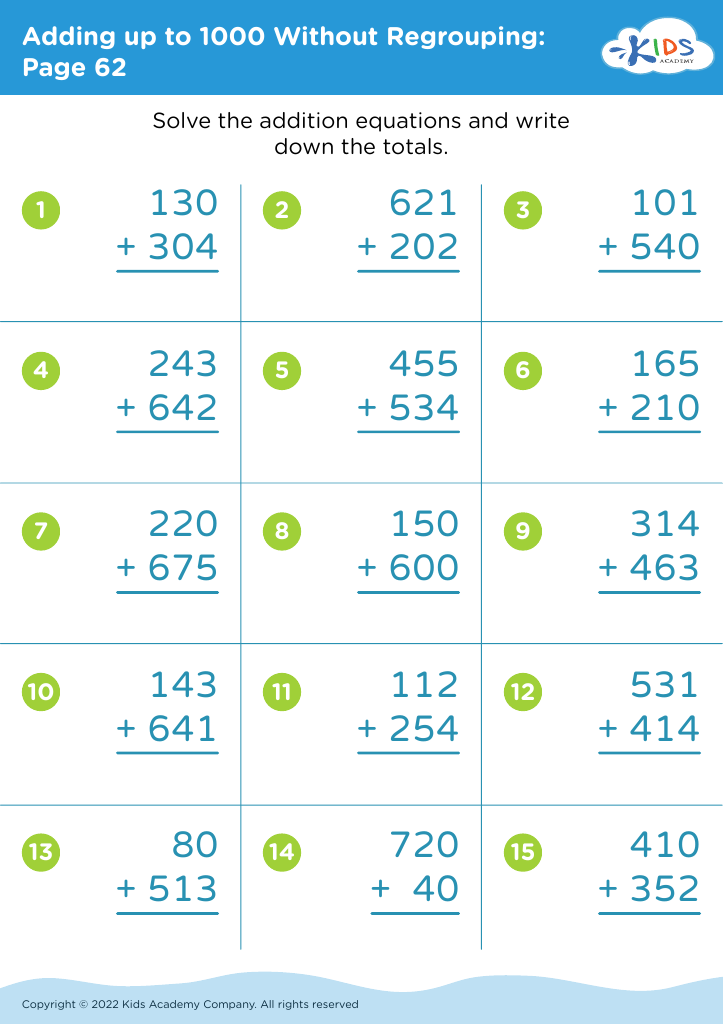
Adding up to 1000 Without Regrouping: Page 62
Worksheet
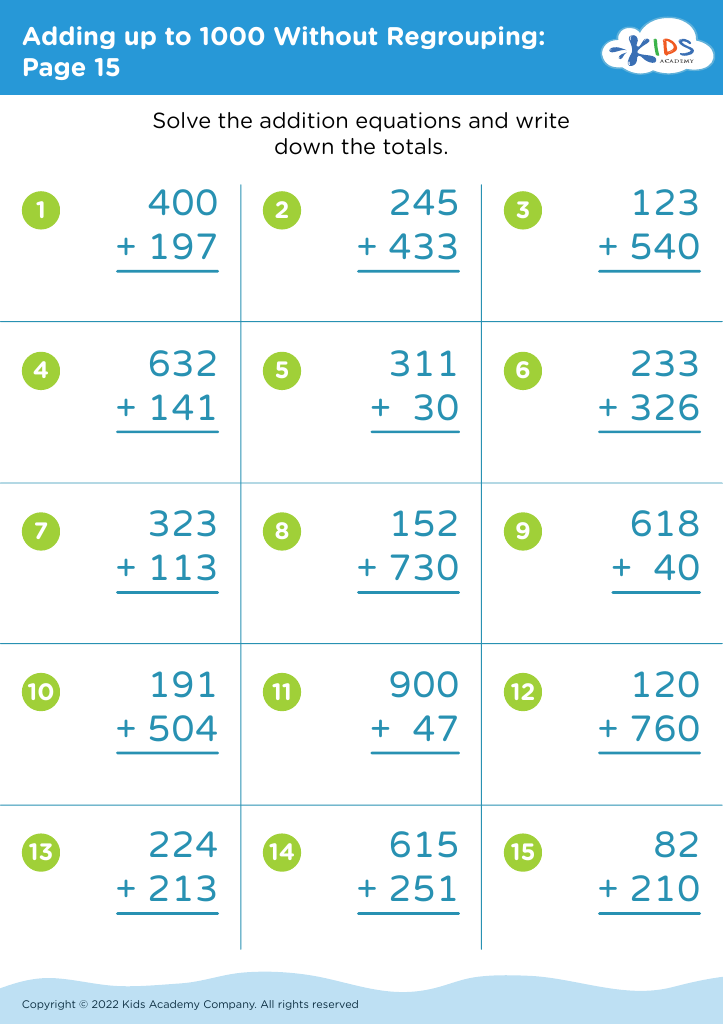
Adding up to 1000 Without Regrouping: Page 15
Worksheet
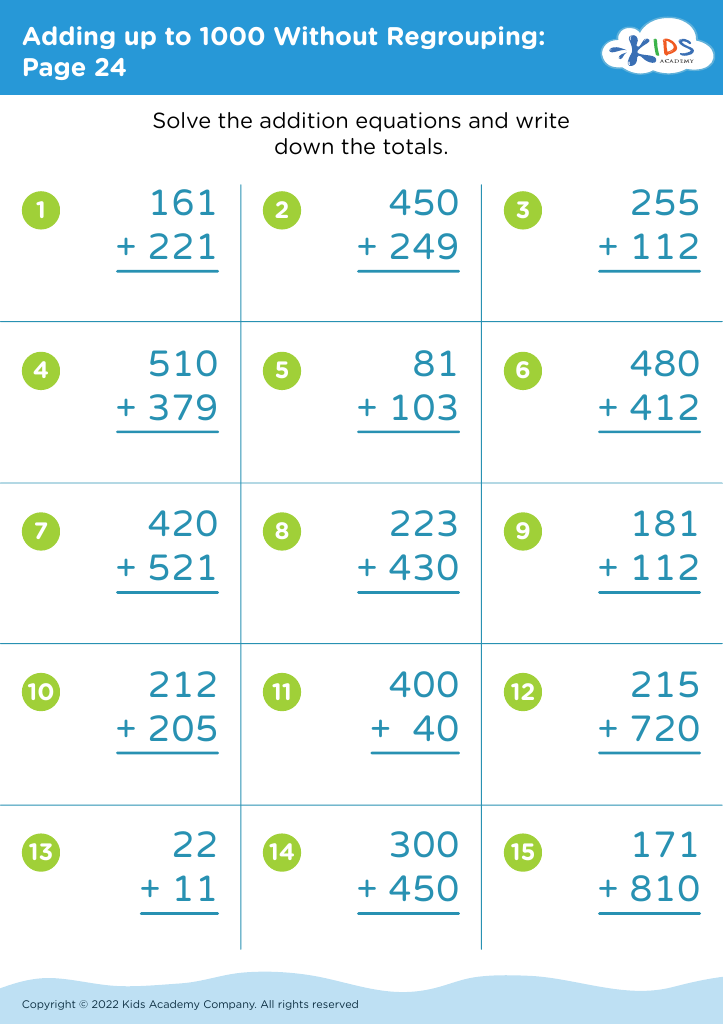
Adding up to 1000 Without Regrouping: Page 24
Worksheet


Understanding fractions is crucial for students ages 5-9, as it lays a foundation for their mathematical development. At this age, children are beginning to grasp the concept of parts and wholes, making it an ideal time to introduce fractions. This knowledge is not just about numbers; it enhances critical thinking and problem-solving skills that are vital in everyday life.

When kids comprehend fractions, they become more proficient in handling larger numbers and concepts, such as adding up to 1000. Mastering fractions helps them understand scaling, proportion, and ratio, essential skills as they advance in their education. Furthermore, these concepts foster connections to real-world scenarios—cutting a pizza, sharing toys, or measuring ingredients, making math relatable and fun.

For teachers and parents, building a strong understanding of fractions in early learners encourages a positive attitude towards math, mitigating anxiety as they progress into more complex topics. Additionally, encouraging this understanding helps identify any gaps that might hinder future learning. Fostering competence in fractions at this stage not only prepares children for advanced mathematics but also champions lifelong learning and confidence in their abilities. An investment in their mathematical foundation today is a step towards their success in the future.