Filters

90 filtered results

Clear all filters
Favorites
With answer key
Interactive

90 filtered results

Difficulty Level

Grade


Check out this FREE Trial Lesson on Adding Up to 5 for age 5-9!

L

Favorites
With answer key
Interactive
  • 5-9
  • Animal recognition
  • Adding Up to 5
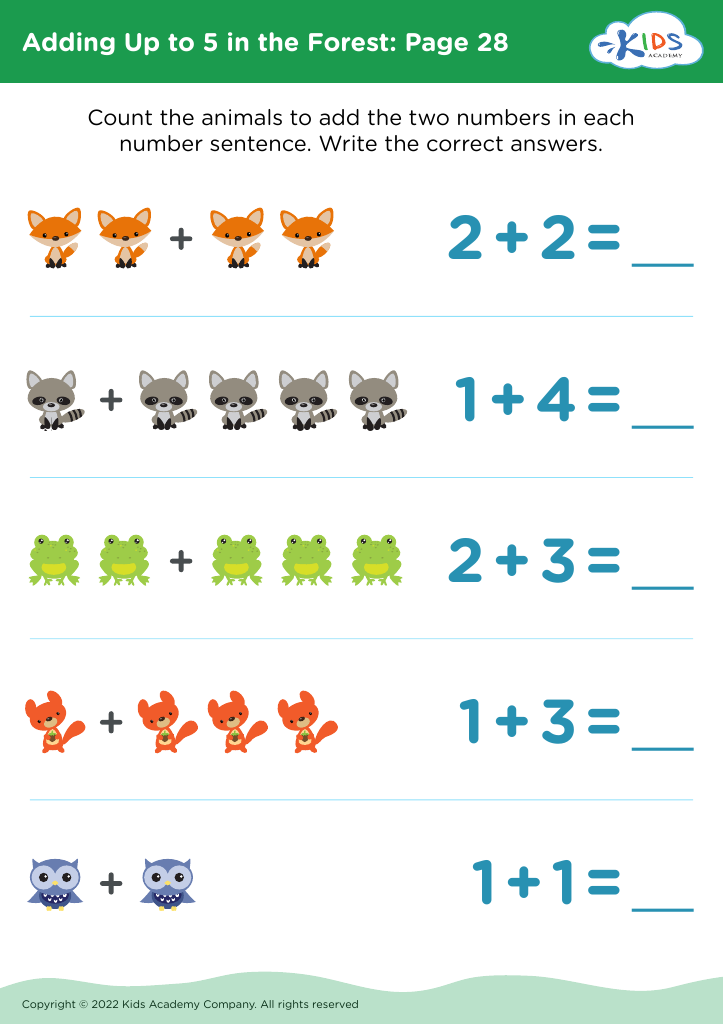
Adding Up to 5 in the Forest: Page 28
Worksheet
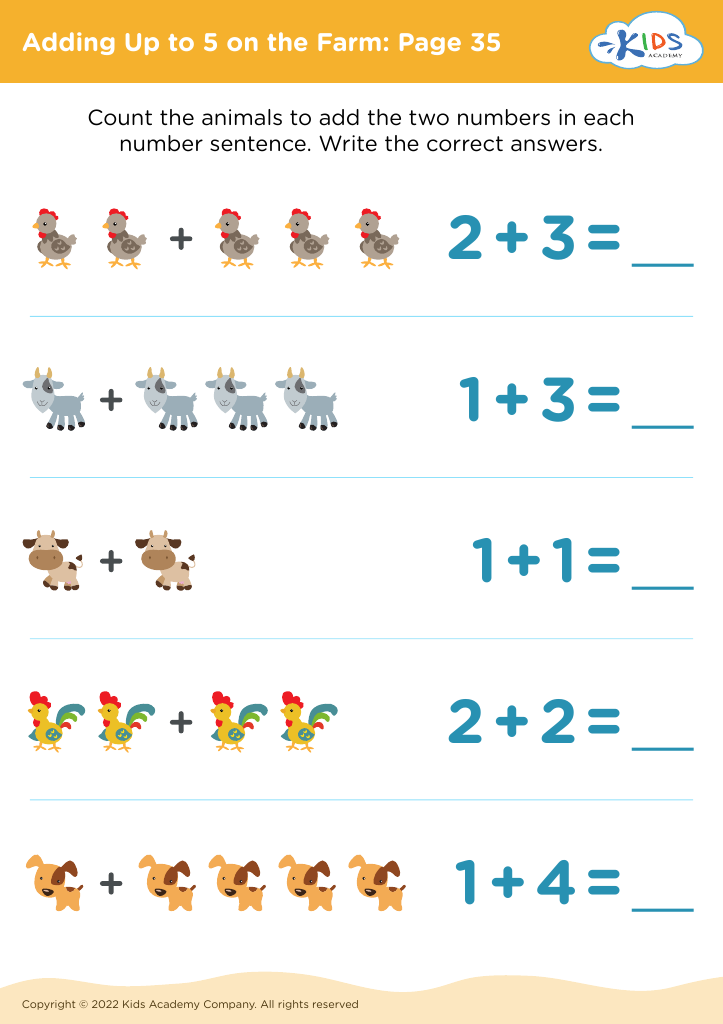
Adding Up to 5 on the Farm: Page 35
Worksheet
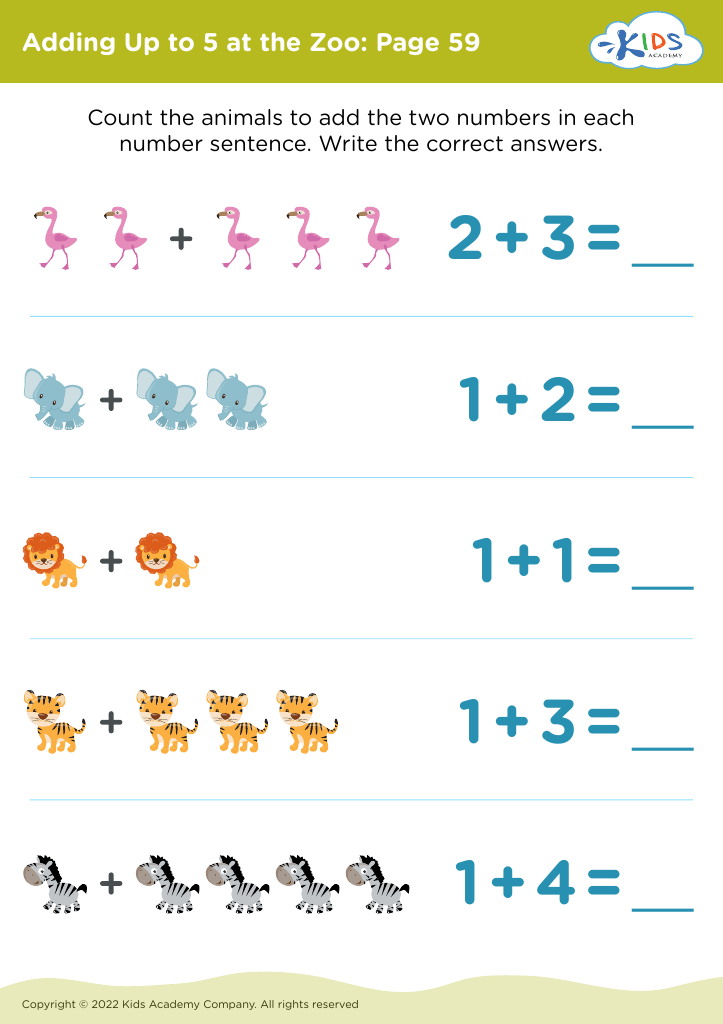
Adding Up to 5 at the Zoo: Page 59
Worksheet
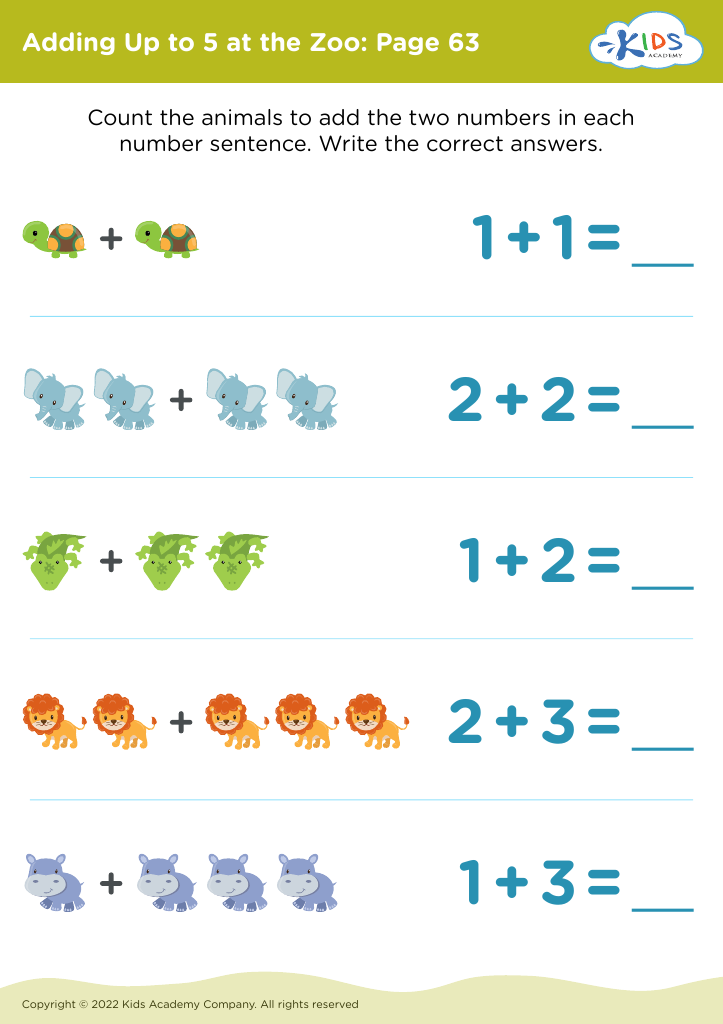
Adding Up to 5 at the Zoo: Page 63
Worksheet
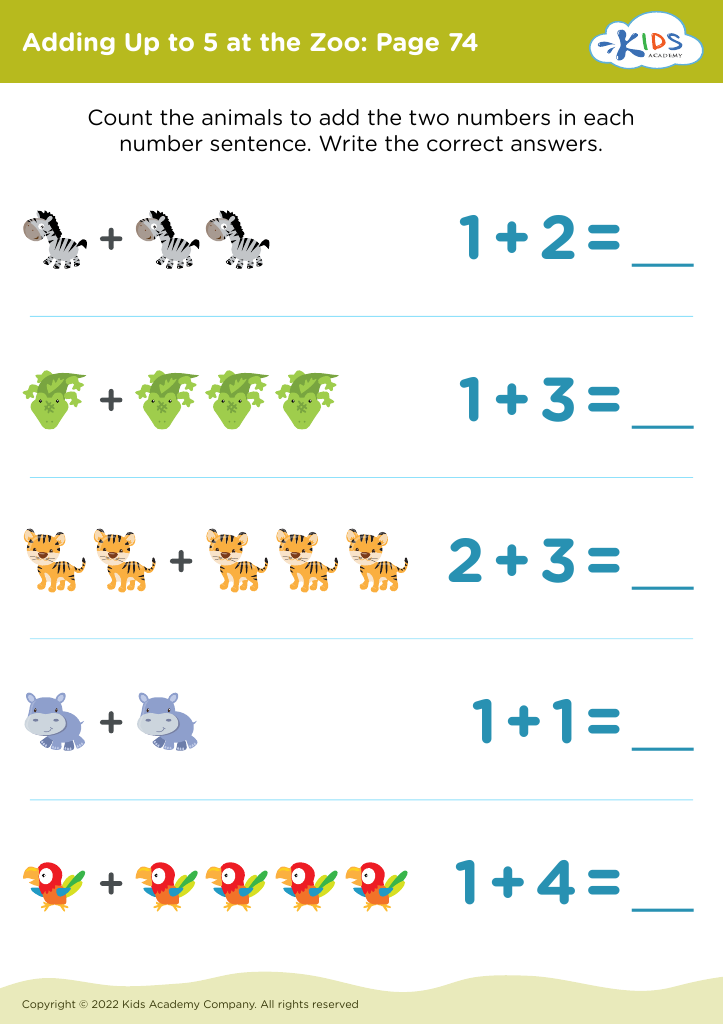
Adding Up to 5 at the Zoo: Page 74
Worksheet
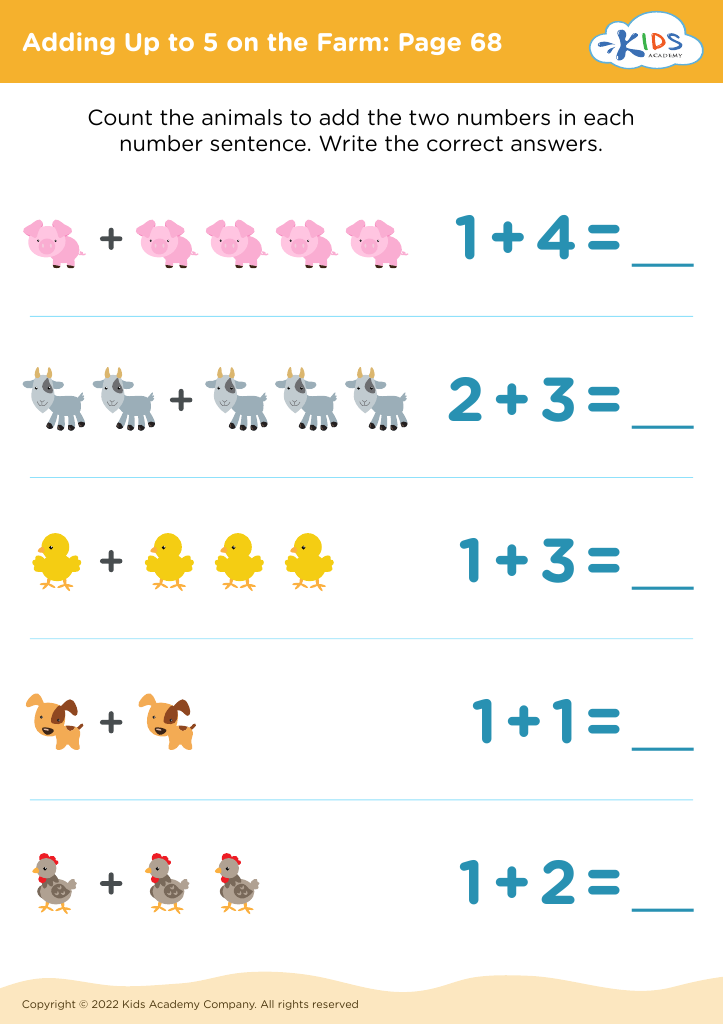
Adding Up to 5 on the Farm: Page 68
Worksheet
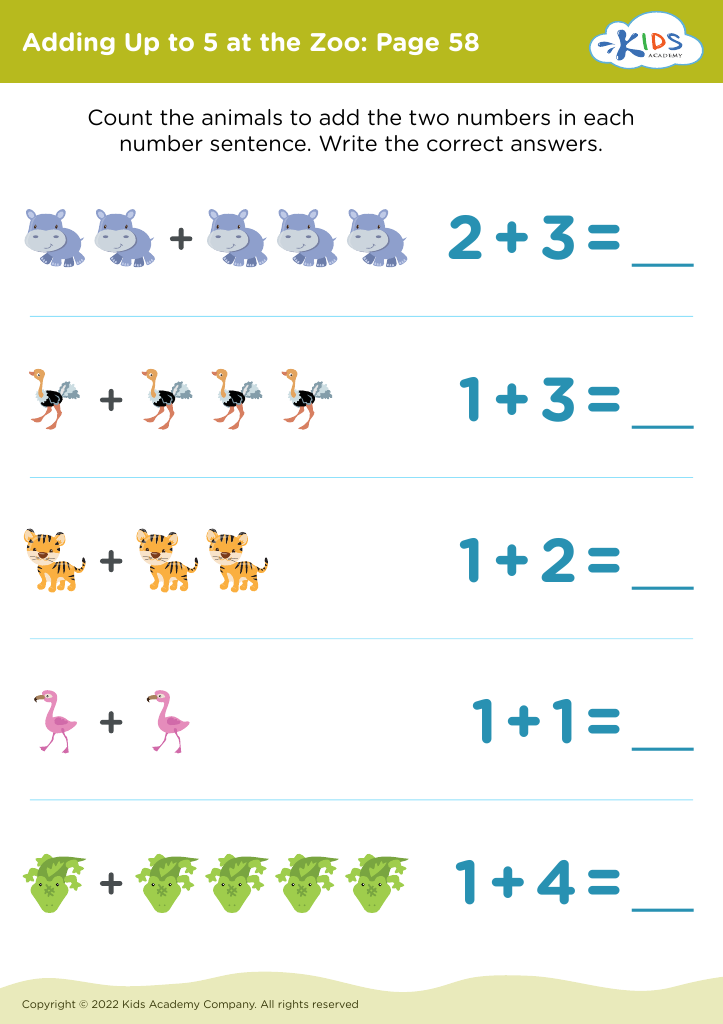
Adding Up to 5 at the Zoo: Page 58
Worksheet
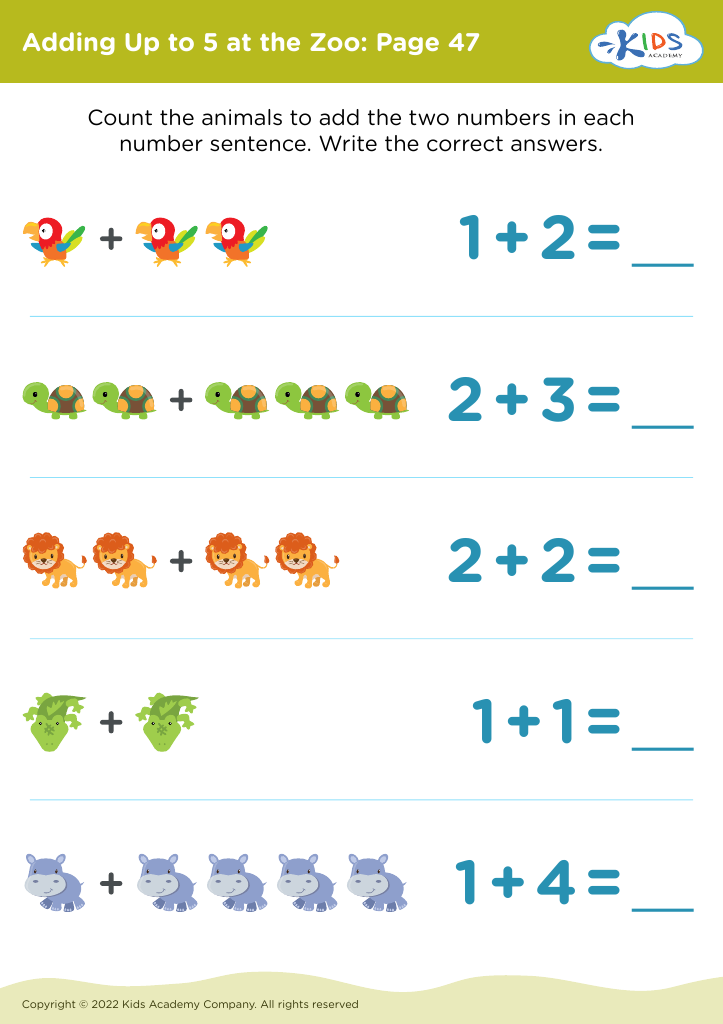
Adding Up to 5 at the Zoo: Page 47
Worksheet
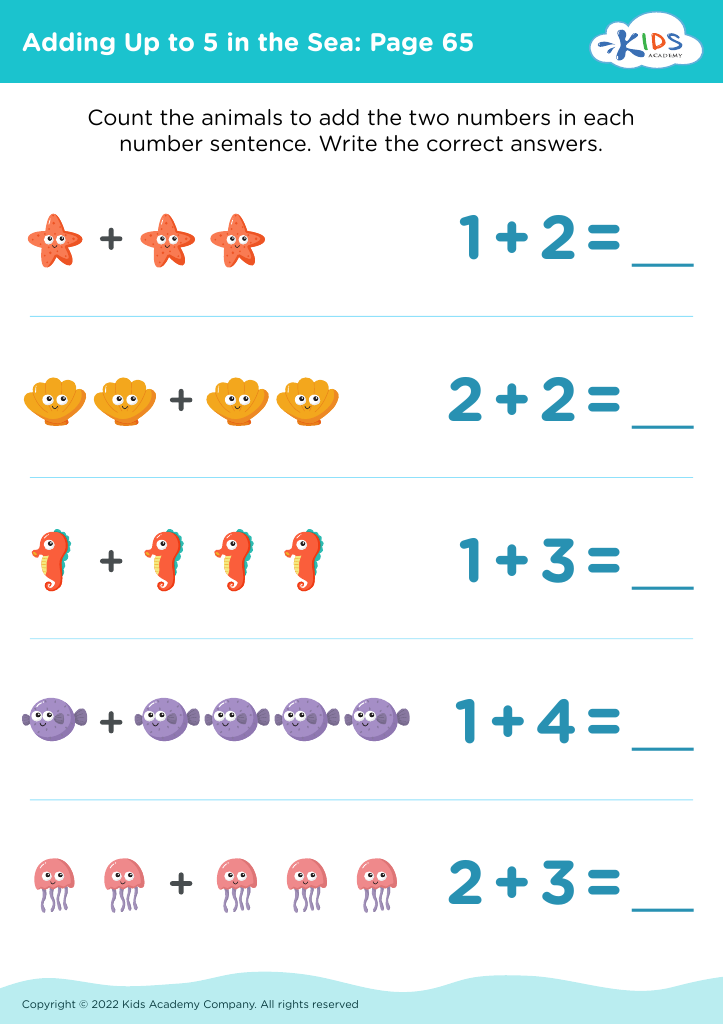
Adding Up to 5 in the Sea: Page 65
Worksheet
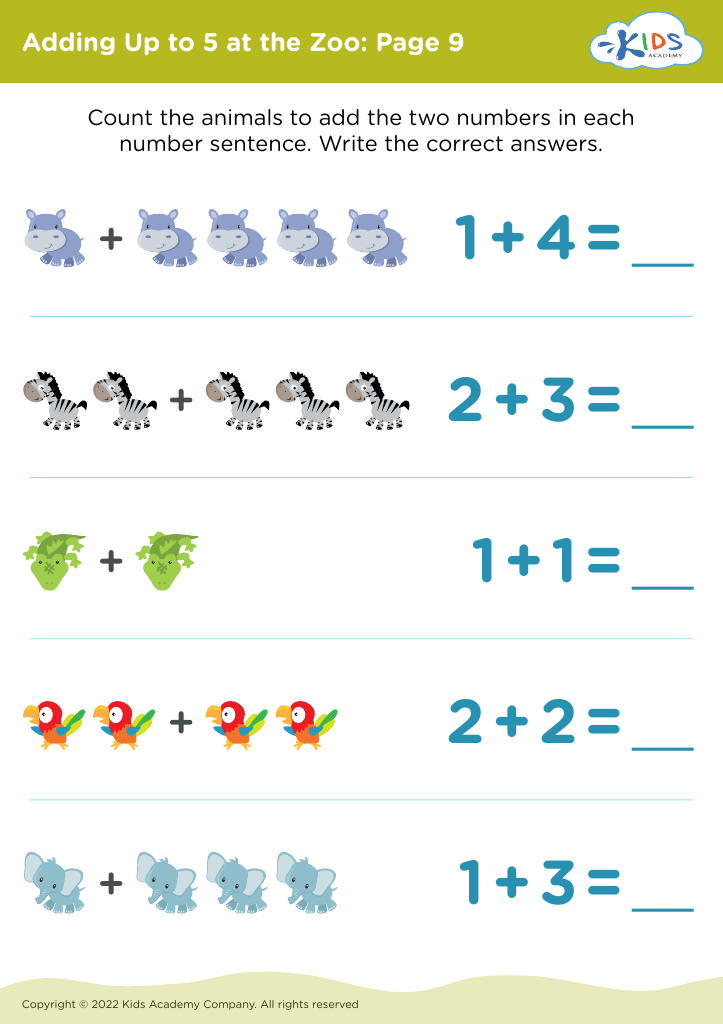
Adding Up to 5 at the Zoo: Page 9

Adding Up to 5 at the Zoo: Page 9

Adding Up to 5 at the Zoo: Page 9
Worksheet
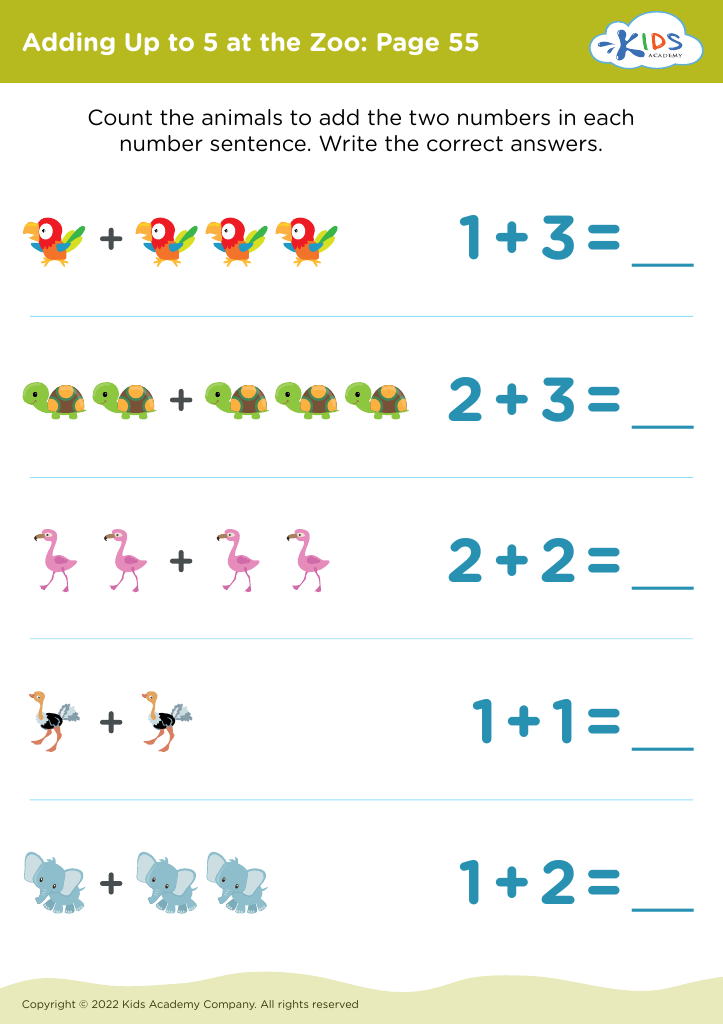
Adding Up to 5 at the Zoo: Page 55
Worksheet
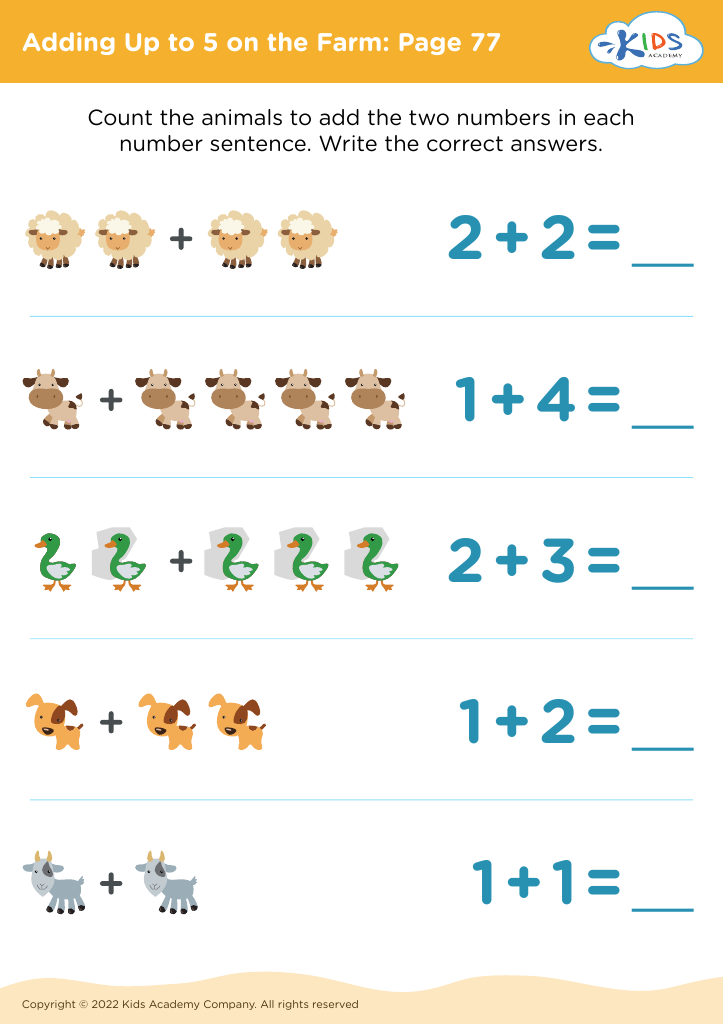
Adding Up to 5 on the Farm: Page 77
Worksheet
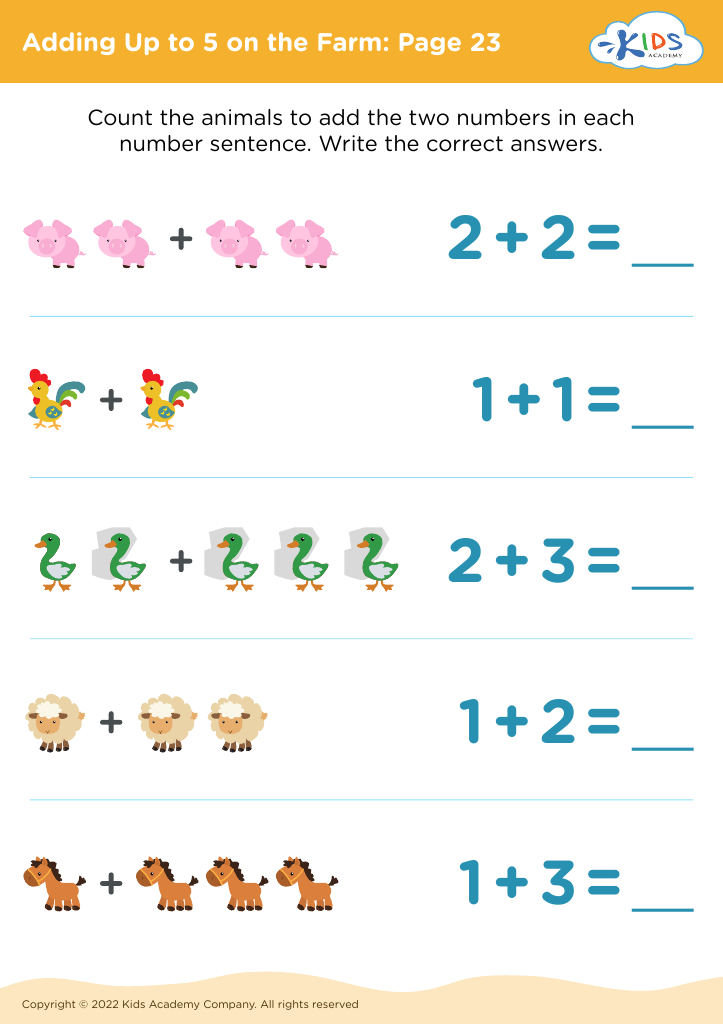
Adding Up to 5 on the Farm: Page 23
Worksheet
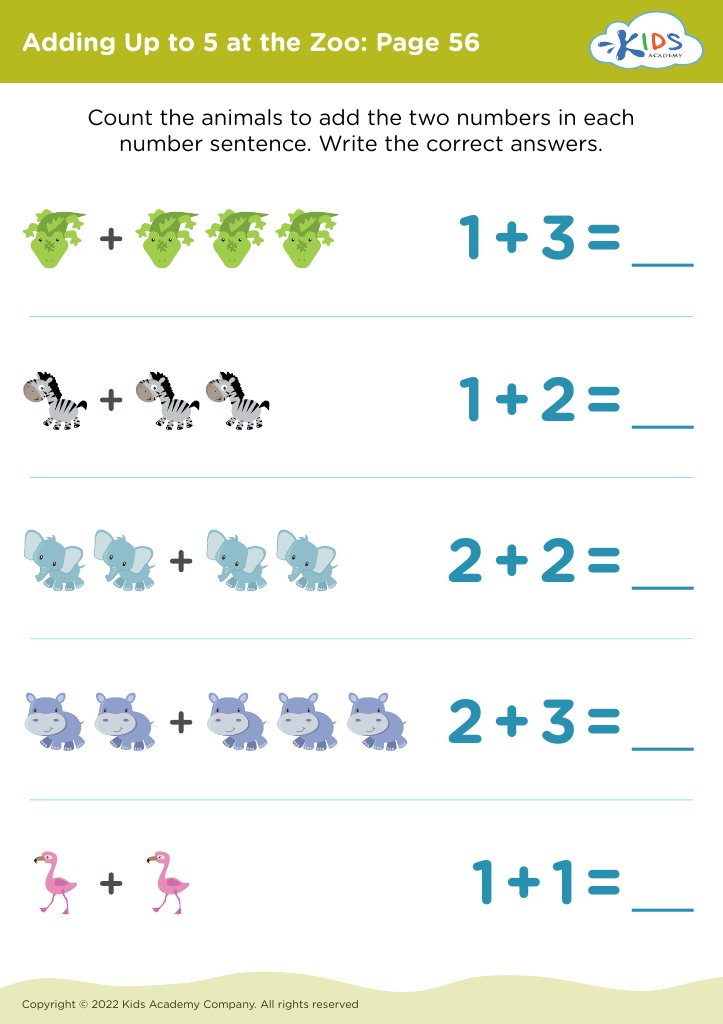
Adding Up to 5 at the Zoo: Page 56
Worksheet
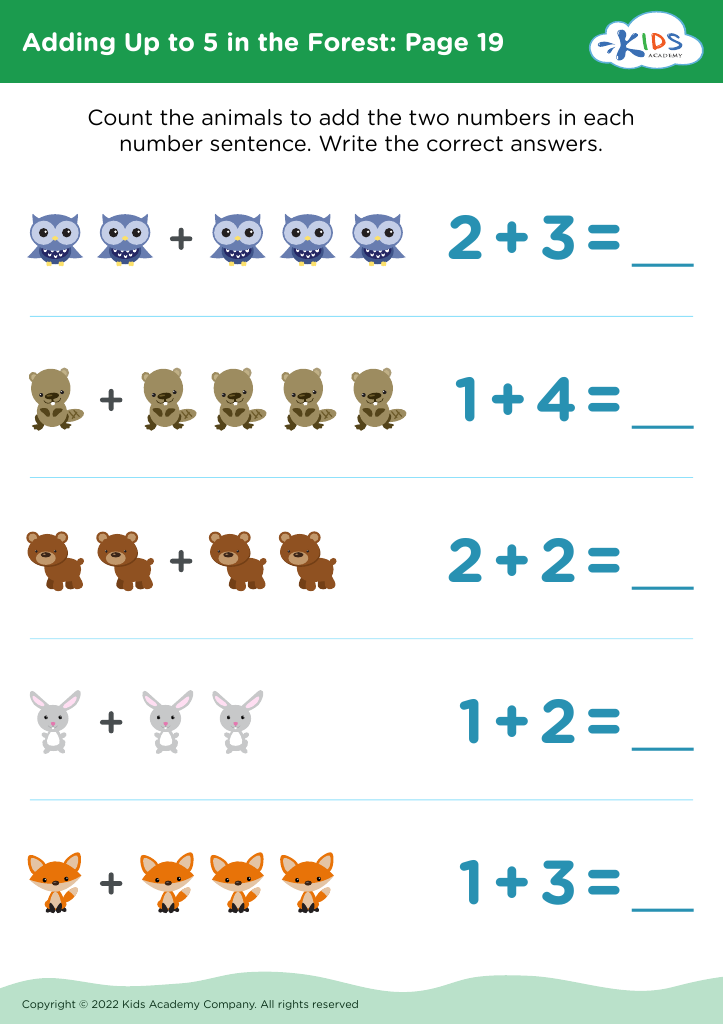
Adding Up to 5 in the Forest: Page 19
Worksheet
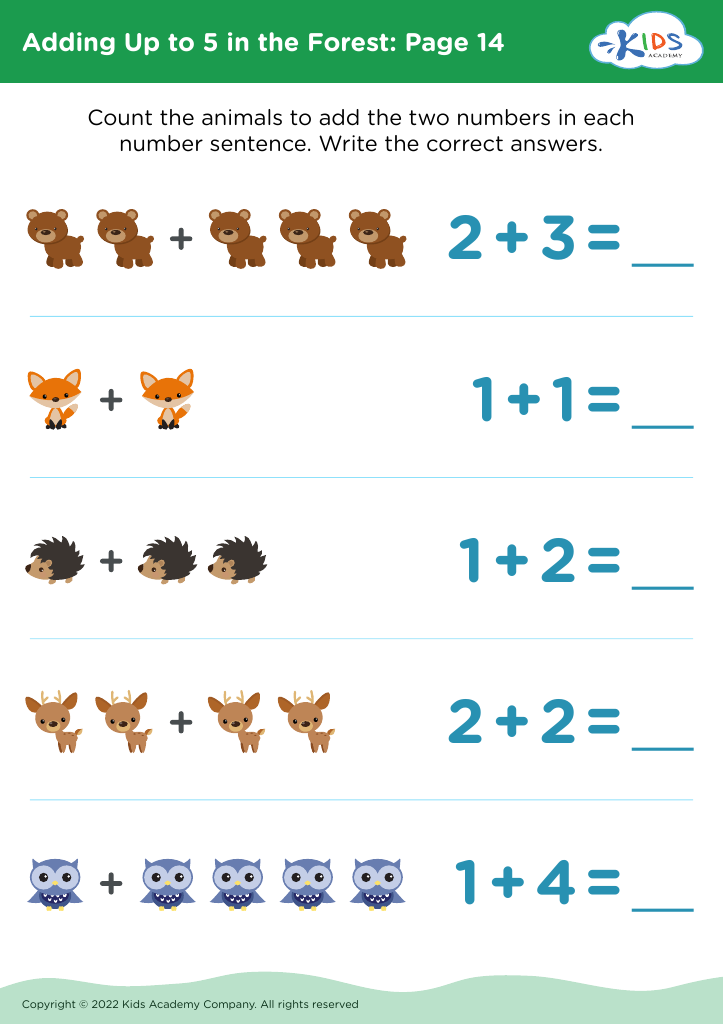
Adding Up to 5 in the Forest: Page 14
Worksheet
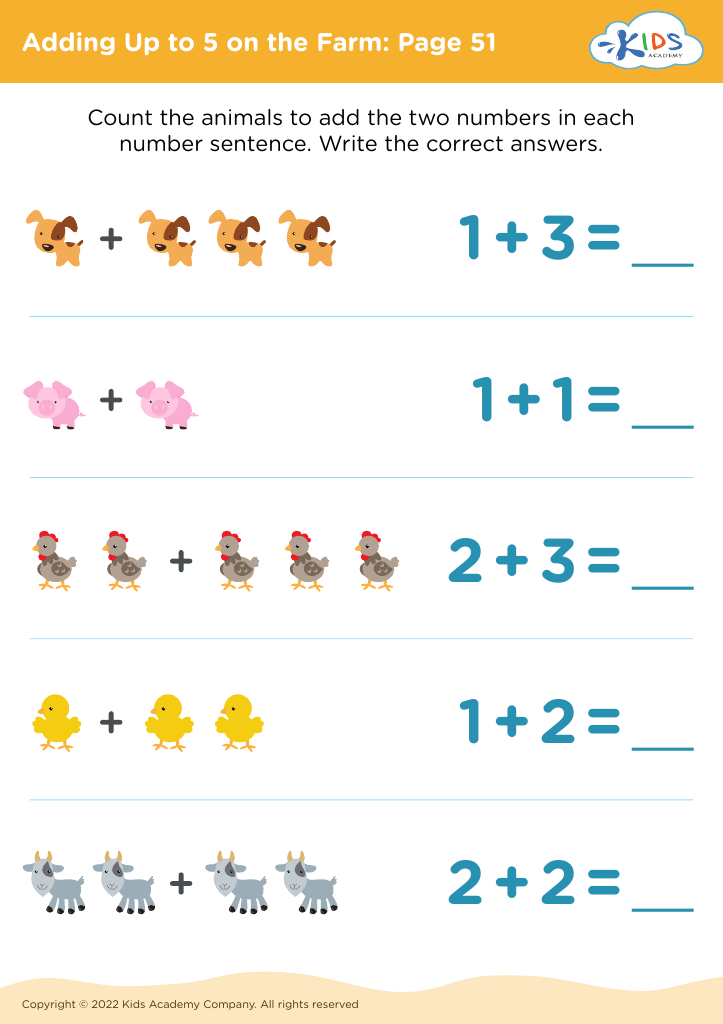
Adding Up to 5 on the Farm: Page 51
Worksheet
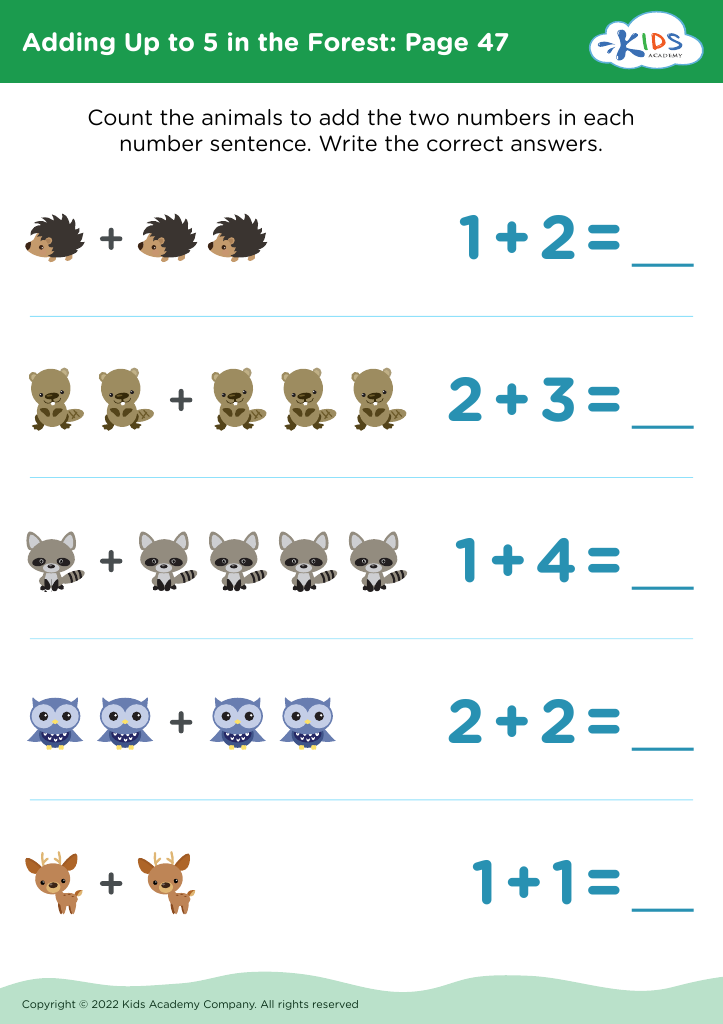
Adding Up to 5 in the Forest: Page 47
Worksheet
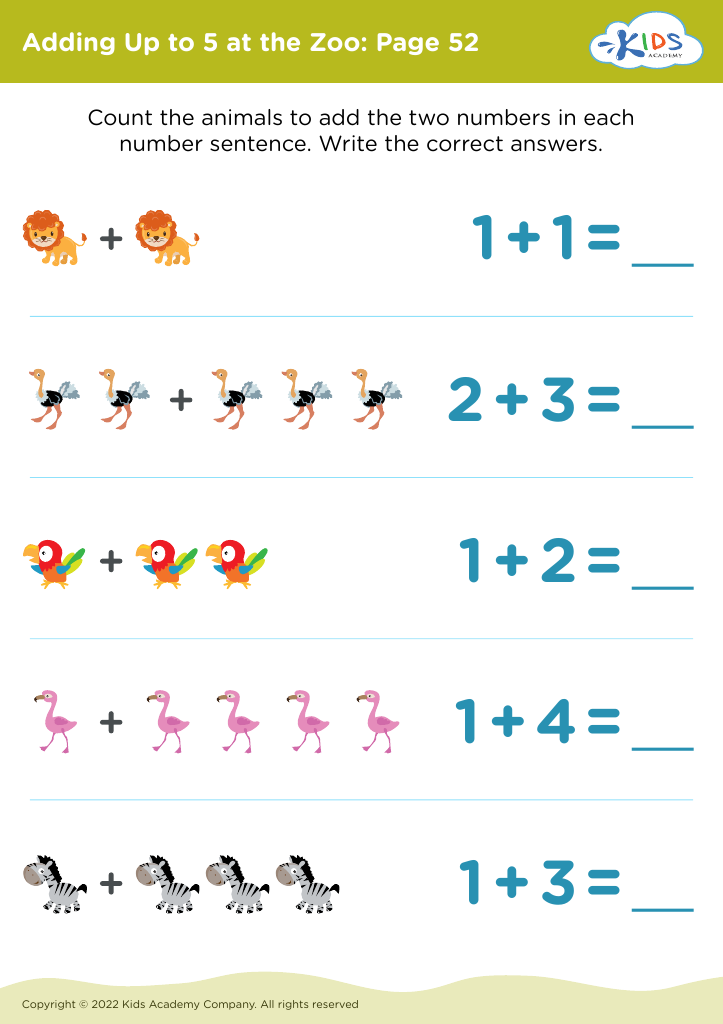
Adding Up to 5 at the Zoo: Page 52
Worksheet
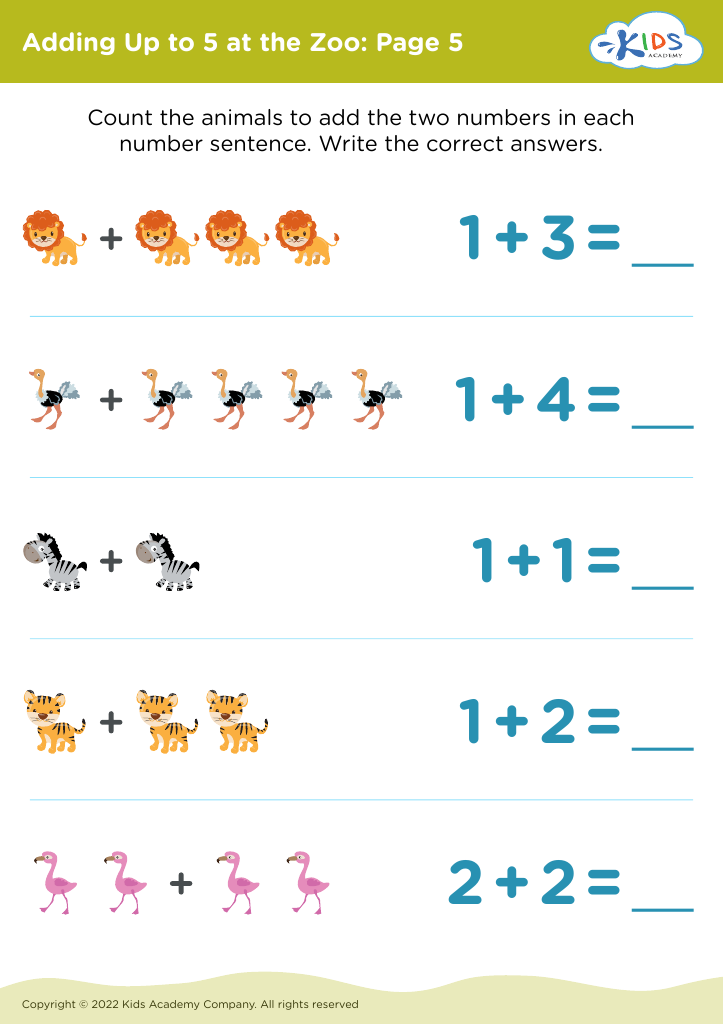
Adding Up to 5 at the Zoo: Page 5

Adding Up to 5 at the Zoo: Page 5

Adding Up to 5 at the Zoo: Page 5
Worksheet
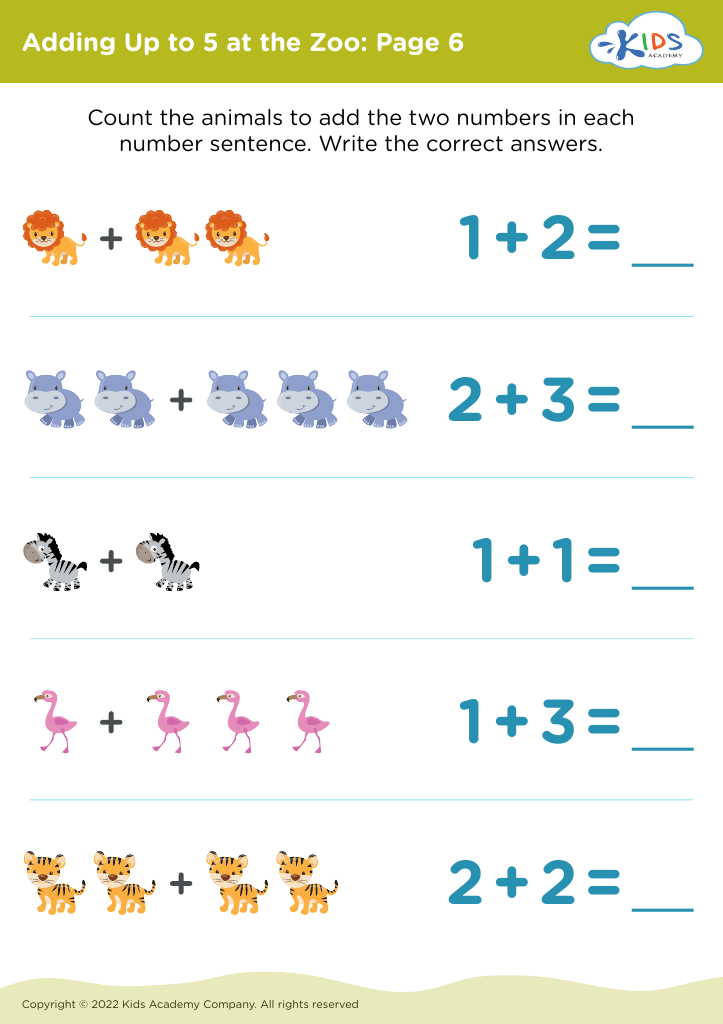
Adding Up to 5 at the Zoo: Page 6

Adding Up to 5 at the Zoo: Page 6

Adding Up to 5 at the Zoo: Page 6
Worksheet
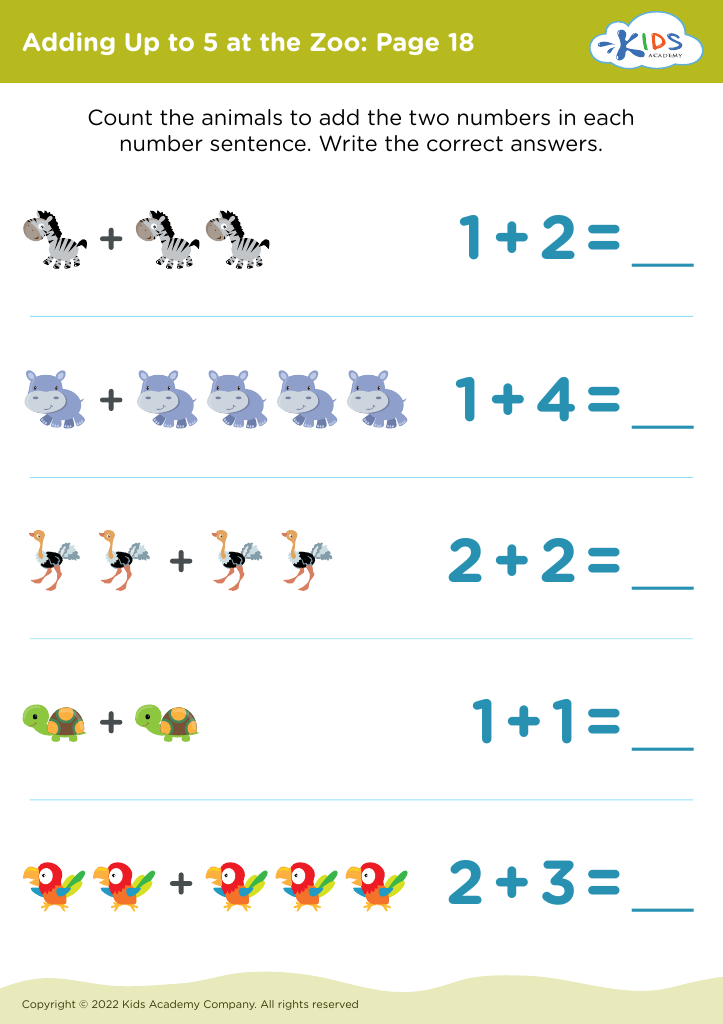
Adding Up to 5 at the Zoo: Page 18
Worksheet
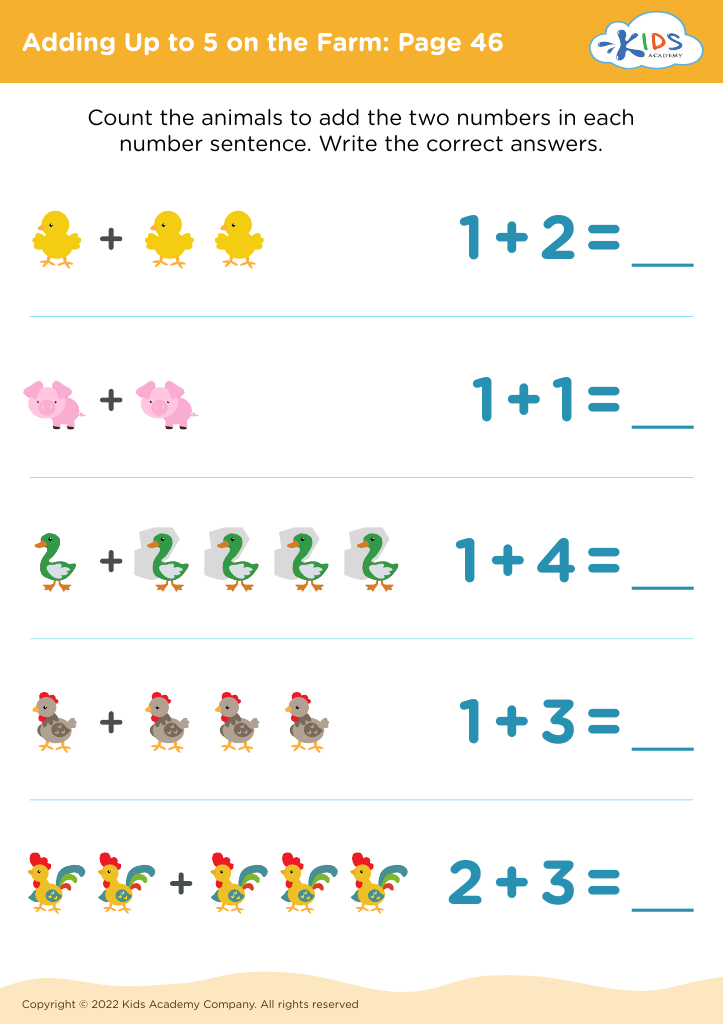
Adding Up to 5 on the Farm: Page 46
Worksheet
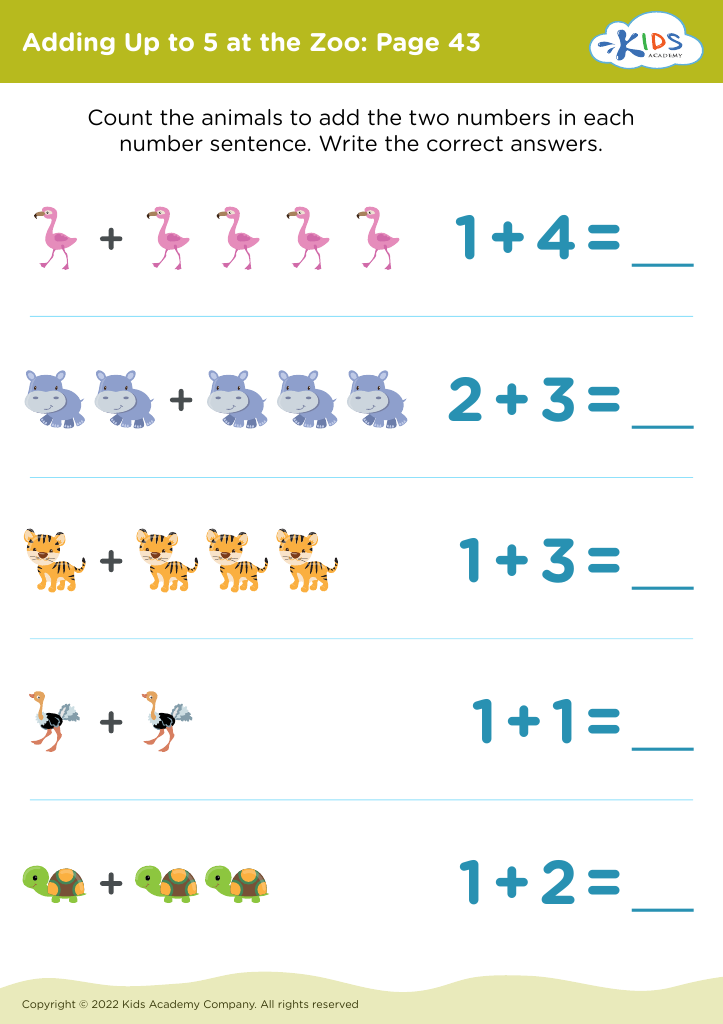
Adding Up to 5 at the Zoo: Page 43
Worksheet


Teaching animal recognition and adding up to 5 to children ages 5-9 is a crucial part of their early development for several reasons. First, combining these lessons aids in cognitive development; recognizing animals helps improve memory, attention to detail, and categorization skills, while basic addition strengthens mathematical foundation and problem-solving skills.

By integrating animal recognition with simple arithmetic, children learn in a more engaging and relatable way. The familiar context of animals makes abstract numerical concepts concrete and enjoyable, promoting a positive attitude toward learning. For instance, asking a child to count the number of legs on several cats and dogs combines math with real-world knowledge, enhancing understanding.

Social and emotional development is also supported. Emphasizing understanding and curiosity about animals fosters empathy and respect for living creatures. This can translate into better peer relationships as children learn to care for others.

Moreover, this integrated approach caters to diverse learning styles. Visual learners benefit from images of animals, auditory learners from counting aloud, and kinesthetic learners from handling objects or playing related games.

Therefore, parents and teachers should prioritize activities that combine animal recognition with addition to create a comprehensive learning experience that is both fun and educational, laying a solid groundwork for future academic success.