Fine Motor Skills (coloring) Adding Up to 5 Worksheets for Ages 5-9
3 filtered results
-
From - To
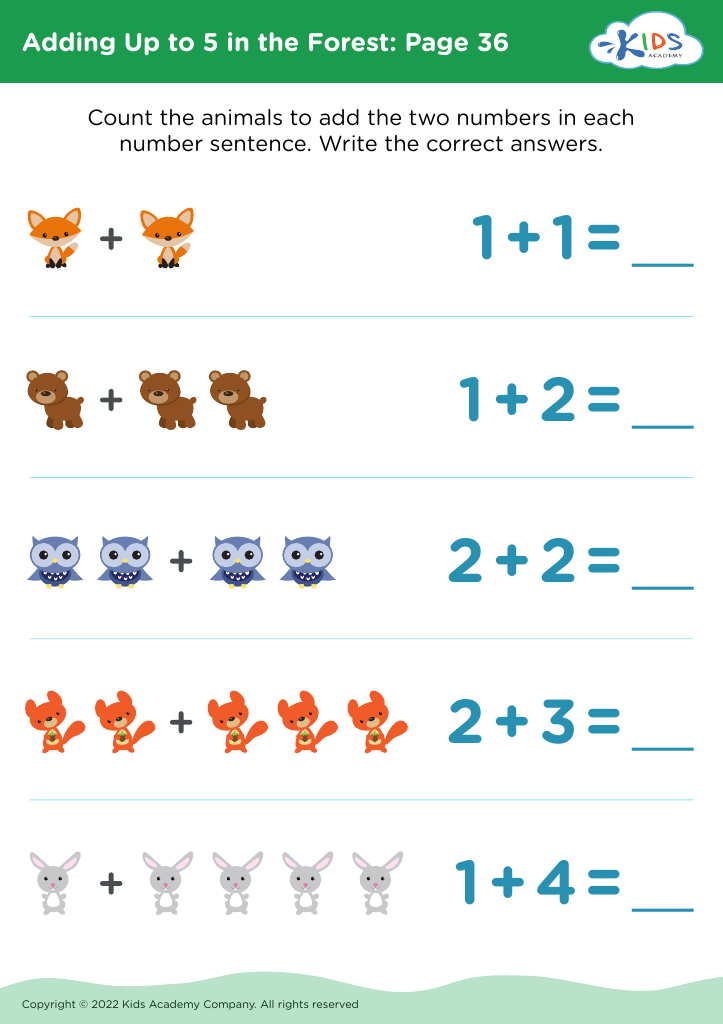
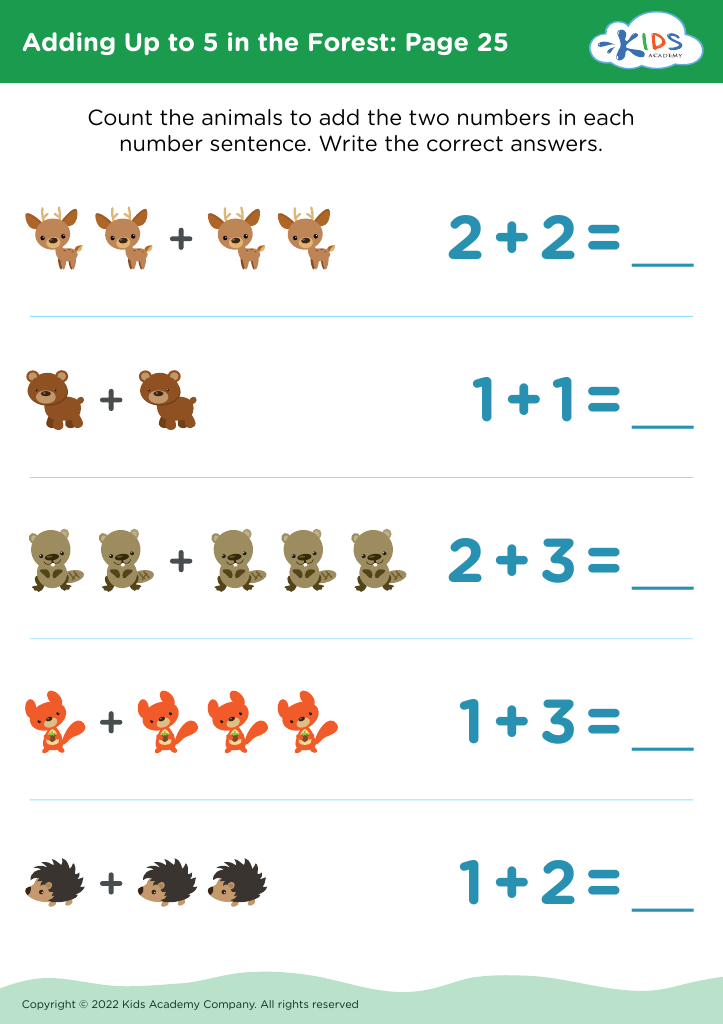
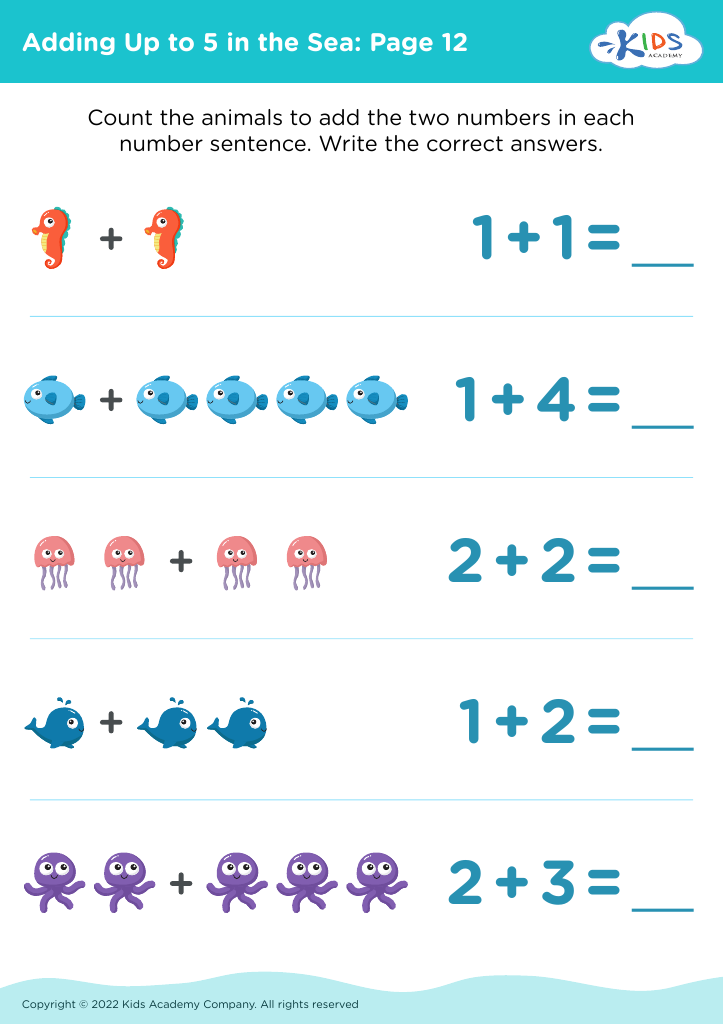
Enhance your child's fine motor skills with our "Adding Up to 5" worksheets designed for ages 5-9! These engaging, interactive activities combine coloring fun with early math concepts, helping young learners grasp the basics of addition. Through carefully crafted illustrations, kids will develop hand-eye coordination and dexterity while mastering simple addition problems. Each worksheet features colorful designs that motivate children to practice their math skills creatively. Perfect for at-home learning or classroom activities, these worksheets provide a balanced approach to skill development in a playful, enjoyable way. Watch your child flourish as they build confidence in math while honing their fine motor abilities!


.jpg)





Fine motor skills are crucial for children aged 5-9 as they form the foundation for various everyday tasks and academic success. Engaging in activities like coloring not only enhances these skills but also promotes creativity and self-expression. The act of holding crayons, pencils, or markers helps improve hand-eye coordination, dexterity, and grip strength, essential for writing and other manual activities that children will encounter in school.
Moreover, the concept of adding up to 5 often overlaps with fine motor skills practice. Children learn to use their fingers to count and manipulate small objects, which correlates with math skills, fostering early numeracy. This dual focus—developing fine motor skills while simultaneously grasping basic math concepts—supports holistic development.
Teachers and parents should recognize that both fine motor proficiency and basic addition skills are critical for building confidence and independence in children. Mastery of these skills encourages children to participate in more complex tasks, paving the way for successful learning in broader contexts. Ultimately, investing attention and resources into developing fine motor skills and understanding numbers early on equips children with tools they need for future academic challenges and everyday life.








