Following instructions Adding Up to 5 Worksheets for Ages 5-9
3 filtered results
-
From - To
Help your child develop essential math skills with our “Following Instructions Adding Up to 5 Worksheets for Ages 5-9”! Perfect for early learners, these engaging worksheets combine basic math practice with the crucial ability to follow directions. Through fun and interactive exercises, children will improve their addition skills by adding numbers up to 5 while also enhancing their listening and comprehension abilities. Whether used in the classroom or at home, these worksheets provide the ideal educational support, ensuring a strong foundation in math and essential cognitive skills. Explore now and make learning both enjoyable and effective!
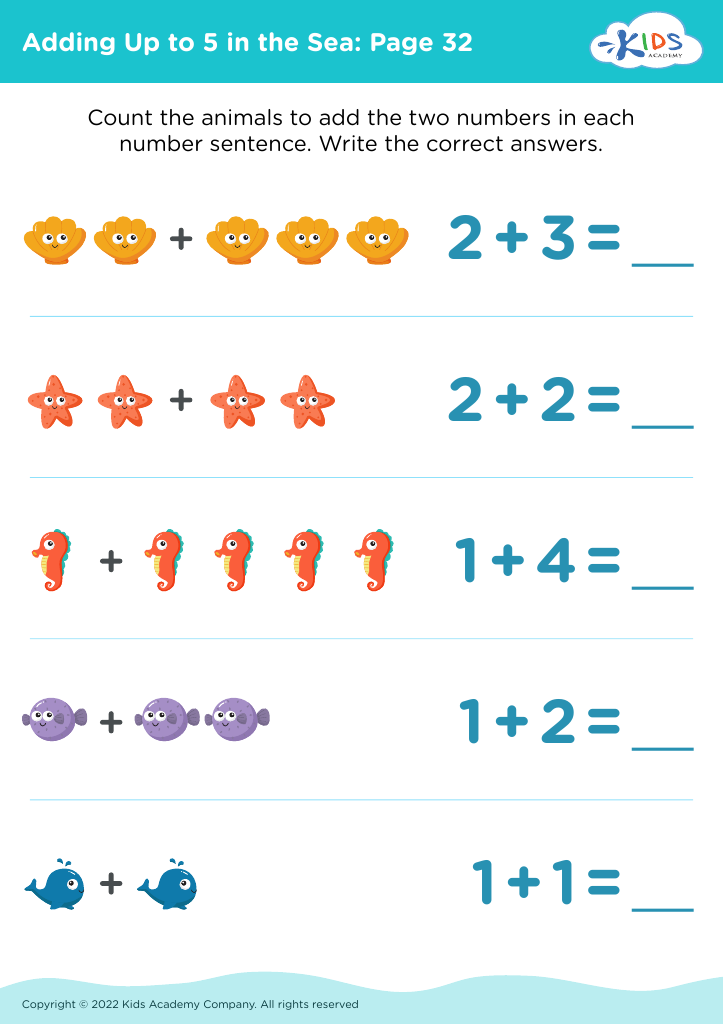
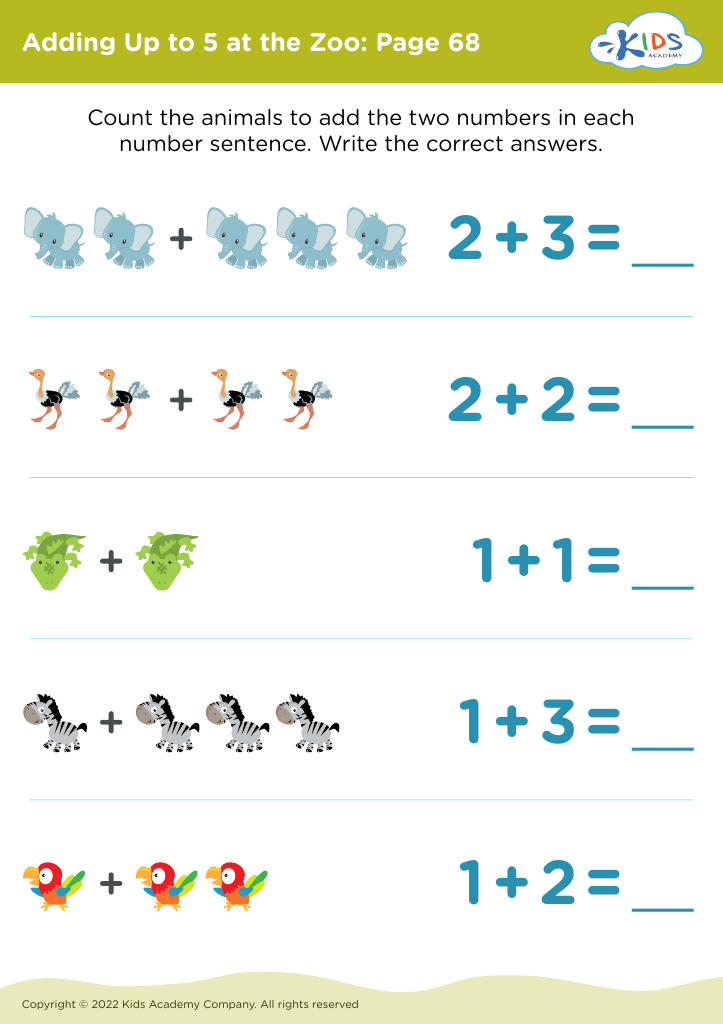
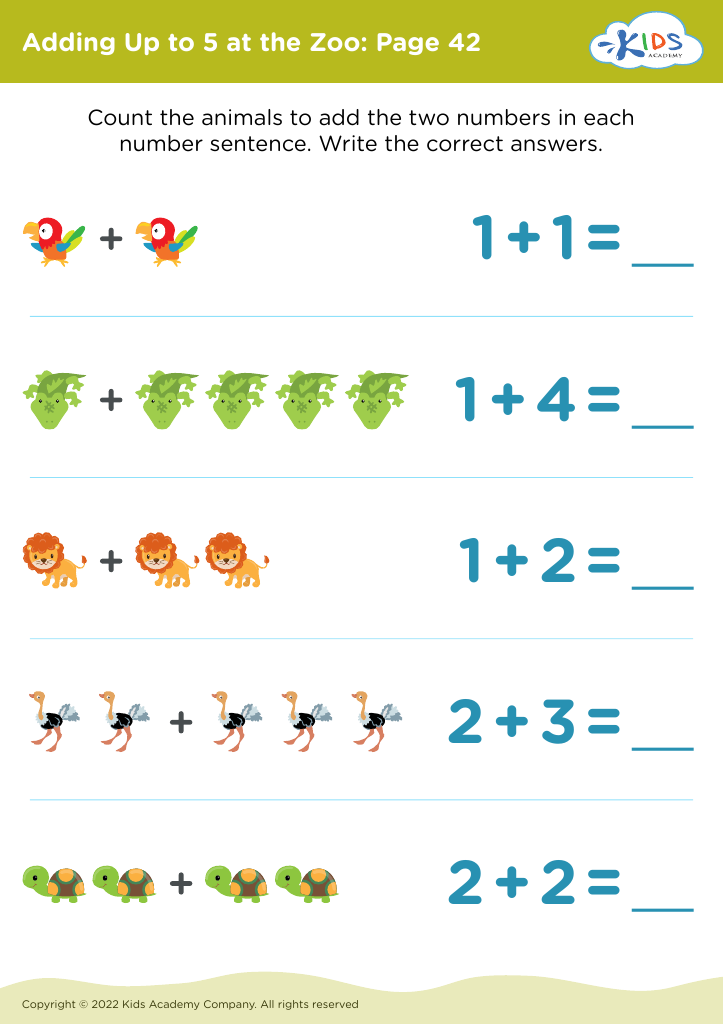








Helping children ages 5-9 learn to follow instructions for adding up to 5 provides a crucial foundational skill that enhances their cognitive development and sets a solid cornerstone for future learning in mathematics. By mastering these basic arithmetic skills, children develop a sense of numerical understanding and problem-solving capabilities that are essential for more complex math tasks in later years.
Following instructions specifically aid in understanding and implementing steps involved in addition. When kids learn to add up to 5, they are essentially practicing the fundamentals of number sense, which is their ability to understand numbers and their relationships. This cognitive skill is vital not just in academics but in everyday life scenarios, such as counting objects or managing simple transactions.
Moreover, these activities also foster key developmental skills including attention to detail, memory retention, and the ability to follow sequential steps. This not only prepares them for mathematical success but also lays the groundwork for skills in other disciplines such as reading, science, and more.
In essence, focusing on accurate following of instructions for basic addition cultivates an environment where young learners develop confidence in their mathematical abilities, establishing a positive attitude towards learning and enabling them to tackle more advanced concepts with ease as they progress in their education.








