Visual learning enhancement Adding Up to 5 Worksheets for Ages 5-9
4 filtered results
-
From - To
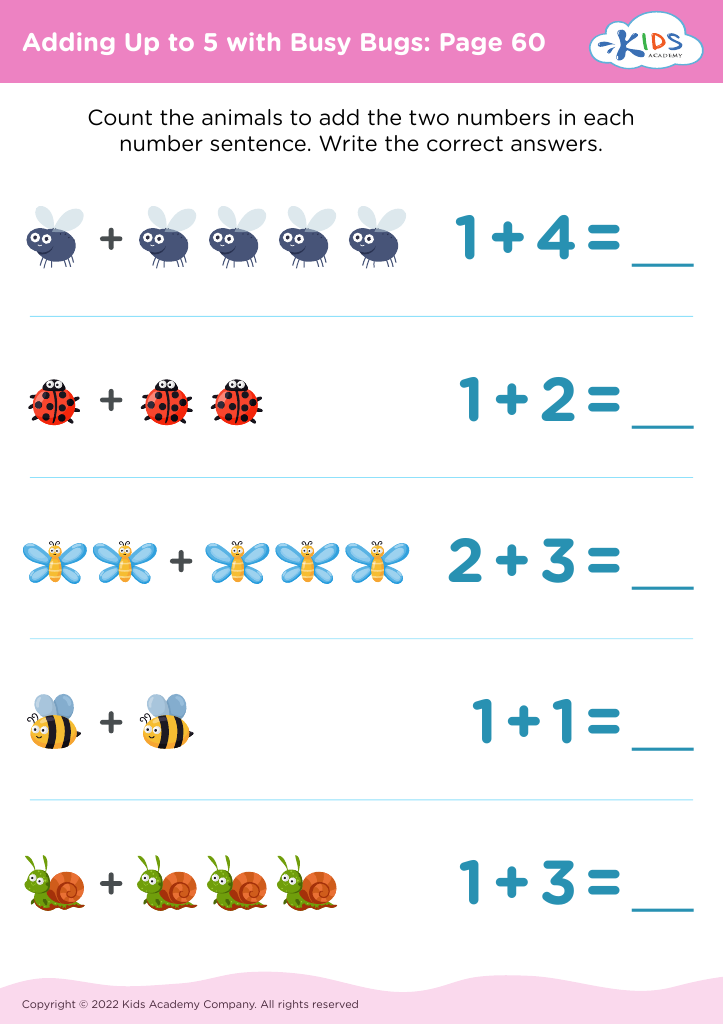
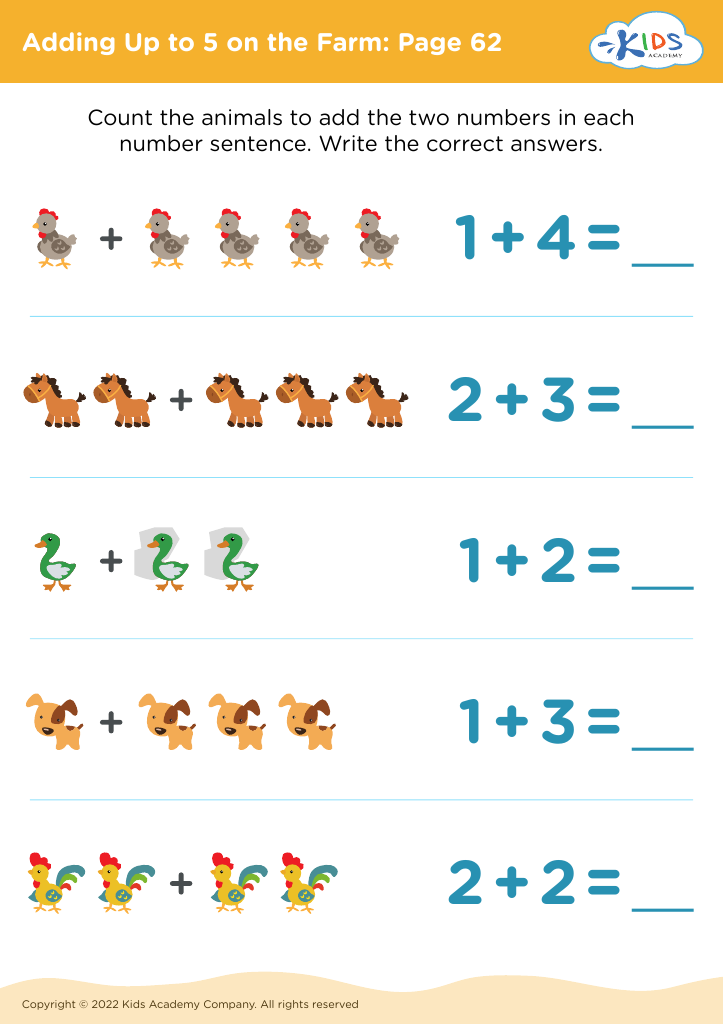
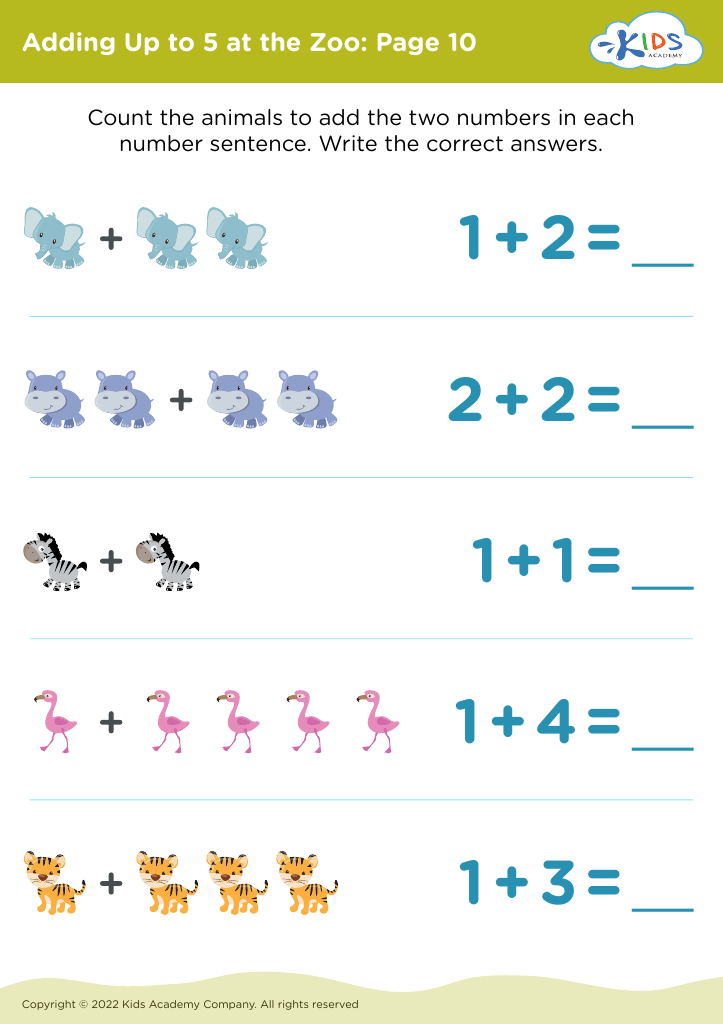
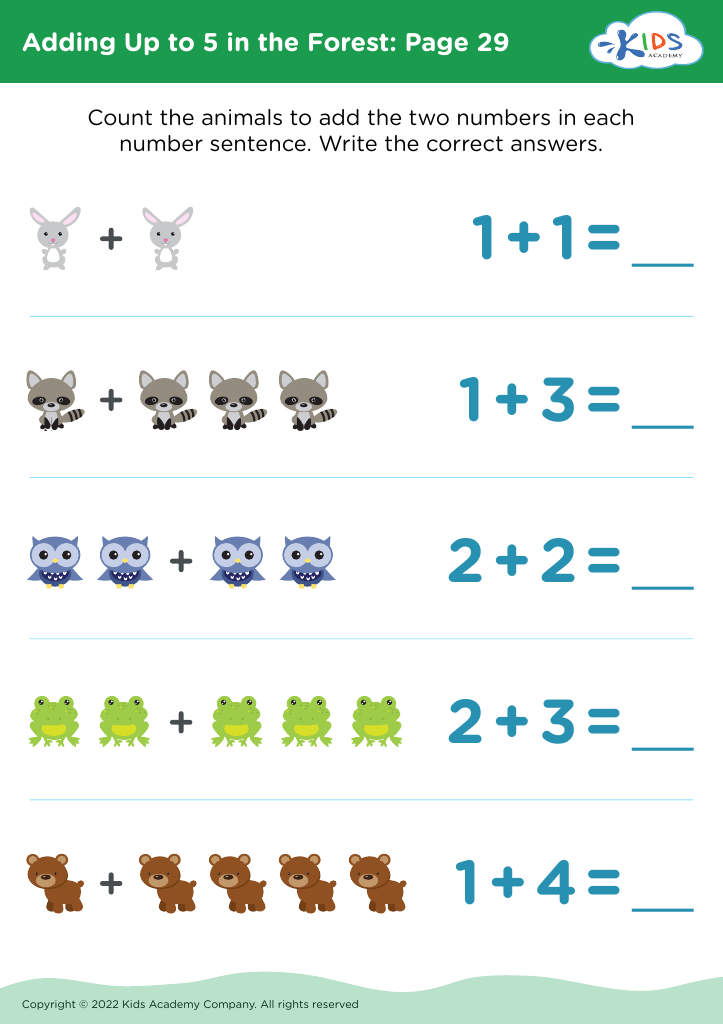
Enhance your child's mathematical skills with our "Visual Learning Enhancement: Adding Up to 5 Worksheets" designed for ages 5-9. These engaging printable worksheets utilize visually appealing elements to make learning addition enjoyable and intuitive. Children will explore concepts through vibrant illustrations, hands-on activities, and interactive exercises that promote critical thinking. The worksheets are perfect for reinforcing numerical understanding and improving problem-solving abilities, making math a fun experience. Ensure your little learners develop a strong foundation in addition with these meticulously crafted resources. Download now and watch your child’s confidence in math grow as they master adding up to 5!


%20(1).jpg)





Parents and teachers should prioritize visual learning enhancement for young learners, particularly when it comes to foundational math skills like adding up to 5. Children aged 5-9 are in a critical stage of cognitive development, where they primarily learn through visual means. Engaging with colorful diagrams, interactive visuals, and manipulatives can significantly aid their understanding of mathematical concepts.
Visual learning enhances memory retention by providing concrete frameworks for abstract concepts. For instance, using visuals such as counters, number lines, and playful graphics can help young learners grasp the concept of addition in a more relatable way. This increases their engagement and enthusiasm for learning.
Moreover, parents and teachers play a pivotal role in tailoring learning experiences to individual needs. Employing visual tools can support diverse learning styles, making lessons accessible for all students, including those who may struggle with traditional approaches. Additionally, visual aids cultivate critical thinking and problem-solving skills by encouraging children to analyze and interpret information.
Ultimately, emphasizing visual learning for addition not only builds a strong mathematical foundation but also fosters a love for learning, equipping children with the essential skills they need for future academic success. Thus, it is vital for caregivers to embrace visual strategies in their educational practices.








