Visual learning reinforcement Adding Up to 5 Worksheets for Ages 5-9
5 filtered results
-
From - To
Boost your child's math skills with our "Adding Up to 5 Worksheets for Ages 5-9"! These engaging, visually appealing worksheets are meticulously designed to reinforce basic addition concepts. Perfect for visual learners, each page combines colorful imagery and interactive exercises to make learning fun and effective. As your child adds numbers up to 5, they'll improve their problem-solving abilities and build a strong math foundation. Tailored for kids aged 5-9, these worksheets make learning math as enjoyable as it is educational. Unlock your child's potential and watch their confidence soar with our innovative math resources!
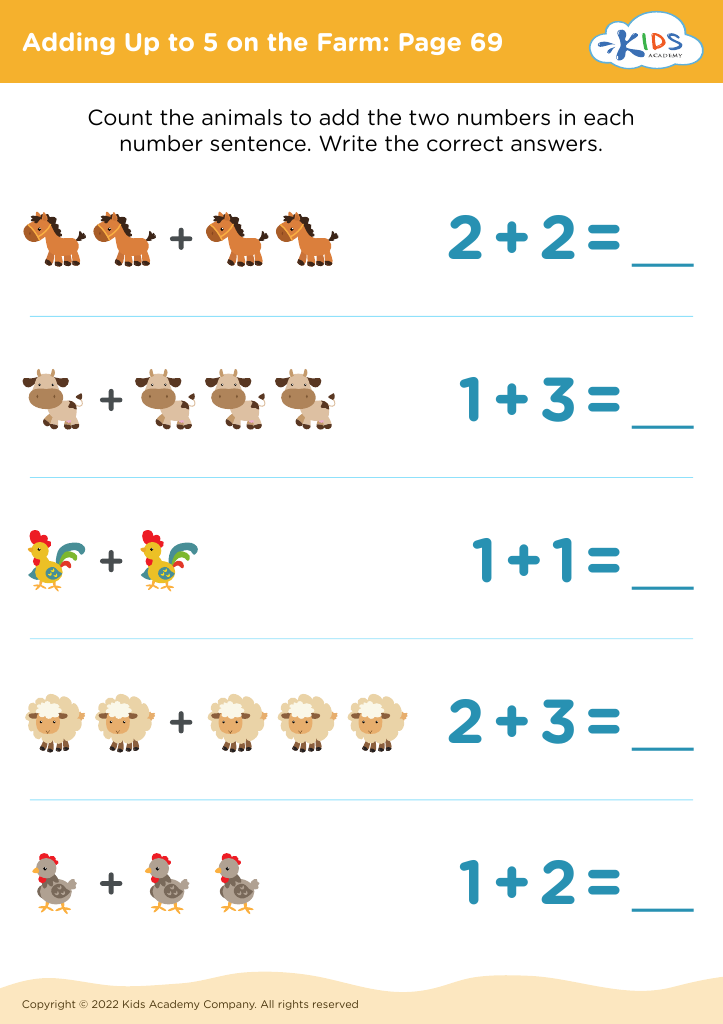
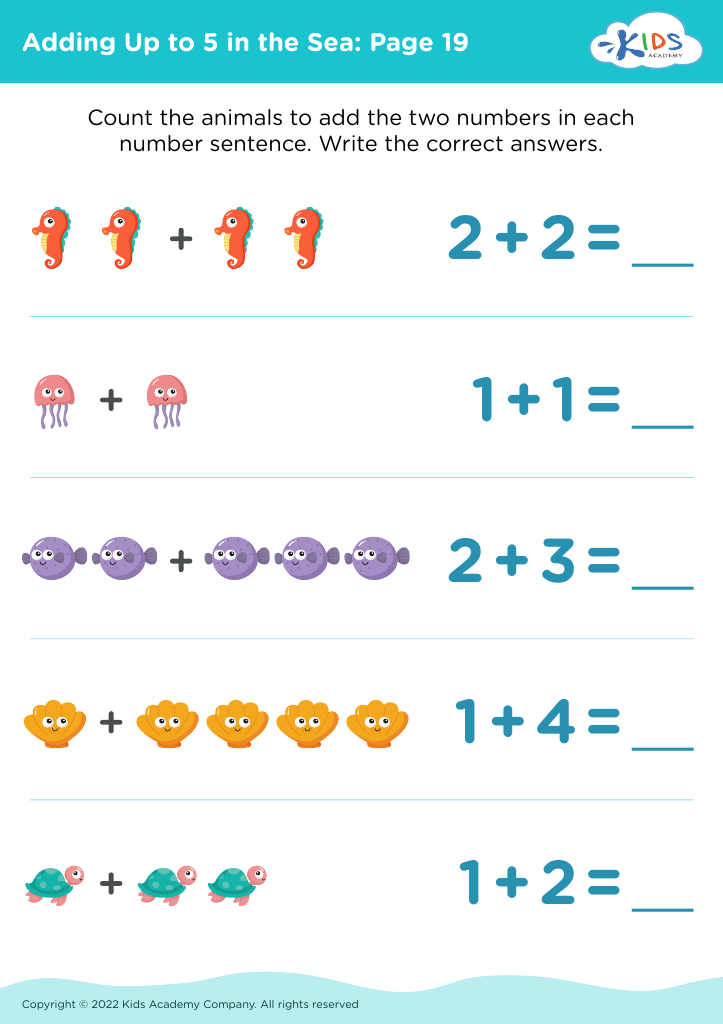
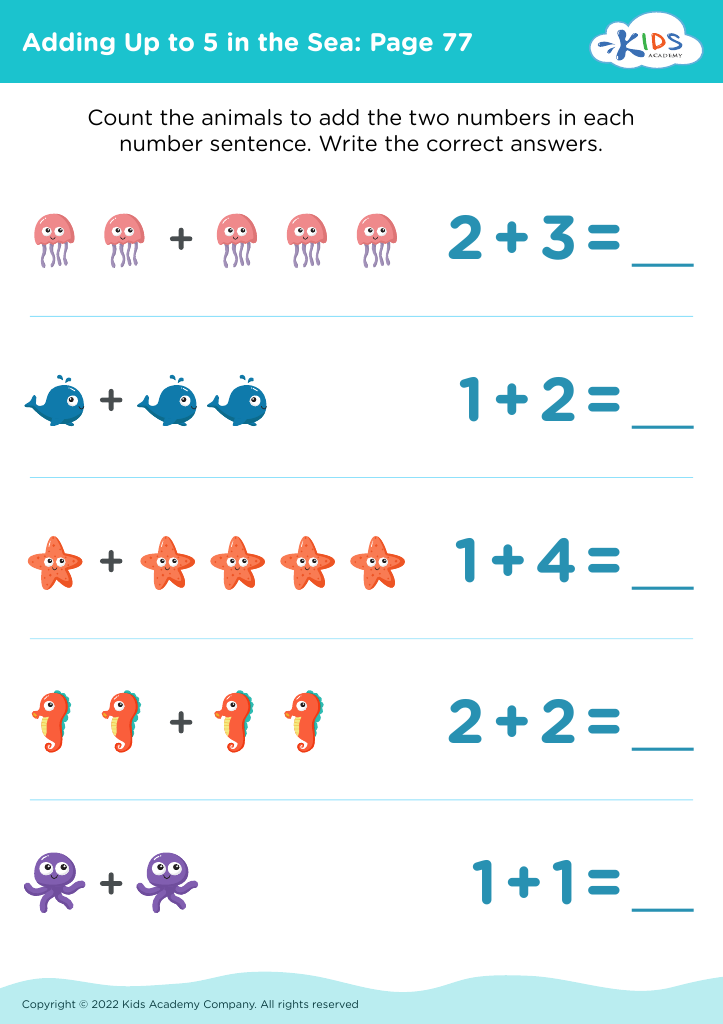
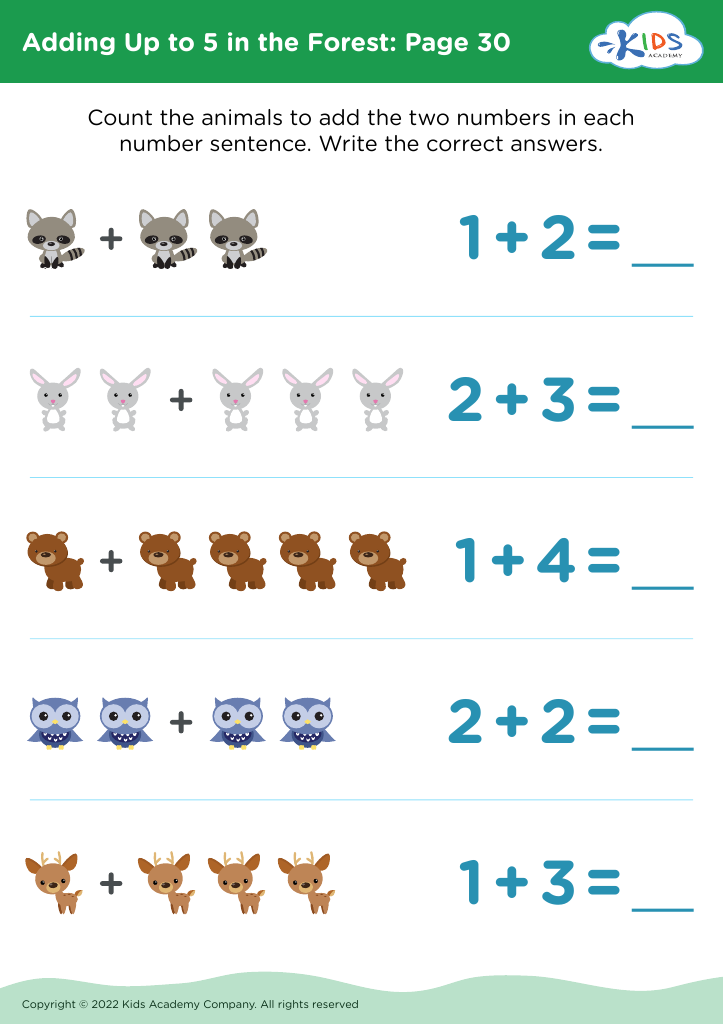
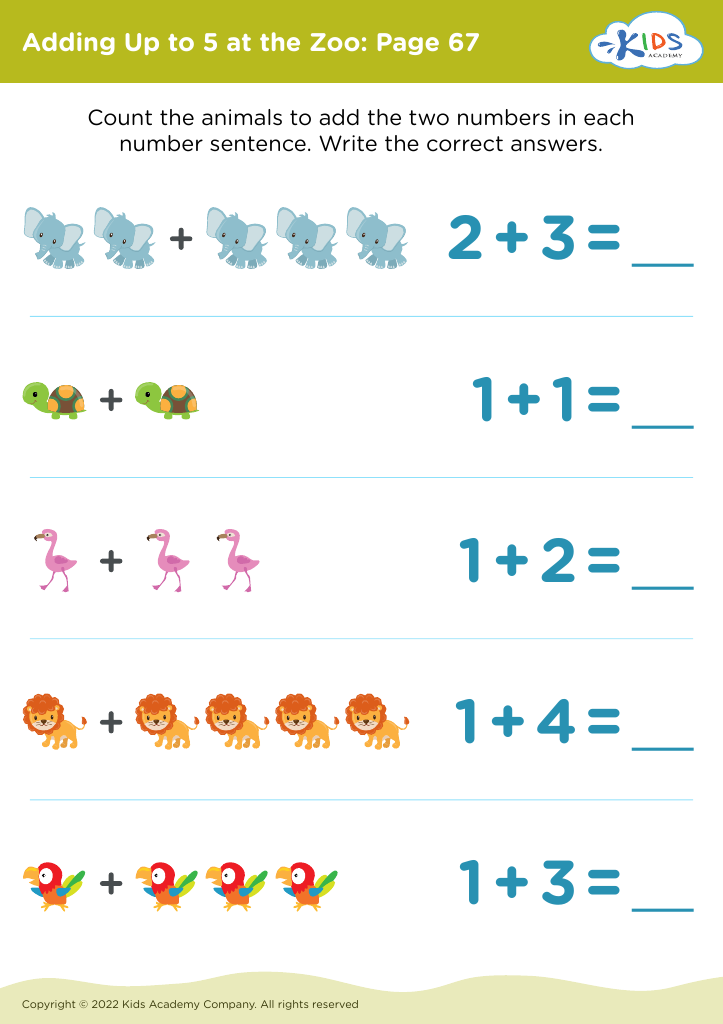








Visual learning reinforcement is a highly effective educational strategy, especially when teaching foundational mathematics concepts like adding numbers up to 5 to children ages 5-9. At this stage of their development, young learners are particularly receptive to visual stimuli, which can significantly enhance their understanding and retention of new information.
First, visual aids such as counting pictures, number lines, or colorful bead strings make abstract concepts more concrete. For instance, seeing five apples grouped together helps children grasp what the number 5 signifies far better than just hearing it described. This physical representation can demonstrate quantities, helping children internalize the idea of "adding up."
Second, visual learning supports various learning styles. Not all children are auditory learners; some are visual learners who understand better when information is presented visually. By integrating visual elements, educators ensure that these students also have the tools they need to succeed.
Finally, using visual aids often makes learning more engaging and fun. This level of engagement is critical at such a young age, as it fosters a lifelong love for learning. When kids enjoy what they are doing, they are more likely to practice and refine their skills.
In summary, incorporating visual learning reinforcement for adding up to 5 not only aids comprehension and accommodates different learning styles but also makes education an enjoyable process, instilling confidence and curiosity in young learners.








