Fine motor skills (writing) Adding with Busy Bugs Worksheets for Ages 5-9
5 filtered results
-
From - To
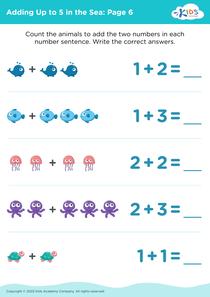
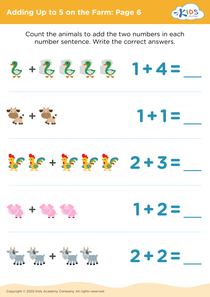
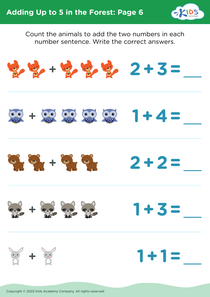
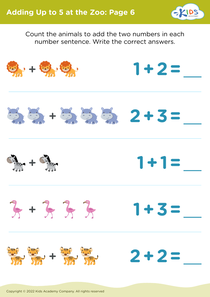
Enhance your child's fine motor skills with our "Adding with Busy Bugs Worksheets" tailored for ages 5-9! These engaging worksheets combine fun and learning, allowing kids to practice writing while developing essential dexterity. Each activity features delightful bug characters that capture children's imagination and encourage them to practice both addition and handwriting skills simultaneously. Your little ones won't just learn math; they'll also refine their grip, coordination, and control suitable for young learners. Perfect for at-home activities or classroom settings, our worksheets confer a holistic approach to learning. Explore the joy of writing and math together today with Busy Bugs!
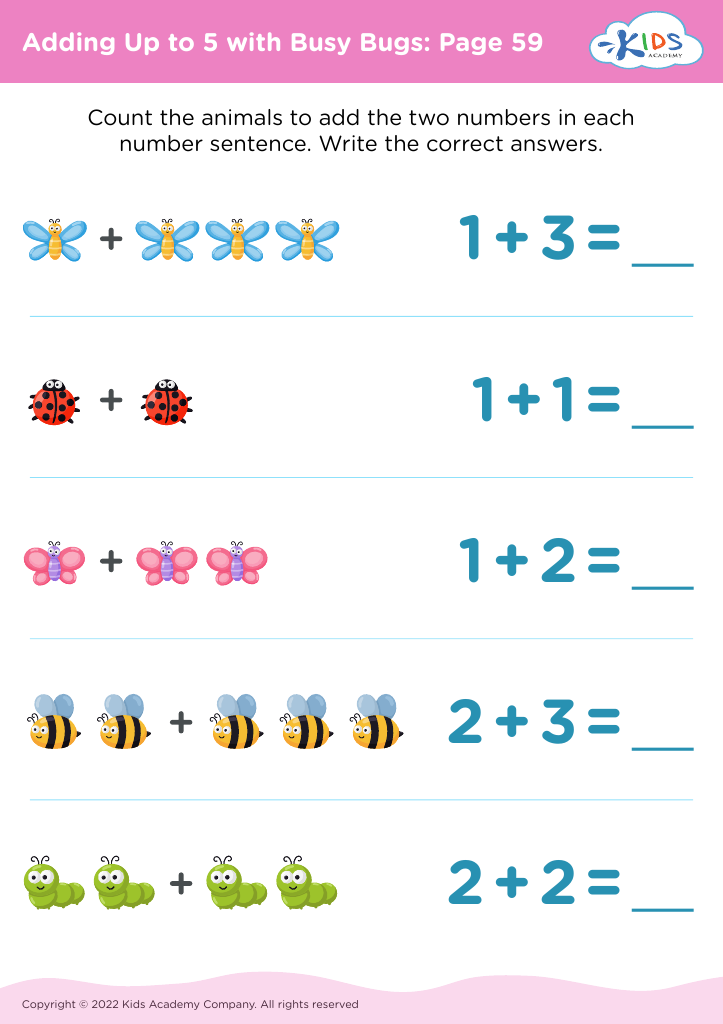
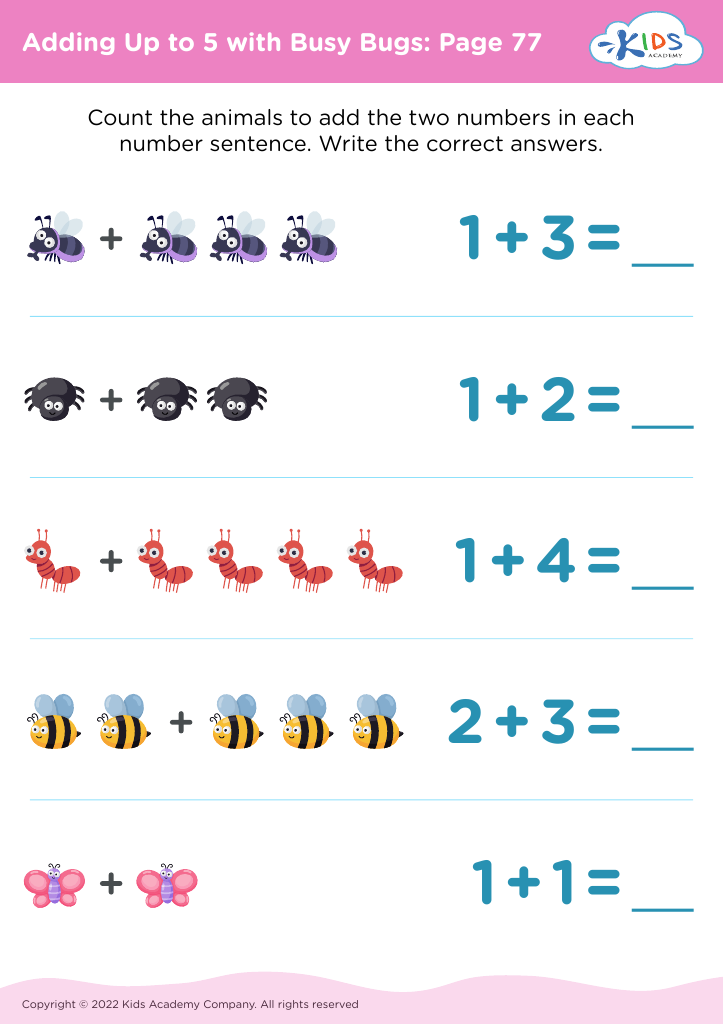
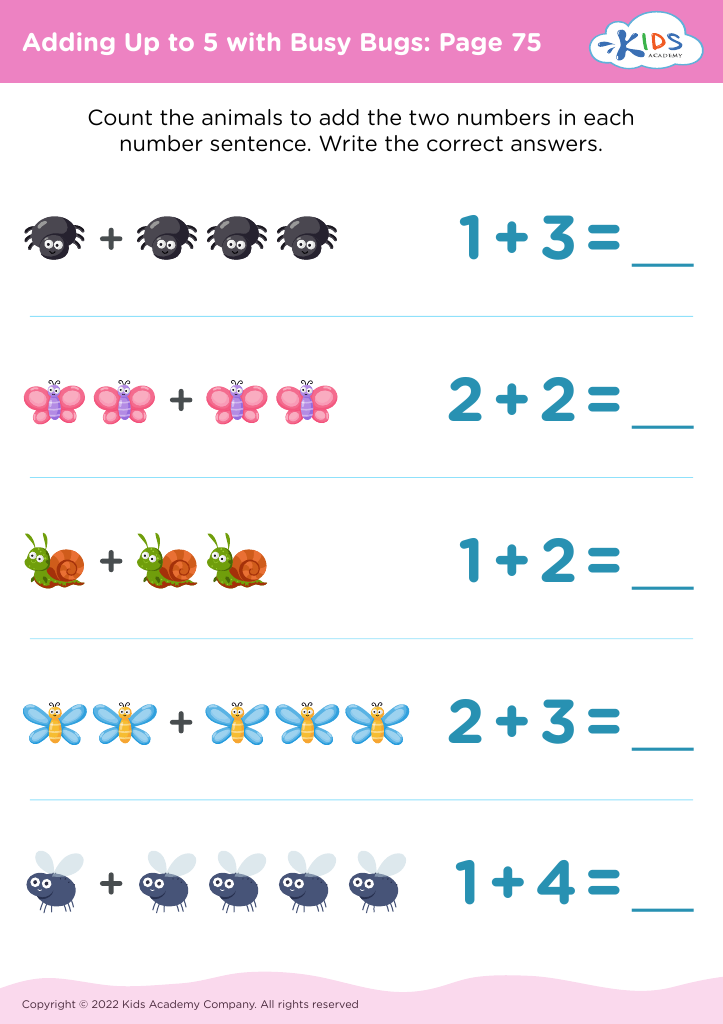
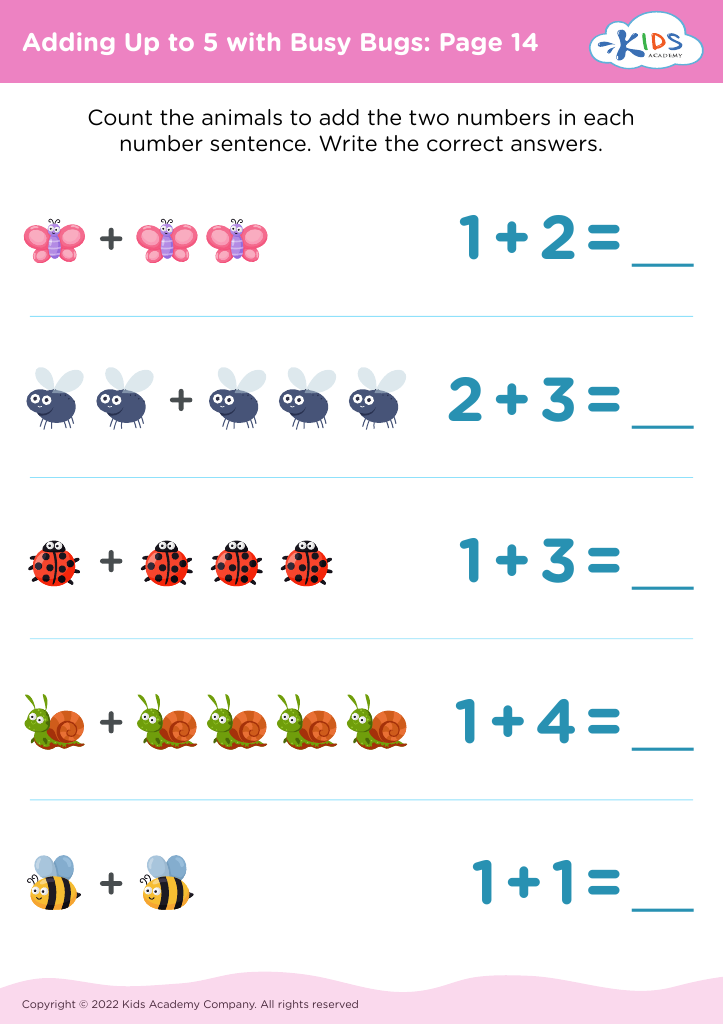
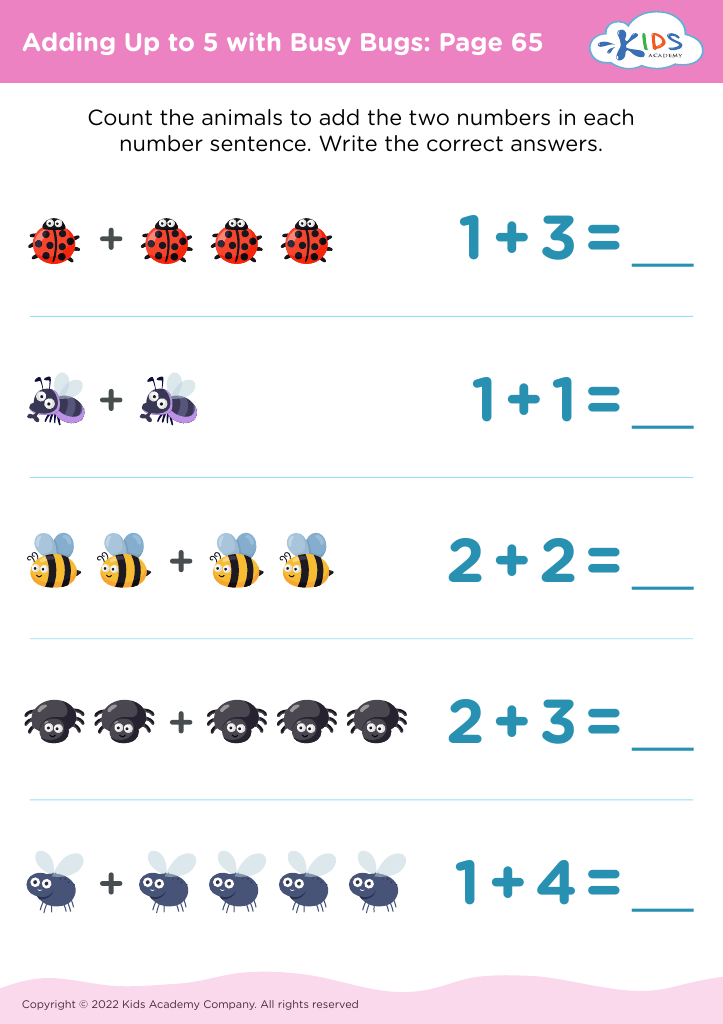



Fine motor skills are essential for children's overall development, particularly in writing, and they play a crucial role in their academic and everyday activities. For parents and teachers, supporting the development of these skills in children ages 5-9 not only enhances their ability to write but also boosts their confidence and independence.
Busy Bugs, designed specifically for this age group, is an engaging resource that fosters fine motor skill development through fun, hands-on activities. By weaving in playful themes, children are motivated to practice precise movements, which are fundamental in tasks such as writing, buttoning shirts, and tying shoes. These skills set the foundation for more complex abilities later in life.
Moreover, fine motor proficiency is linked to cognitive development, as children learn to coordinate their hands and eyes, comprehend spatial relationships, and develop concentration and patience. This coordination is vital for successful learning experiences in various subjects, not just in literacy.
By incorporating tools like Busy Bugs, parents and teachers can create an enriching environment where children actively engage in skill-building on their own terms, laying the groundwork for a successful educational journey. Understanding the importance of fine motor skills ultimately better equips children for the academic challenges ahead.