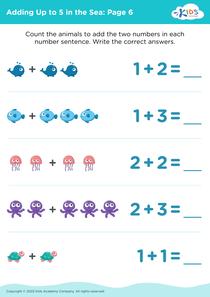
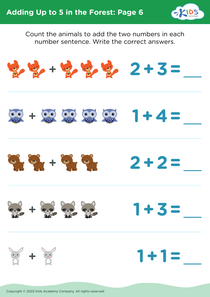
Problem-Solving Skills Adding with Busy Bugs Worksheets for Ages 5-9
6 filtered results
-
From - To
Explore our "Adding with Busy Bugs Worksheets for Ages 5-9" and enhance your child's problem-solving skills! These engaging worksheets feature fun, colorful insects that make addition enjoyable for young learners. Designed to challenge and entertain kids, these activities help improve mathematical thinking and boost confidence while fostering crucial problem-solving abilities. Perfect for home or classroom settings, our printable worksheets adapt to various learning paces and styles. Equip your child with the essential skills they need for academic success through playful and interactive exercises. Start your math adventure today with Busy Bugs!
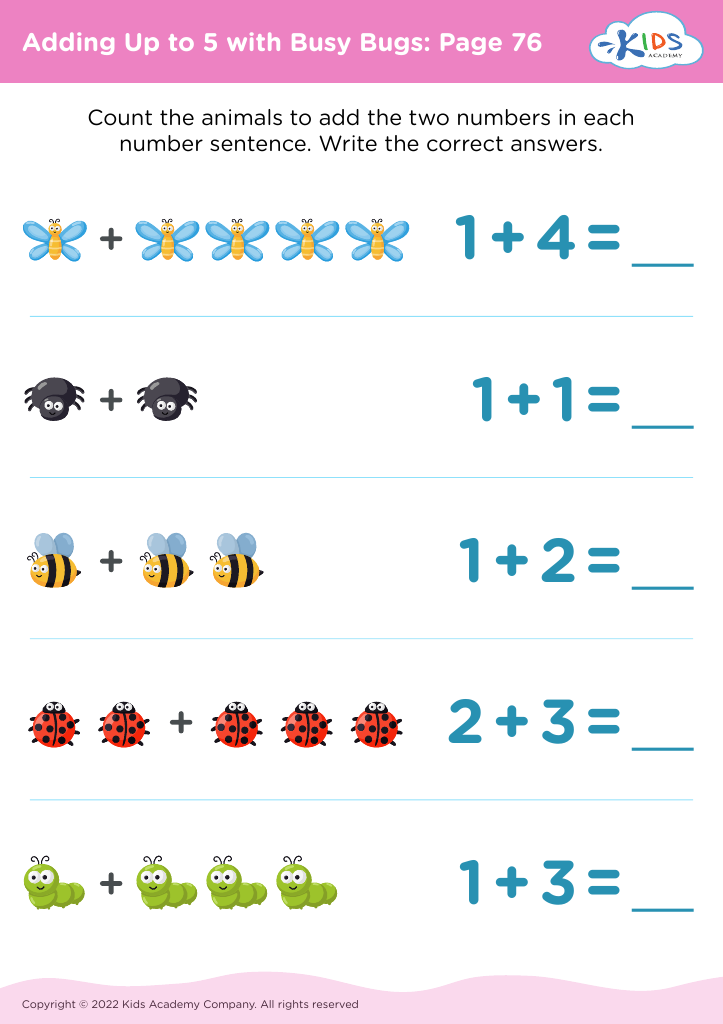
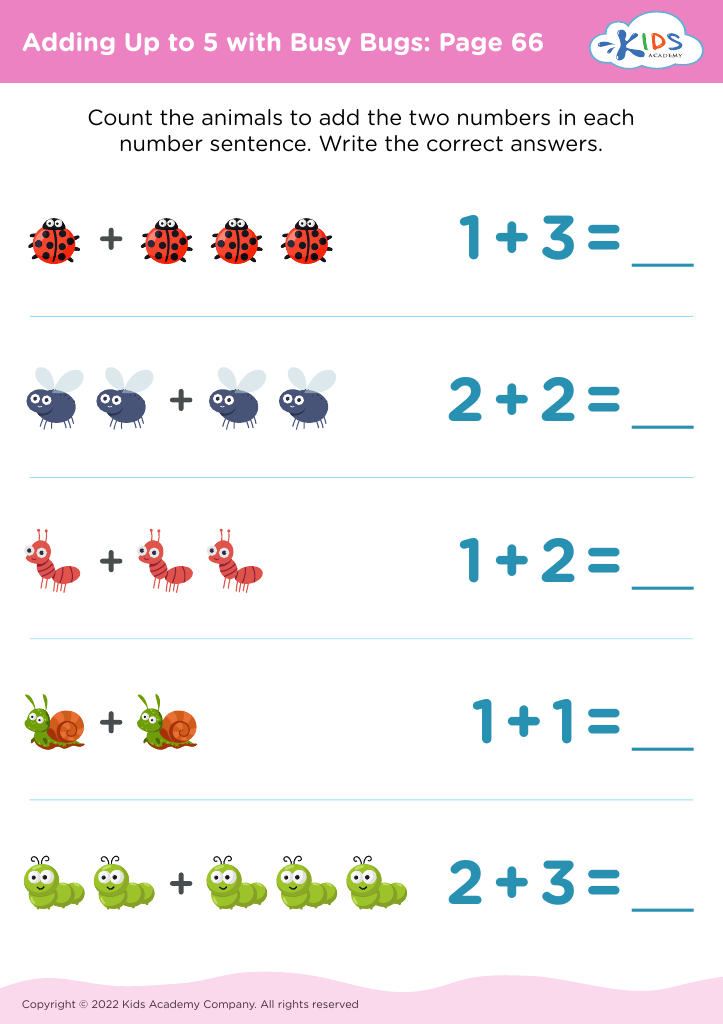
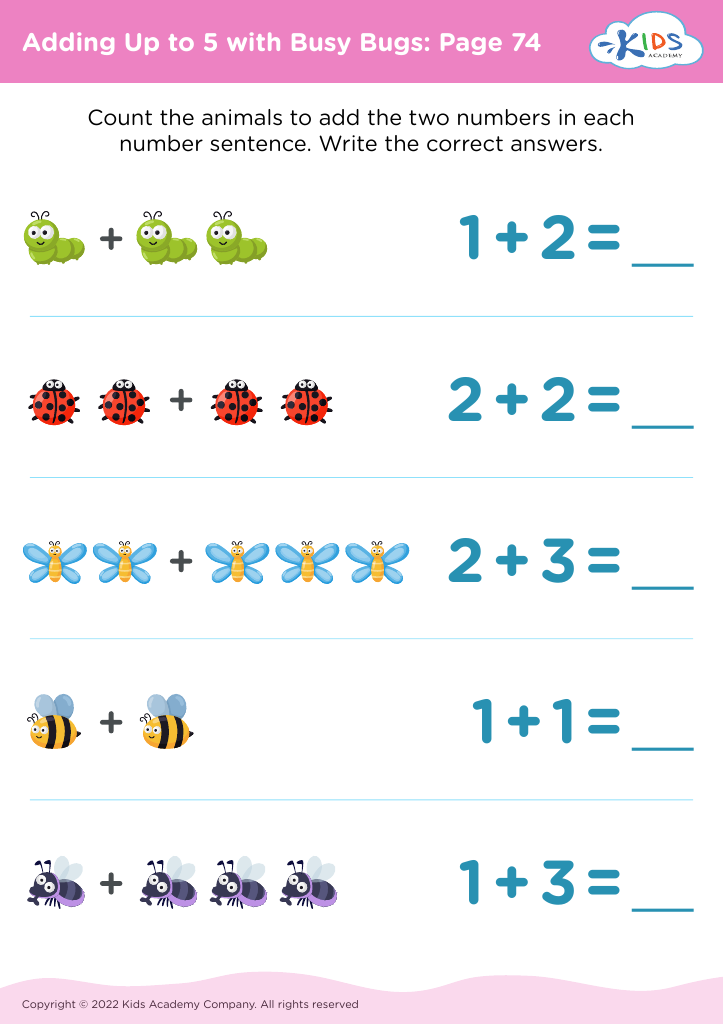
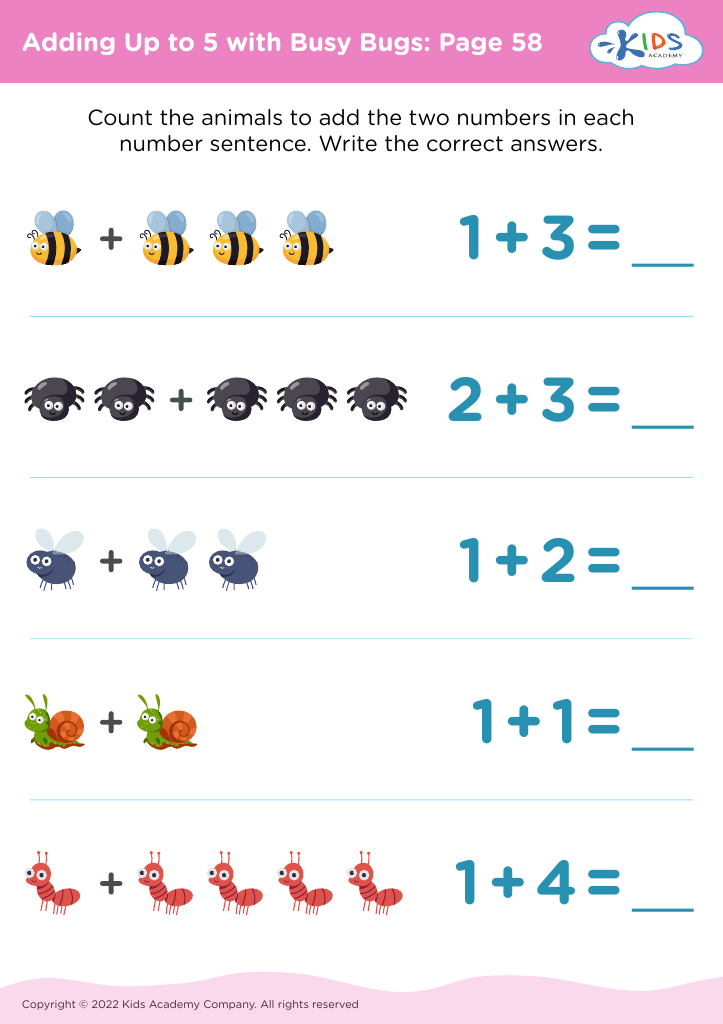
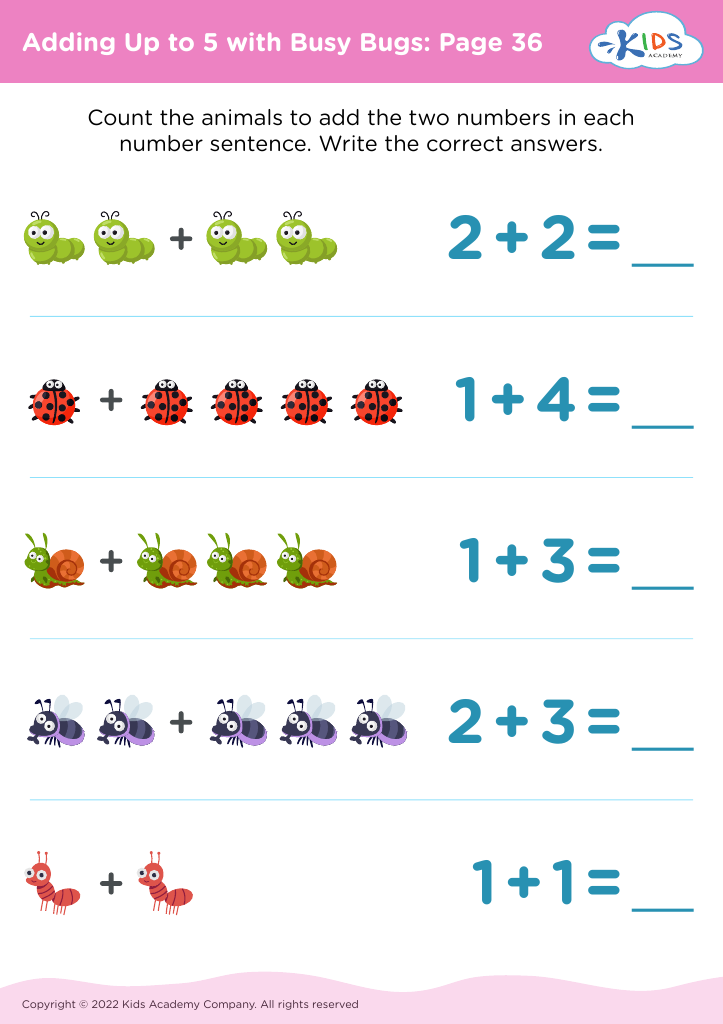
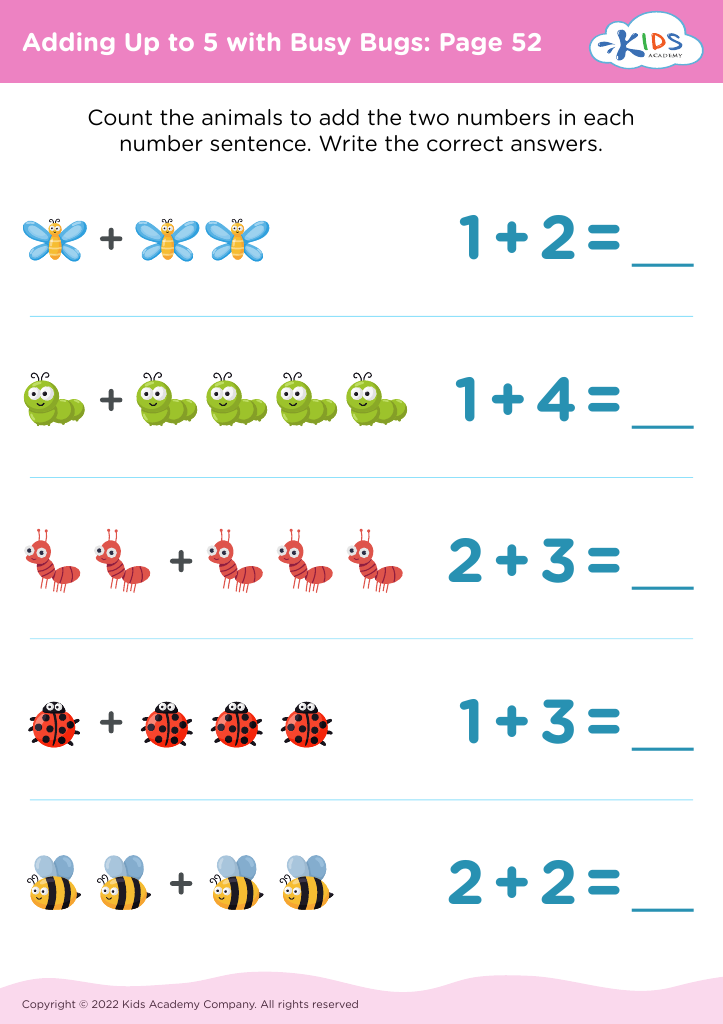



Problem-solving skills are foundational for a child's cognitive development, and incorporating fun and engaging activities, such as "Busy Bugs," into their learning can be highly beneficial. For children aged 5-9, learning through play fosters critical thinking and creativity.
Busy Bugs is an excellent tool for teaching addition because it combines imaginative play with mathematical concepts in a way that is both approachable and stimulating. When children engage in activities like counting colorful bugs, they not only practice their addition skills but also learn to recognize patterns, understand sequencing, and improve their memory. This hands-on learning experience makes abstract math concepts concrete and relatable, thereby improving retention and comprehension.
Parents and teachers should care about these skills because they are fundamental to a child's success in both academic and real-world settings. Problem-solving promotes independence and resilience, as children learn to tackle challenges methodically and confidently. Additionally, it lays the groundwork for more advanced mathematical concepts and logical reasoning that students will encounter in later grades.
By fostering these skills early on with engaging tools like Busy Bugs, parents and teachers empower children to develop a positive attitude towards mathematics and learning in general. This proactive approach ultimately leads to well-rounded, capable individuals who are better prepared to face future academic and personal challenges.