Filters

279 filtered results

Clear all filters
Favorites
With answer key
Interactive

279 filtered results

Difficulty Level

Grade


Check out this FREE Trial Lesson on Addition & Subtraction for age 5-9!

Sorting Objects into 3 Categories

Favorites
With answer key
Interactive
  • 5-9
  • Basic Addition Skills
  • Addition & Subtraction
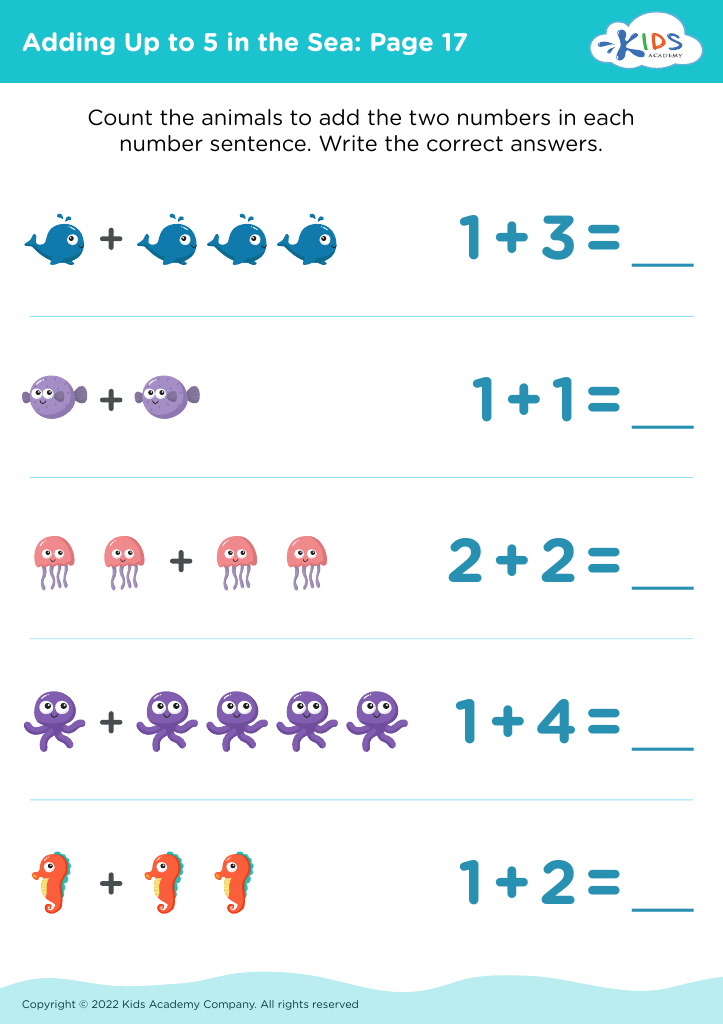
Adding Up to 5 in the Sea: Page 17
Worksheet
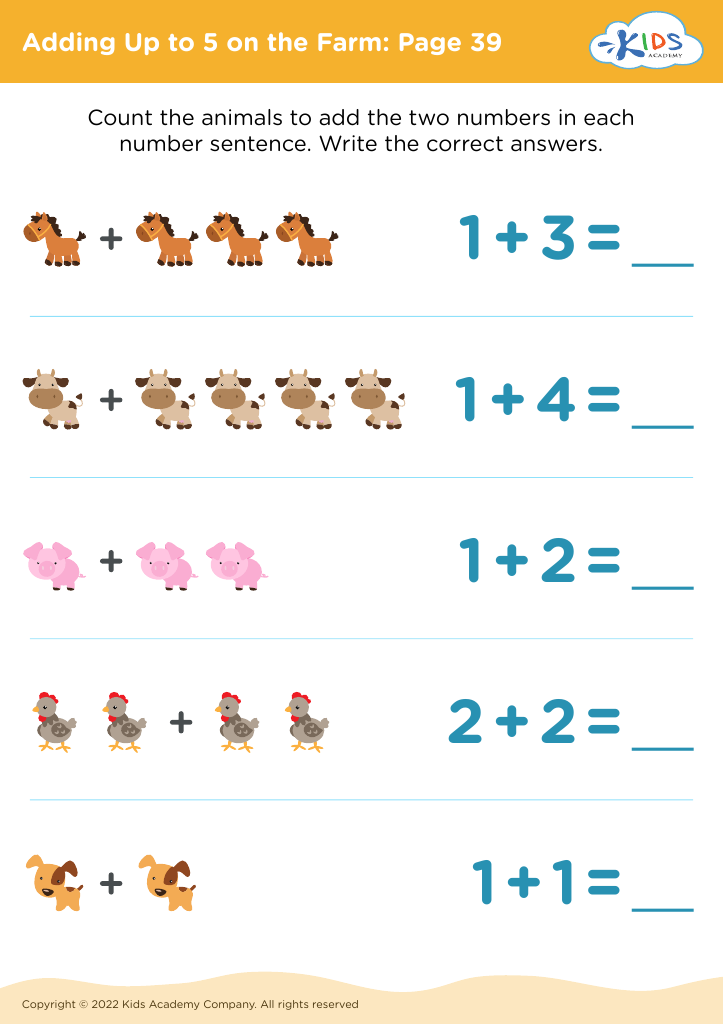
Adding Up to 5 on the Farm: Page 39
Worksheet
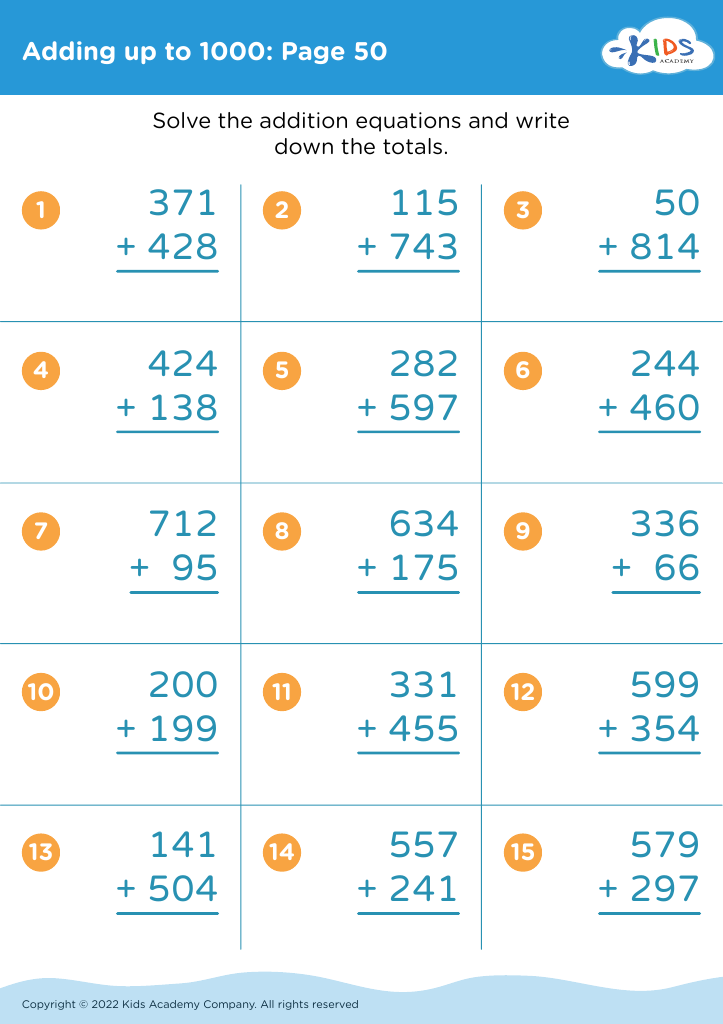
Adding up to 1000: Page 50

Adding up to 1000: Page 50

Adding up to 1000: Page 50
Worksheet
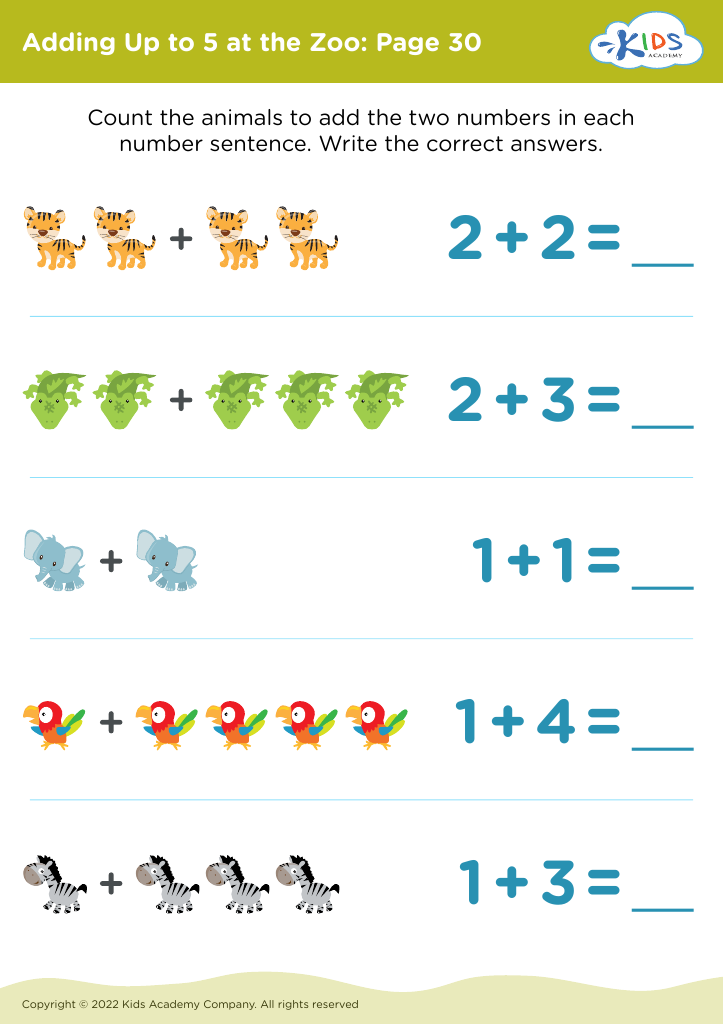
Adding Up to 5 at the Zoo: Page 30
Worksheet
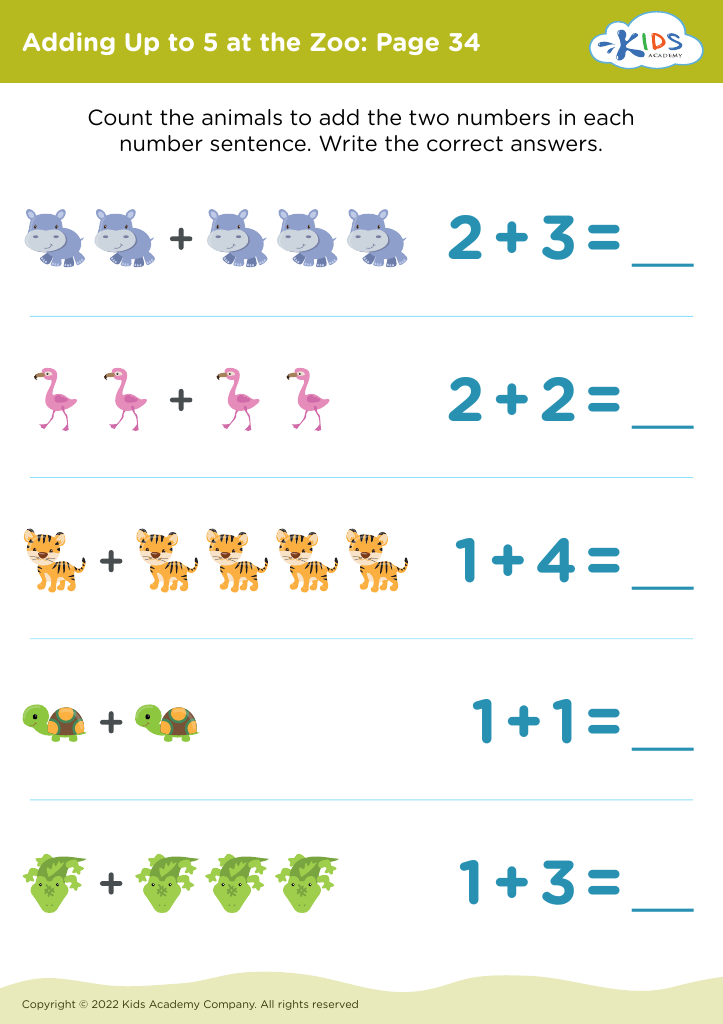
Adding Up to 5 at the Zoo: Page 34
Worksheet
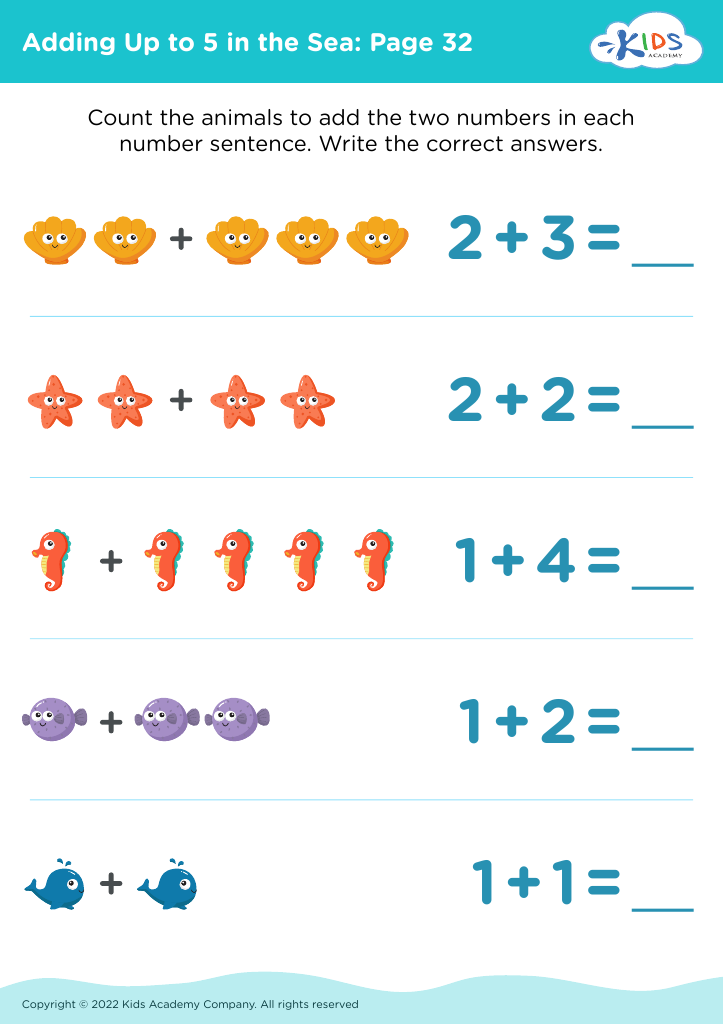
Adding Up to 5 in the Sea: Page 32
Worksheet
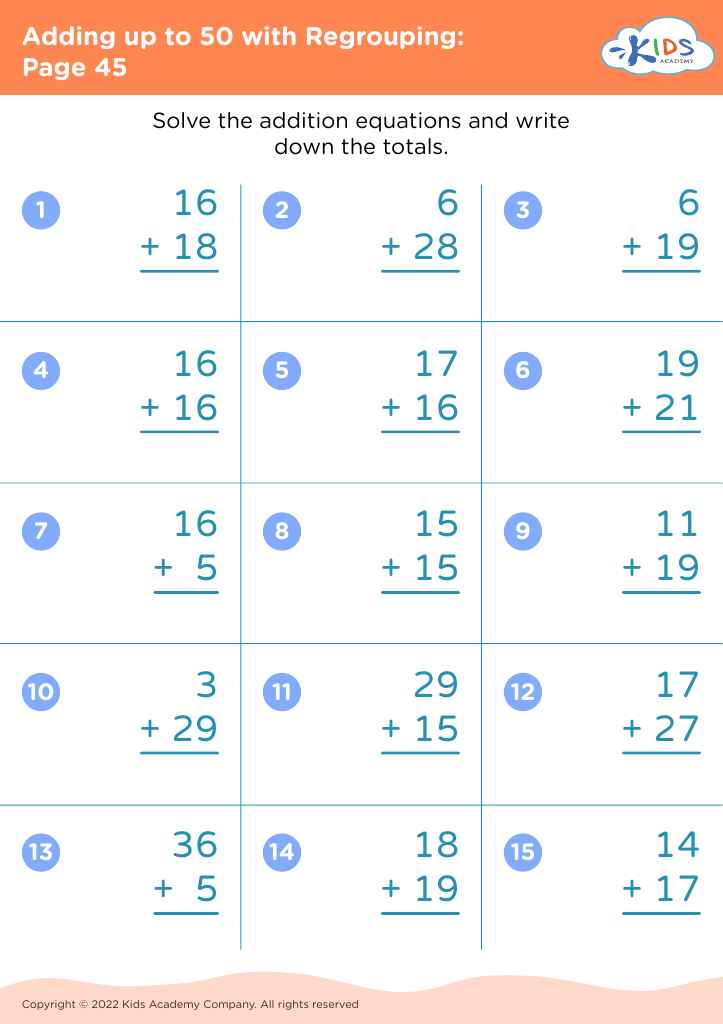
Adding up to 50 with Regrouping: Page 45
Worksheet
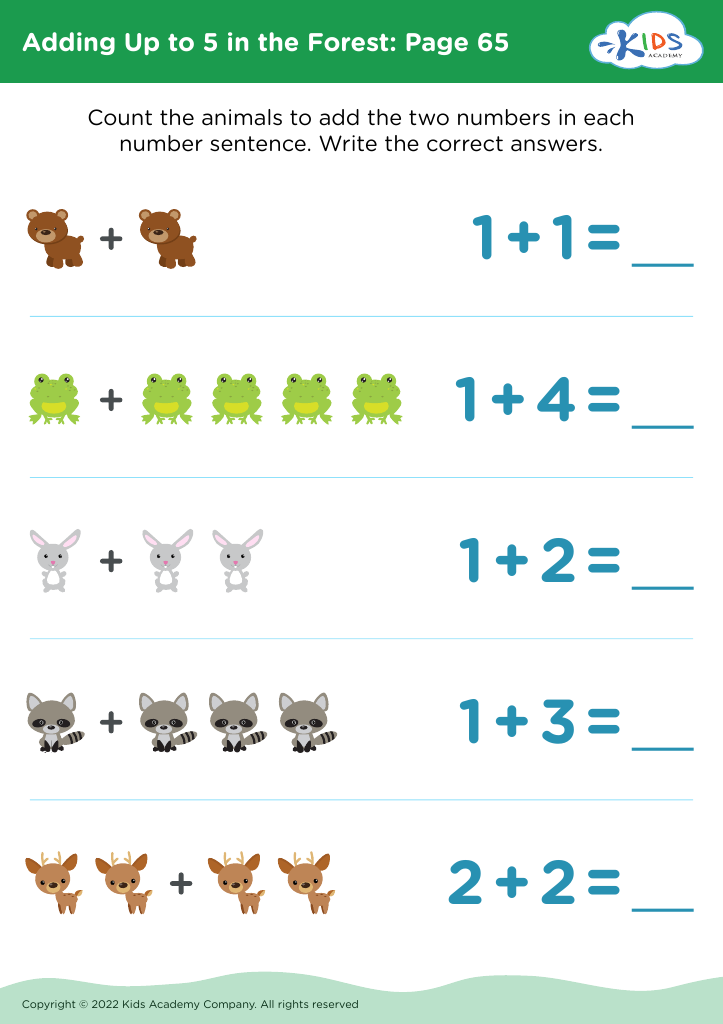
Adding Up to 5 in the Forest: Page 65
Worksheet
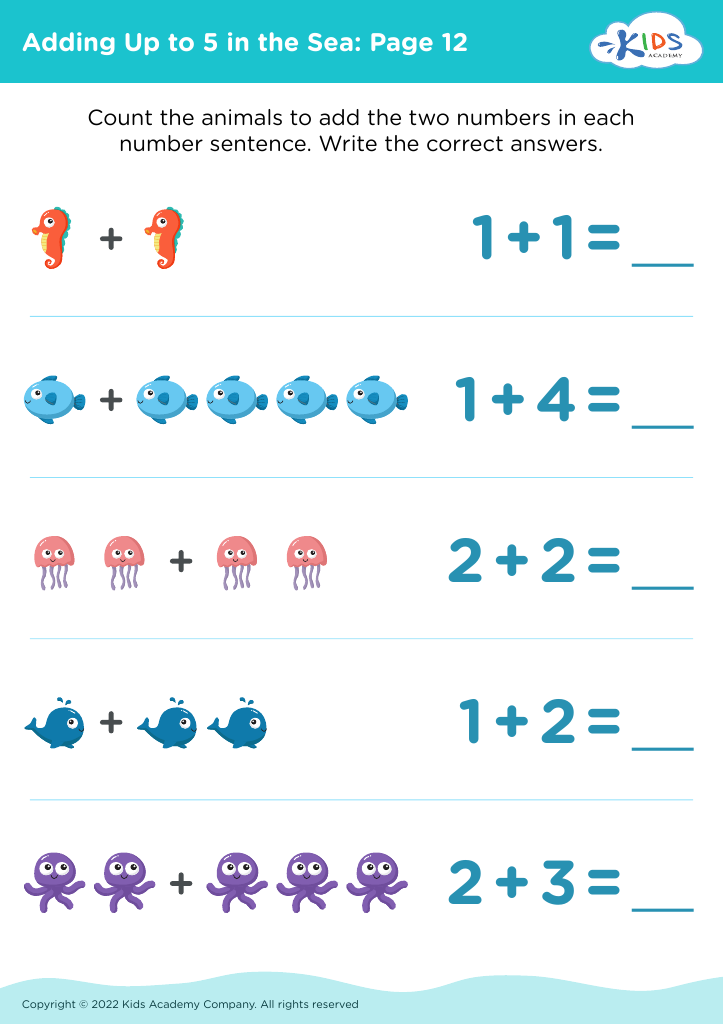
Adding Up to 5 in the Sea: Page 12
Worksheet
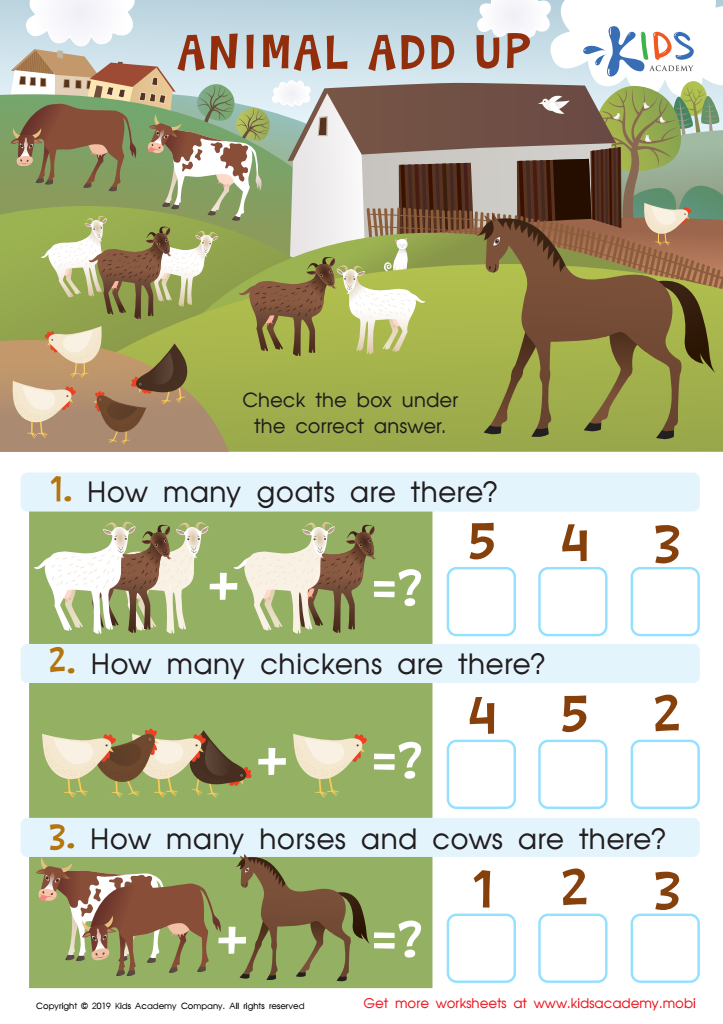
Animal Add Up Worksheet

Animal Add Up Worksheet

Animals are fun to observe and interact with. They can be seen at the zoo, parks, farms and in homes with pets. This worksheet helps kids identify animals, and build addition skills. Look at the picture with them and help name each animal. After that, add the animals up and check the box for the correct answer. 80 words.
Animal Add Up Worksheet
Worksheet
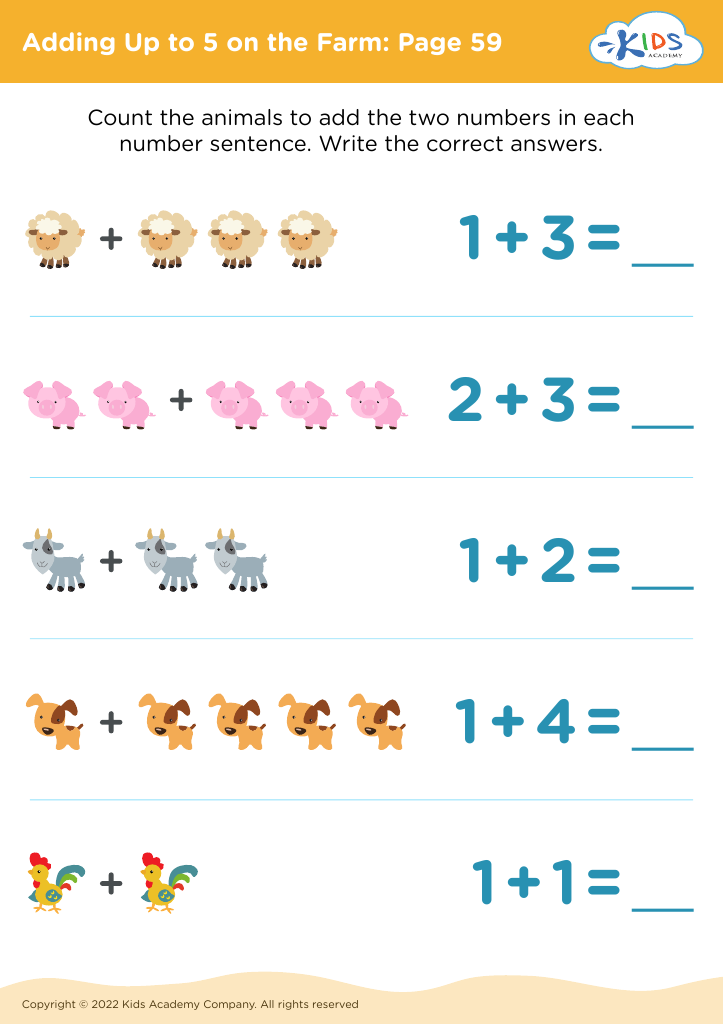
Adding Up to 5 on the Farm: Page 59
Worksheet
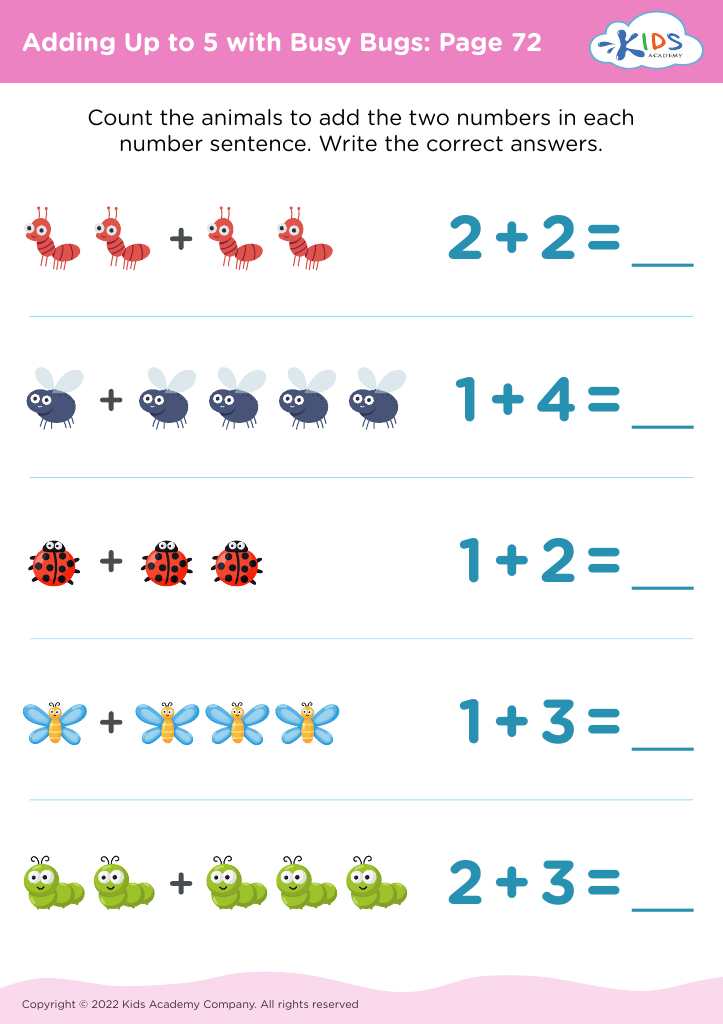
Adding Up to 5 with Busy Bugs: Page 72
Worksheet
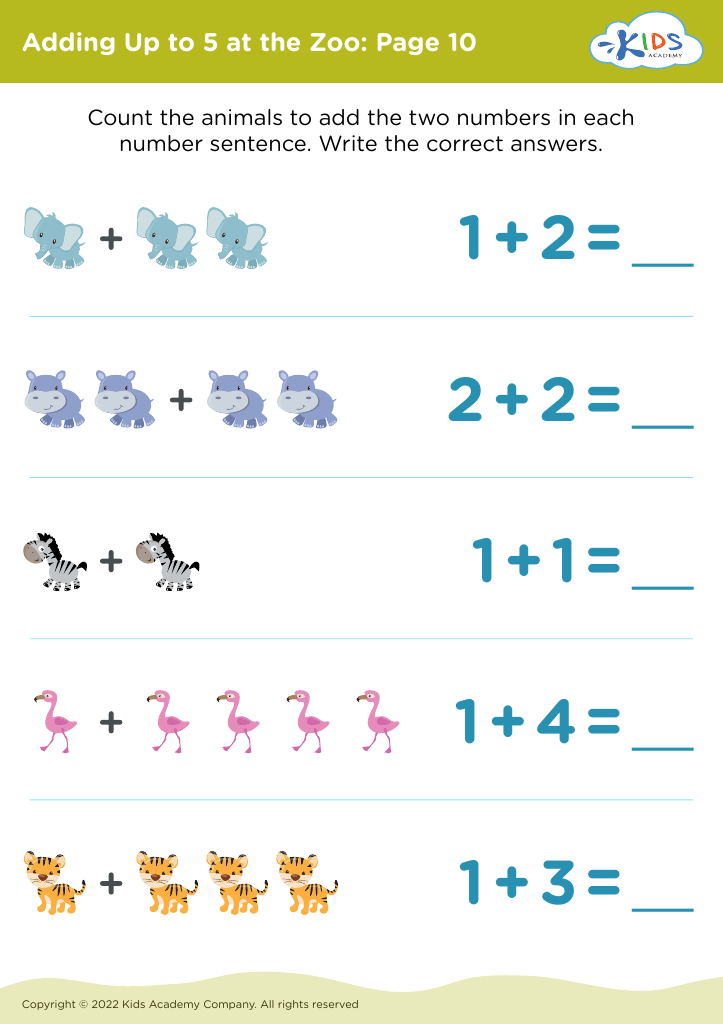
Adding Up to 5 at the Zoo: Page 10
Worksheet
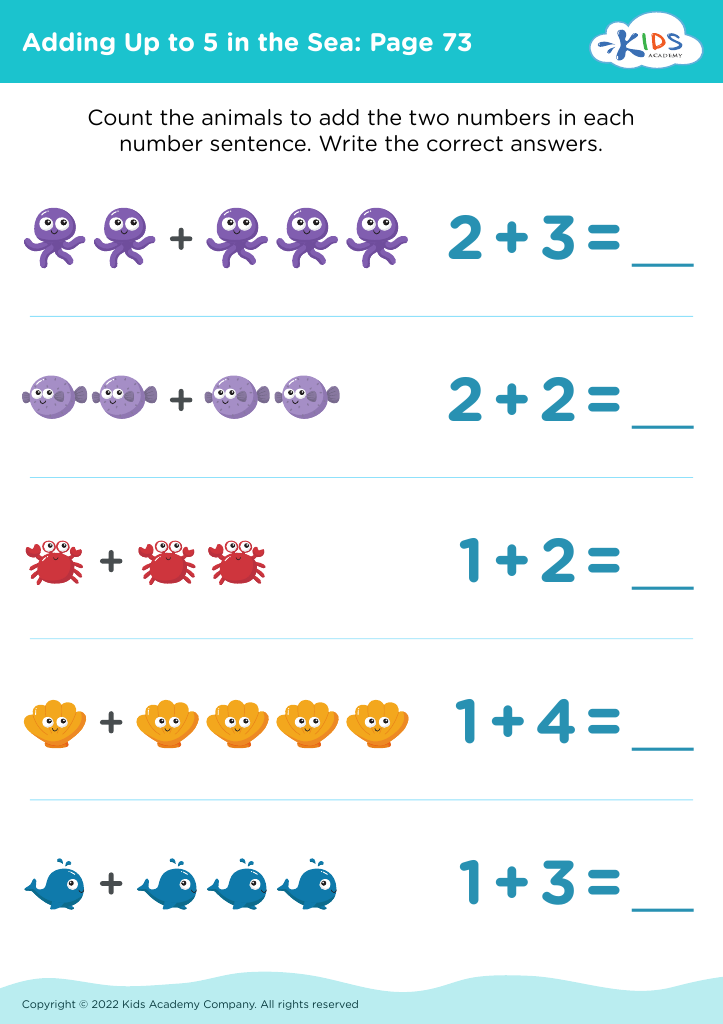
Adding Up to 5 in the Sea: Page 73
Worksheet
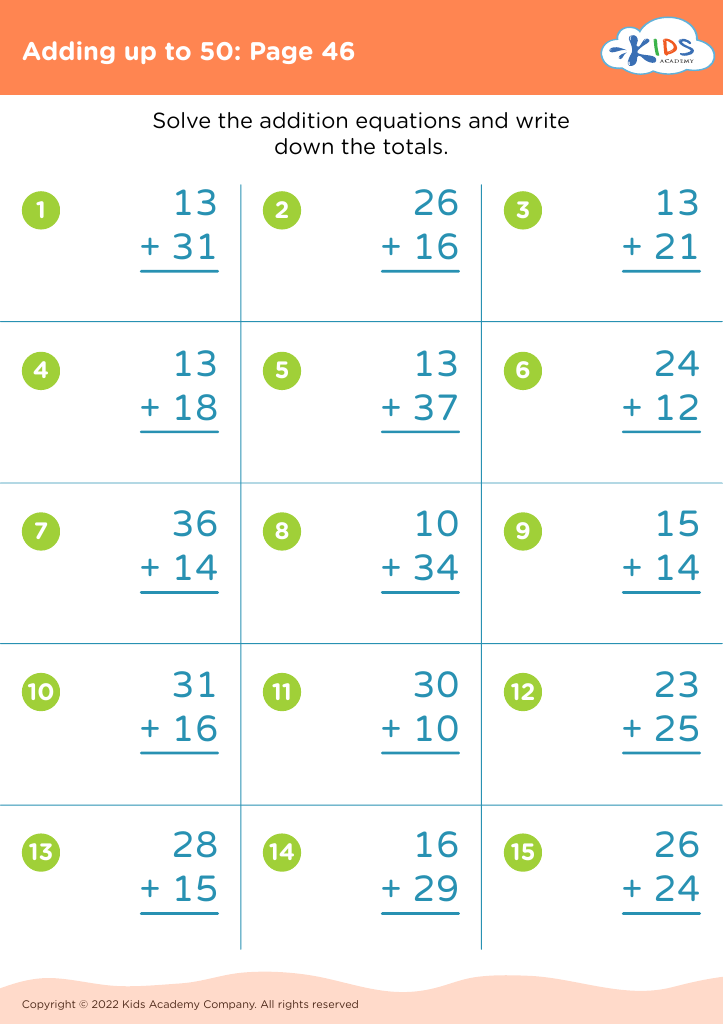
Adding up to 50: Page 46

Adding up to 50: Page 46

Adding up to 50: Page 46
Worksheet
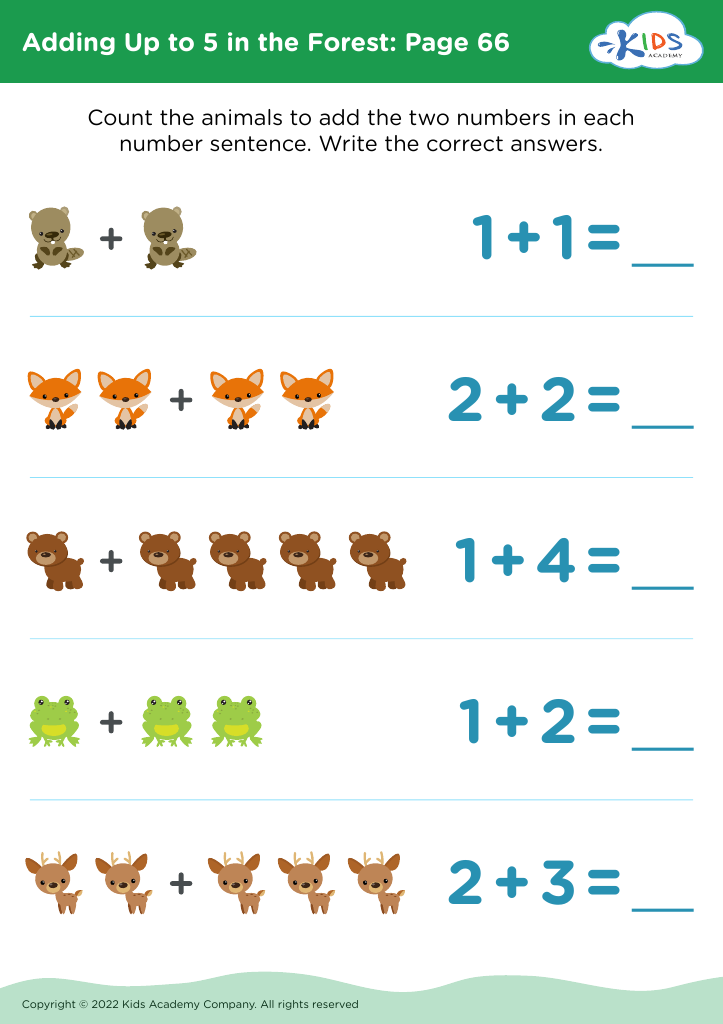
Adding Up to 5 in the Forest: Page 66
Worksheet
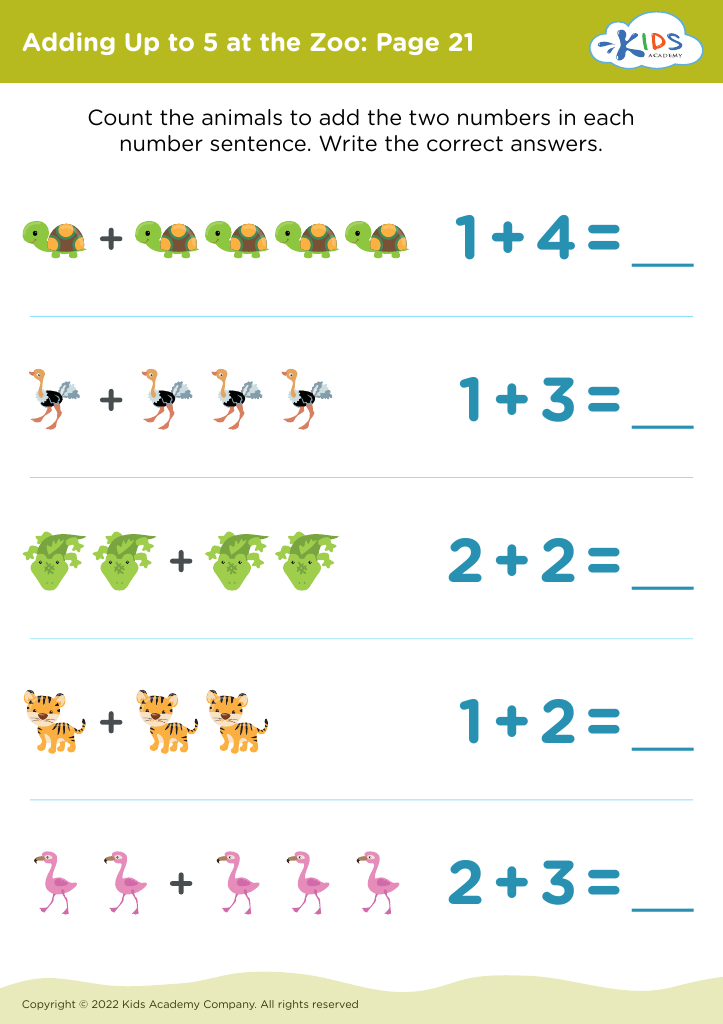
Adding Up to 5 at the Zoo: Page 21
Worksheet
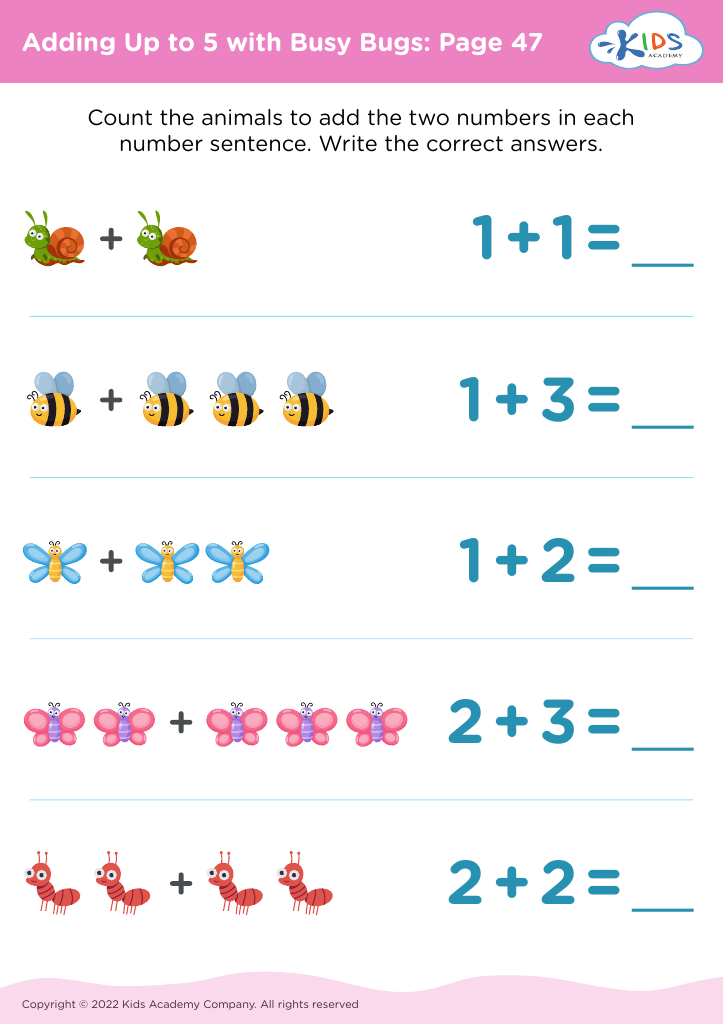
Adding Up to 5 with Busy Bugs: Page 47
Worksheet
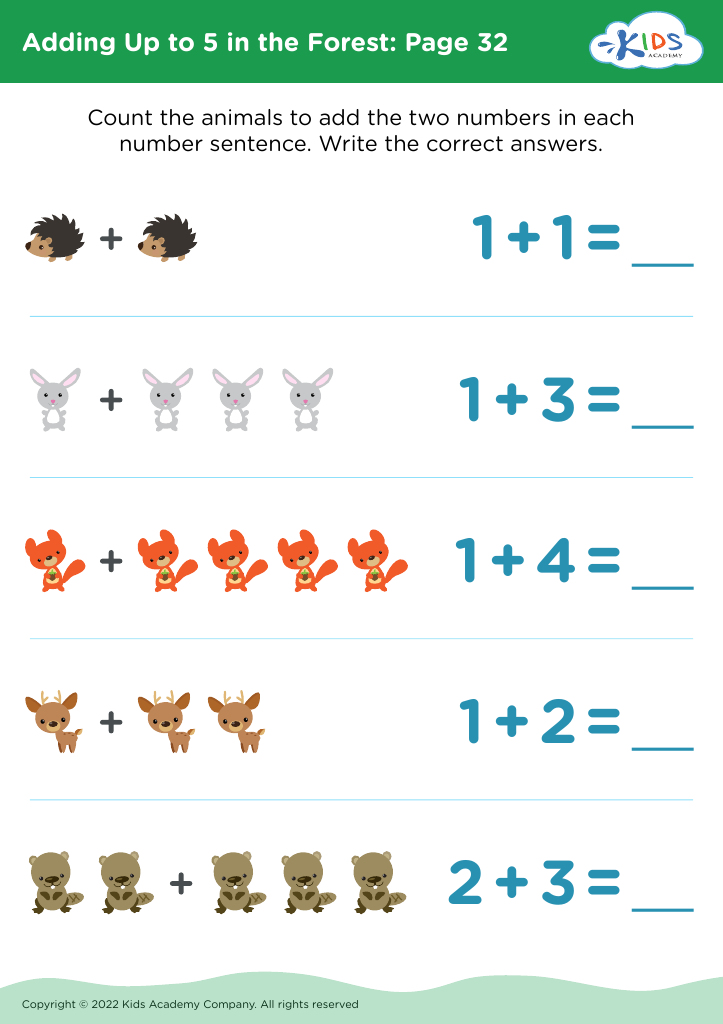
Adding Up to 5 in the Forest: Page 32
Worksheet
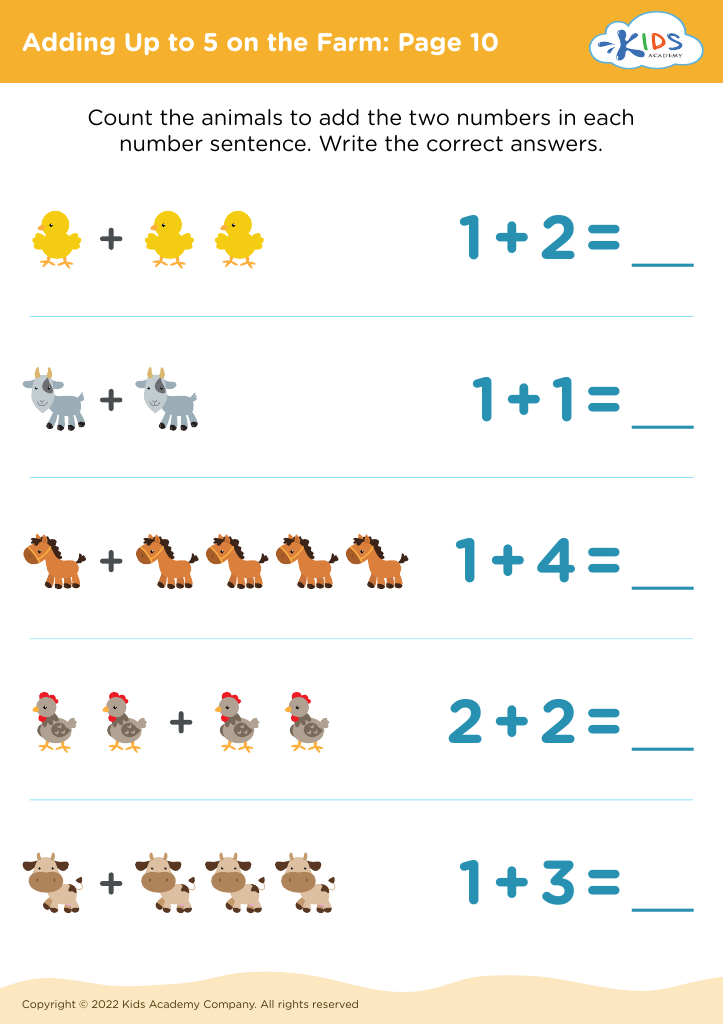
Adding Up to 5 on the Farm: Page 10
Worksheet
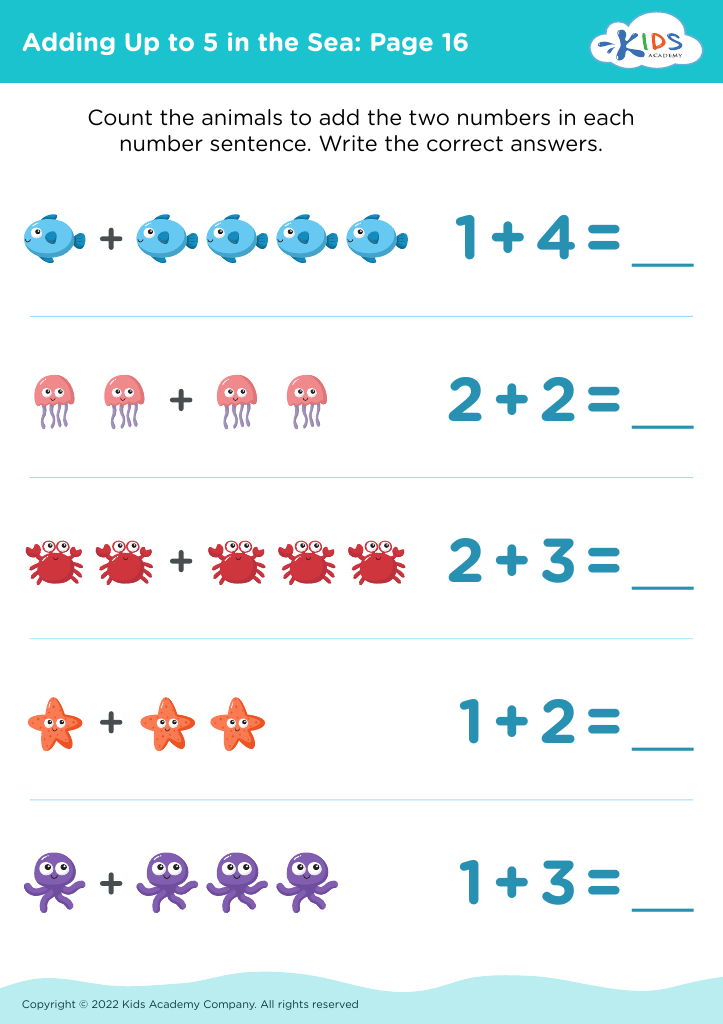
Adding Up to 5 in the Sea: Page 16
Worksheet
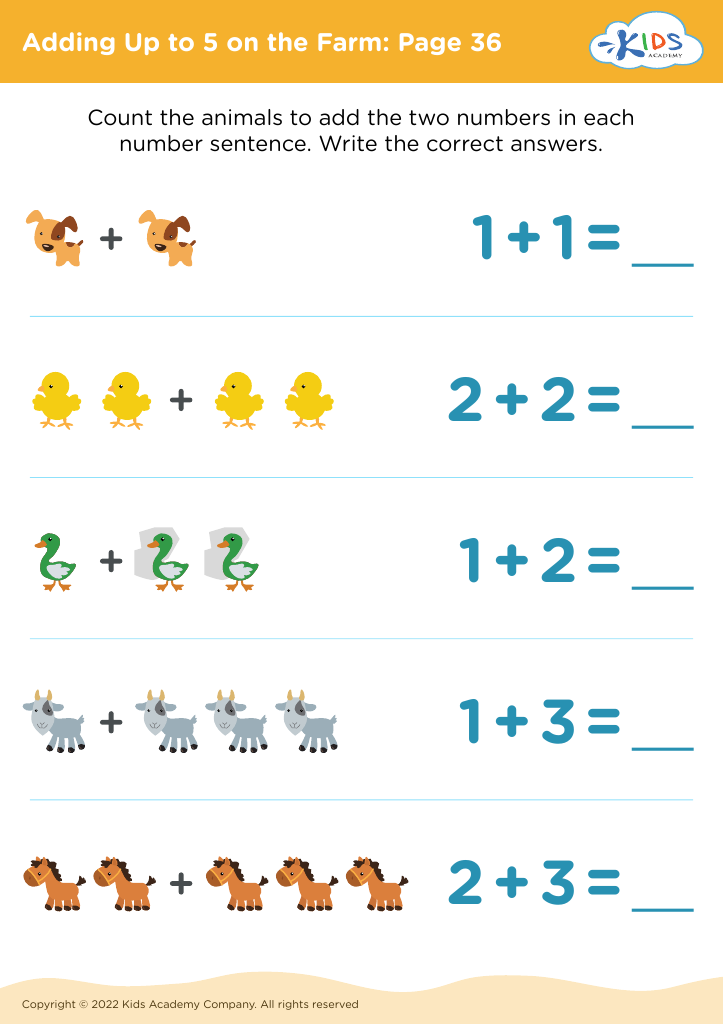
Adding Up to 5 on the Farm: Page 36
Worksheet
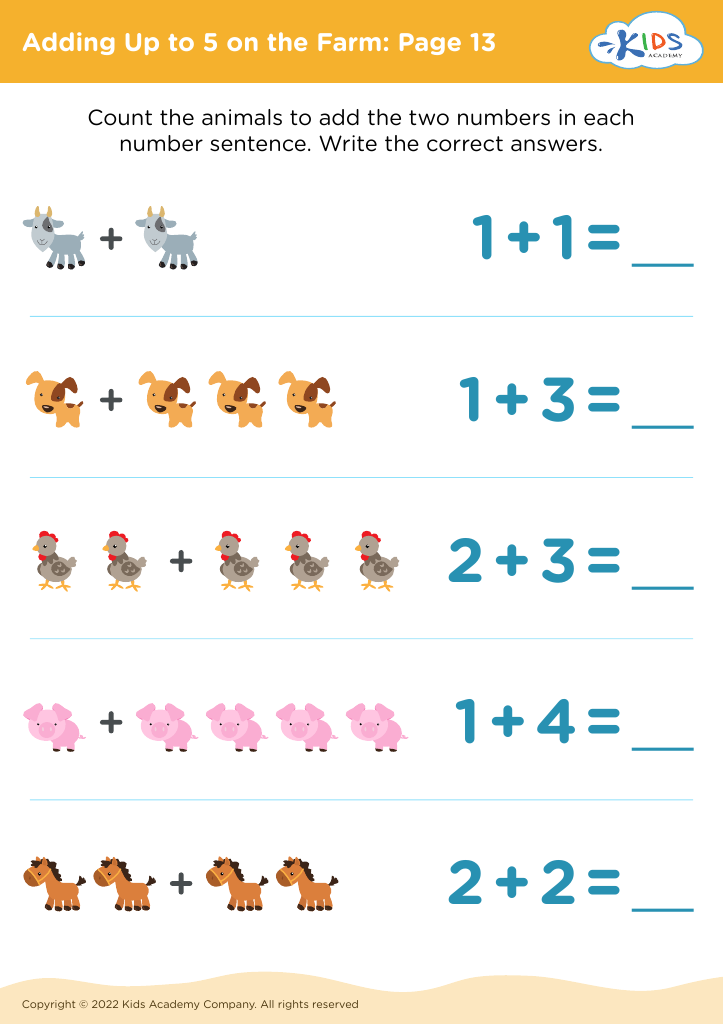
Adding Up to 5 on the Farm: Page 13
Worksheet
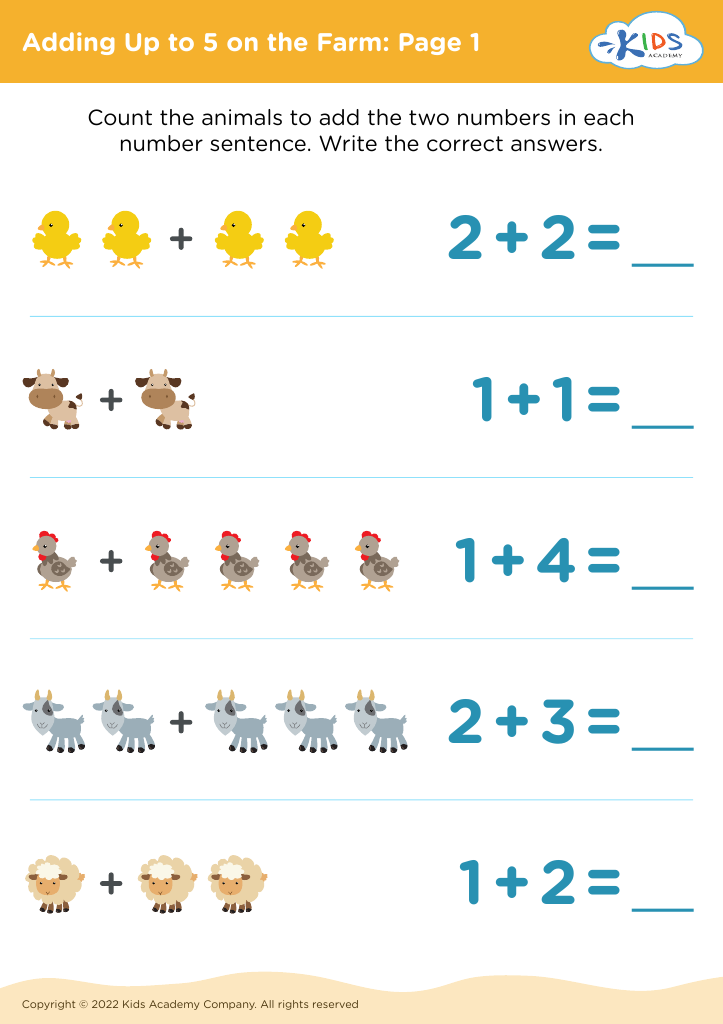
Adding Up to 5 on the Farm: Page 1
Worksheet


Caring about basic addition and subtraction skills for children aged 5-9 is essential for several reasons. Firstly, these foundational math skills are crucial for everyday life. Children encounter situations that require counting, comparing quantities, and simple calculations, whether they're playing games, managing allowances, or helping in the kitchen. Mastery of these skills builds confidence and encourages a positive attitude towards math.

Academically, strong addition and subtraction abilities serve as a stepping stone for more complex mathematical concepts encountered in later grades. Early mastery paves the way for skills in multiplication, division, and problem-solving, ensuring that children keep pace with their peers.

Moreover, developing these skills fosters critical thinking and cognitive development. Engaging with numbers promotes logical reasoning and boosts analytical skills. Furthermore, mastering these concepts early on can mitigate math anxiety, which affects many children as they progress through school.

Lastly, parents and teachers play an integral role in fostering a supportive learning environment. Encouraging practice through games, applications, and real-life situations makes learning fun and relatable. By prioritizing these basic skills, adults can inspire a love for math that can last a lifetime and empower children for future academic success.