Developing logical thinking Addition & Subtraction Worksheets for Ages 5-9
4 filtered results
-
From - To
Unlock your child's potential with our engaging Developing Logical Thinking Addition & Subtraction Worksheets, specifically designed for ages 5-9. These worksheets foster critical thinking and problem-solving skills while making math fun! Each activity encourages children to explore relationships between numbers, enhancing their understanding of addition and subtraction. Suitable for various learning styles, our colorful and interactive worksheets offer a perfect blend of education and play. As your child tackles challenges and solves puzzles, they’ll build confidence in their mathematical abilities. Explore our collection today and watch your little ones thrive as they develop essential logical thinking skills through math!
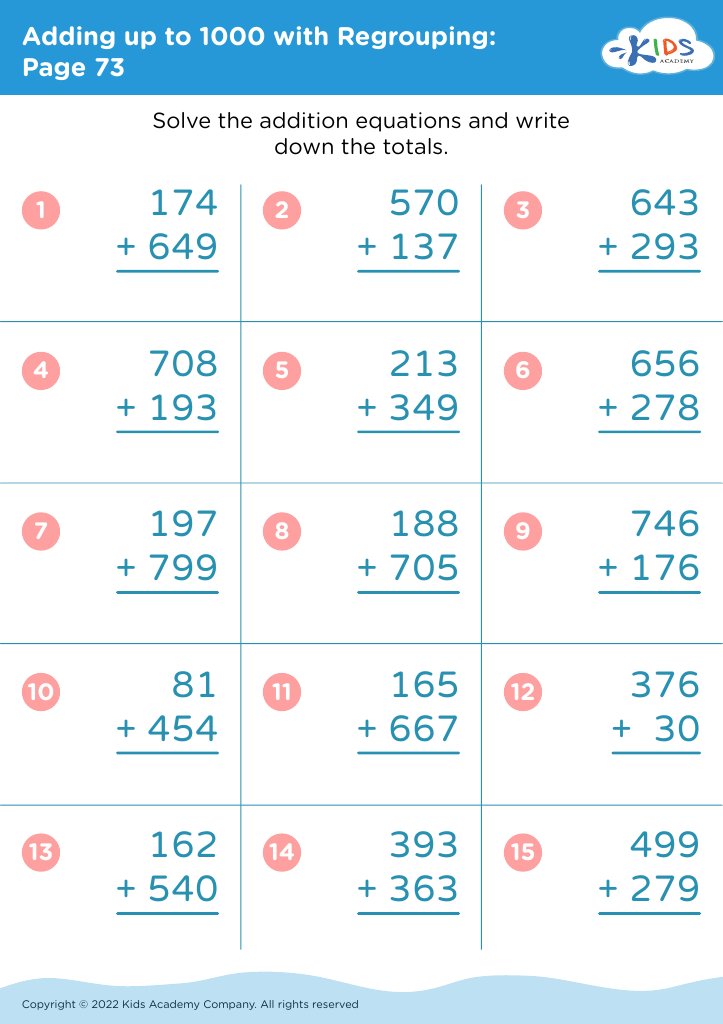
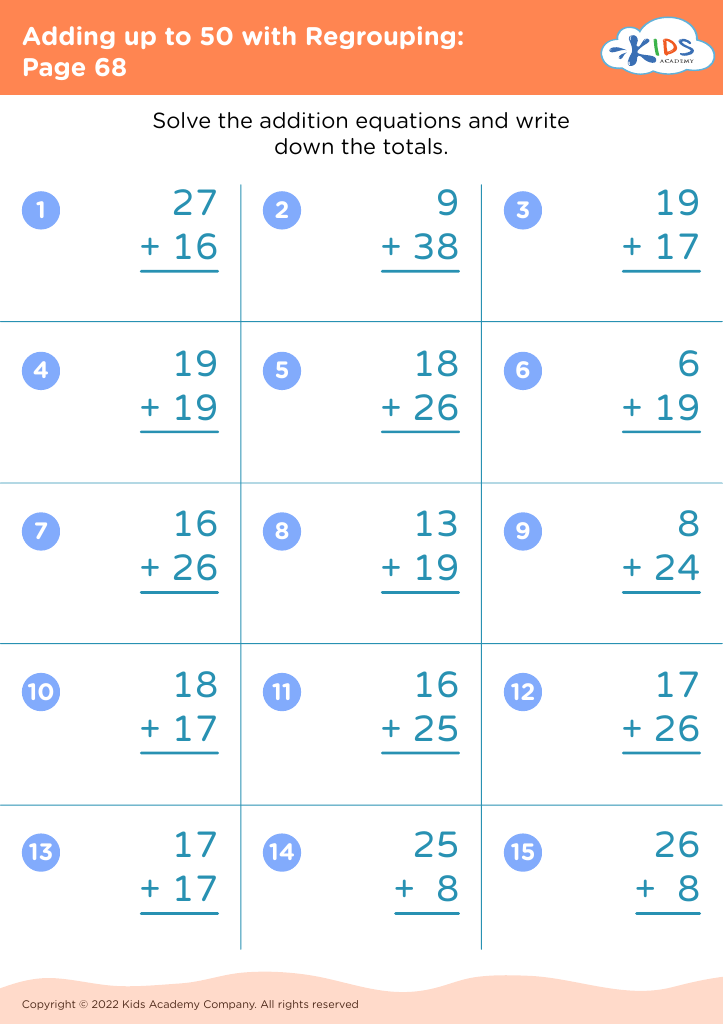
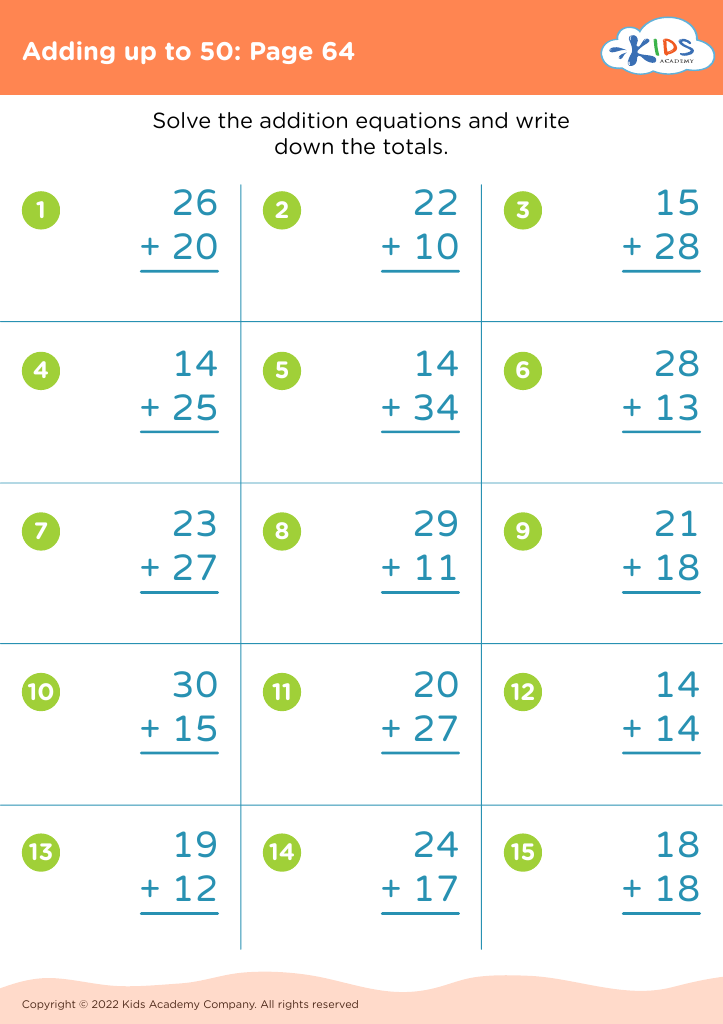
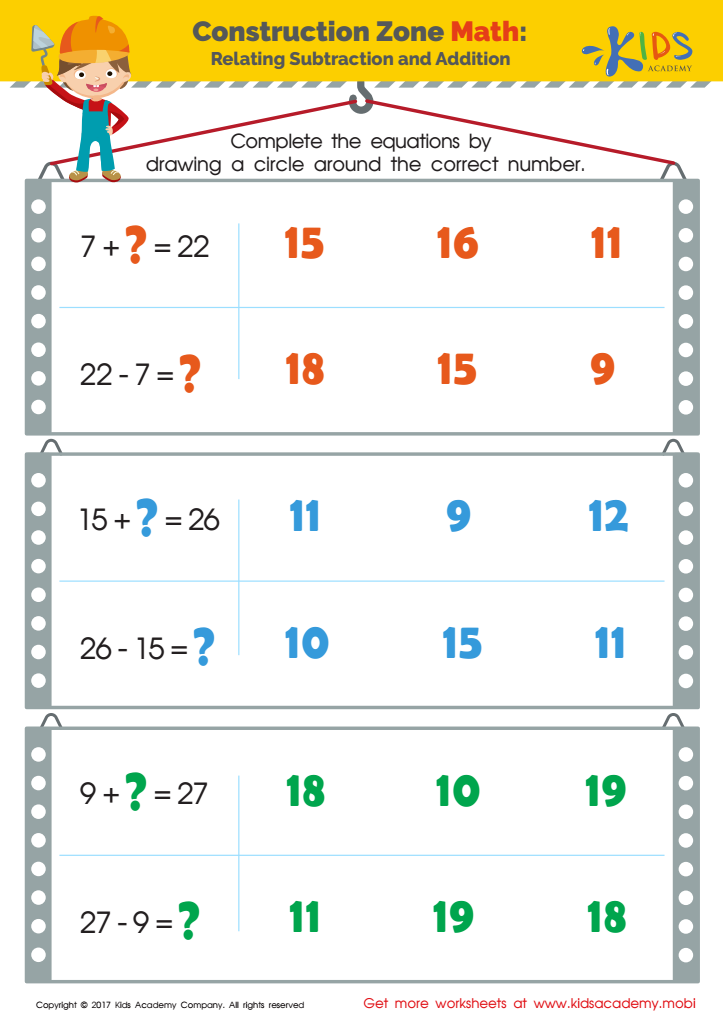
Related Addition and Subtraction Facts Worksheet
 Assign to My Students








Developing logical thinking skills in addition and subtraction for children ages 5-9 is critical for their academic success and everyday problem-solving. At this age, children are forming the foundational skills they need for more complex mathematical concepts. By nurturing these logical thinking abilities, parents and teachers can help children understand not just how to perform operations, but also why those operations work—enhancing their overall comprehension of mathematics.
Moreover, logical thinking fosters critical reasoning, encourages perseverance, and promotes the ability to approach problems methodically. This cognitive development is essential not just in mathematics but in all areas of learning, laying the groundwork for future skills in science, technology, engineering, and mathematics (STEM).
Additionally, mastering addition and subtraction equips children with practical life skills crucial for personal finance, time management, and logical decision-making as they grow older. Parents and teachers cultivate confidence and a positive attitude toward mathematics by engaging children in engaging and interactive learning experiences. In a rapidly changing world, logical thinkers are better equipped to adapt to new challenges, making it essential for parents and educators to prioritize developing these skills in young learners.








