Enhances number recognition Addition & Subtraction Worksheets for Ages 5-9
4 filtered results
-
From - To
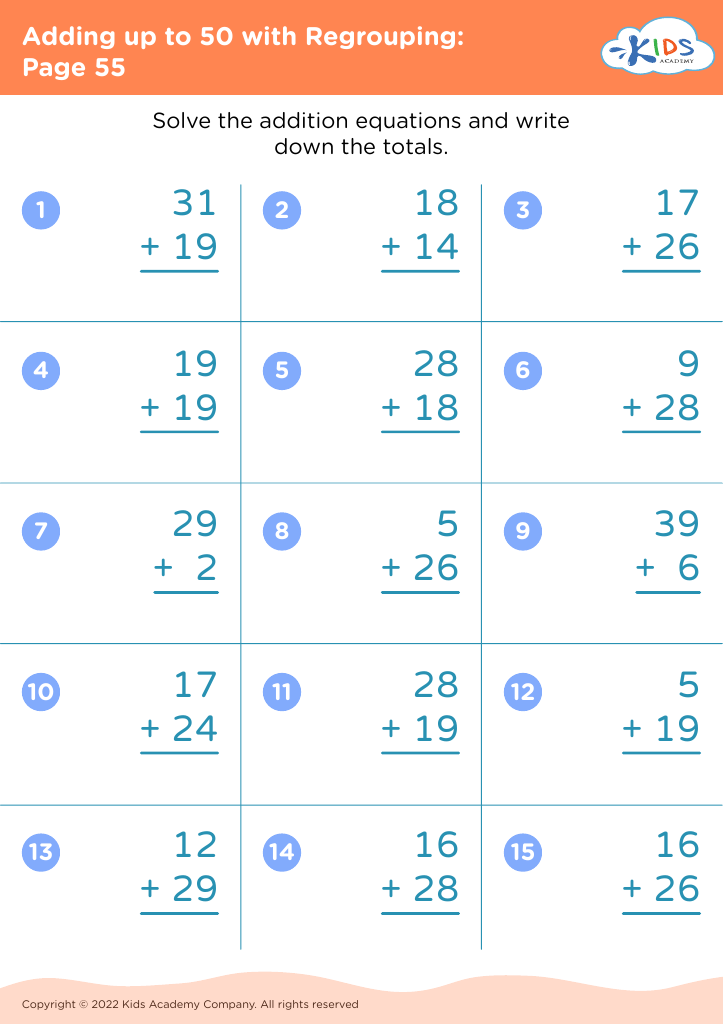
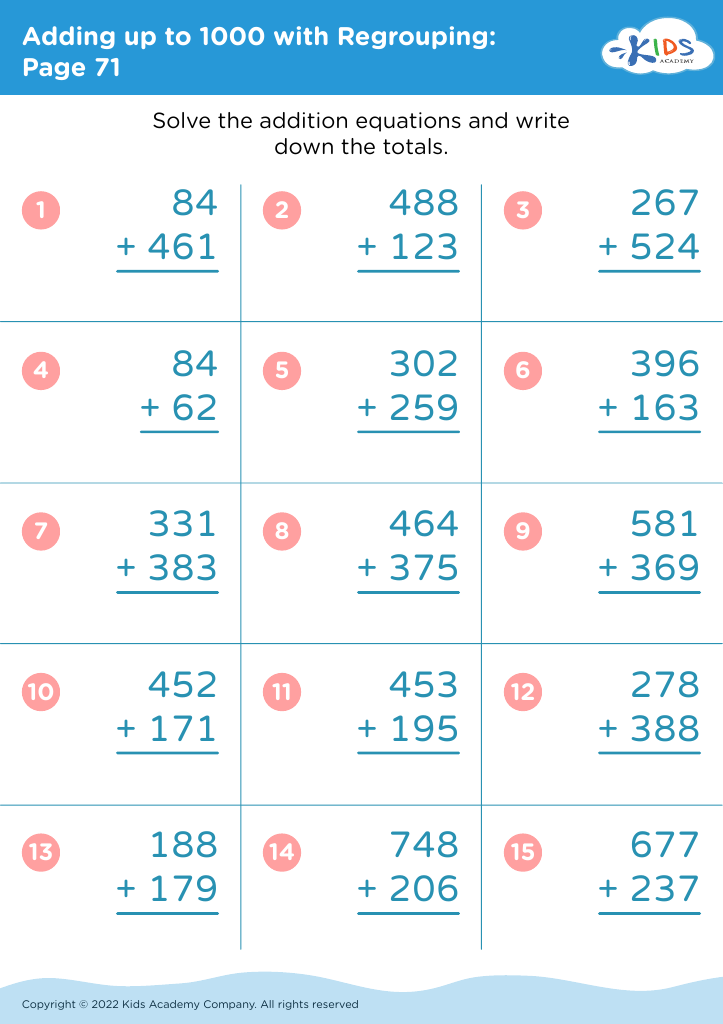
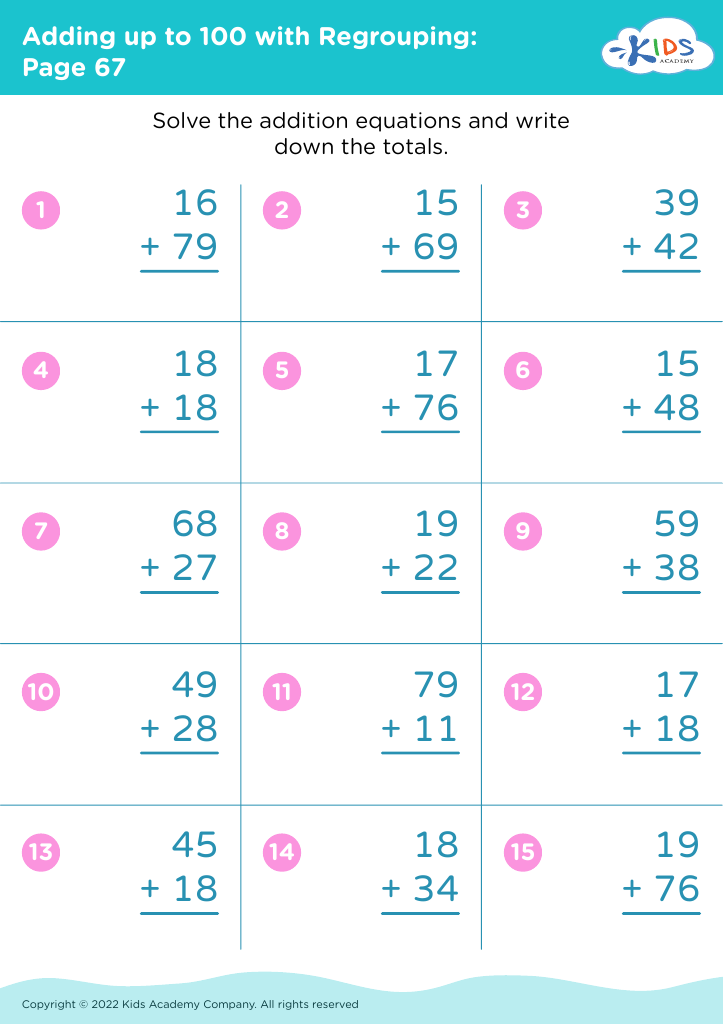
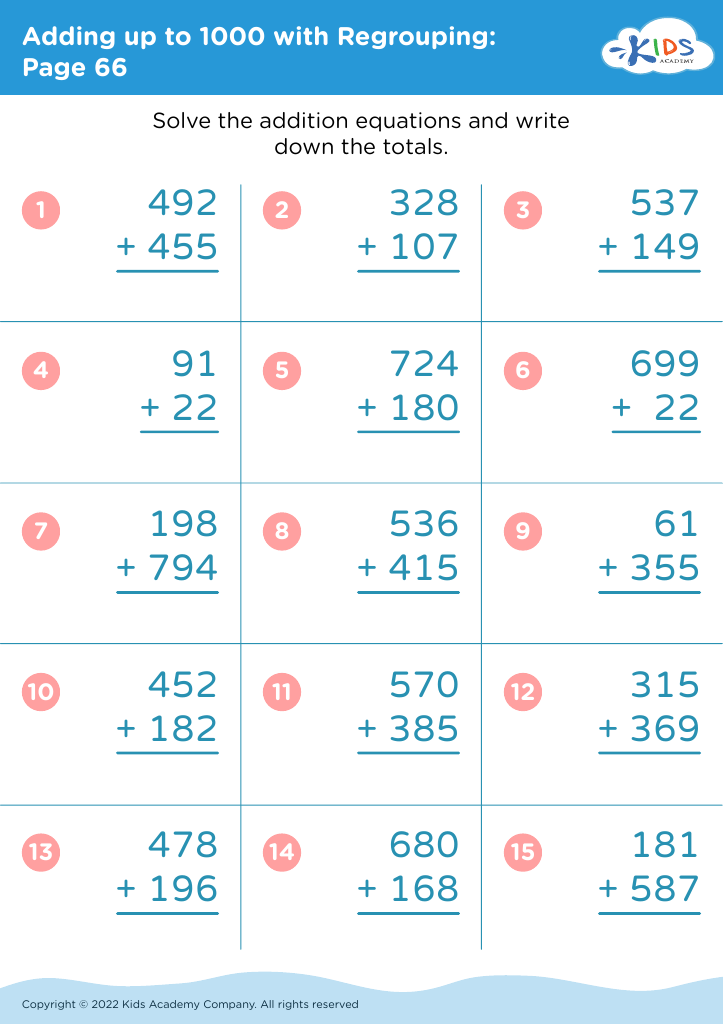
Enhance your child’s math skills with our engaging Addition & Subtraction Worksheets designed for ages 5-9. Formulated to strengthen number recognition capabilities, these printable resources make learning fun and effective. Each worksheet is crafted by educators to offer a balance of challenge and excitement, helping young learners confidently master foundational math concepts. Watch as your child improves their computation accuracy and gains a solid understanding of numbers while enjoying a variety of structured, educational activities. Ideal for both classroom use and at-home practice, these worksheets are the perfect tool to support your child’s math journey.








Parents and teachers should prioritize enhancing number recognition and proficiency in addition and subtraction for children aged 5-9 because these skills form the foundation of their mathematical understanding and overall cognitive development. Early number recognition helps children identify, understand, and use numbers in various everyday contexts, crucial for developing strong mathematical literacy.
Proficiency in addition and subtraction at this developmental stage equips children with essential problem-solving skills, enabling them to navigate real-life situations where these basic operations are applicable. These fundamental mathematical skills also foster logical thinking, improve memory, and enhance concentration.
Moreover, early competence in these areas positively impacts a child's confidence and attitude towards math. Children are more likely to approach advanced mathematical concepts with enthusiasm and persistence if they have a strong grasp of the basics. In the context of educational progression, students with a solid understanding of number recognition and basic arithmetic often perform better in subsequent academic chapters and standardized tests.
Ultimately, nurturing these skills in the early grades provides a critical foundation not only for academic success in mathematics but for critical thinking, logical reasoning, and everyday problem-solving, setting children on a trajectory for lifelong learning and success. Parents and teachers play a pivotal role in guiding and supporting children through these early learning milestones.








