
Enhancing observation skills Addition & Subtraction Worksheets for Ages 5-9
3 filtered results
Difficulty Level
Grade
Age
-
From - To
Subject
Activity
Standards
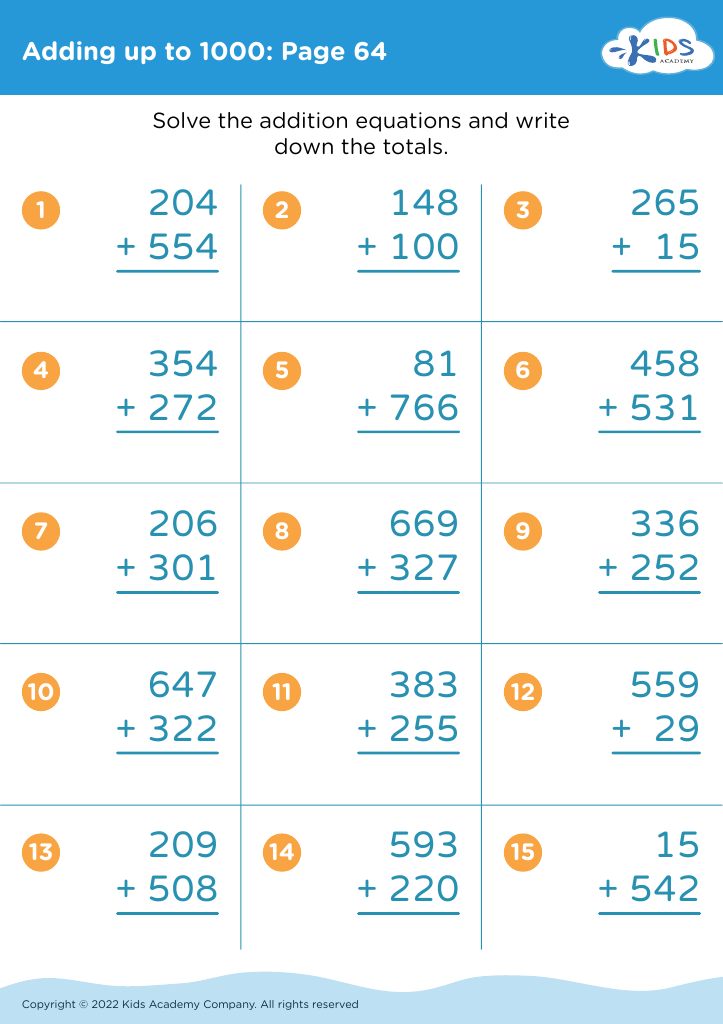
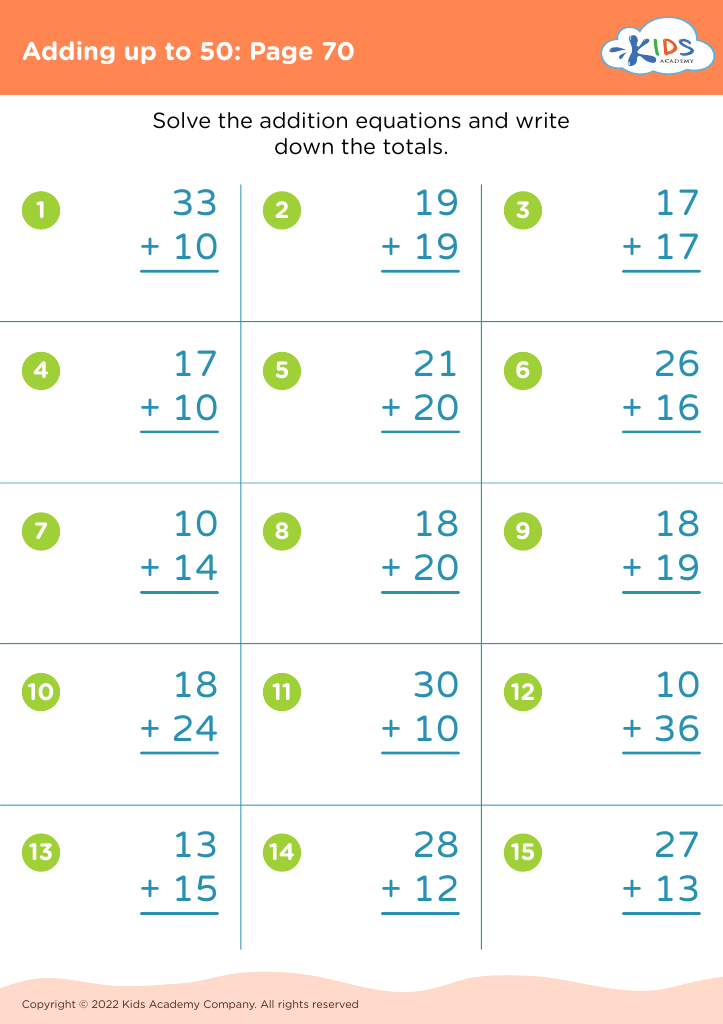
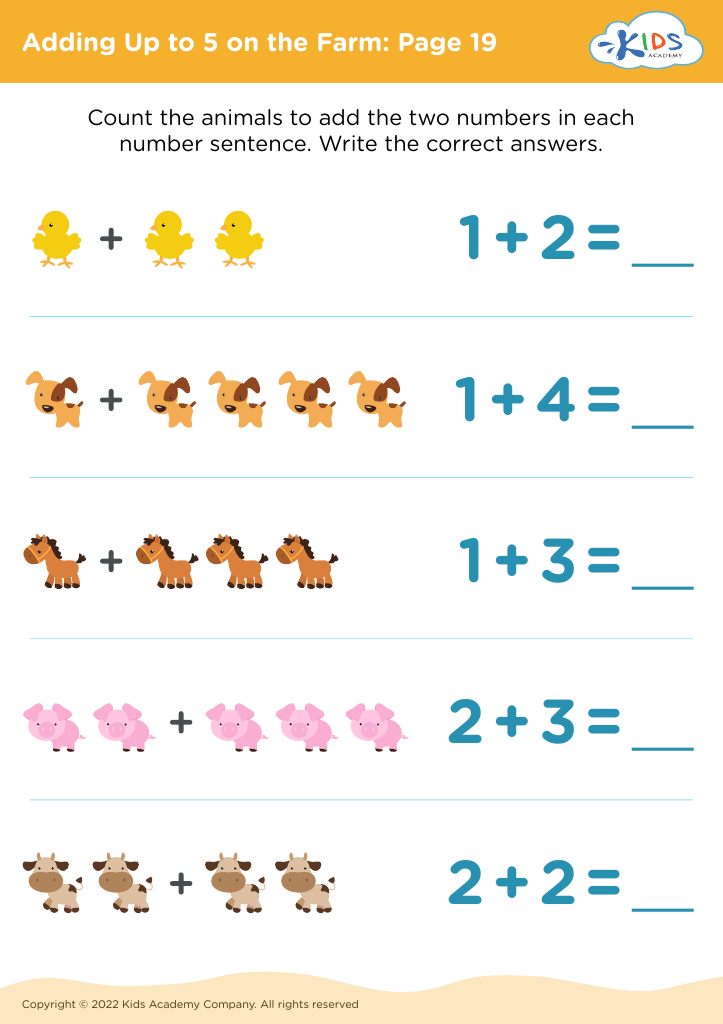
Boost your child’s math abilities with our "Enhancing Observation Skills Addition & Subtraction Worksheets" designed for ages 5-9! These engaging, printable worksheets not only focus on arithmetic operations but also encourage critical observation skills. Through vibrant illustrations and interactive exercises, children learn to recognize patterns, categorize objects, and boost their ability to analyze information more effectively, making math more enjoyable and intuitive. Cultivating these skills lays a strong foundation for future learning. Perfect for home or classroom use, these worksheets will help your young learners master math concepts while fostering essential observation techniques needed for their educational journey.
Favorites
With answer key
Interactive
Join Kids Academy for Free
Who is primarily going to use this learning content?








Enhancing observation skills in addition and subtraction for children aged 5-9 is crucial for their overall mathematical development. At this age, children are laying the foundation for their understanding of numbers and mathematical concepts. When parents and teachers focus on developing observation skills, they enable children to notice patterns, relationships, and discrepancies in mathematical situations, fostering deeper comprehension.
Observational skills help children learn to visualize problems, making it easier for them to solve addition and subtraction equations. By observing how numbers interact, they can better grasp concepts such as regrouping, the commutative property, and the significance of place value. This critical thinking contributes to enhanced problem-solving abilities, which are essential for future learning.
Moreover, improved observation skills can lead to greater engagement and motivation during math activities. When children participate in observational tasks—such as visual aids, manipulatives, or real-world applications—they develop a sense of curiosity and confidence in their abilities.
Finally, developing these skills early on creates a supportive environment that nurtures mathematical foundations, reducing anxiety around math and encouraging a lifelong appreciation for learning. Ultimately, fostering strong observational abilities in young learners is crucial for their success and enjoyment in mathematics.








