Discover our engaging Fraction Comparison Addition & Subtraction Worksheets designed specifically for children aged 5-9! These fun and interactive printables help young learners grasp essential math concepts by comparing fractions and practicing addition and subtraction. Each worksheet features colorful illustrations and clear instructions, making it easy for kids to explore fractions in a hands-on way. As they complete these activities, students will build crucial skills in critical thinking and problem-solving. Perfect for teachers and homeschoolers alike, our worksheets provide a valuable resource to enhance math understanding in early education. Download now and watch your child's confidence in math grow!
Check out this FREE Trial Lesson on Addition & Subtraction for age 5-9!

L

Favorites
With answer key
Interactive
  • 5-9
  • Fraction comparison
  • Addition & Subtraction
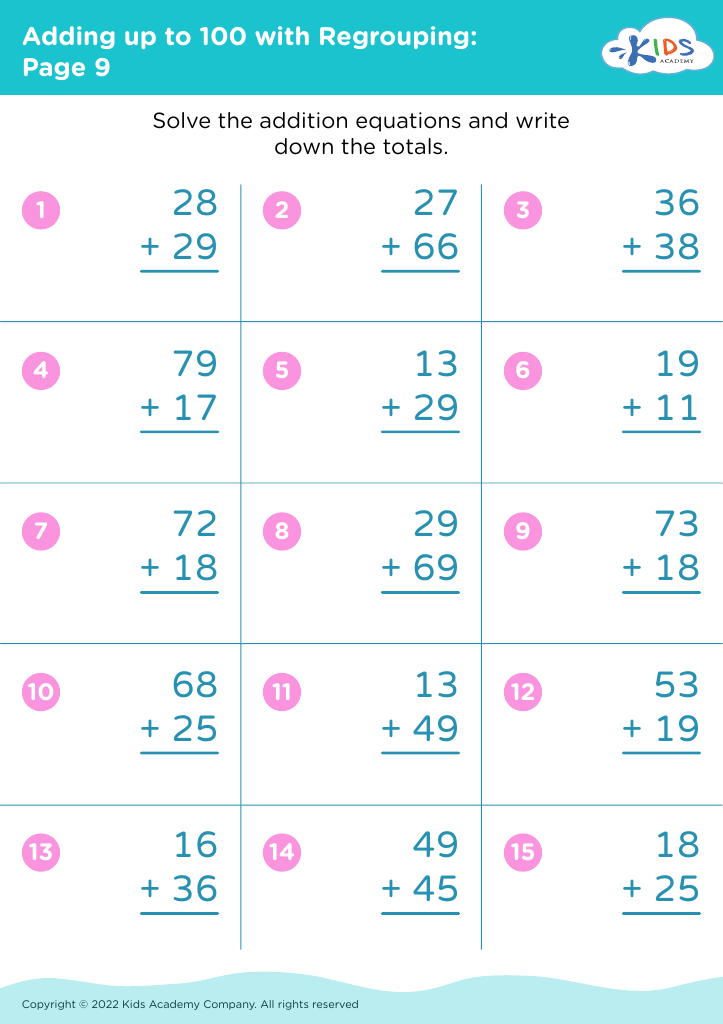
Adding up to 100 with Regrouping: Page 9
Worksheet
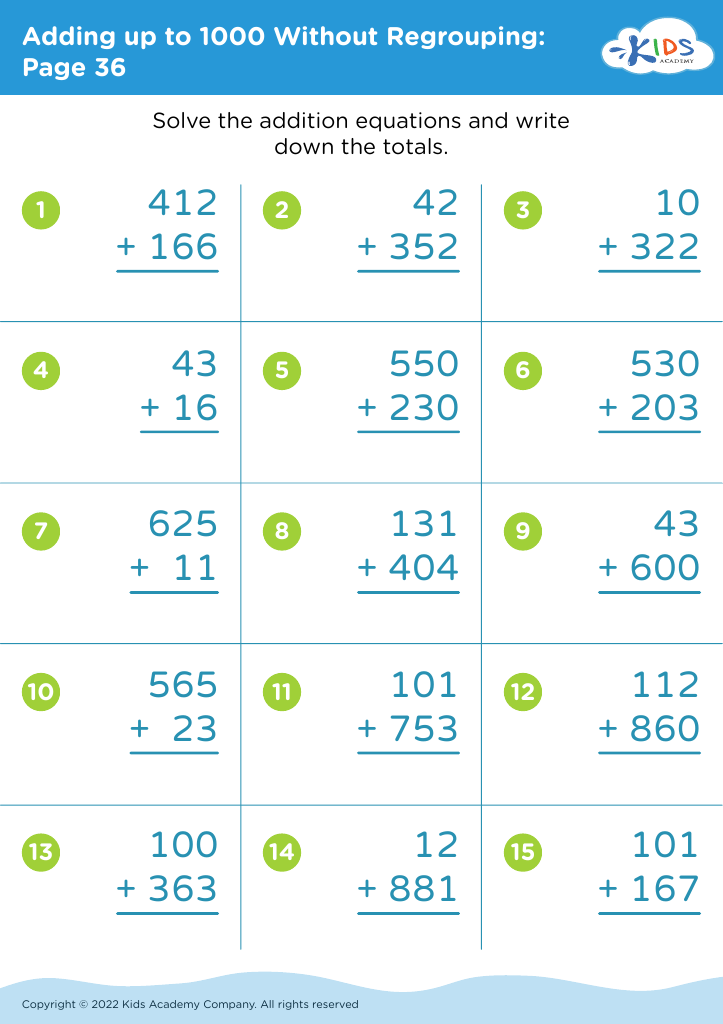
Adding up to 1000 Without Regrouping: Page 36
Worksheet
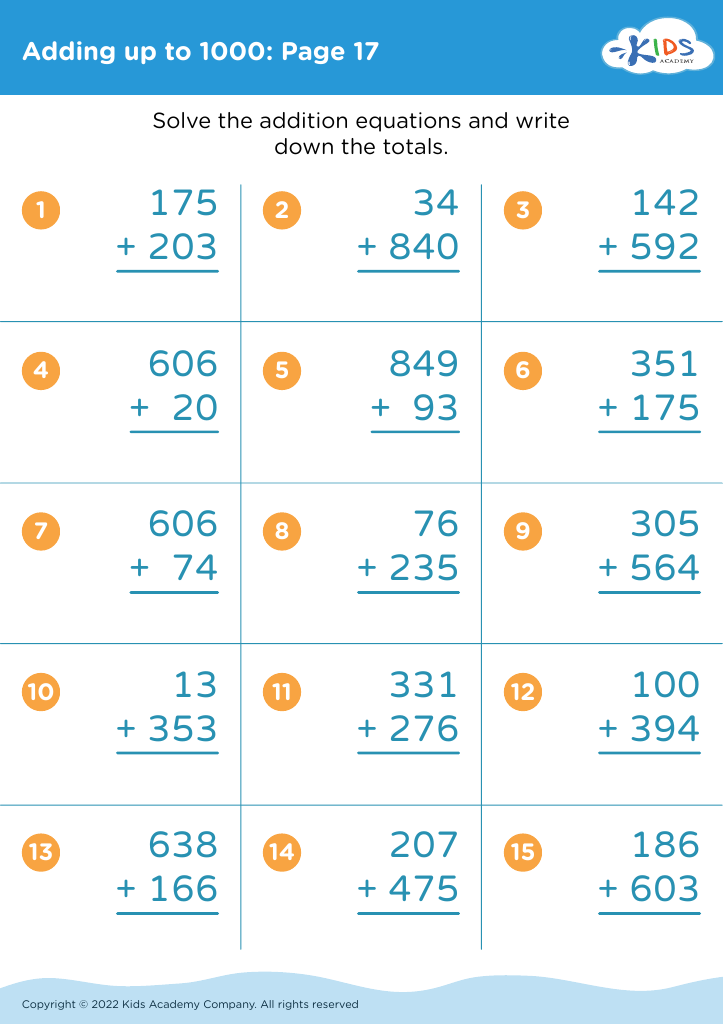
Adding up to 1000: Page 17

Adding up to 1000: Page 17

Adding up to 1000: Page 17
Worksheet
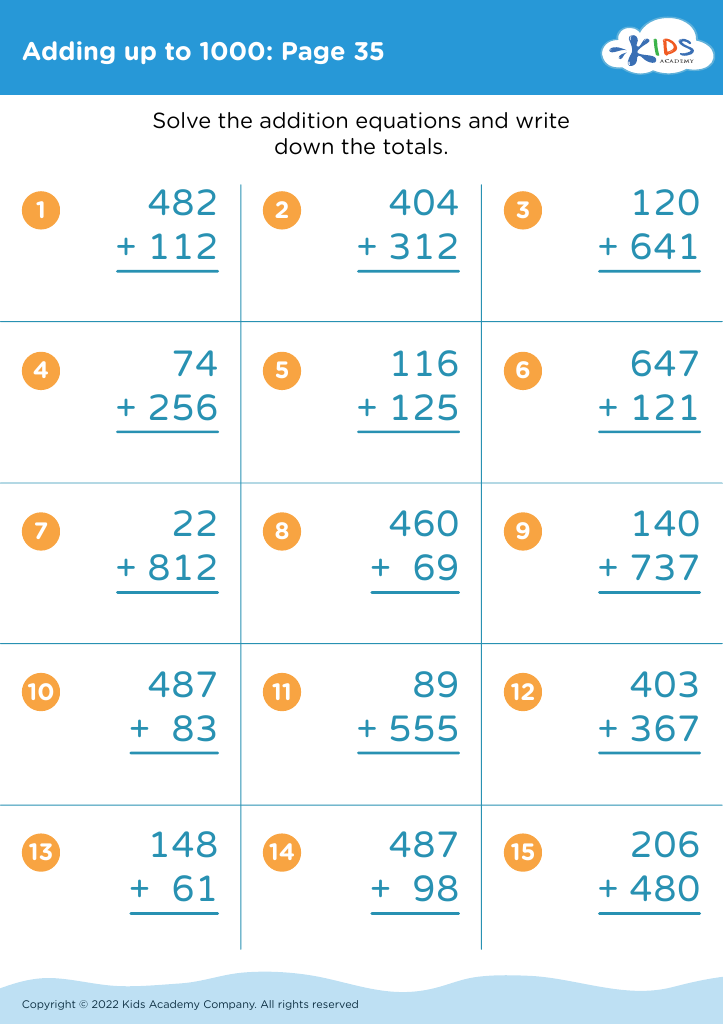
Adding up to 1000: Page 35

Adding up to 1000: Page 35

Adding up to 1000: Page 35
Worksheet
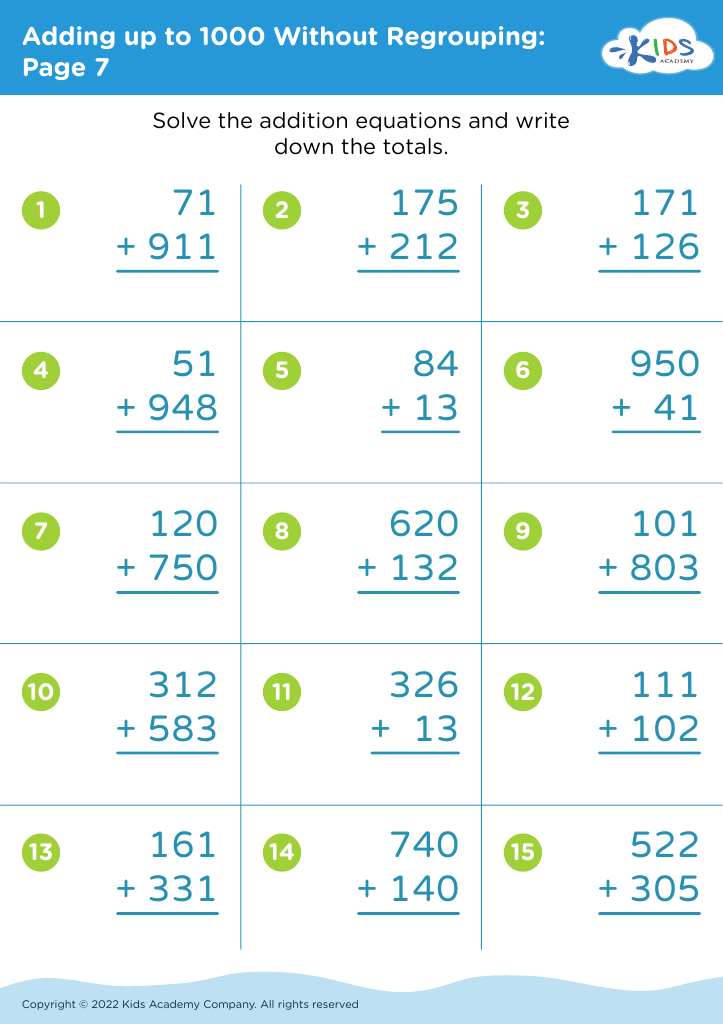
Adding up to 1000 Without Regrouping: Page 7
Worksheet
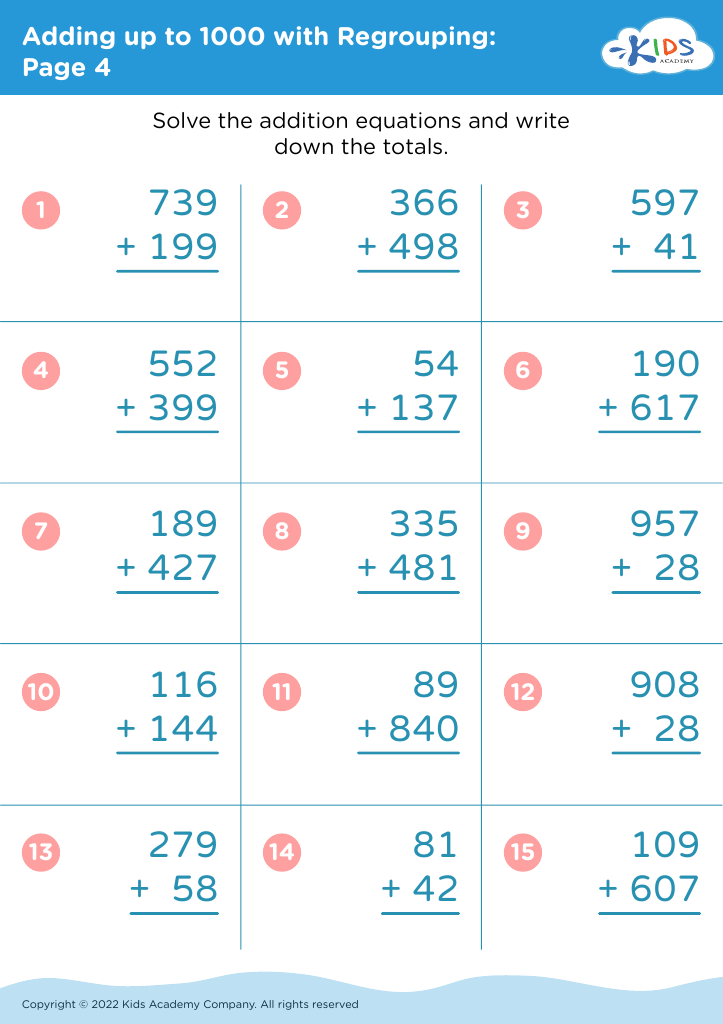
Adding up to 1000 with Regrouping: Page 4
Worksheet
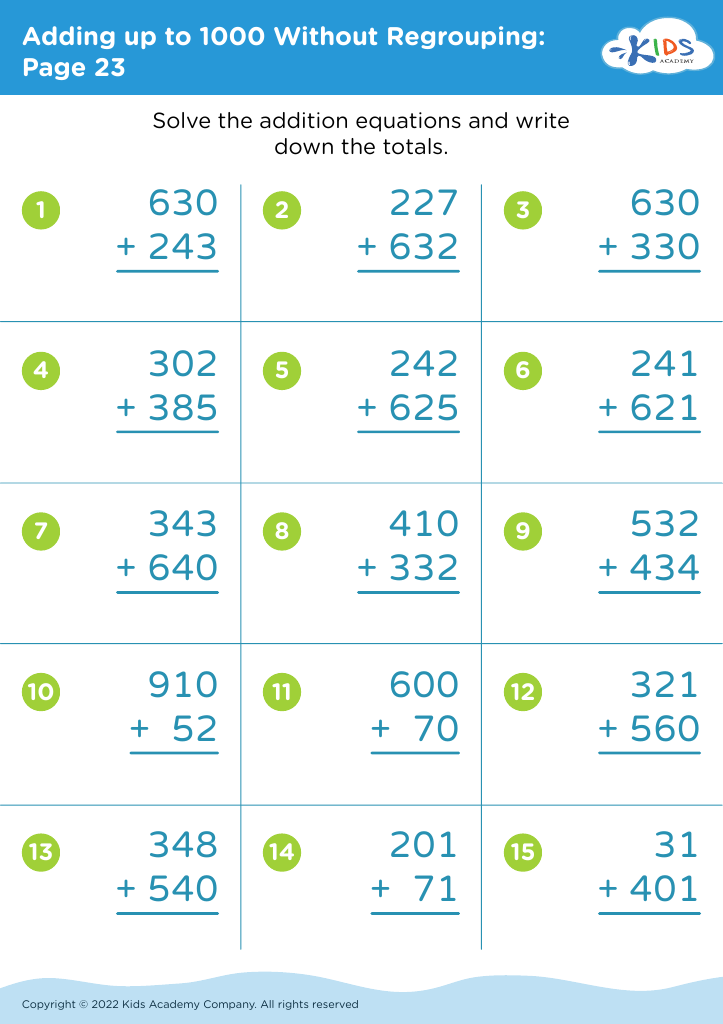
Adding up to 1000 Without Regrouping: Page 23
Worksheet
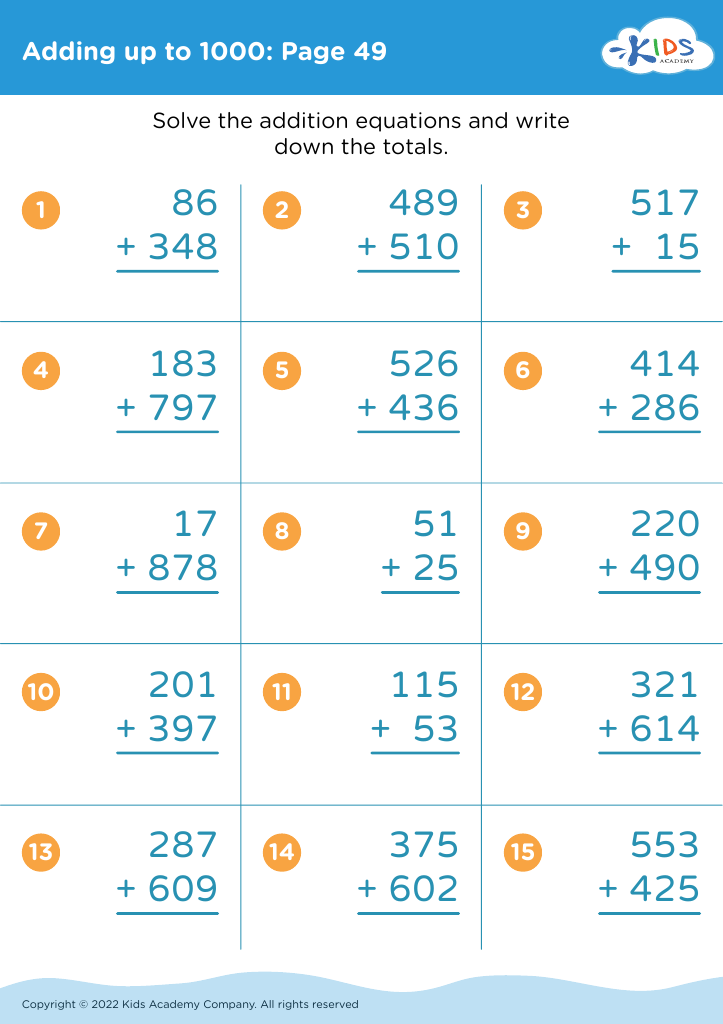
Adding up to 1000: Page 49

Adding up to 1000: Page 49

Adding up to 1000: Page 49
Worksheet
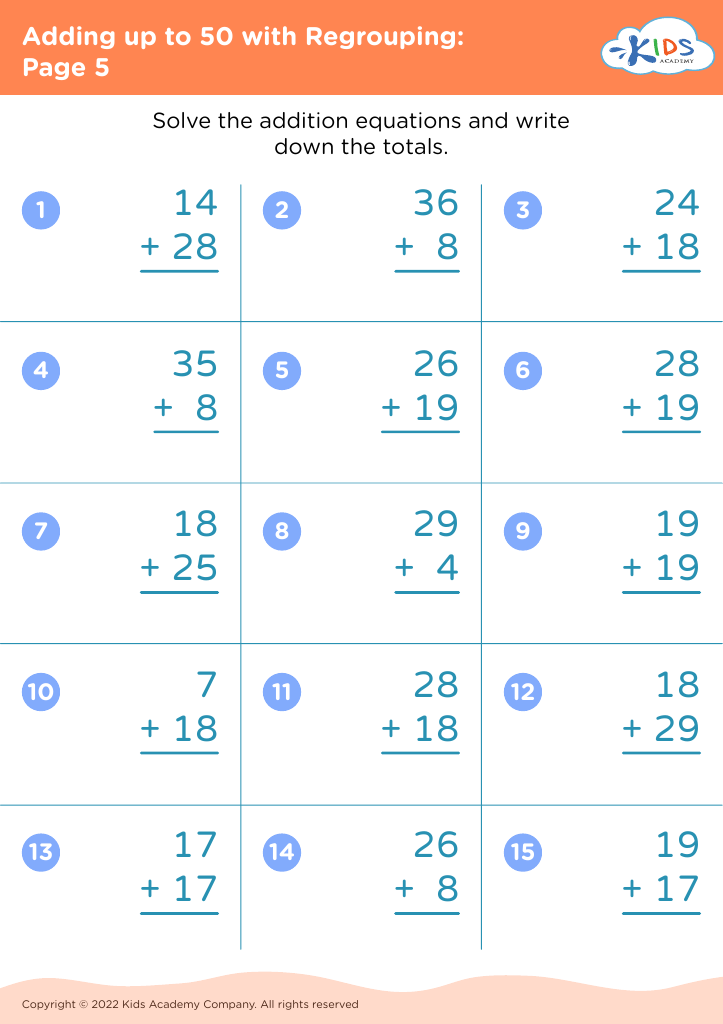
Adding up to 50 with Regrouping: Page 5
Worksheet
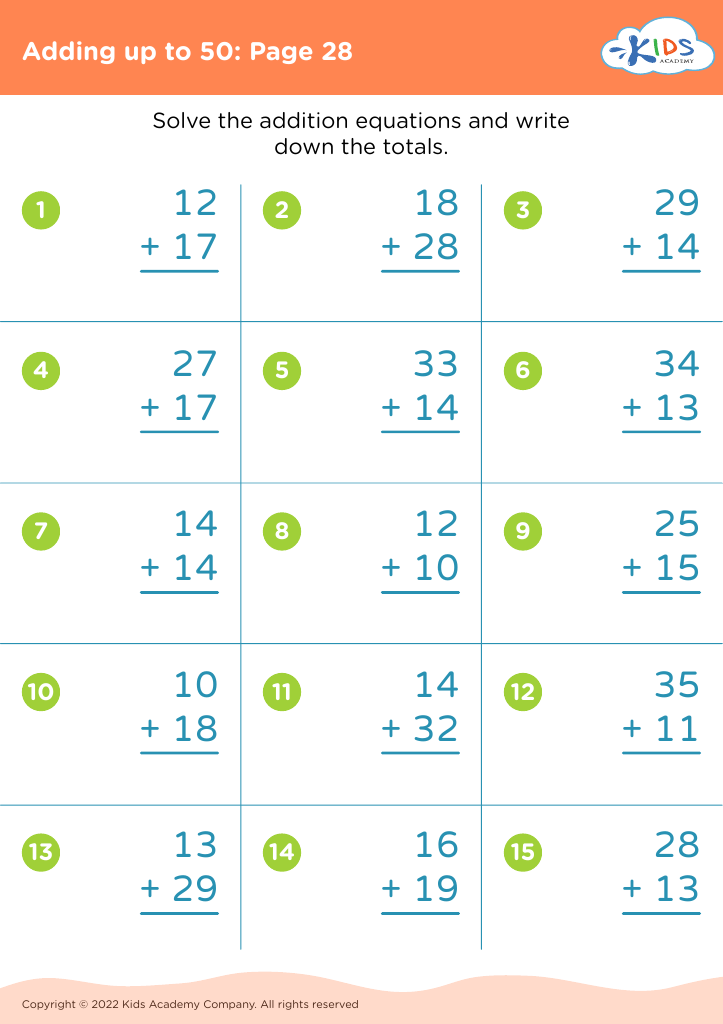
Adding up to 50: Page 28

Adding up to 50: Page 28

Adding up to 50: Page 28
Worksheet
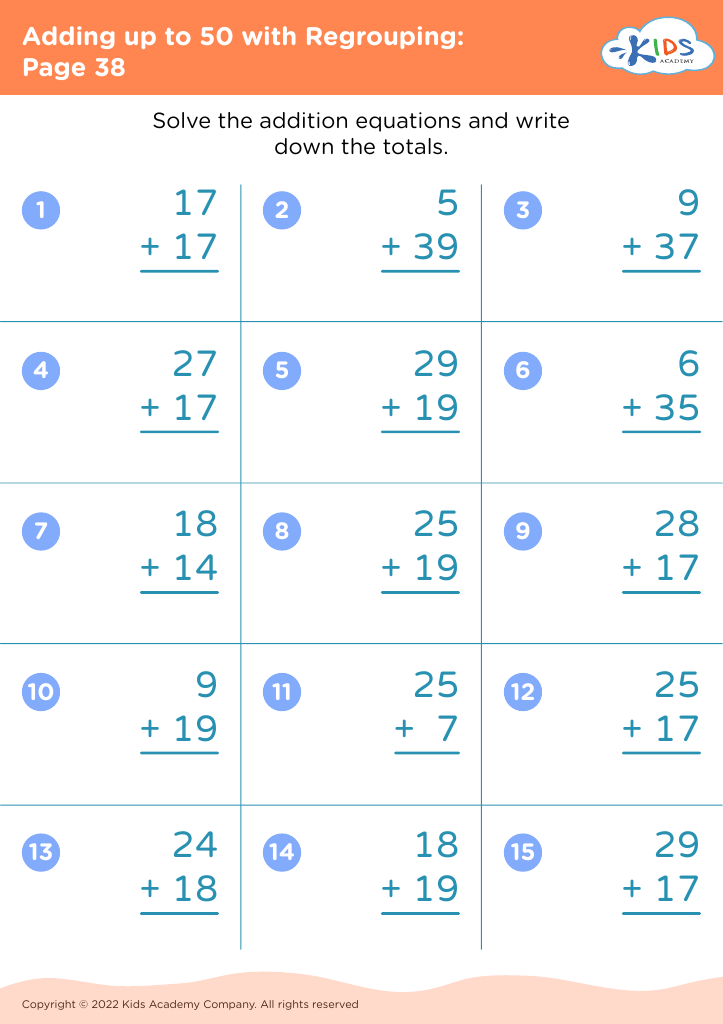
Adding up to 50 with Regrouping: Page 38
Worksheet
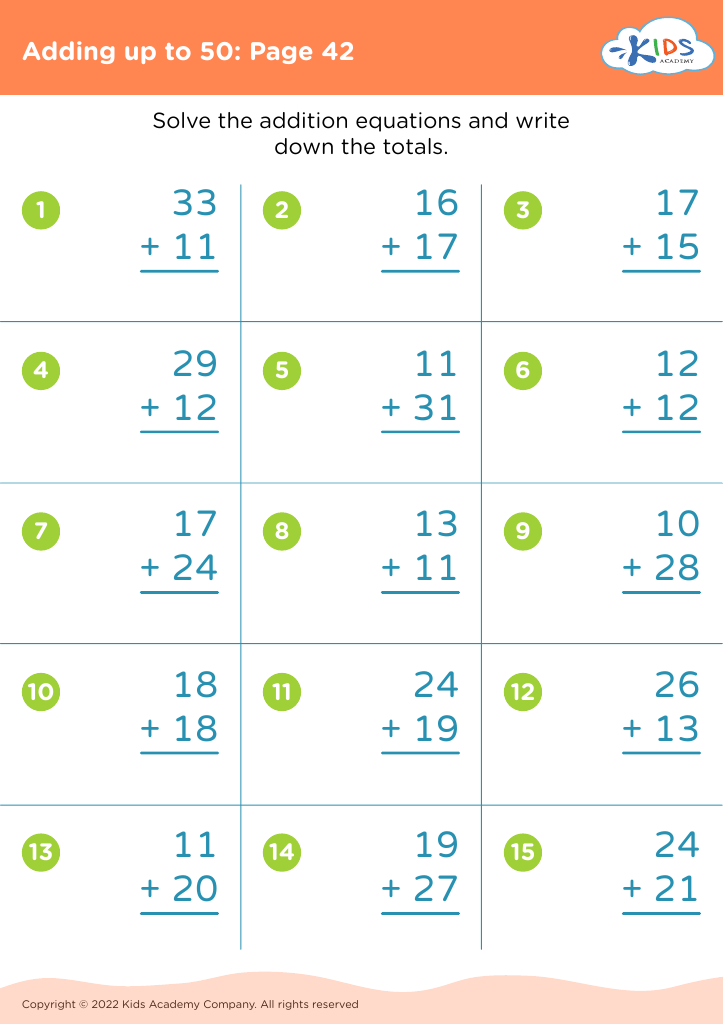
Adding up to 50: Page 42

Adding up to 50: Page 42

Adding up to 50: Page 42
Worksheet
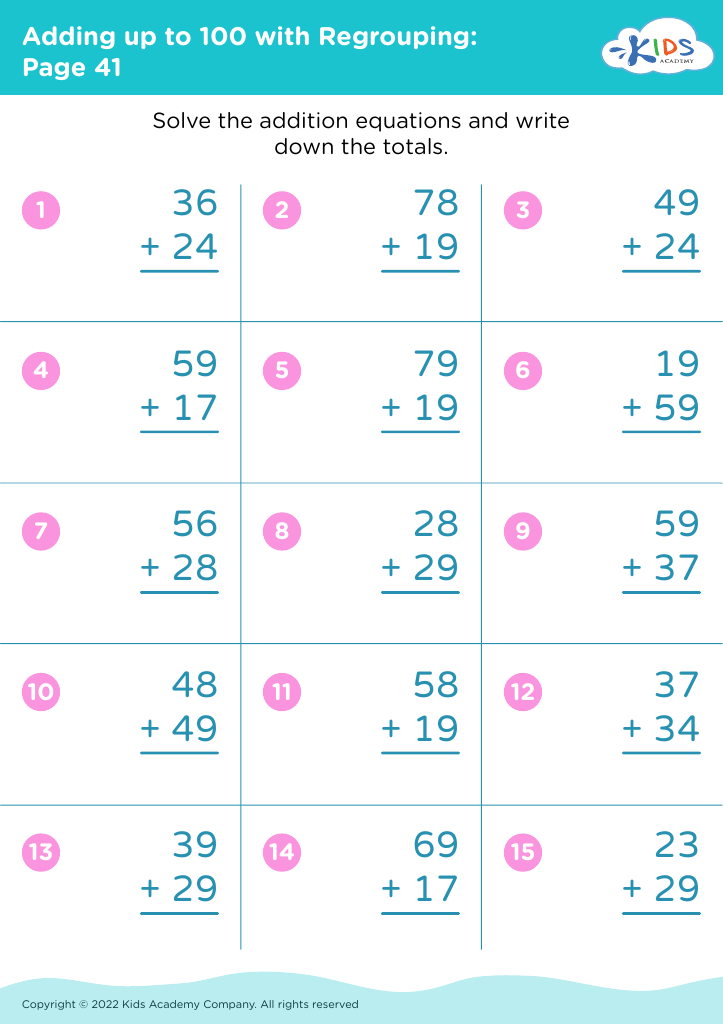
Adding up to 100 with Regrouping: Page 41
Worksheet
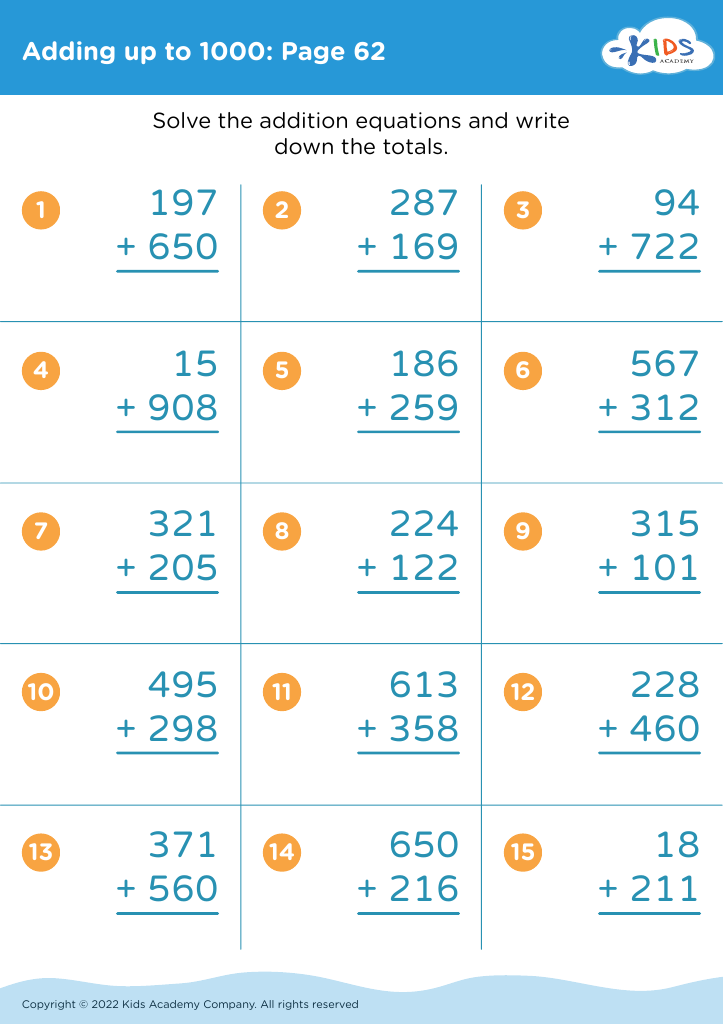
Adding up to 1000: Page 62

Adding up to 1000: Page 62

Adding up to 1000: Page 62
Worksheet
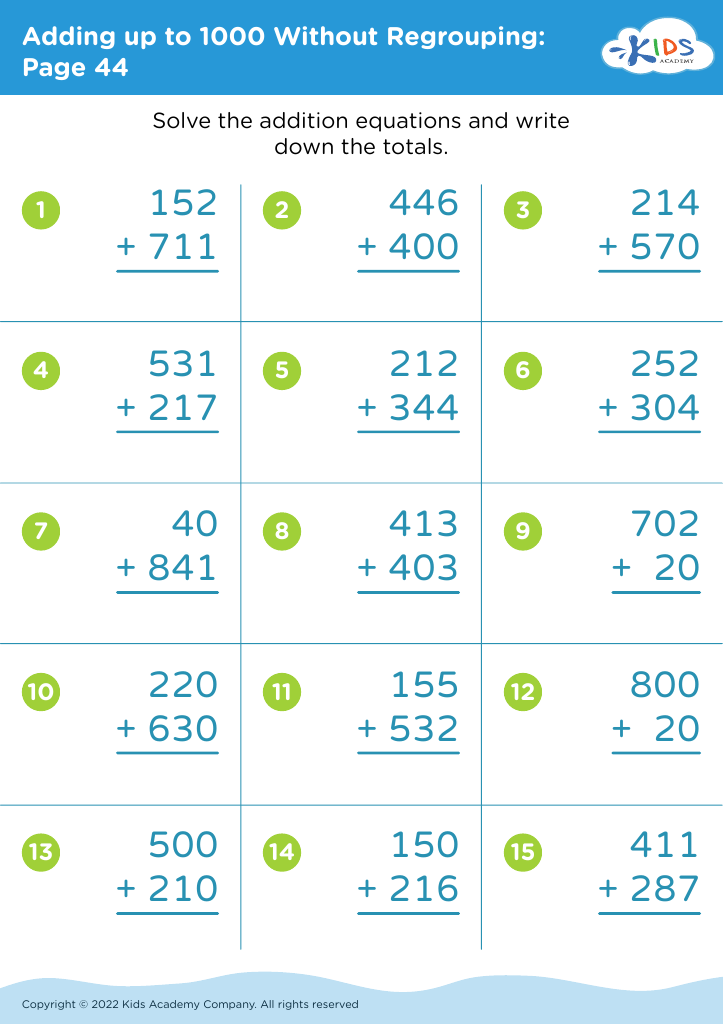
Adding up to 1000 Without Regrouping: Page 44
Worksheet
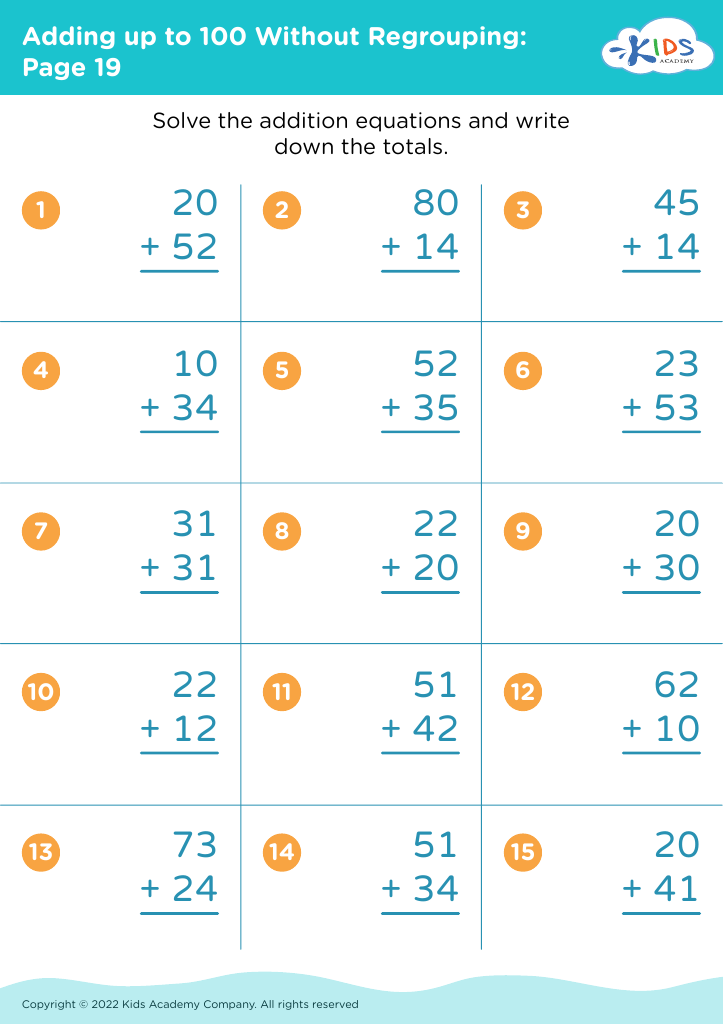
Adding up to 100 Without Regrouping: Page 19
Worksheet
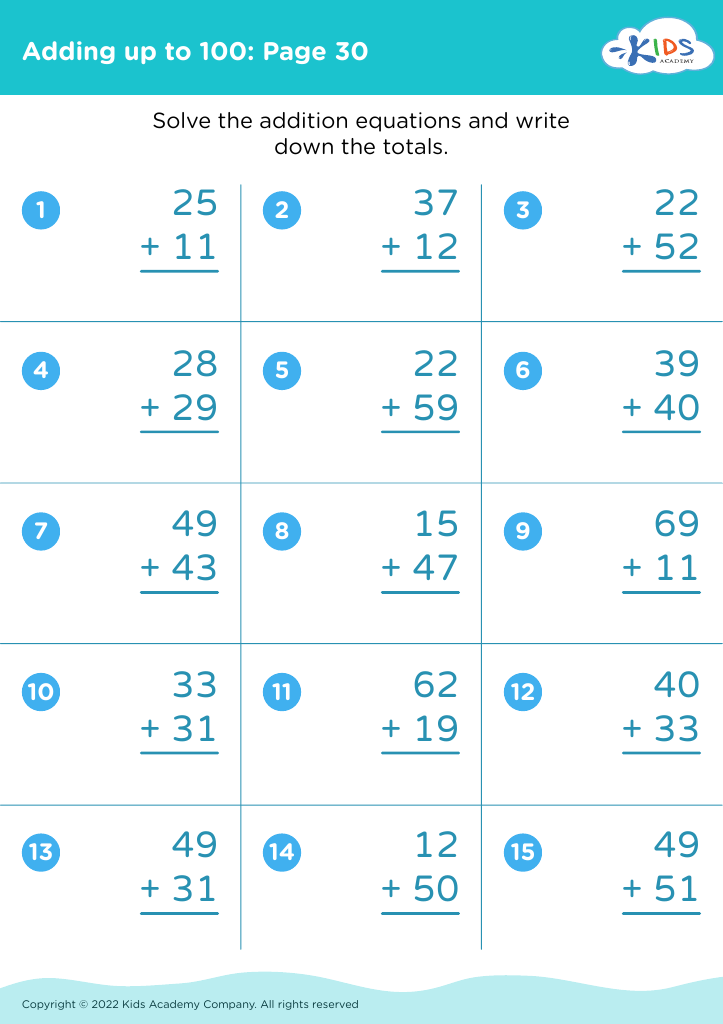
Adding up to 100: Page 30

Adding up to 100: Page 30

Adding up to 100: Page 30
Worksheet
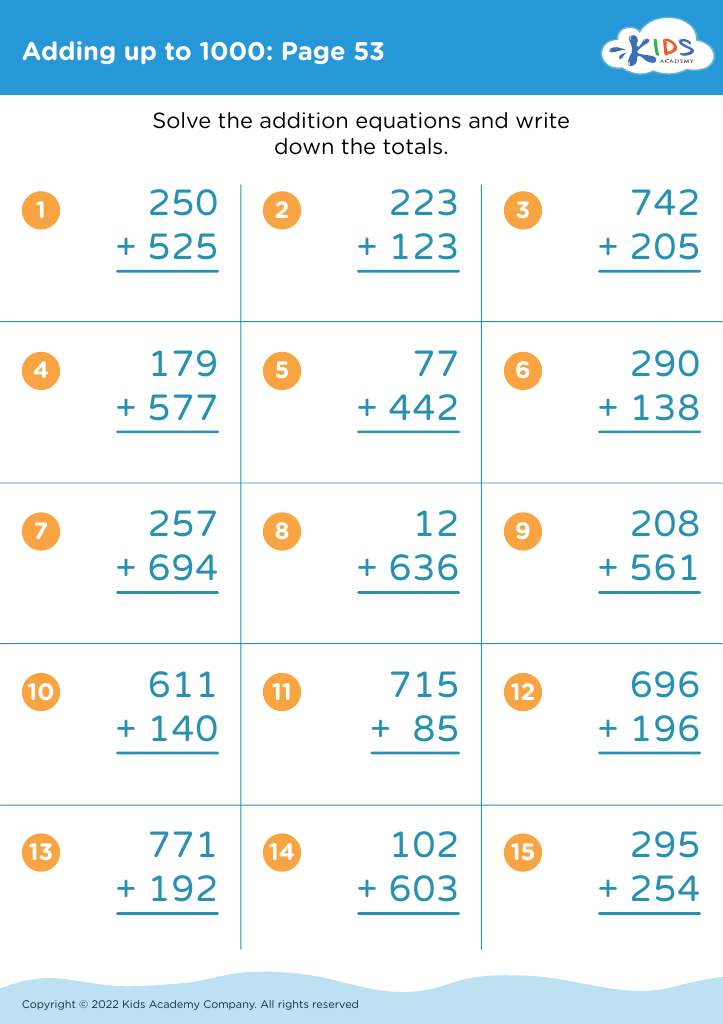
Adding up to 1000: Page 53

Adding up to 1000: Page 53

Adding up to 1000: Page 53
Worksheet
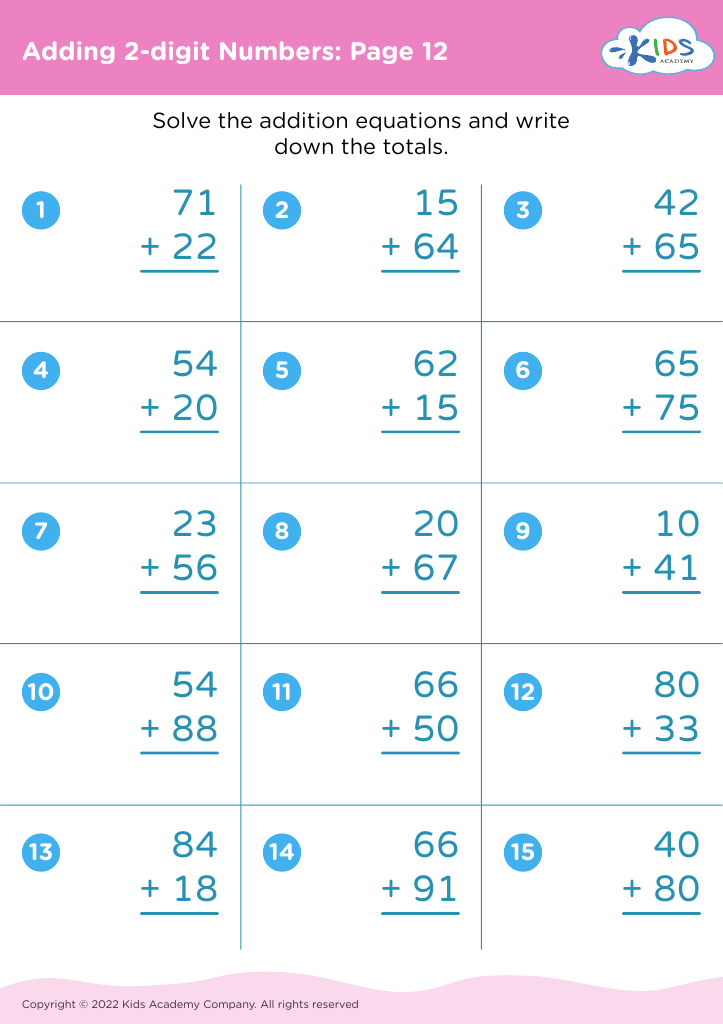
Adding 2-digit Numbers: Page 12

Adding 2-digit Numbers: Page 12

Adding 2-digit Numbers: Page 12
Worksheet
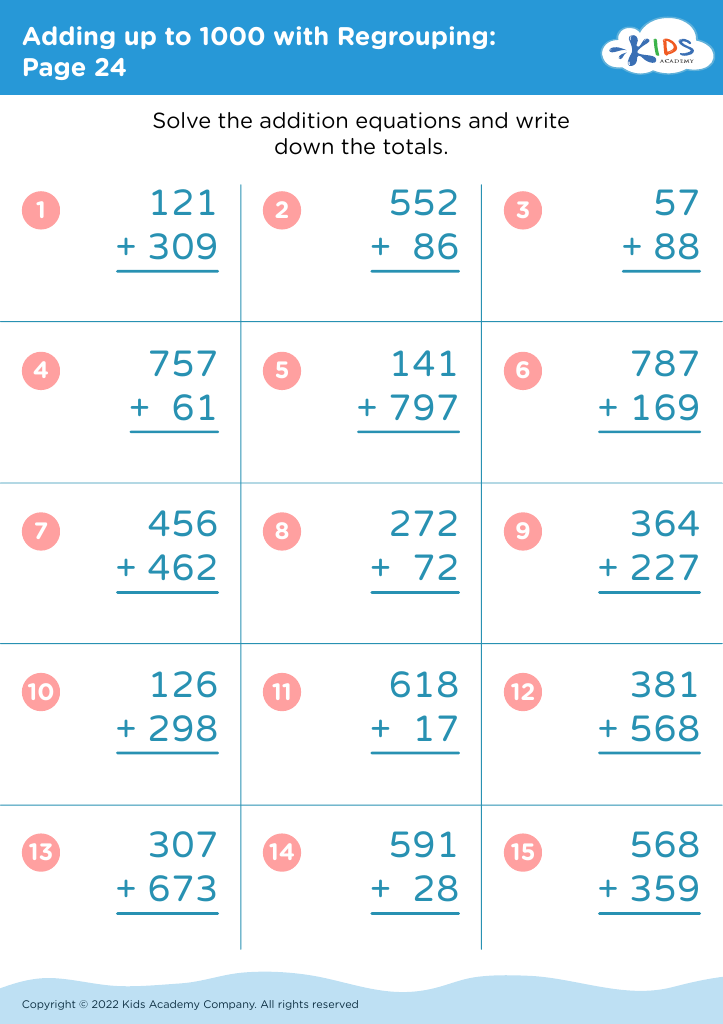
Adding up to 1000 with Regrouping: Page 24
Worksheet
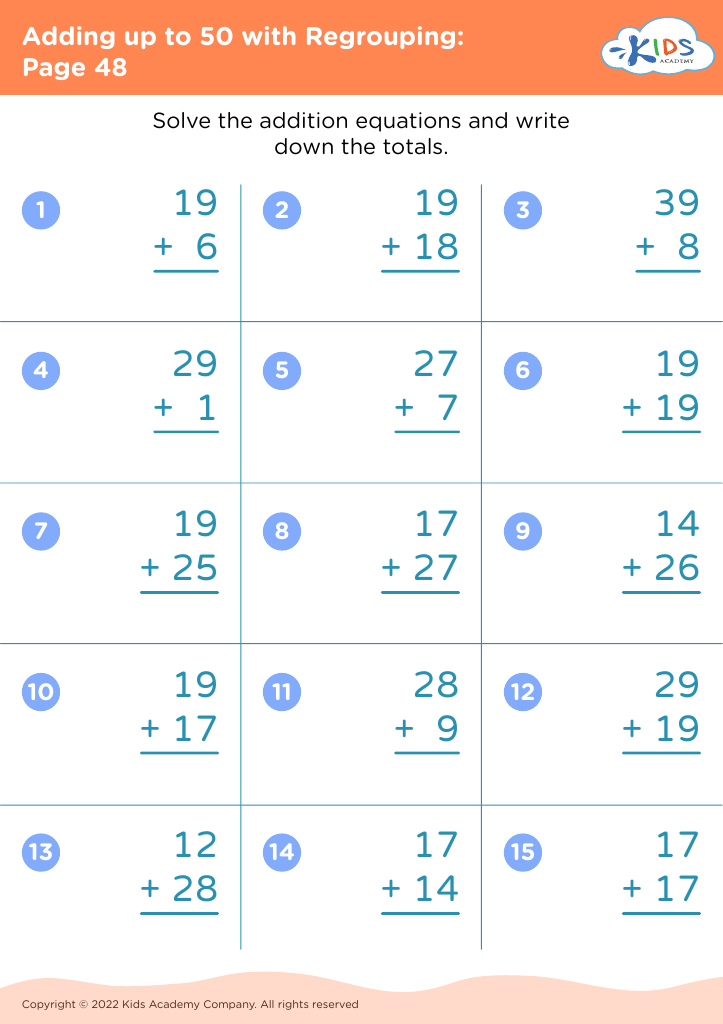
Adding up to 50 with Regrouping: Page 48
Worksheet
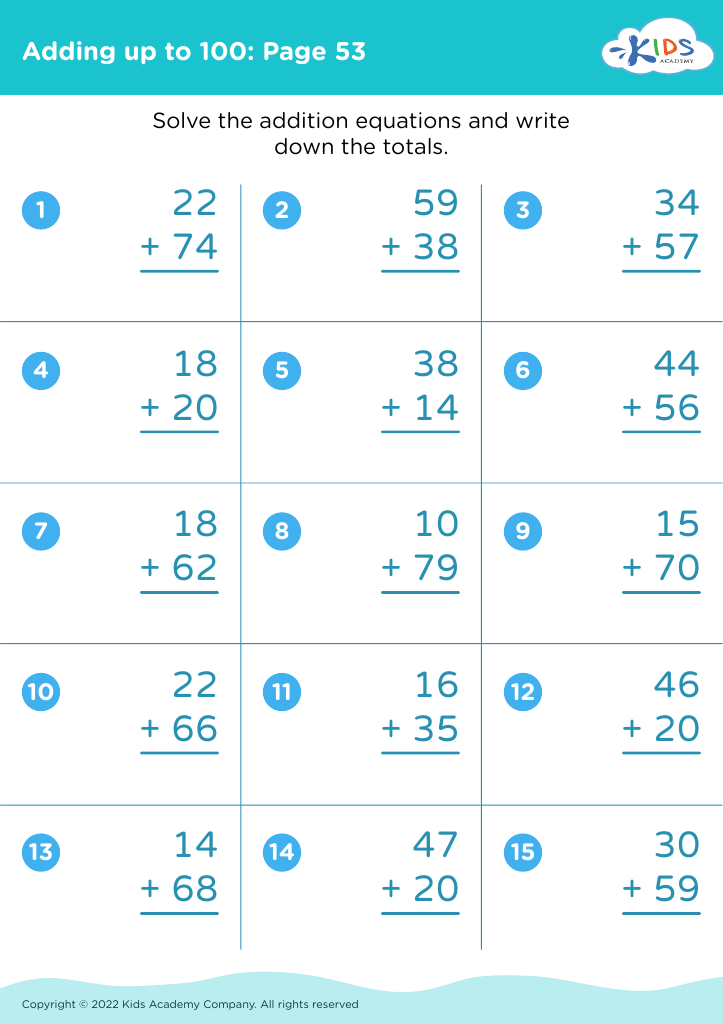
Adding up to 100: Page 53

Adding up to 100: Page 53

Adding up to 100: Page 53
Worksheet
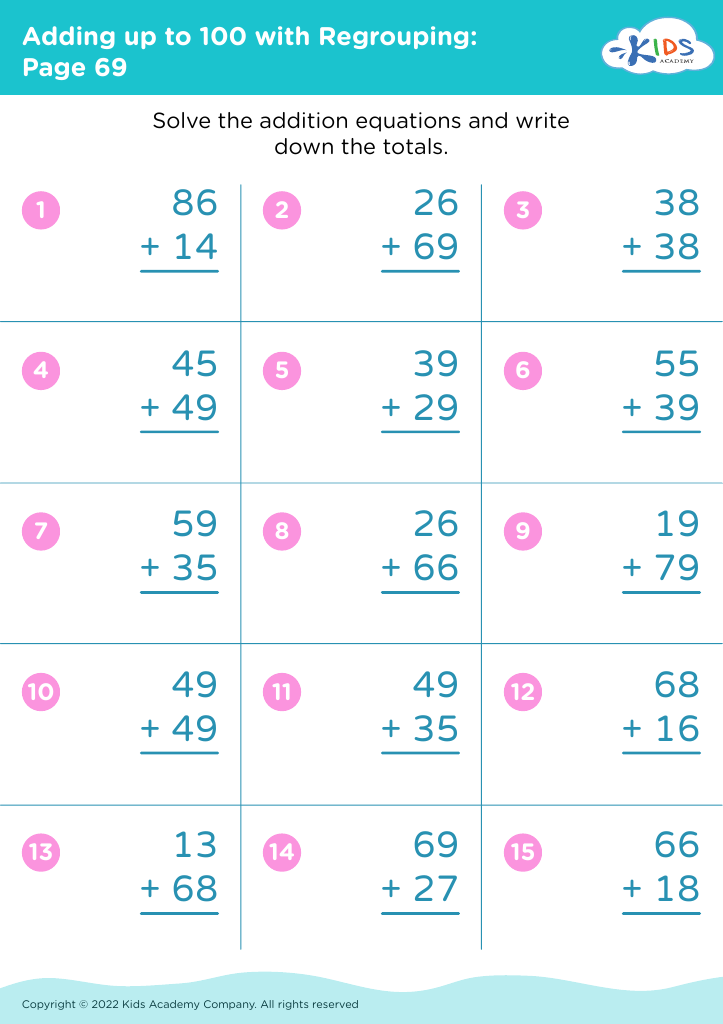
Adding up to 100 with Regrouping: Page 69
Worksheet
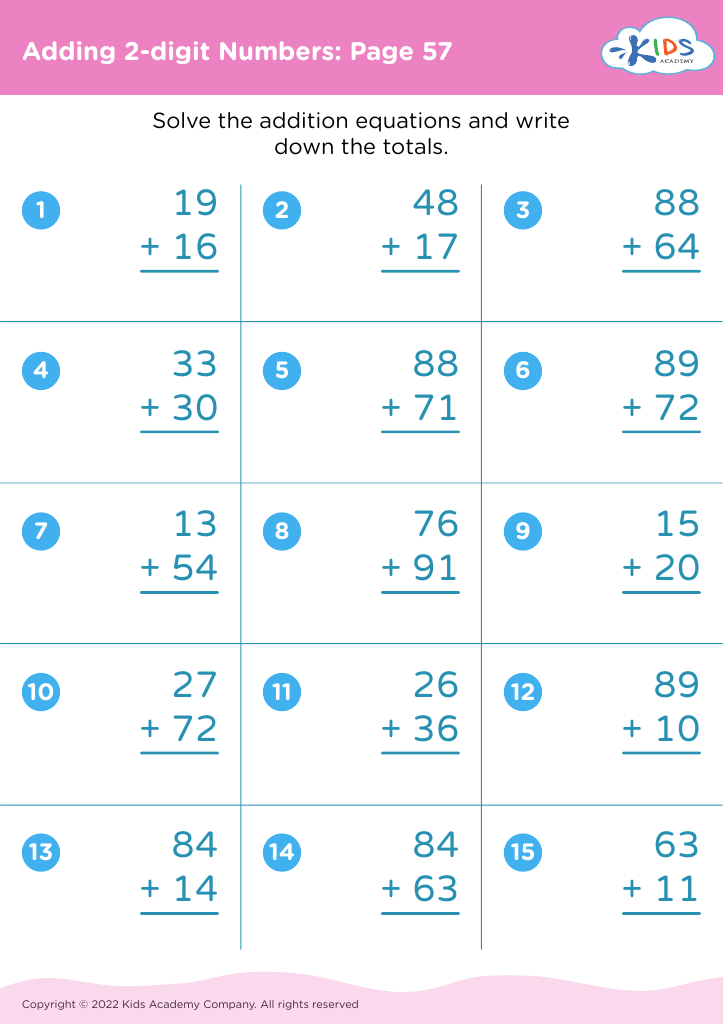
Adding 2-digit Numbers: Page 57

Adding 2-digit Numbers: Page 57

Adding 2-digit Numbers: Page 57
Worksheet


Parents and teachers should care about fraction comparison, addition, and subtraction for ages 5-9 because these concepts form the foundational skills for more advanced mathematical understanding. During this developmental stage, children are beginning to grasp the idea of parts of a whole, which is critical for their overall number sense. Introducing fractions at an early age helps students visualize relationships between numbers, enabling them to make connections that lead to better problem-solving skills.

Moreover, working with fractions helps enhance critical thinking and logical reasoning. Children learn to compare different fractions, identify larger or smaller quantities, and understand equivalent fractions, laying the groundwork for future math concepts like decimals and percentages. This early exposure can foster a positive attitude towards math and encourage a love for learning.

Additionally, in today's increasingly data-driven world, understanding fractions is essential for real-life applications, from cooking to financial literacy. Engaging children in practical activities can make learning more enjoyable and applicable. Overall, emphasizing fraction comparison, addition, and subtraction cultivates essential math skills that will support students’ academic journeys and equip them for real-world challenges. Supporting teachers in these efforts enhances learning outcomes and builds a strong foundation for future mathematical endeavors.