Improve problem-solving Addition & Subtraction Worksheets for Ages 5-9
4 filtered results
-
From - To
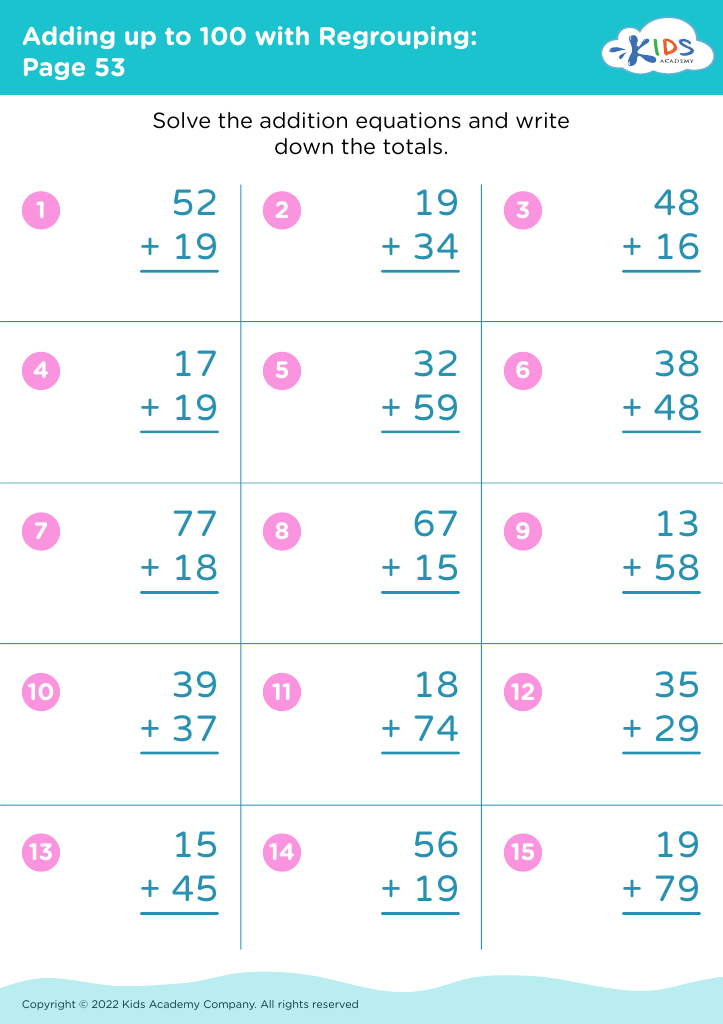
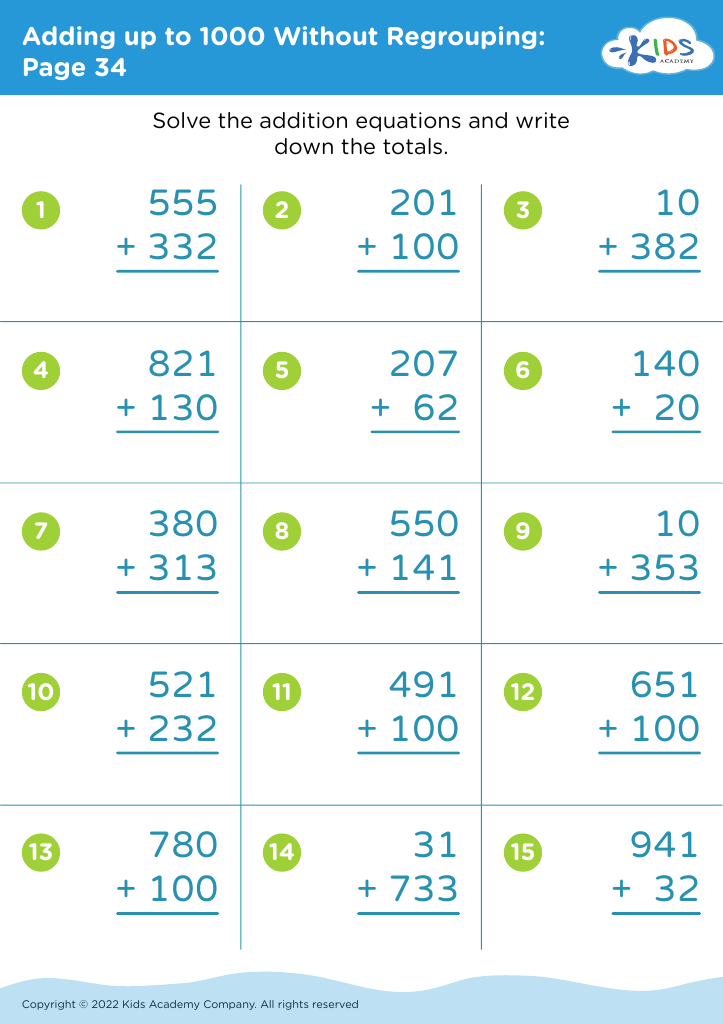
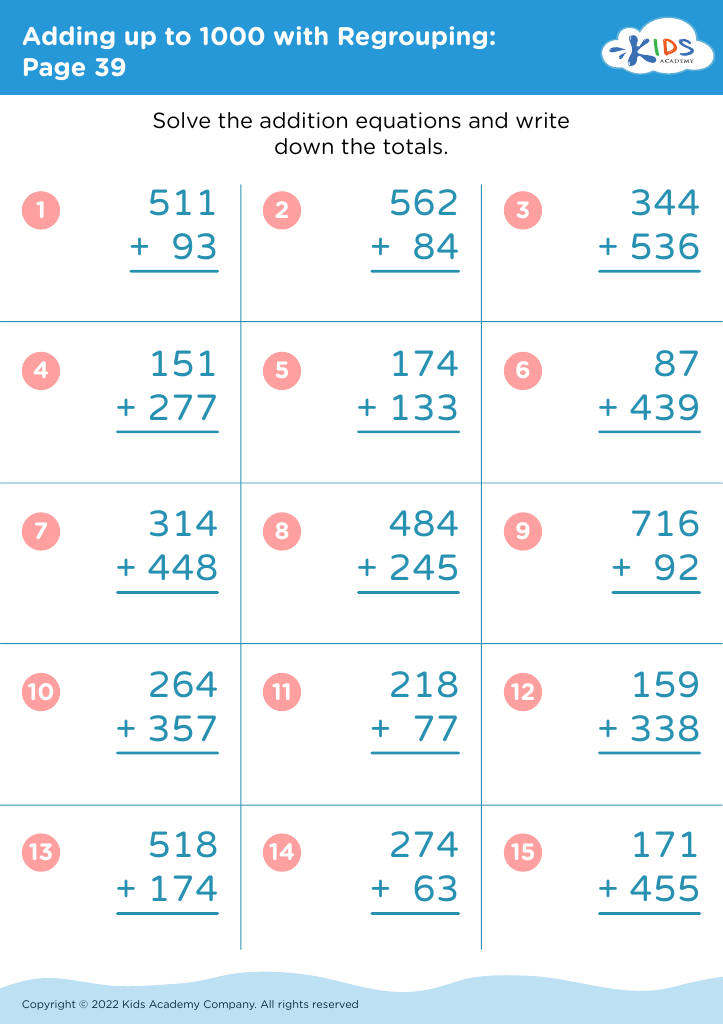
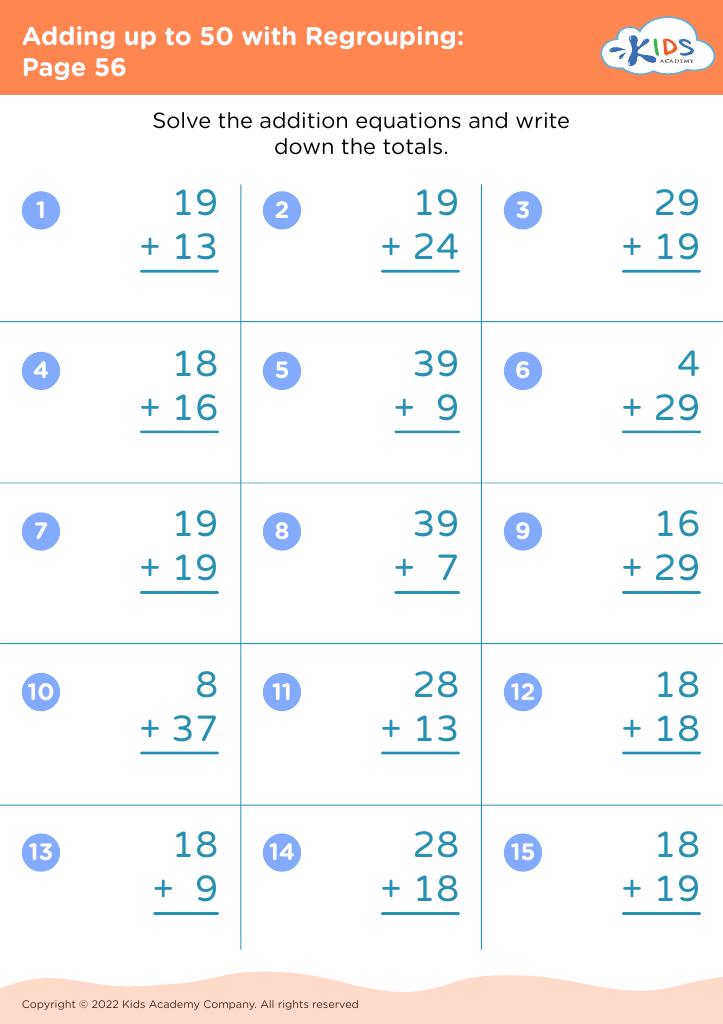
Discover engaging addition and subtraction worksheets designed to enhance problem-solving skills for children aged 5 to 9. Our specially crafted resources encourage young learners to think critically and develop essential math abilities through fun, relatable scenarios. Featuring colorful illustrations and varied exercises, each worksheet promotes interactive learning while building a strong foundation in arithmetic. Perfect for homeschooling, classroom use, or supplementary practice, these worksheets offer progressively challenging problems that cater to different skill levels. Foster your child's mathematical confidence and problem-solving prowess with these effective, enjoyable worksheets tailored to inspire a love for learning! Visit our site to explore and download!








Improving problem-solving skills in addition and subtraction for children aged 5-9 is crucial for several reasons. Firstly, these foundational mathematical skills are essential for everyday life. Understanding how to add and subtract helps children manage money, understand time, and navigate simple tasks, laying the groundwork for more complex math concepts later on.
Moreover, enhancing problem-solving abilities encourages critical thinking. When children learn to approach mathematical problems strategically, they develop resilience and persistence. These skills are not only applicable in mathematics but also extend to a child's overall academic performance and daily decision-making.
Additionally, mastery of addition and subtraction boosts children's confidence. As they become proficient, they experience a sense of accomplishment, which helps foster a positive attitude toward learning. This emotional aspect is vital, as children who feel confident are more likely to embrace challenges and develop a lifelong love for learning.
Finally, preparing children in these early years supports equitable learning opportunities. By ensuring all children achieve a solid grasp of basic math, we promote a strong educational foundation that benefits their future academic success. Investing in their problem-solving skills is a pivotal step toward preparing them for life's challenges.








