Learn new vocabulary Addition & Subtraction Worksheets for Ages 5-9
4 filtered results
-
From - To
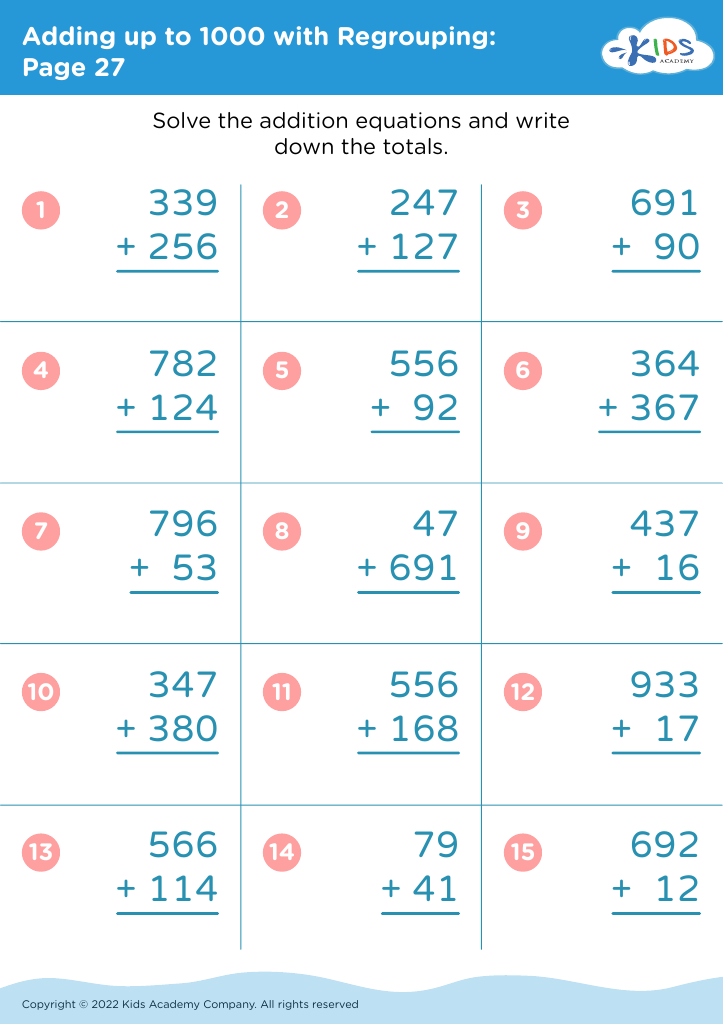
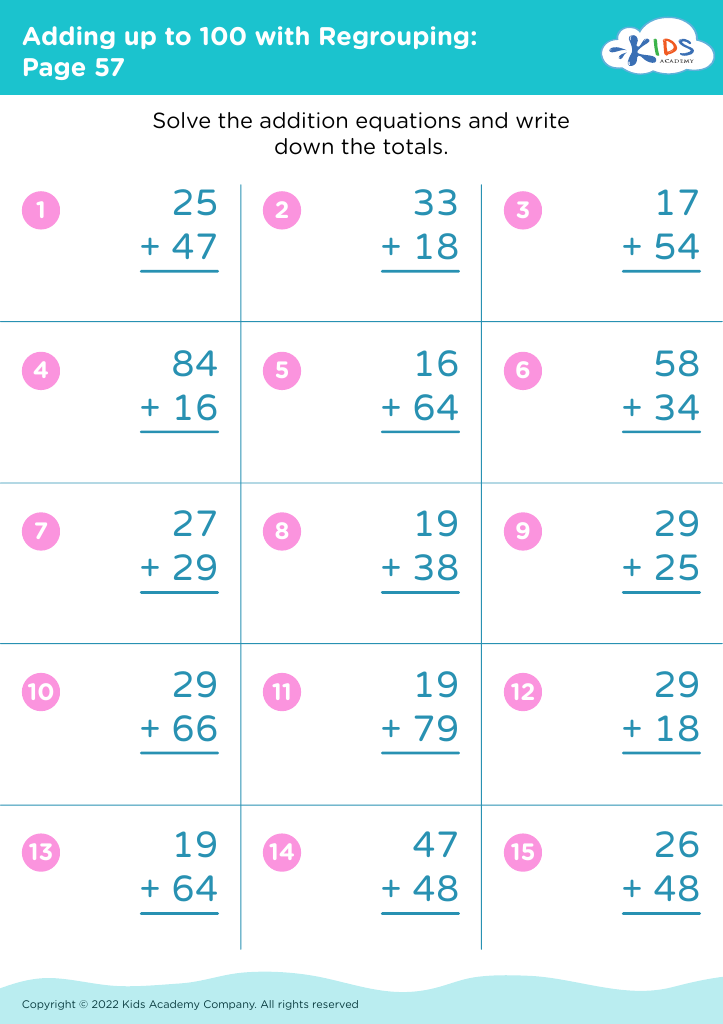
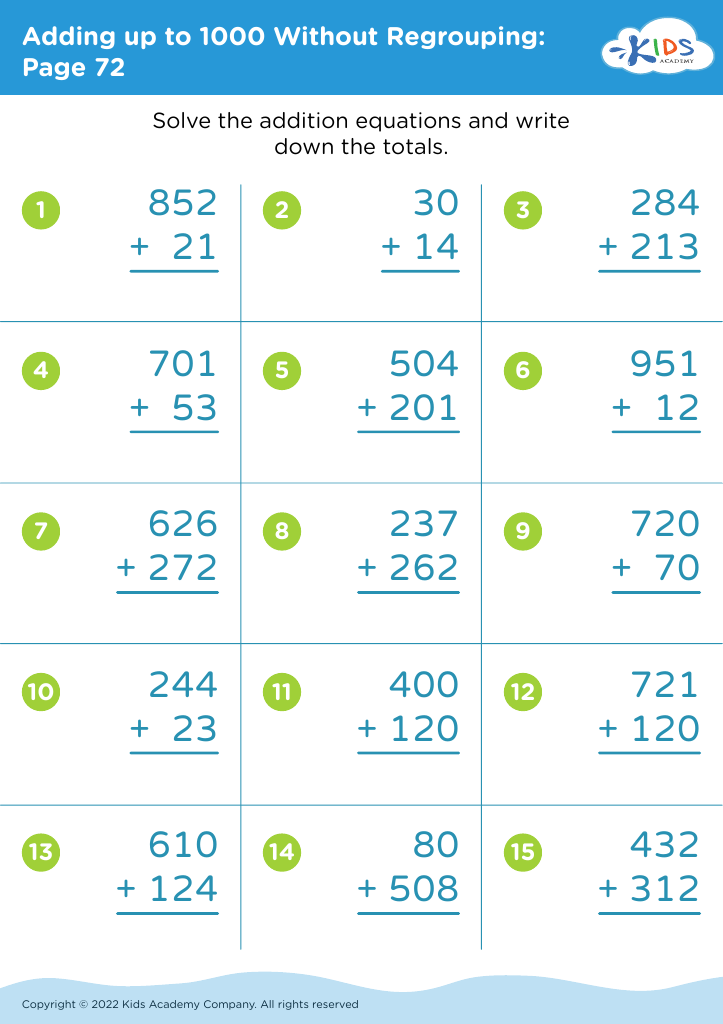
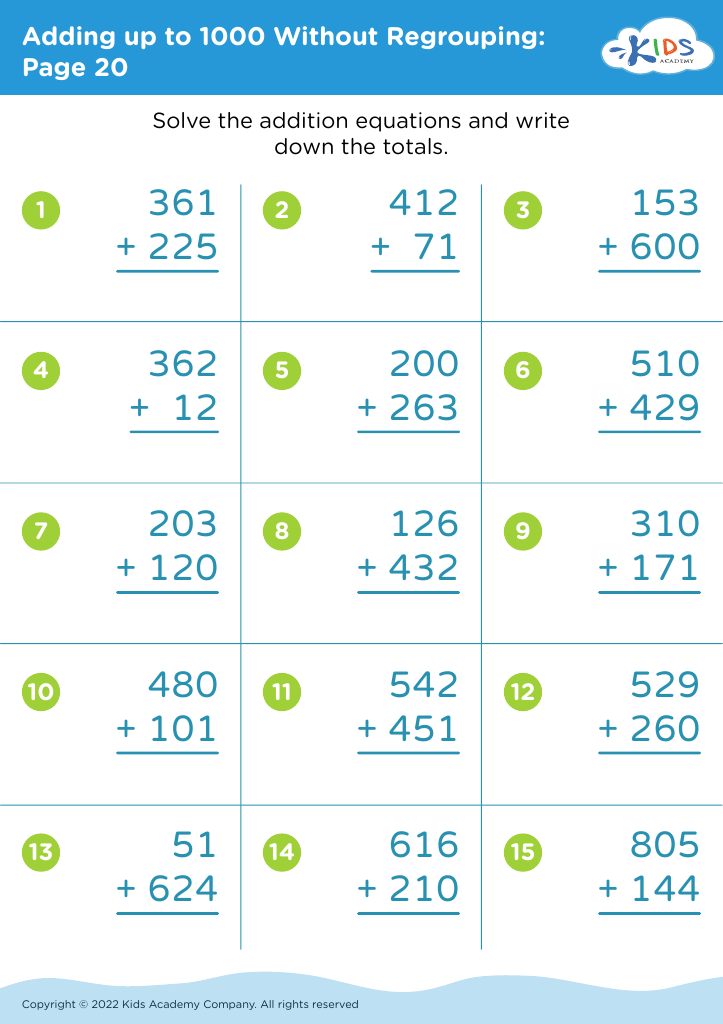
Discover our engaging "Learn New Vocabulary: Addition & Subtraction Worksheets" designed specifically for ages 5-9! These worksheets help young learners master essential math vocabulary while developing their addition and subtraction skills. Each activity creatively introduces key terms, ensuring that children not only practice their math but also enhance their language skills. With colorful illustrations and interactive exercises, these worksheets are perfect for classroom settings or at-home learning. Give your child the tools they need to excel in math while building their vocabulary in a fun and accessible way. Start their educational journey today with our engaging resources!








Parents and teachers should prioritize building vocabulary in addition and subtraction for children aged 5-9 because a strong mathematical vocabulary lays the foundation for deeper understanding and greater success in math. Learning the terms associated with addition (like “sum,” “total,” and “combine”) and subtraction (such as “difference,” “take away,” and “decrease”) fosters better comprehension of mathematical concepts. When children are familiar with the language of math, they can follow instructions more easily, attempt problem-solving tasks with confidence, and articulate their reasoning clearly.
Moreover, a robust vocabulary aids in developing critical thinking and reasoning skills. When children can grasp the meaning of mathematical terms, they're more likely to engage in discussions about problem-solving strategies, enhancing their collaborative learning experiences. This fluency in math terminology also plays a crucial role in preparing them for standardized tests and higher-level math as they progress in their education.
Additionally, a broader vocabulary can make math more enjoyable, allowing students to explore concepts with curiosity and excitement. Parents and teachers can reinforce this vocabulary through playful activities, discussions, and practical applications, creating a rich learning environment that nurtures both enthusiasm and competence in mathematics.








