Problem-solving development Addition & Subtraction Worksheets for Ages 5-9
3 filtered results
-
From - To
Introducing our Addition & Subtraction Worksheets for Ages 5-9, designed to enhance problem-solving skills in young learners. These interactive and engaging worksheets follow a structured approach that fosters critical thinking and mathematical reasoning. Puzzles, word problems, and practical exercises facilitate internalizing key concepts, making math fun and accessible. Ideal for both classroom and home use, our worksheets support the development of a strong foundation in arithmetic basics. Empower your child's confidence with expertly crafted challenges that align with educational standards, ensuring a successful and enjoyable math learning journey. Explore our resources today and watch your child's problem-solving abilities soar!
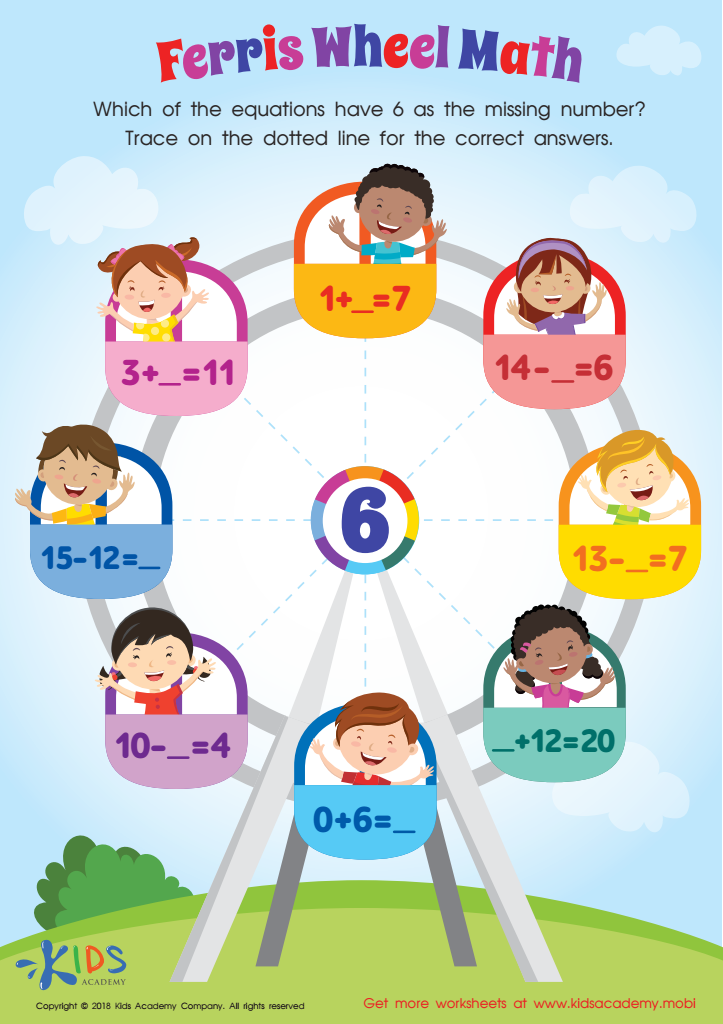
Missing Number: Ferris Wheel Math Worksheet
 Assign to My Students
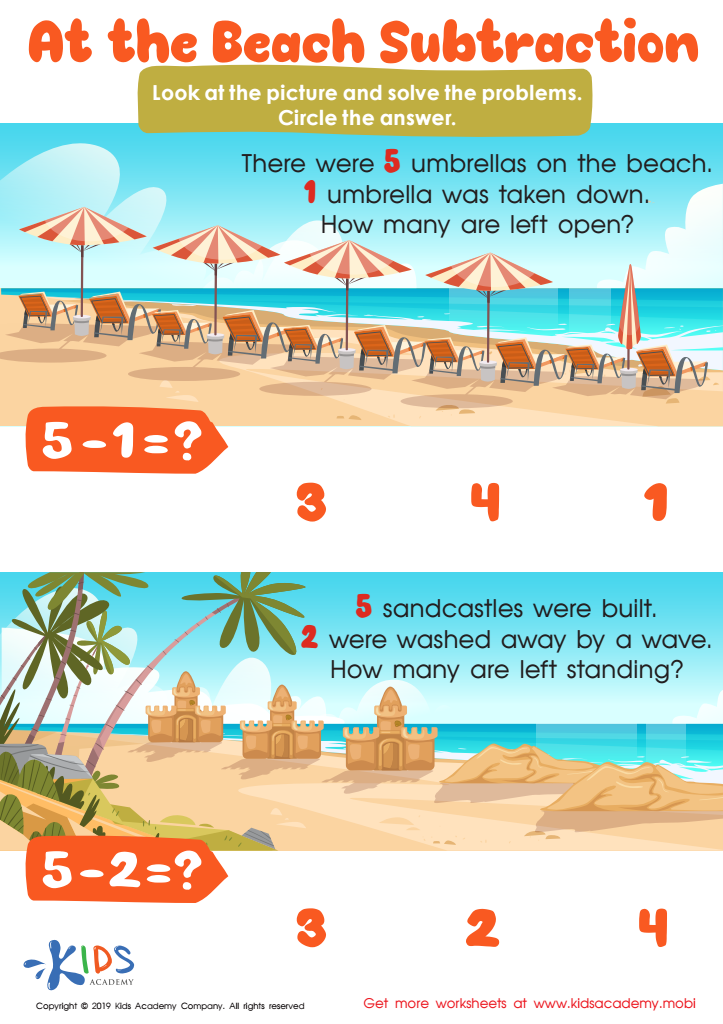
At the Beach Subtraction Worksheet
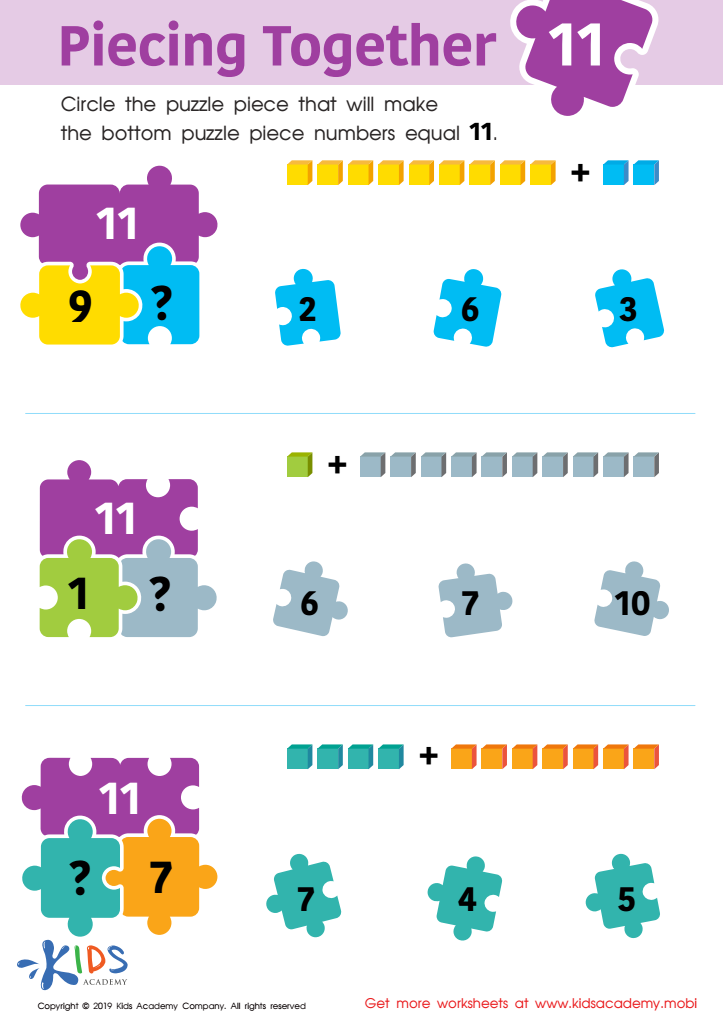
Piecing Together 11 Worksheet








Developing problem-solving skills in addition and subtraction for children aged 5-9 is essential because these foundational mathematical abilities form the building blocks for future learning and everyday tasks. At this critical age, engaging young learners in problem-solving nurtures their critical thinking and ability to approach complex academic challenges with confidence.
Addition and subtraction are not only fundamental to mathematics but are also integral to various real-life situations. Helping children grasp these concepts early on equips them with the capability to manage simple budgeting, understand time, and handle quantities in cooking, shopping, and other daily activities. Building proficiency in these areas fosters independence and encourages a methodological approach to challenges.
Moreover, early problem-solving exercises enhance cognitive development, promoting logical reasoning and boosting memory retention. These abilities are transferable across subjects and aid in overall academic performance. Encouraging hands-on, interactive learning through games and dynamic activities makes these concepts tangible, engaging, and fun for young learners.
Teachers and parents play pivotal roles in nurturing a growth mindset towards problem solving by providing consistent practice, support, and positive reinforcement. Their involvement fosters a secure learning environment where children feel comfortable exploring different strategies and learning from their mistakes, thereby building resilience and a lifelong love for learning.








