Understand patterns Addition & Subtraction Worksheets for Ages 5-9
6 filtered results
-
From - To
Discover our engaging "Understand Patterns Addition & Subtraction Worksheets" designed for children aged 5-9. These worksheets help young learners identify and apply patterns in addition and subtraction, enhancing their math skills in a fun and interactive way. Each worksheet provides varied exercises that encourage critical thinking, enabling kids to recognize relationships between numbers and solve problems effectively. Perfect for classroom integration or home practice, our resources promote a strong foundational understanding of math concepts. By mastering these essential skills, children will gain confidence in their abilities and be well-prepared for more advanced mathematical challenges. Explore our worksheets today!
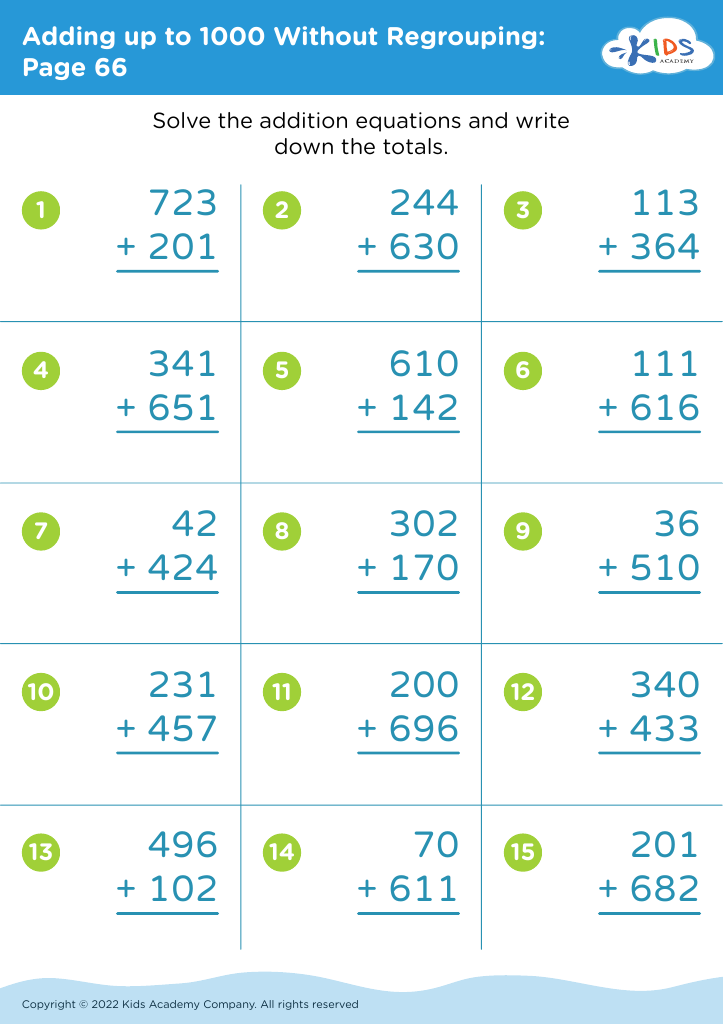
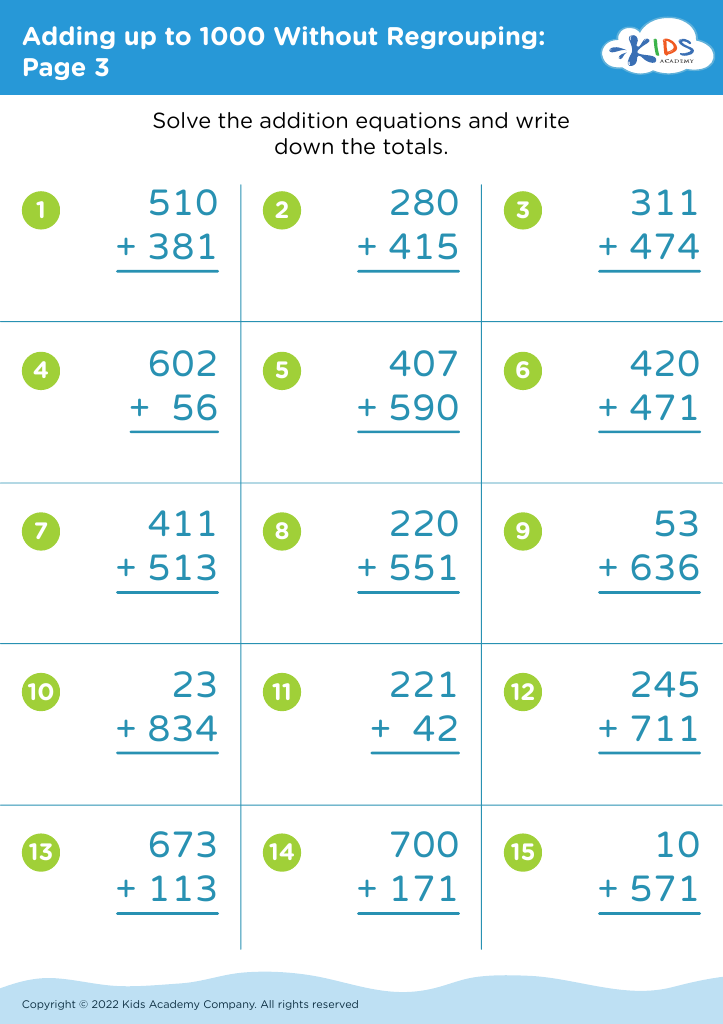
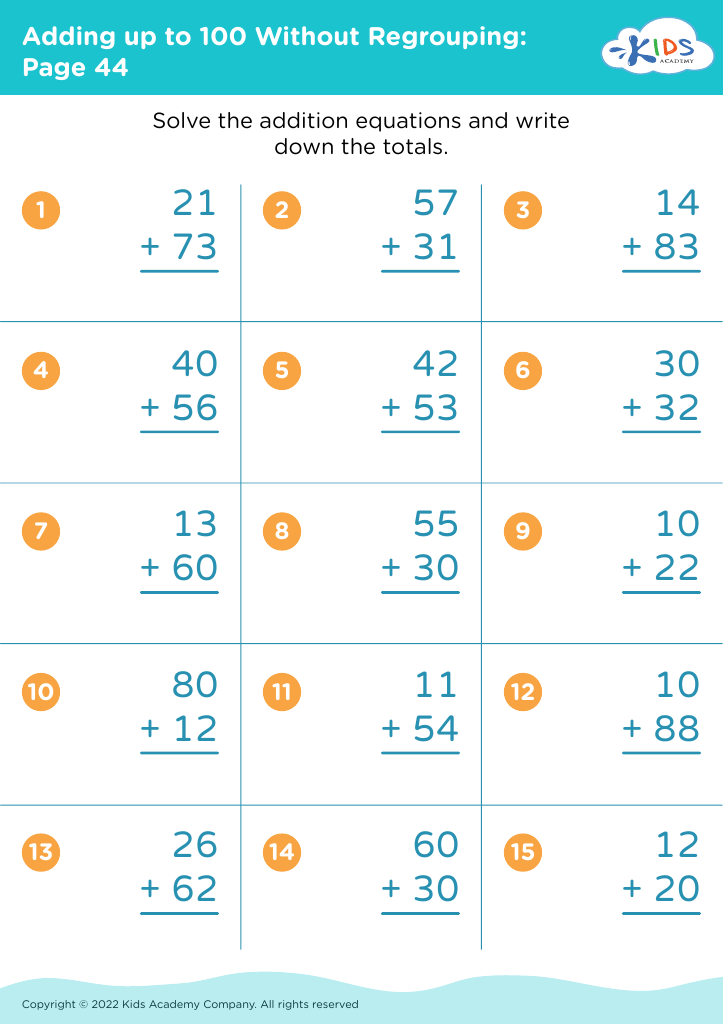
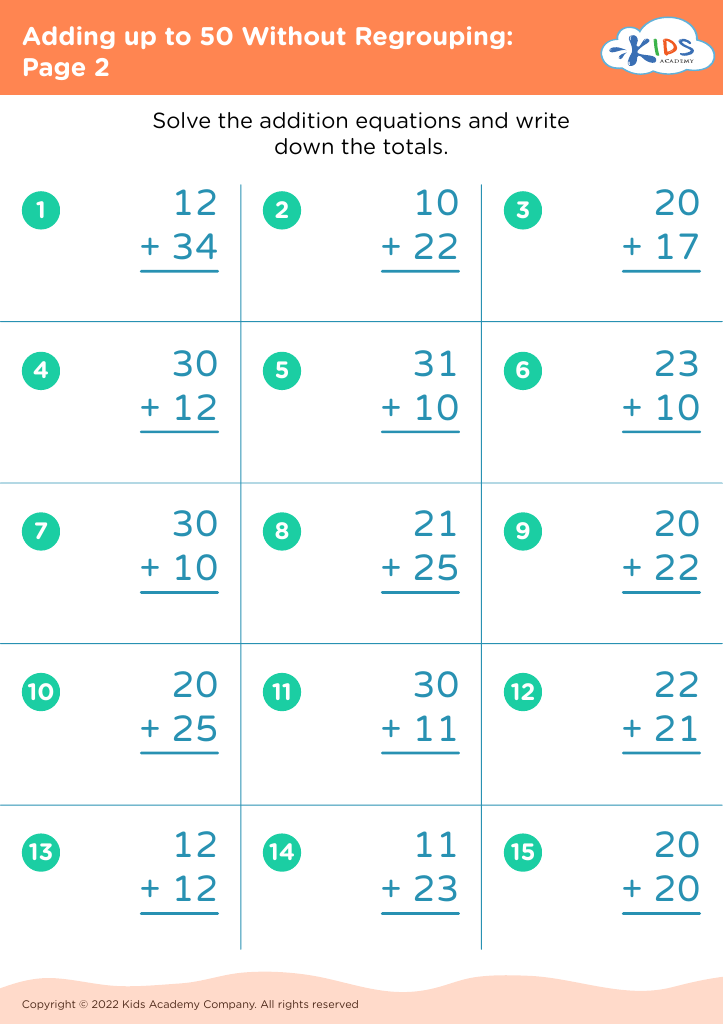
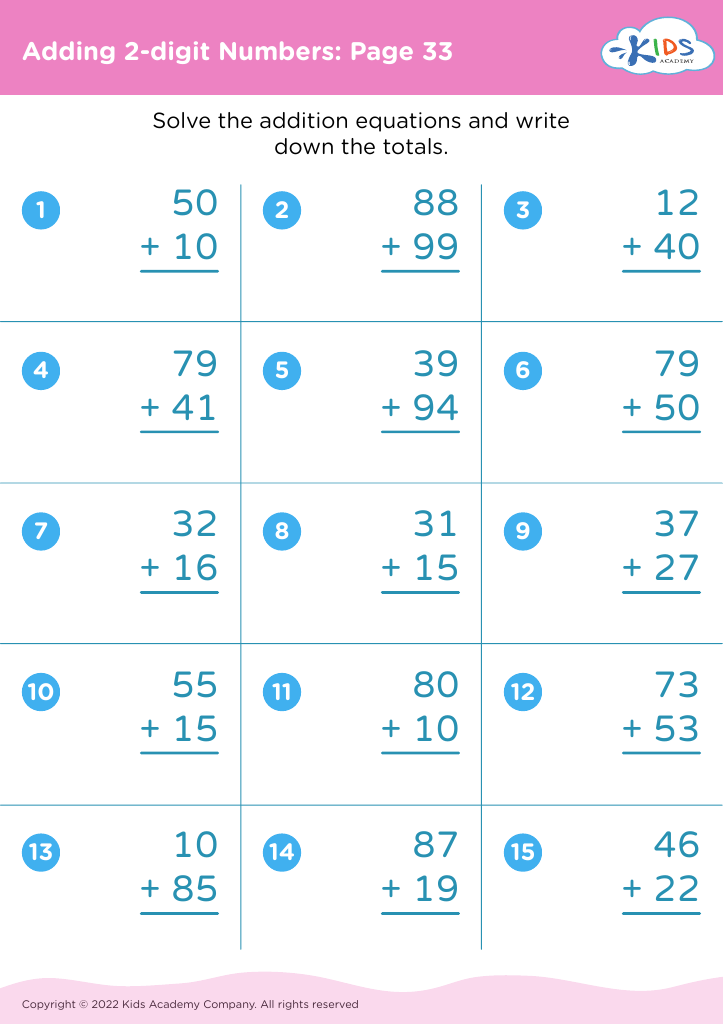
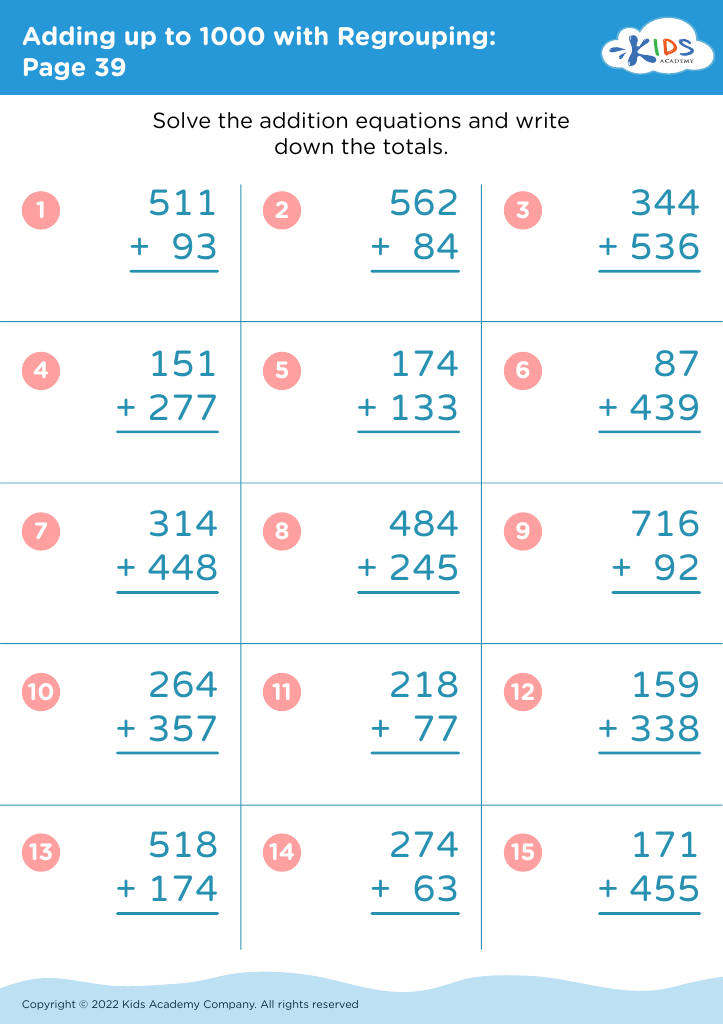








Understanding patterns in addition and subtraction is crucial for children aged 5-9, as these foundational skills play a key role in their overall mathematical development and academic success. When parents and teachers emphasize patterns, they help children make connections between numbers, fostering a deeper comprehension of how addition and subtraction work.
Recognizing patterns enables children to tackle math problems more efficiently, as they can anticipate results and manage calculations with greater confidence. It cultivates their critical thinking skills, allowing them to engage in problem-solving and apply mathematical concepts in everyday situations.
Furthermore, learning about patterns supports the development of algebraic thinking, laying the groundwork for future mathematical concepts. Children who understand patterns are better equipped to approach more advanced topics as they progress in their education.
Additionally, learning through patterns is an engaging way to boost enthusiasm for math, fostering a positive attitude toward the subject. This foundational skill not only builds mathematical competence but also instills a love for learning that encourages lifelong intellectual curiosity. By prioritizing this understanding, parents and teachers invest in their children's future success in math and beyond.








