Visual learning reinforcement Addition & Subtraction Worksheets for Ages 5-9
8 filtered results
-
From - To
Enhance your child's math skills with our engaging Visual Learning Reinforcement Addition and Subtraction Worksheets, specially designed for ages 5-9. These interactive worksheets utilize colorful visuals and intuitive diagrams to make learning fundamental math concepts exciting and accessible. Perfect for young learners, our resources focus on enhancing understanding and retention through visual aids that simplify addition and subtraction. Your child will develop essential math skills while enjoying fun and creative activities. Ideal for parents, teachers, and tutors, these worksheets provide a productive way to reinforce core math concepts in a visually appealing format. Explore our collection and spark a love for learning today!
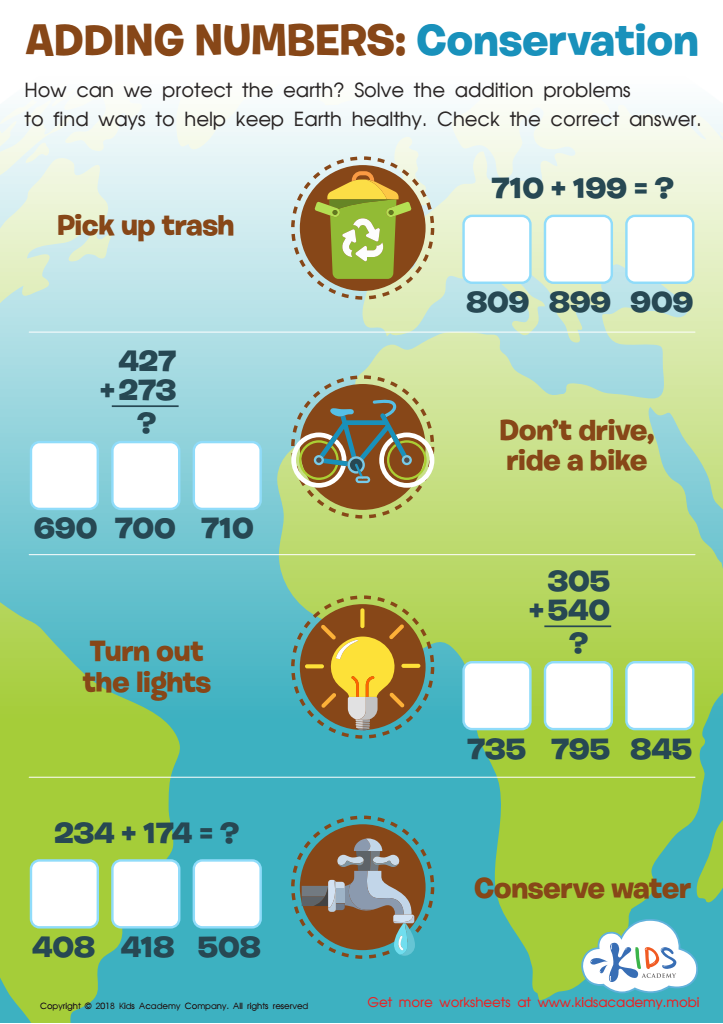
Adding Numbers: Conservation Worksheet
 Assign to My Students
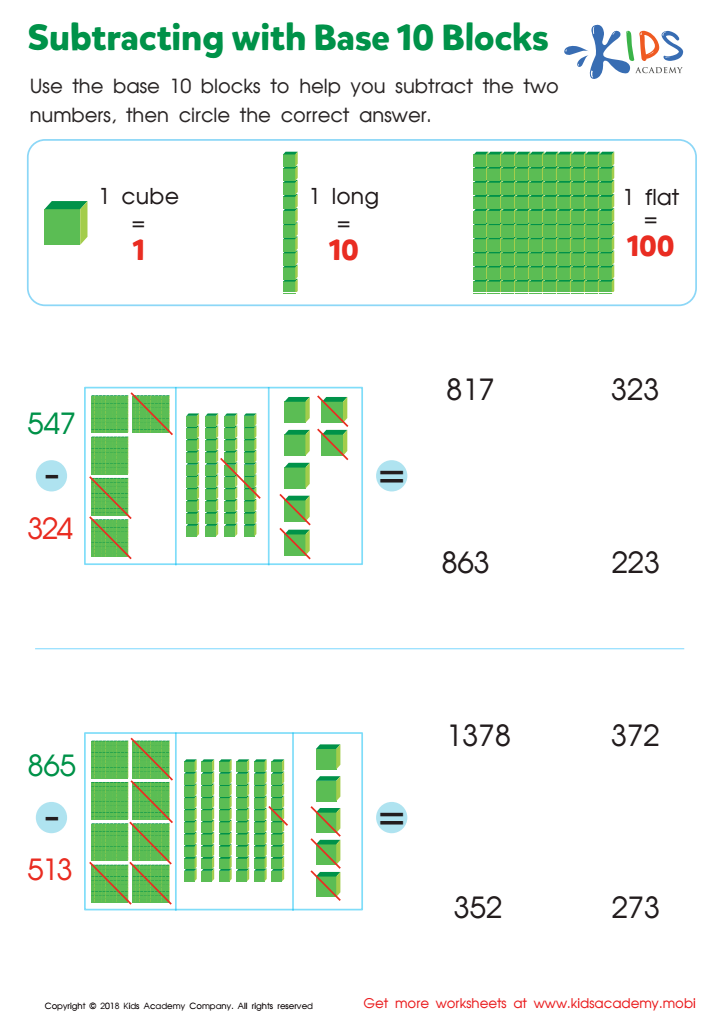
Subtracting with Base 10 Blocks Worksheet
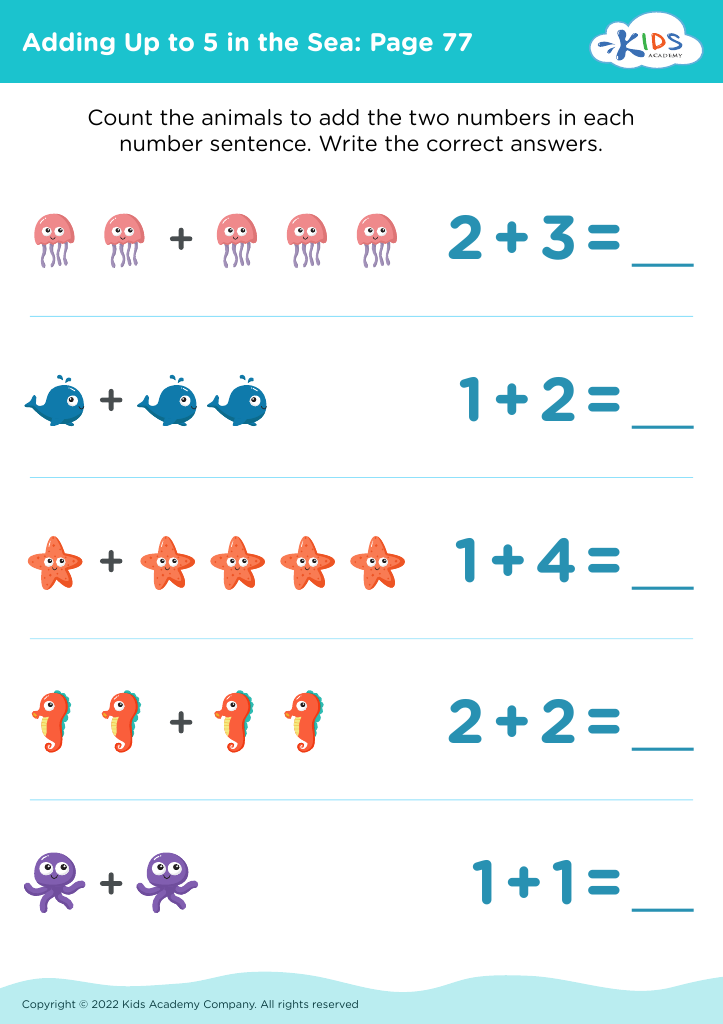
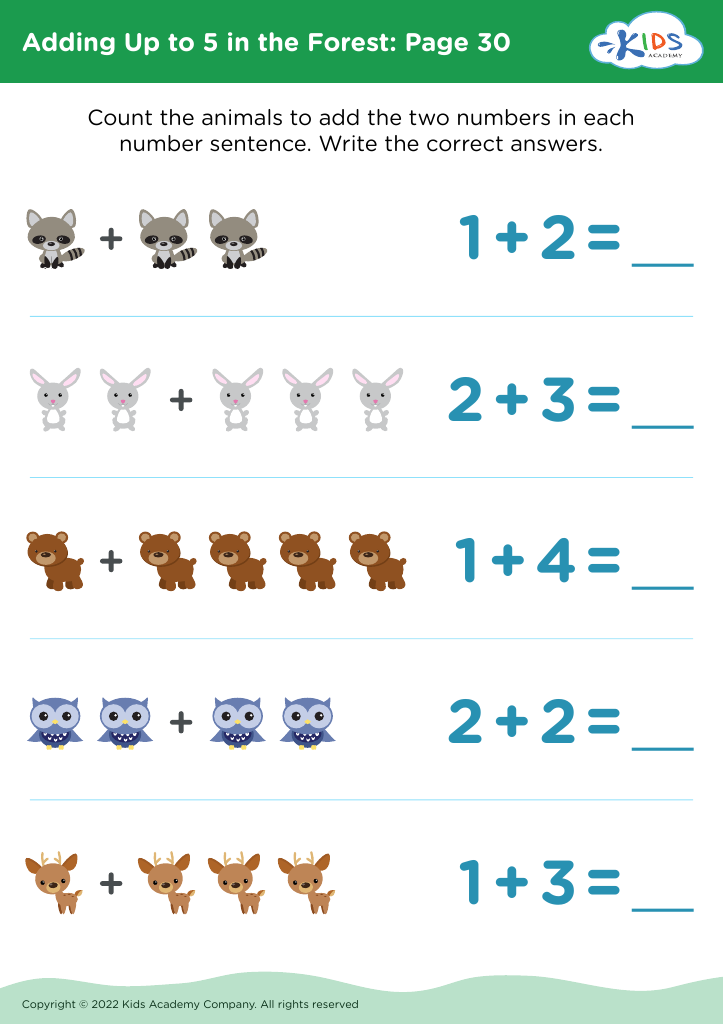
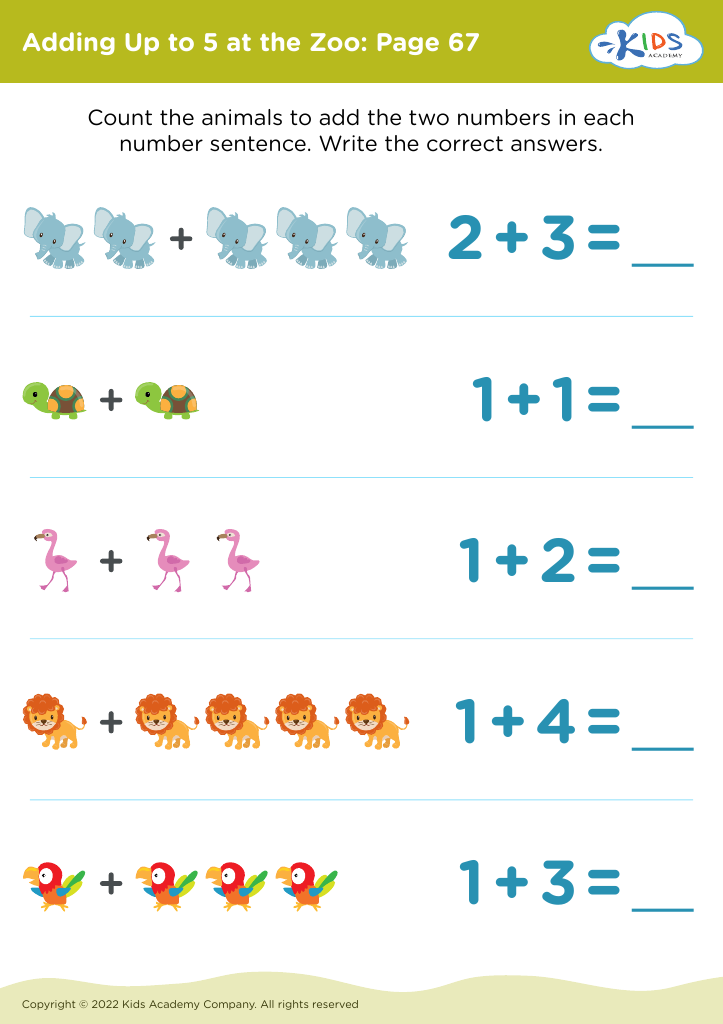
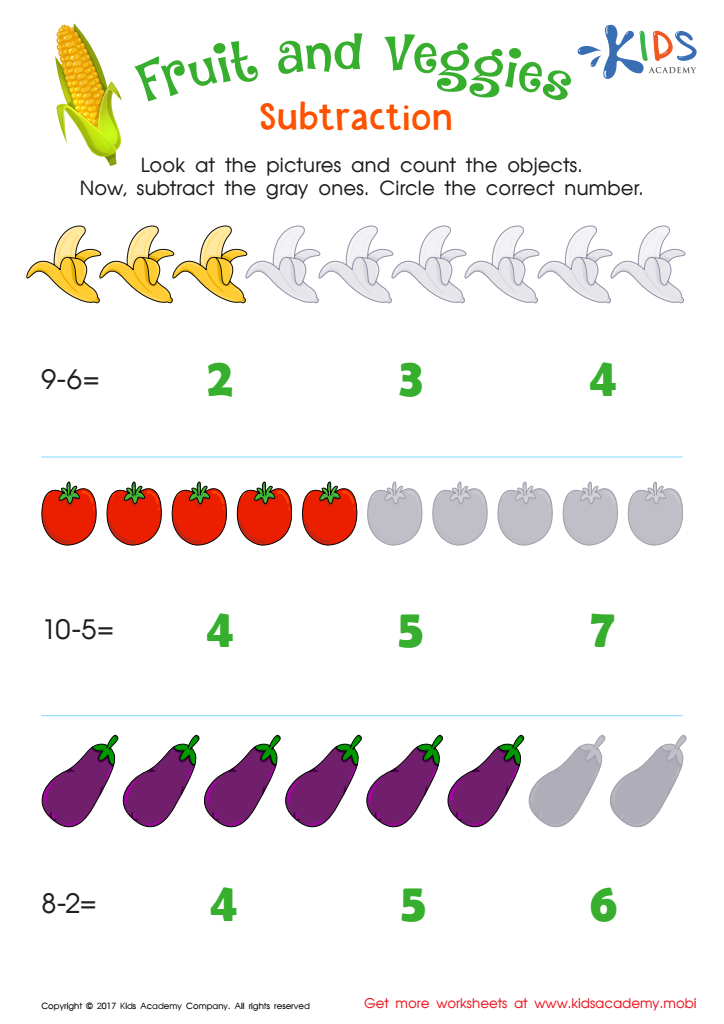
Fruit and Veggies Subtraction Worksheet








Visual learning reinforcement plays a crucial role in teaching addition and subtraction to children aged 5-9. This age group is characterized by a rapidly developing brain that thrives on visual stimuli. By incorporating visual tools such as number lines, manipulatives, and pictorial representations, parents and teachers can help students grasp fundamental math concepts more effectively.
Visual aids simplify complex operations, allowing children to connect abstract numbers with tangible objects, making math more relatable. For instance, using blocks to represent objects can make the addition of numbers tangible, reinforcing understanding through hands-on experience. Visual learning caters to different learning styles, ensuring that visual learners engage meaningfully with the material.
Furthermore, visual reinforcement promotes retention. Children are more likely to remember concepts when they can see and manipulate them. This can enhance confidence, leading to a more positive attitude toward math. It also fosters critical thinking, as children begin to visualize problems and develop strategies to solve them.
As parents and educators work together to implement visual learning strategies, they create a supportive environment where children not only learn addition and subtraction but also develop a foundational understanding and appreciation for math, equipping them for future academic success.








