Visual representation comprehension Addition & Subtraction Worksheets for Ages 5-9
5 filtered results
-
From - To
Enhance your child's math skills with our Visual Representation Comprehension Worksheets, specifically designed for ages 5-9. These engaging resources help young learners grasp addition and subtraction concepts through vivid imagery and visual aids. Our worksheets utilize colorful graphics, diagrams, and interactive challenges that make math enjoyable and relatable. By connecting numbers to visuals, children develop a deeper understanding of mathematical relationships, fostering both confidence and proficiency. Perfect for homeschoolers, classrooms, or reinforcing skills at home, these worksheets pave the way for a strong mathematical foundation. Explore our collection today and empower your child’s mathematical journey!
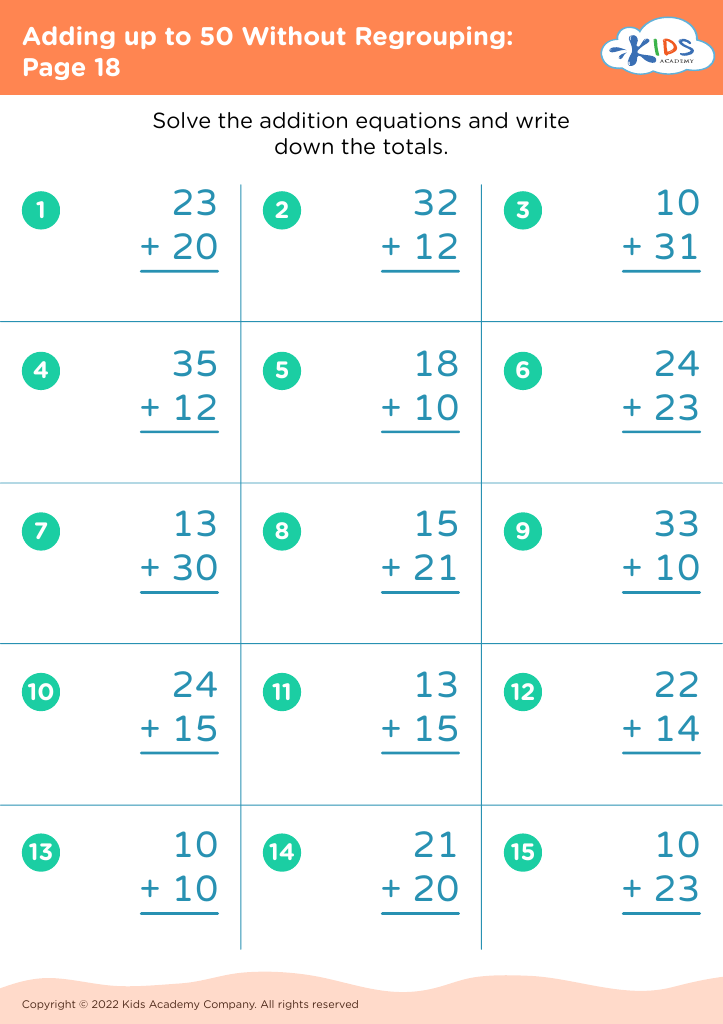
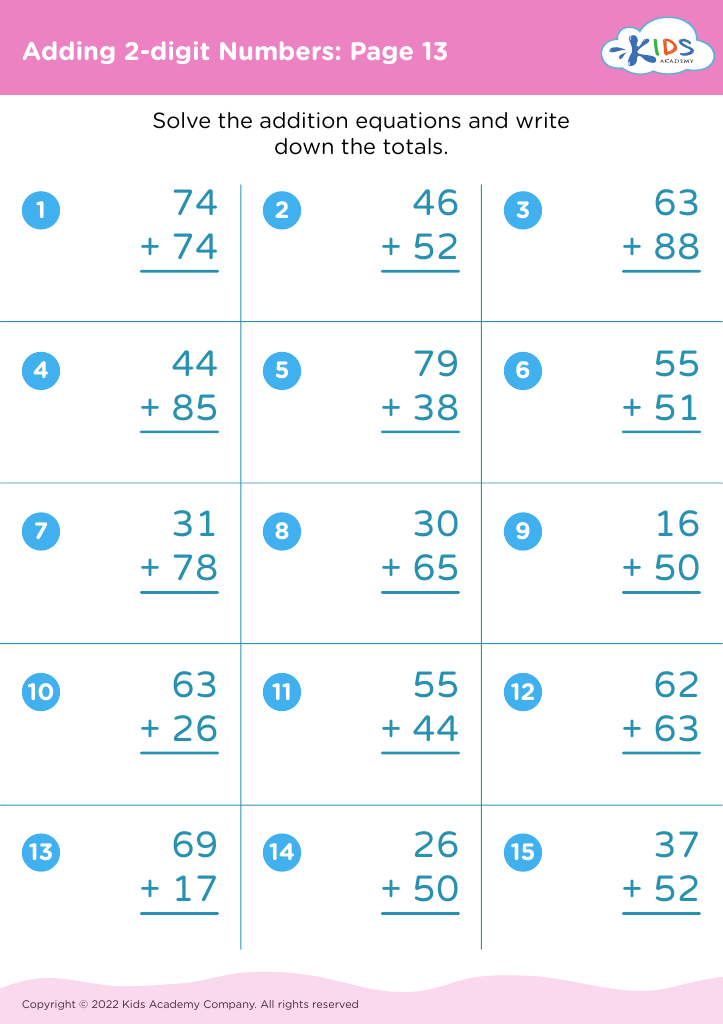
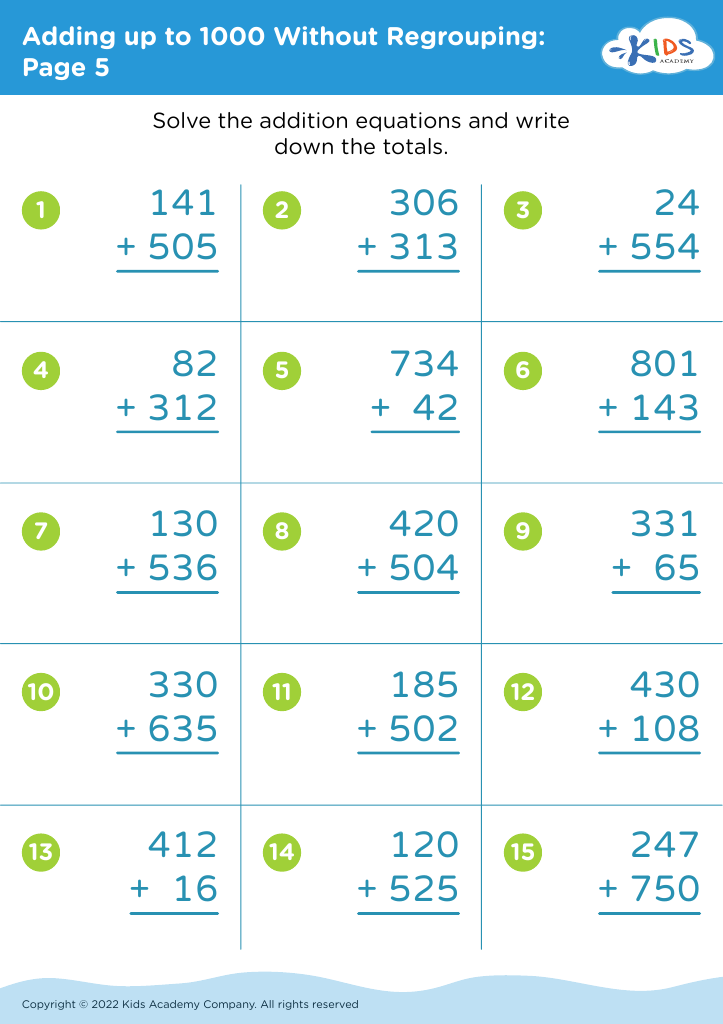
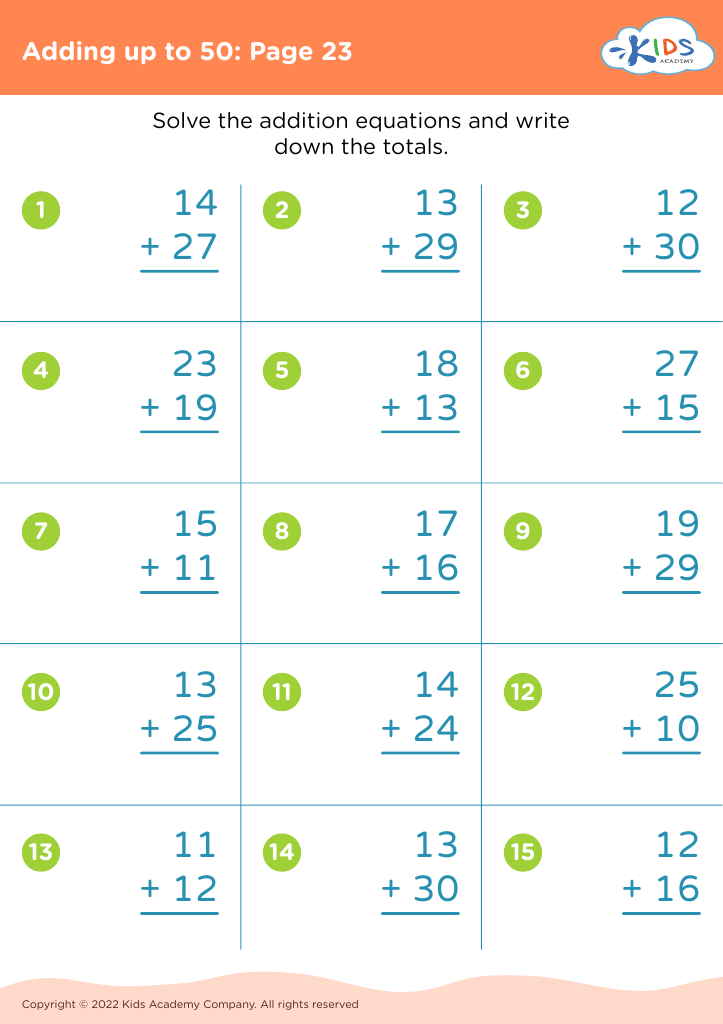
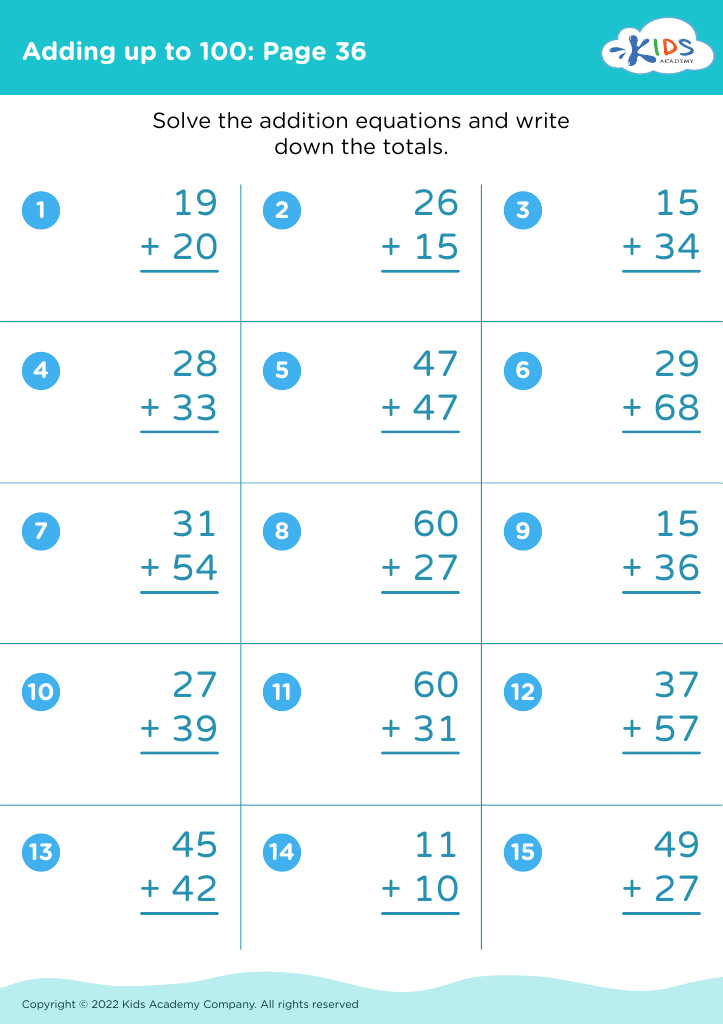








Visual representation comprehension is crucial for children aged 5-9, particularly in mathematical concepts like addition and subtraction. At this developmental stage, children transition from concrete to abstract thinking, making visual aids an essential tool for effective learning. Visual representations, such as counters, number lines, or pictorial diagrams, help students grasp the value of numbers and understand the relationship between quantities.
Parents and teachers should prioritize these methods because they cater to diverse learning styles, enabling children to visualize problems, facilitating a deeper understanding of mathematical concepts. Additionally, when children can see the physical representation of numbers, they gain confidence in their abilities, which is vital for fostering a positive attitude toward math.
These skills lay the groundwork for more advanced mathematics concepts as children progress in their education. Strong visual comprehension enhances problem-solving abilities and cognitive reasoning, equipping students with fundamental skills they'll use throughout their academic journey. Fostering a solid understanding of addition and subtraction through visual means not only supports immediate learning but also promotes long-term numeracy skills, vital for success in future mathematical endeavors. Thus, parents and teachers play a critical role in embracing and implementing visual strategies to enrich children’s mathematical experiences.








