Attention to Detail Addition Worksheets for Ages 5-9
4 filtered results
-
From - To
Discover our "Attention to Detail Addition Worksheets for Ages 5-9," meticulously crafted to bolster your child's math skills and focus. These engaging, age-appropriate worksheets are designed to make learning addition fun while enhancing attention to detail. Each worksheet offers a variety of exercises that teach children to spot minor differences, meticulously follow instructions, and accurately solve addition problems. Perfect for home or classroom use, our printable sheets cater to different learning paces, ensuring comprehensive support for budding mathematicians. Boost your child’s concentration, problem-solving skills, and math confidence with our expertly designed addition worksheets.
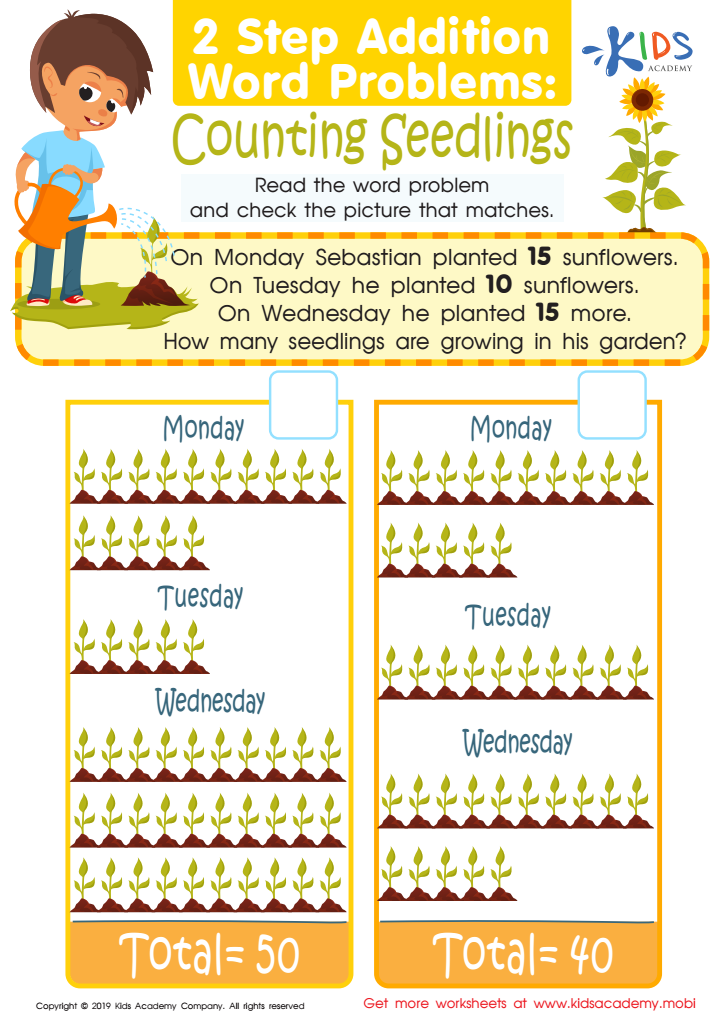
Counting Seedlings Worksheet
 Assign to My Students
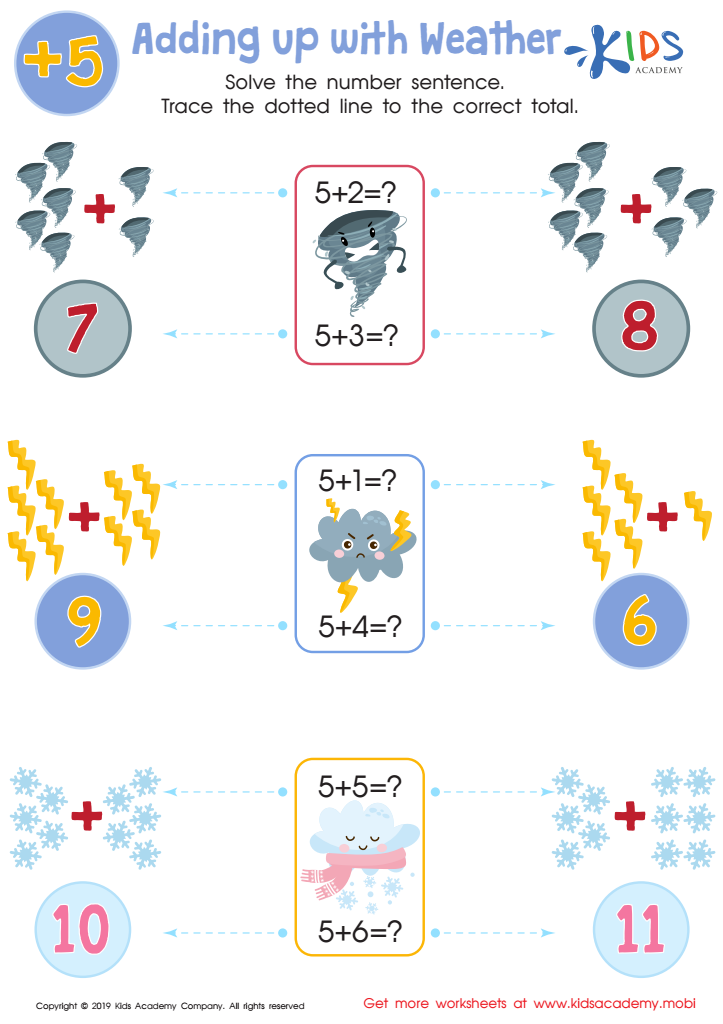
Adding up With Water Worksheet








Attention to detail in addition for children aged 5-9 is crucial for several reasons. At this formative stage, foundational math skills are being established, and accuracy in basic arithmetic operations sets the tone for future learning. When children pay attention to the details in addition, they not only get the right answers but also develop a strong understanding of number sense and place value. This attentiveness helps prevent the formation of bad habits that can be difficult to unlearn later.
Moreover, attention to detail fosters a growth mindset. Children learn the importance of taking their time, checking their work, and learning from mistakes. These skills are transferable across all academic subjects and other areas of life. Additionally, by honing their focus and concentration, children enhance their cognitive abilities, such as working memory and problem-solving skills.
For parents and teachers, recognizing and encouraging attention to detail also helps identify learning challenges early on, providing an opportunity for timely intervention. Activities and exercises that promote meticulous calculation ensure that children build confidence in their math abilities, reducing anxiety and fostering a positive attitude towards the subject. Therefore, cultivating attention to detail in addition is essential for the overall academic and personal growth of young learners.








