Basic arithmetic understanding Addition Worksheets for Ages 5-9
4 filtered results
-
From - To
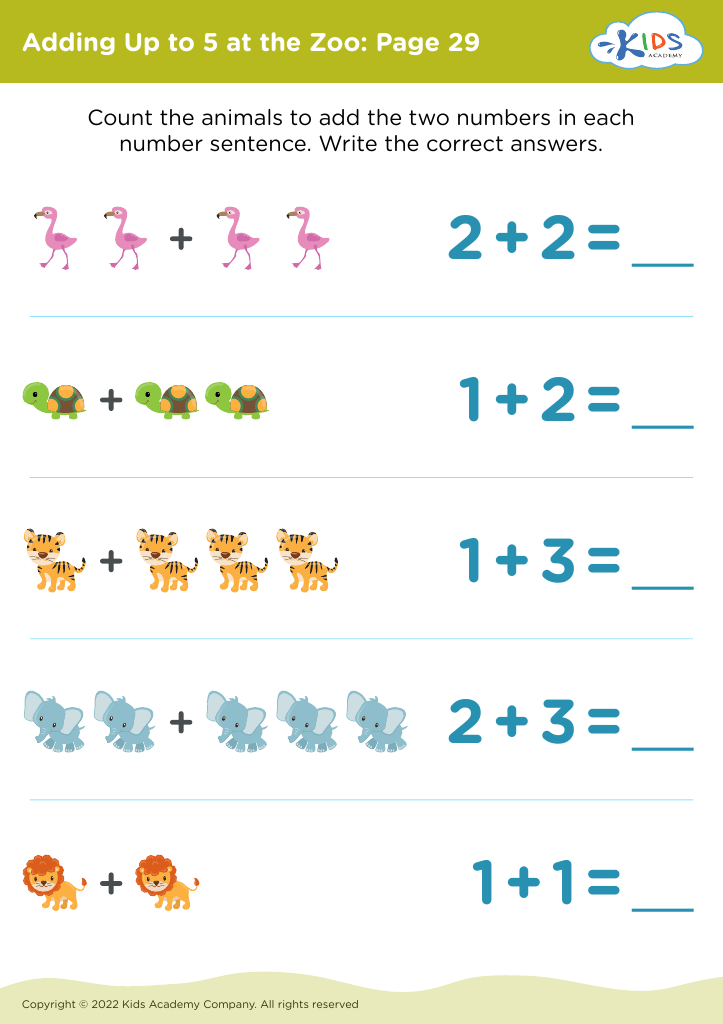
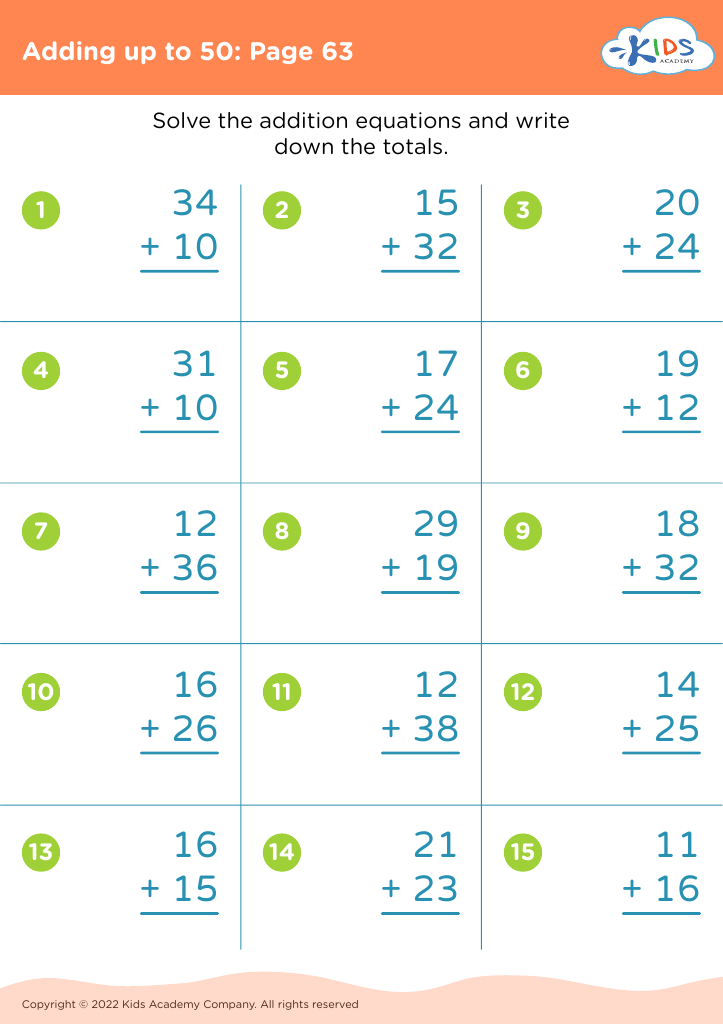
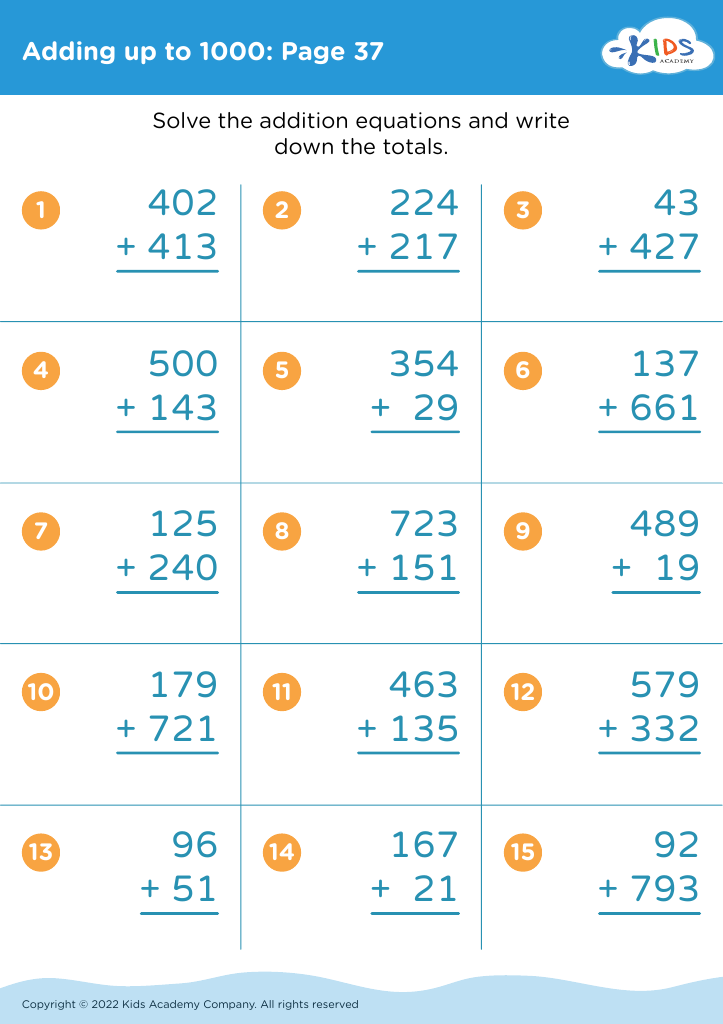
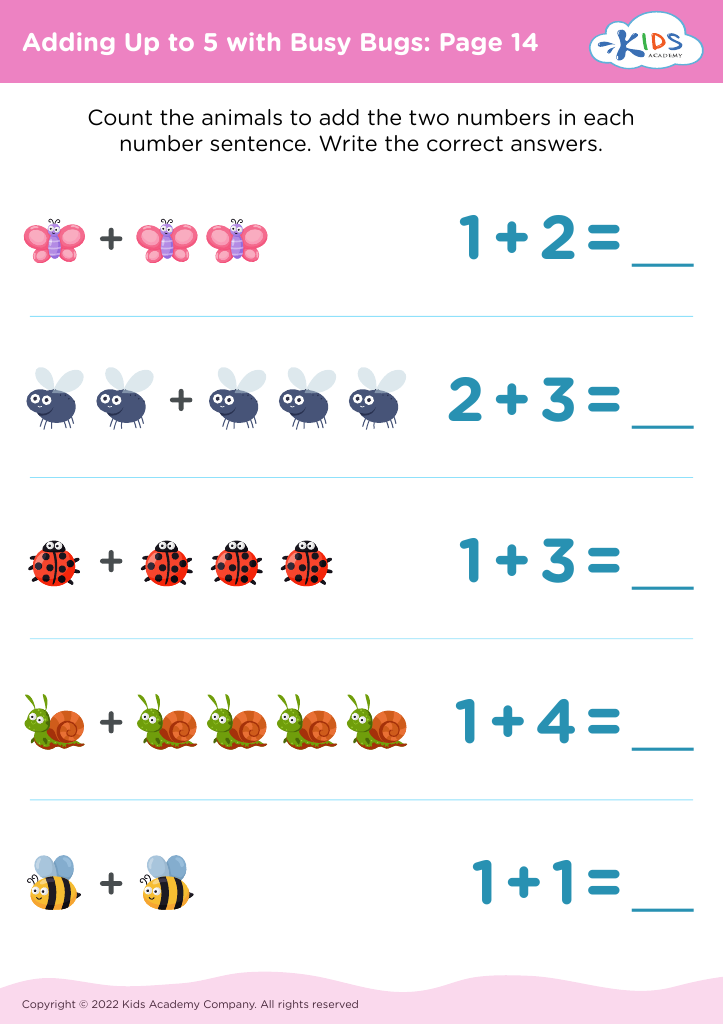
Discover our engaging "Basic Arithmetic Understanding Addition Worksheets" tailored specifically for children ages 5 to 9. These fun, interactive worksheets help young learners build foundational addition skills through colorful illustrations and enjoyable activities. Designed to promote a positive learning experience, our resources guide children as they master essential concepts such as number recognition, counting, and simple addition problems. Help your child gain confidence in math with exercises that reinforce comprehension and problem-solving abilities. Perfect for classroom use or home practice, these worksheets make learning addition a delightful journey for young mathematicians. Unlock their potential and make math exciting today!








Understanding basic arithmetic, particularly addition, is crucial for children aged 5-9 because it lays the foundation for all future mathematical learning. At this developmental stage, children are naturally curious and eager to grasp new concepts, making it an ideal time to instill a solid understanding of numbers and their relationships. Addition is not just a mathematical skill; it's a gateway to problem-solving, critical thinking, and logical reasoning.
When children understand addition, they are better equipped to handle daily tasks, from managing money to measuring ingredients while cooking. This foundational skill enhances their confidence and encourages a positive attitude towards learning mathematics. Moreover, strong arithmetic skills contribute to academic success, as mathematics is a key component of standardized testing and many other subjects, such as science and engineering.
Parents and teachers play an essential role in supporting this knowledge. By creating engaging activities and fostering a positive learning environment, they can encourage children to explore addition in fun and practical ways. Establishing a strong grasp of addition early on can reduce math anxiety later and promote persistence in overcoming challenges, ultimately nurturing lifelong learners who appreciate the value of math in everyday life.








