Basic Math Skills Addition Worksheets for Ages 5-9
75 filtered results
-
From - To
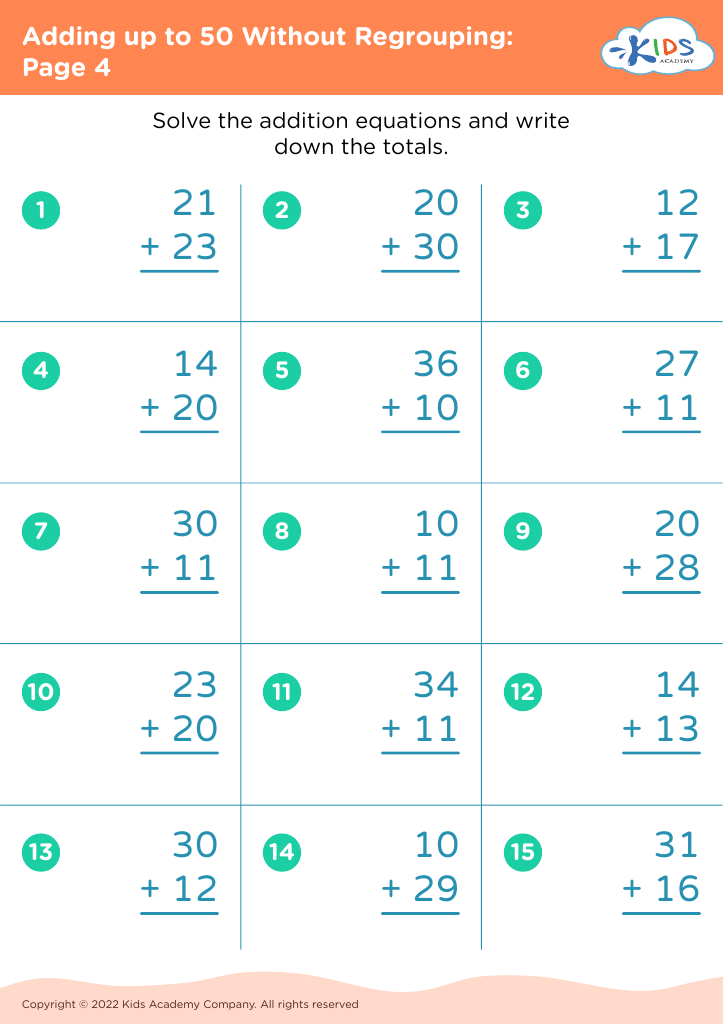
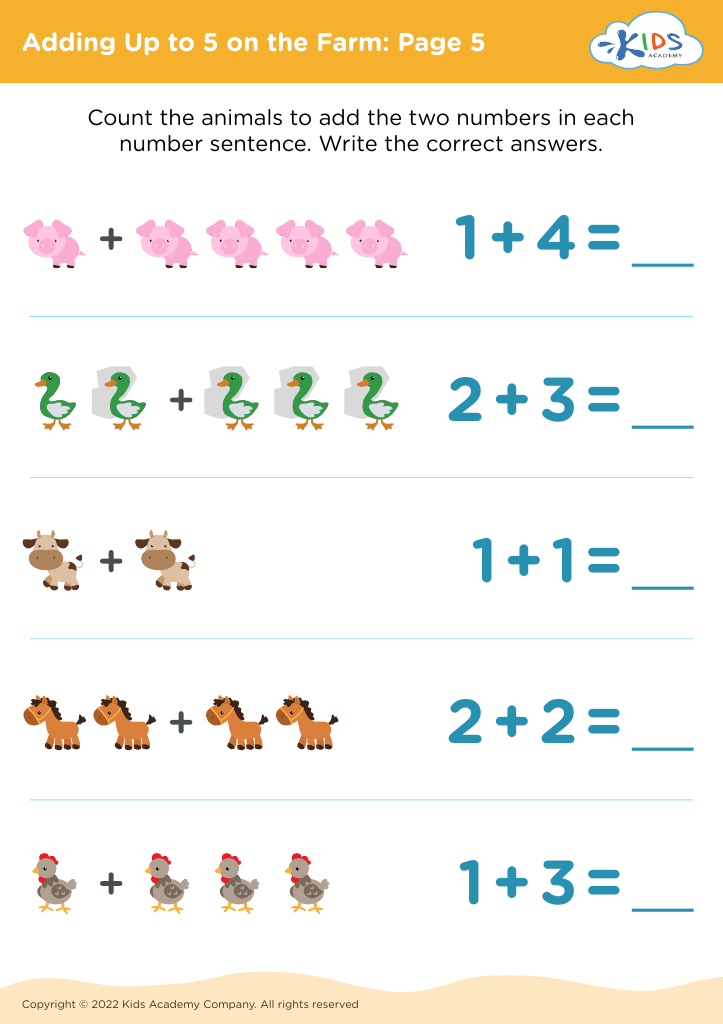
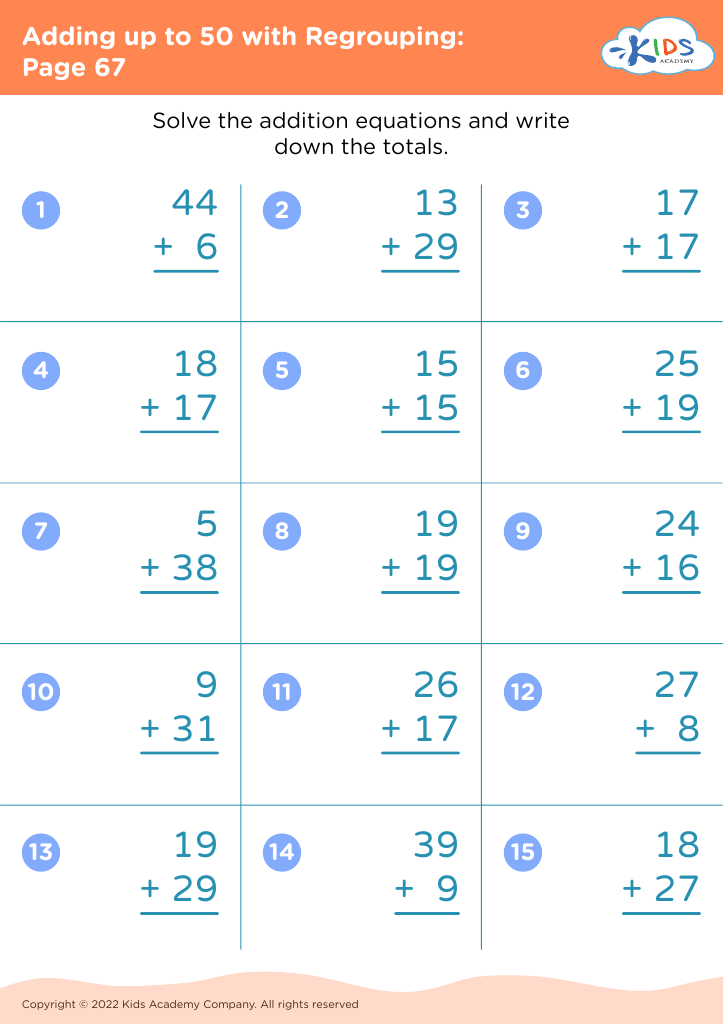
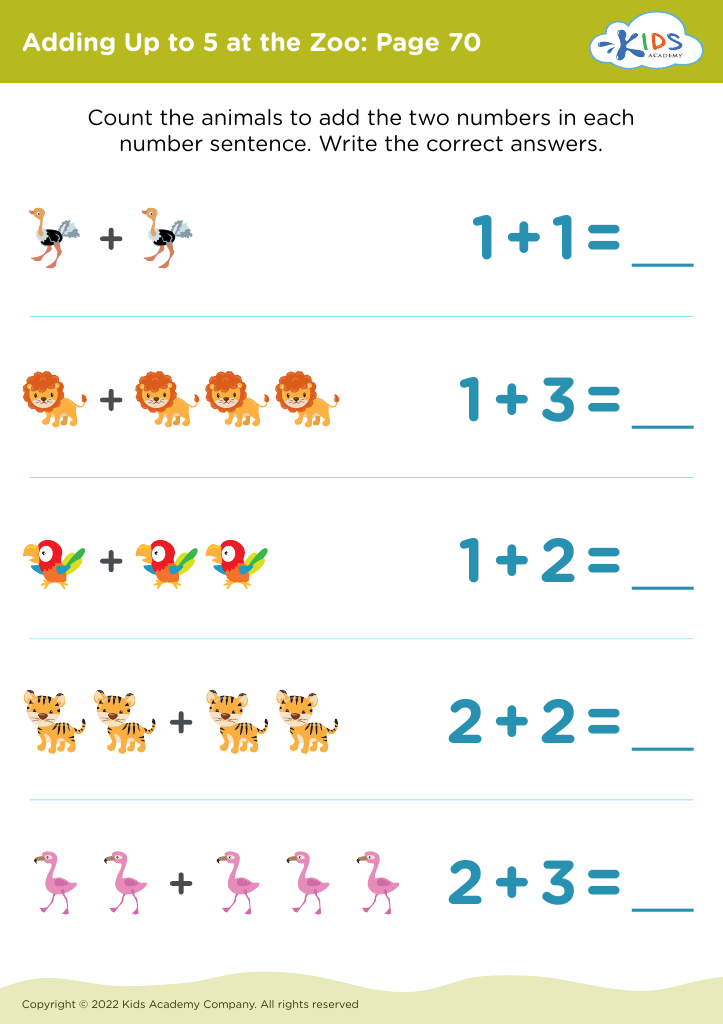
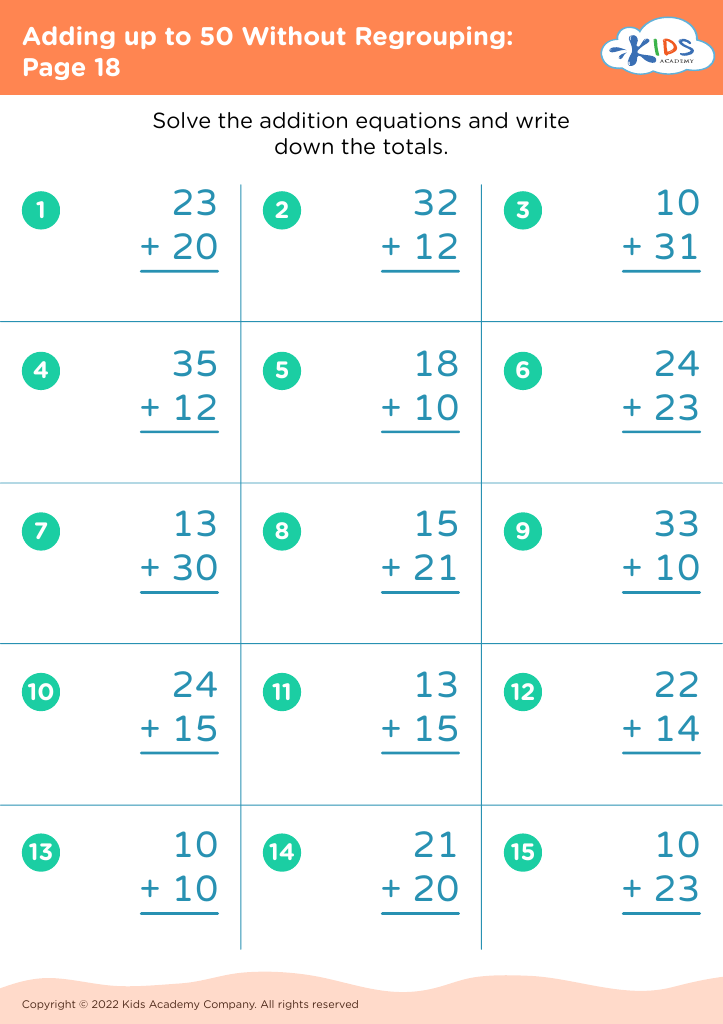
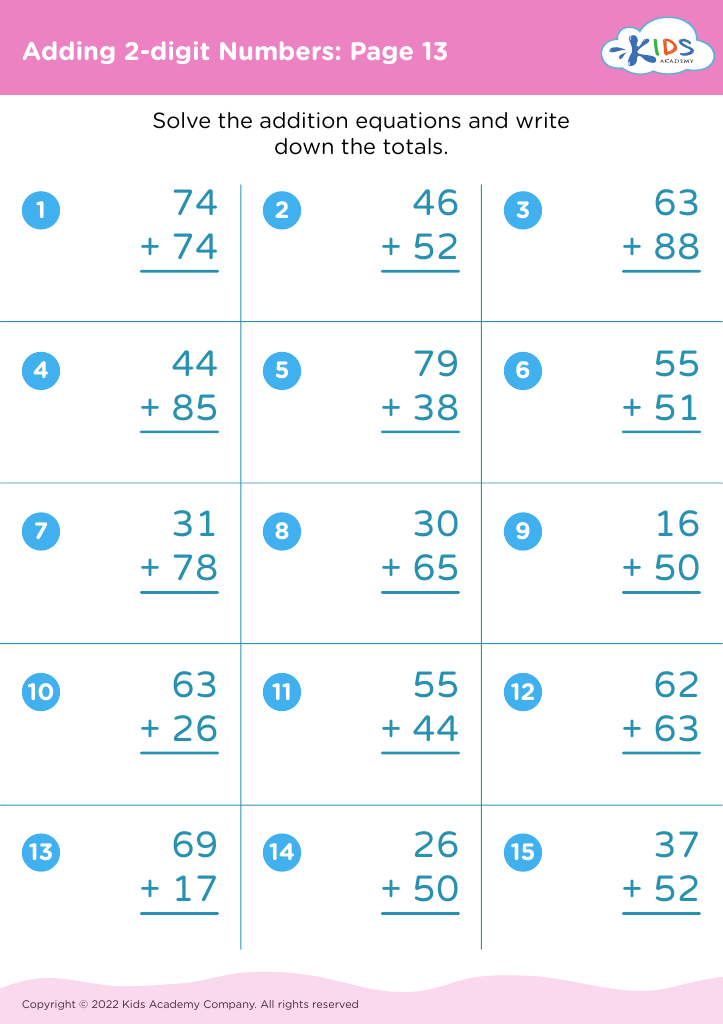
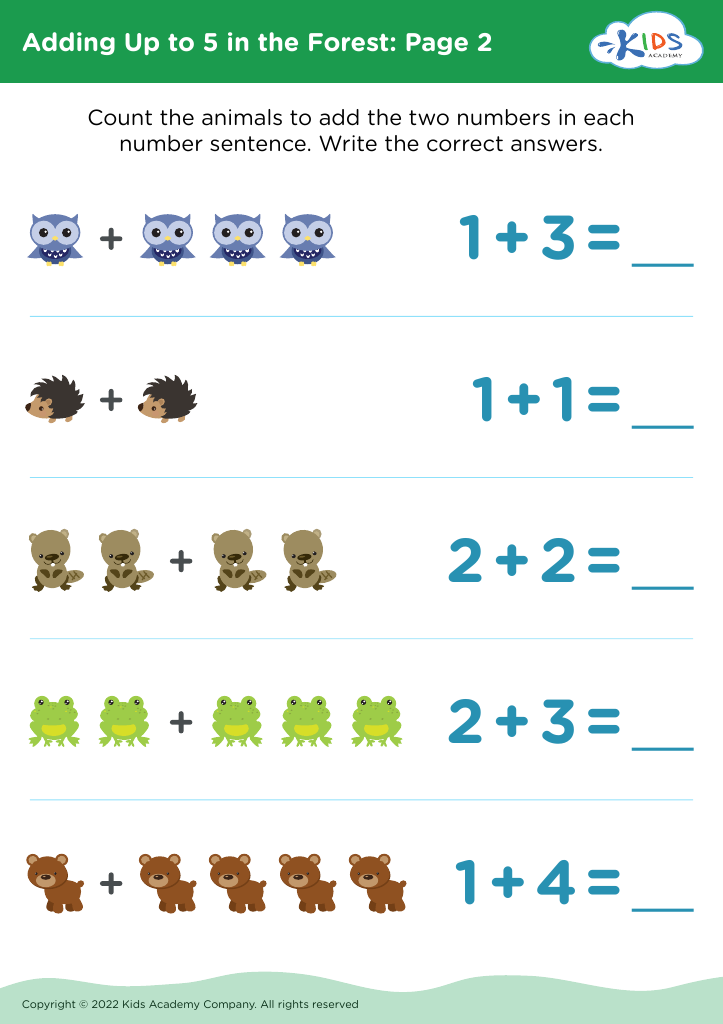
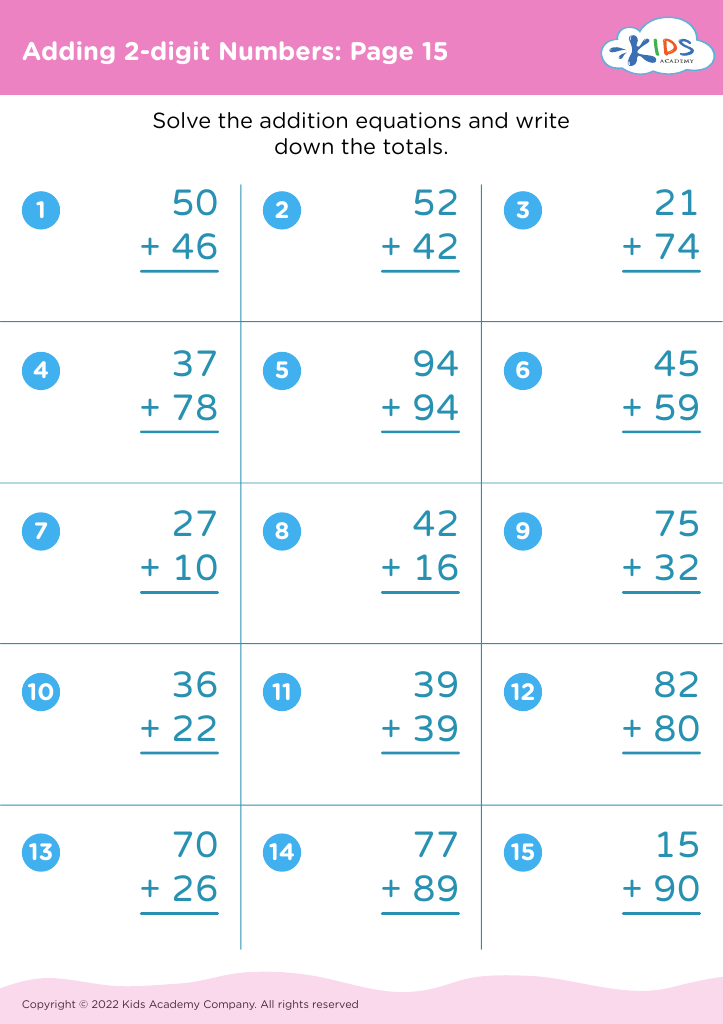
Discover our engaging Basic Math Skills Addition Worksheets designed specifically for children ages 5-9! These worksheets offer a fun and interactive way to develop essential addition skills through colorful illustrations and enjoyable exercises. Perfect for homeschooling or classroom activities, our resources encourage early learners to practice simple number recognition and basic addition problems. With a variety of formats—from visual aids to comprehensive practice sheets—kids can build confidence while mastering fundamental math concepts. Start your child’s arithmetic journey today and watch them enhance their problem-solving skills while enjoying the process of learning math! Visit our site for a wealth of resources and printable materials.
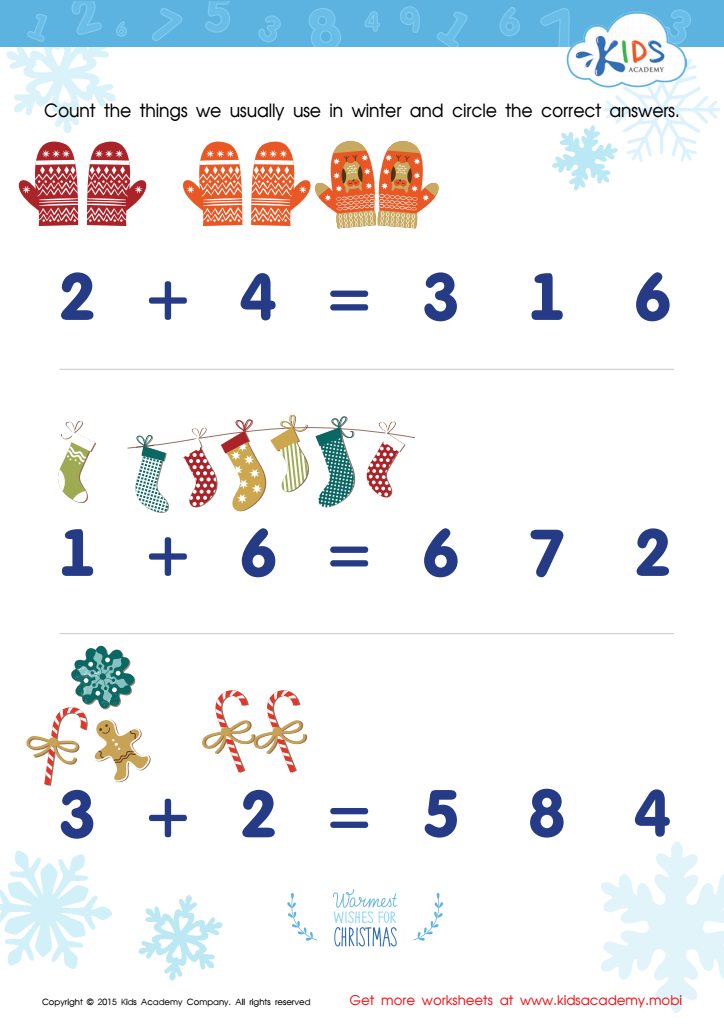
Count Winter Things Worksheet
 Assign to My Students
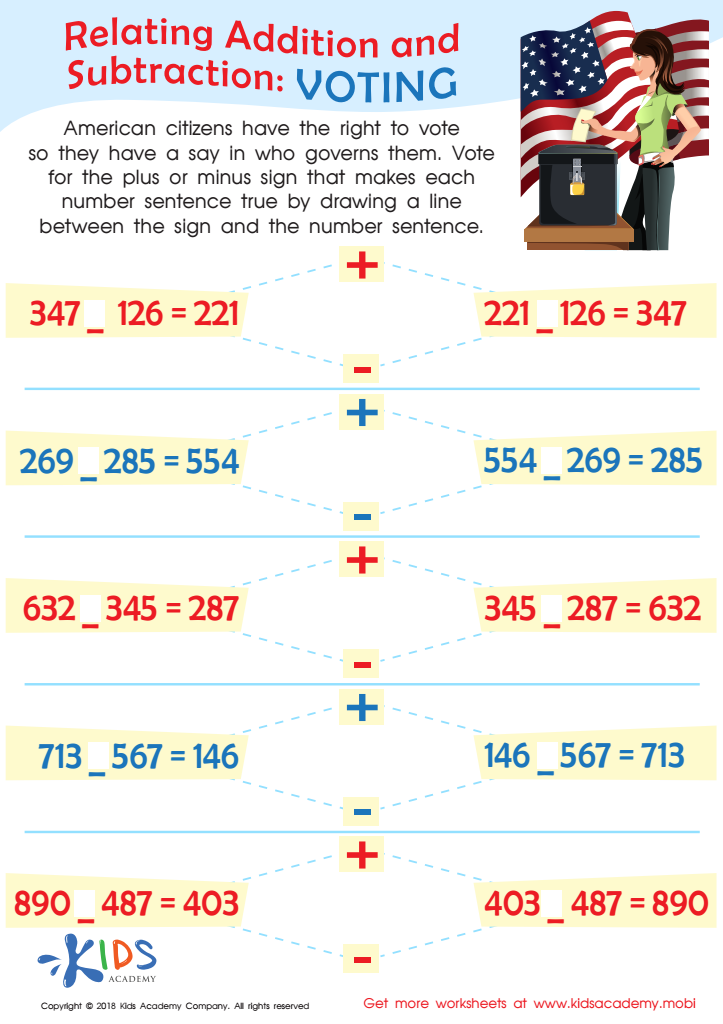
Voting Worksheet
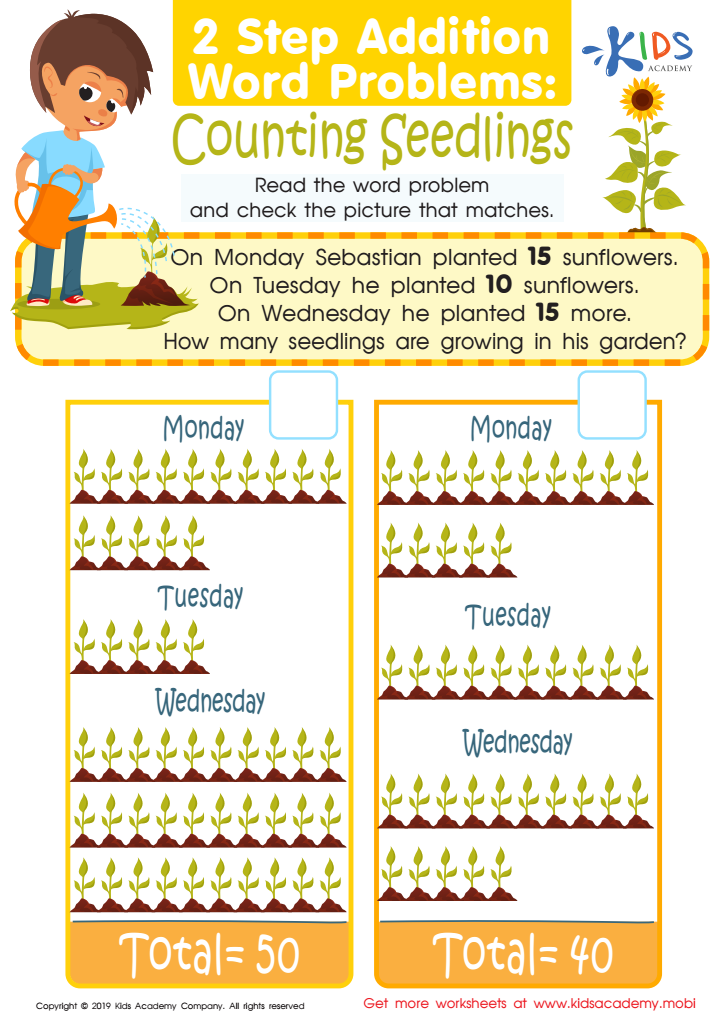
Counting Seedlings Worksheet
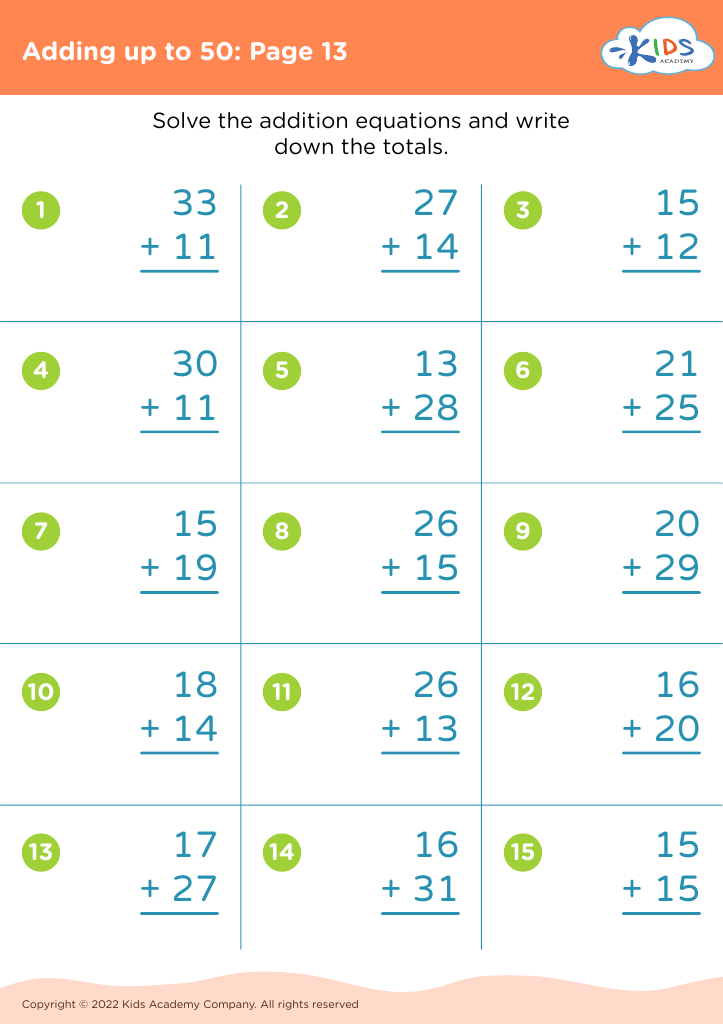
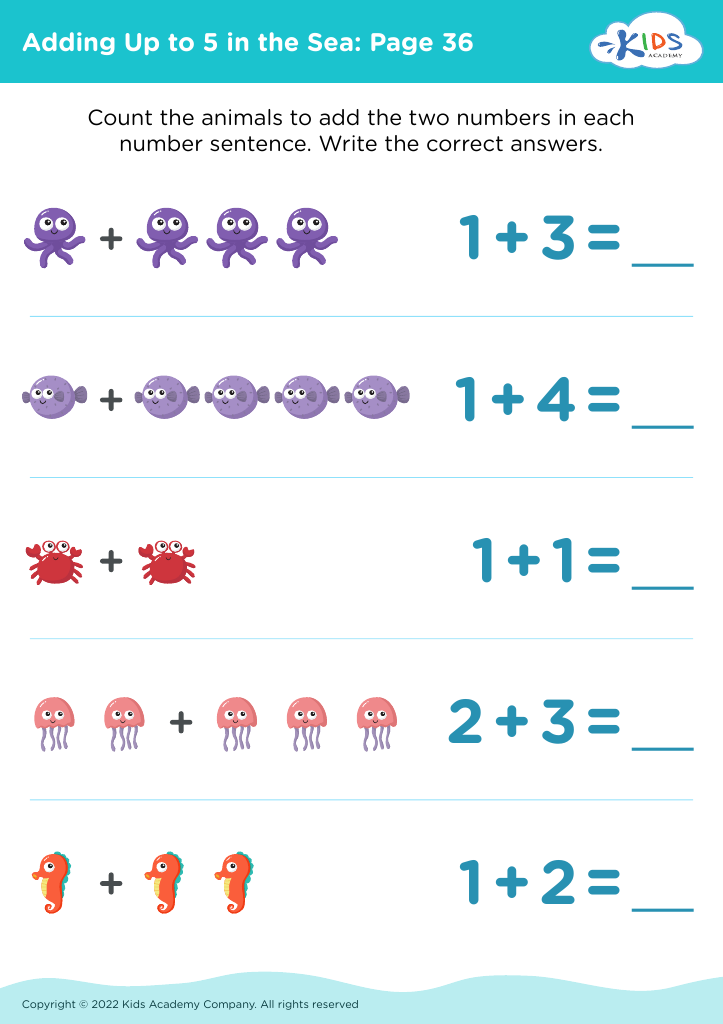
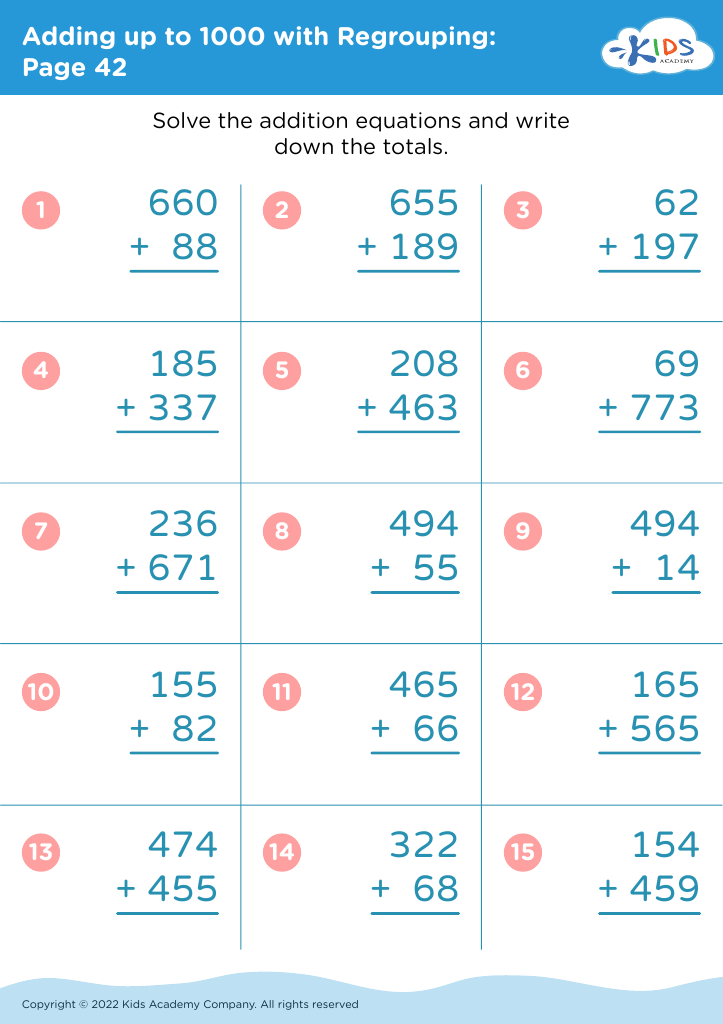
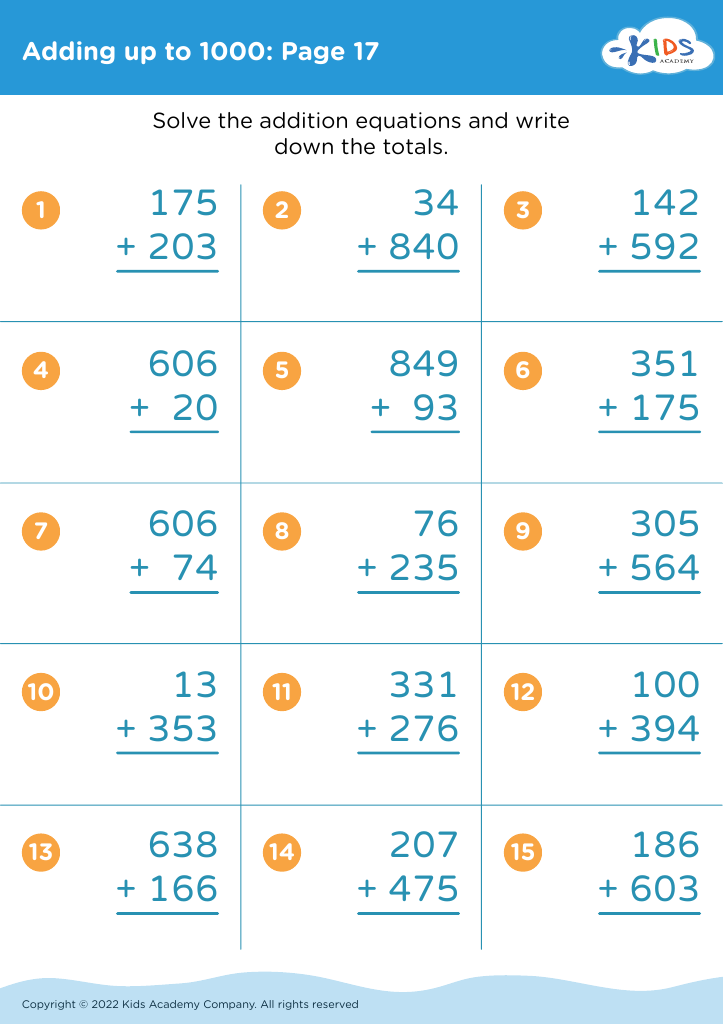
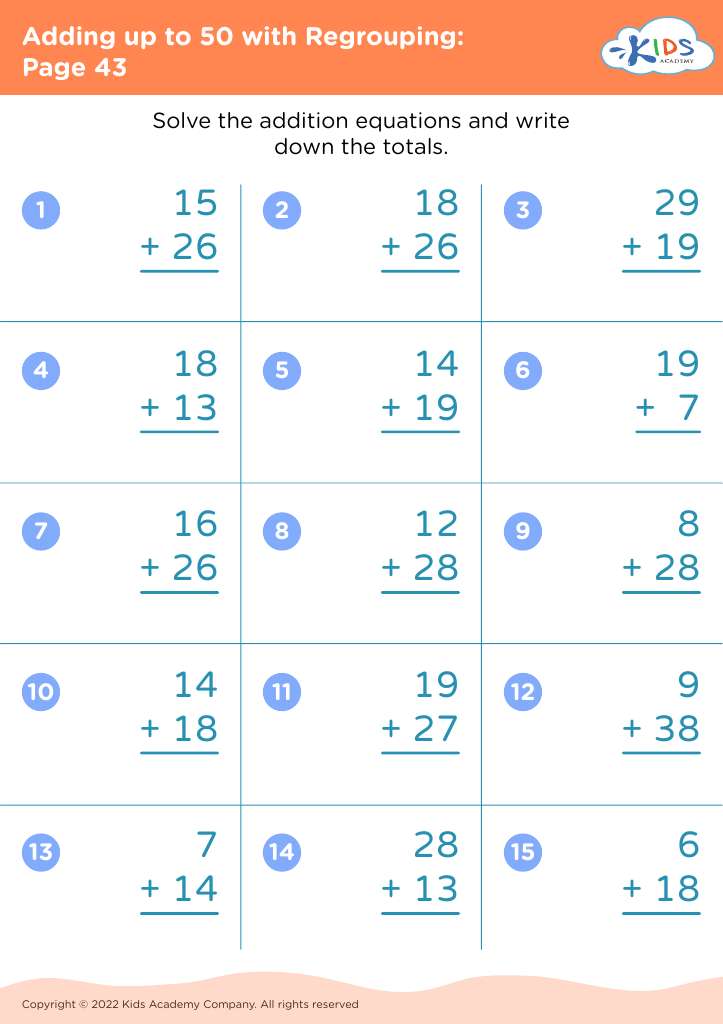
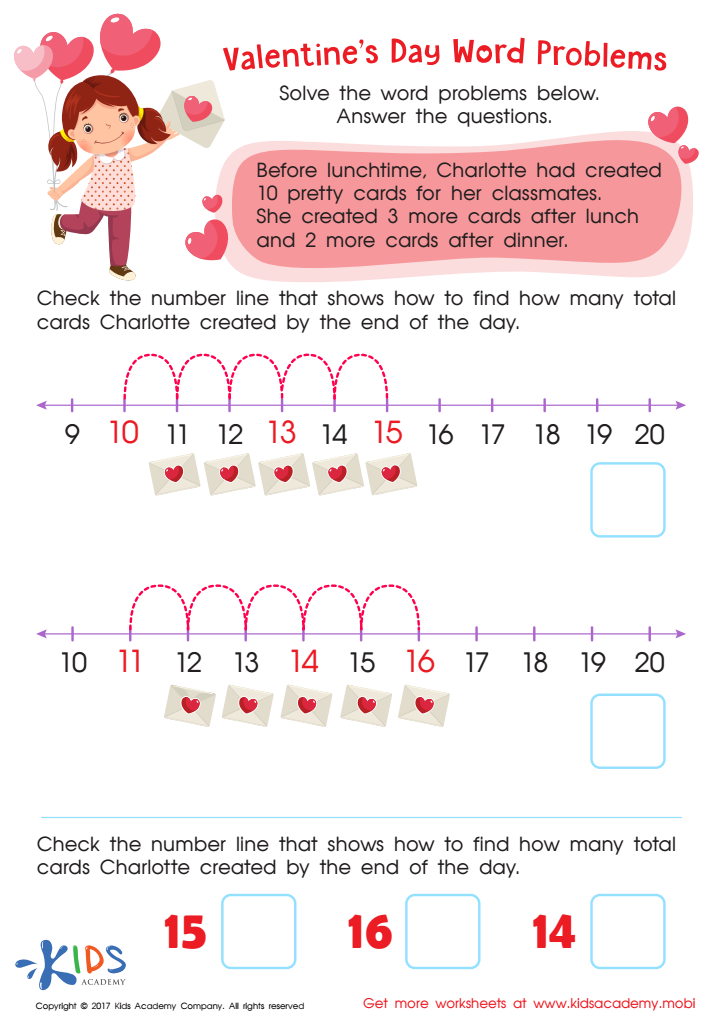
Valentines Day Word Problem Worksheet
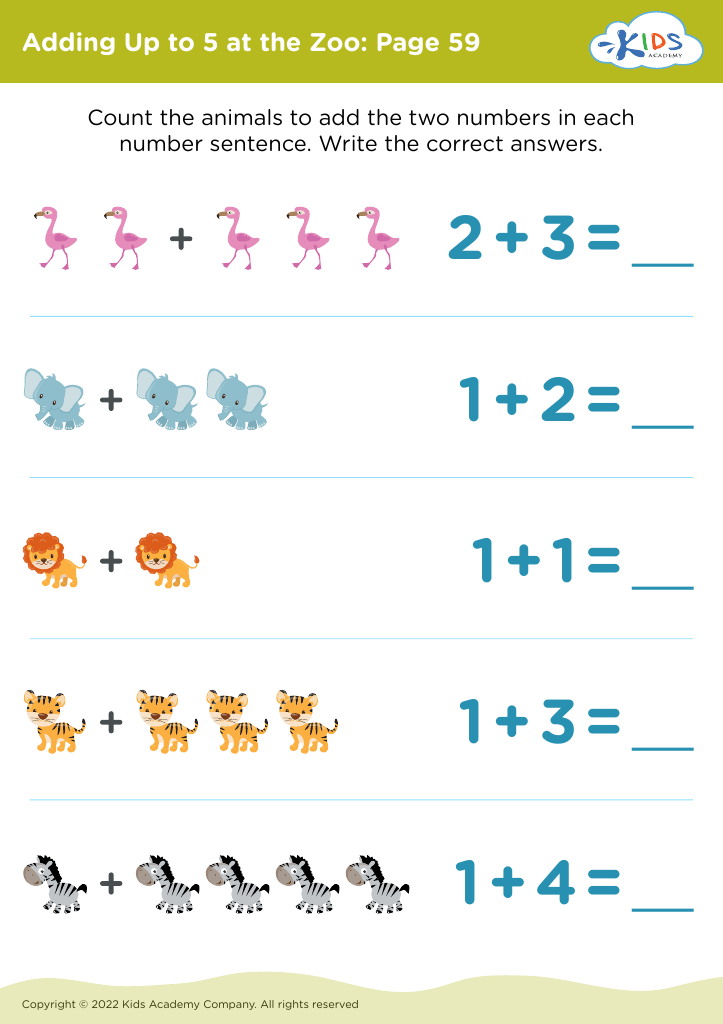
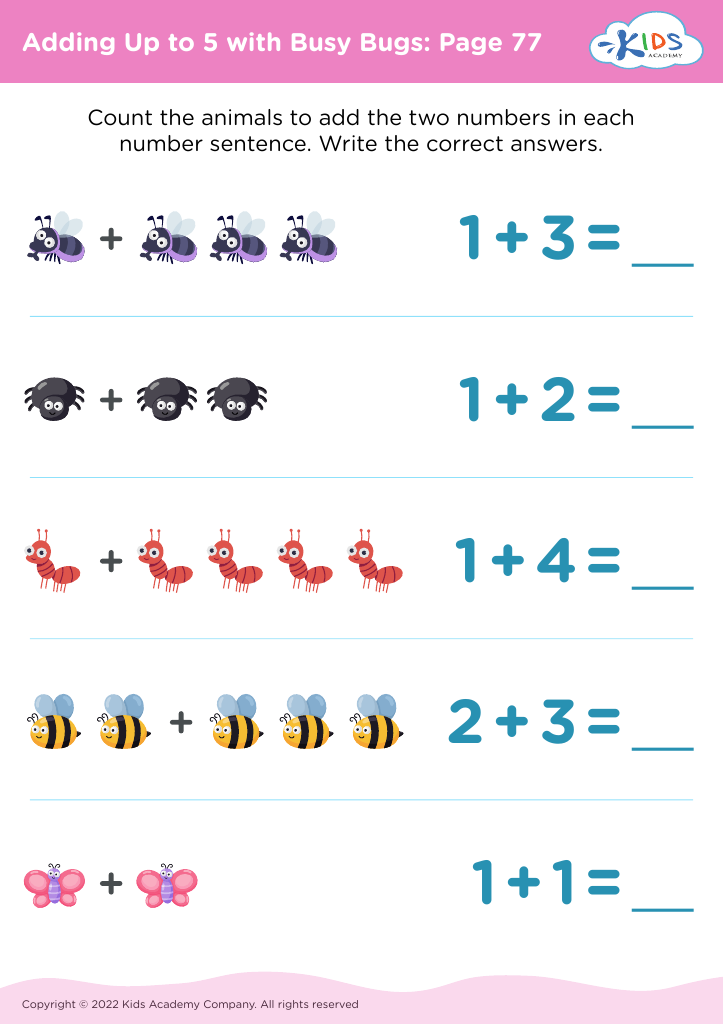
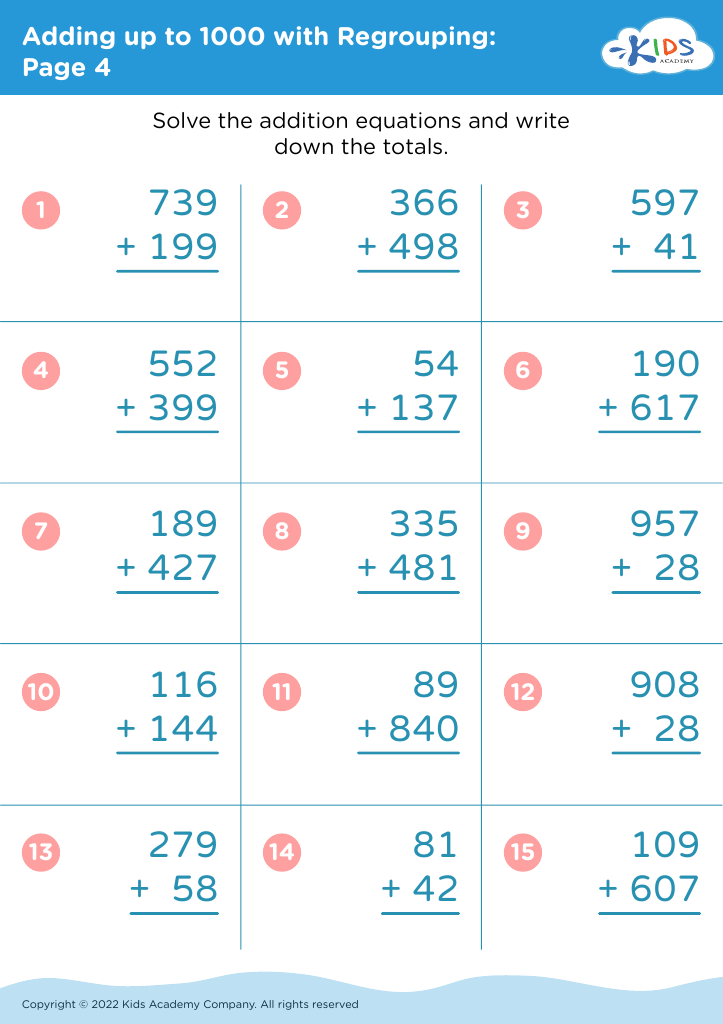
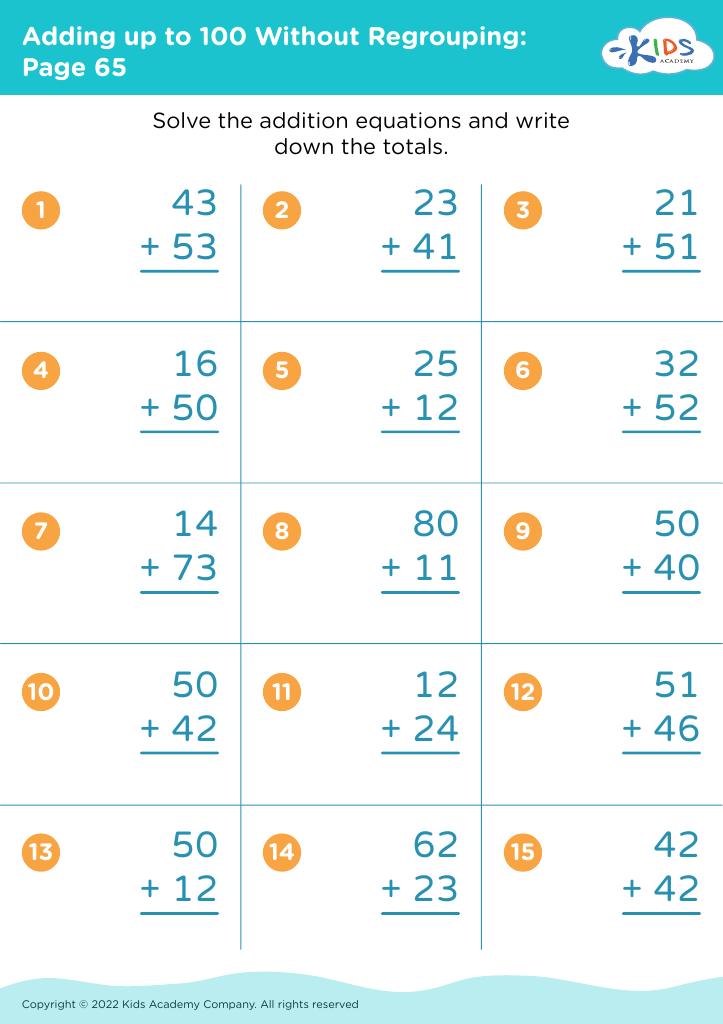








Basic math skills, particularly addition, are foundational for children's cognitive development and future academic success. For children aged 5-9, mastering addition isn’t just about numbers; it's about building critical thinking and problem-solving abilities. Early understanding of arithmetic encourages logical thinking, helping children to make sense of the world around them.
Parents and teachers should prioritize basic addition skills as they serve as a stepping stone for more complex math concepts, such as subtraction, multiplication, and division. Early proficiency in addition fosters confidence and a positive attitude towards math, reducing future math anxiety. Additionally, these skills aid in daily activities, such as measuring ingredients for a recipe or managing allowances, making math relevant and accessible.
Engaging children with fun and interactive methods—like games, storytelling, and practical applications—can enhance their learning experience. Addressing addition skills also promotes perseverance, attention, and patience, essential traits for lifelong learning.
In sum, by investing time and resources into teaching addition to young children, parents and teachers support not just mathematical skills but overall personal development, setting the stage for future educational achievements and a positive relationship with math.








