Comparing numbers Addition Worksheets for Ages 5-9
4 filtered results
-
From - To
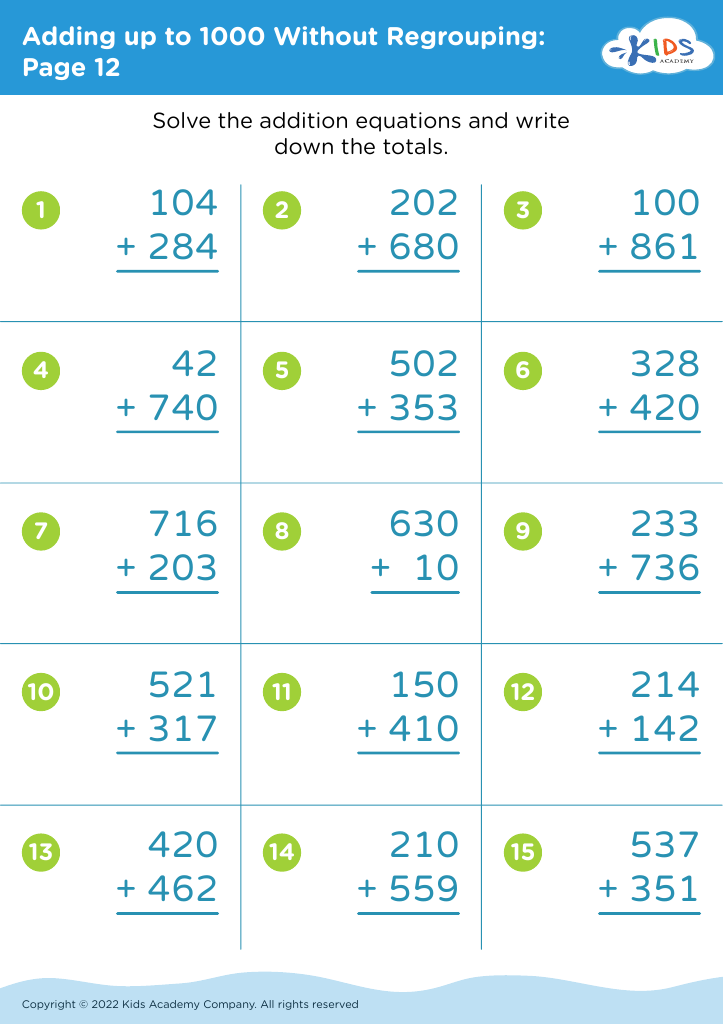
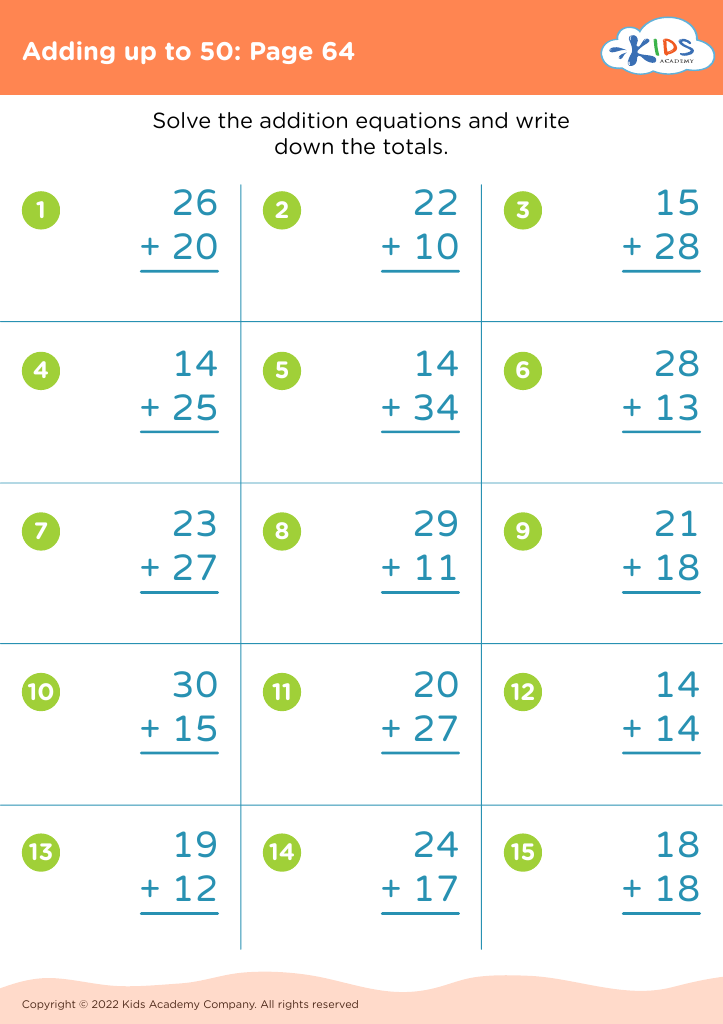
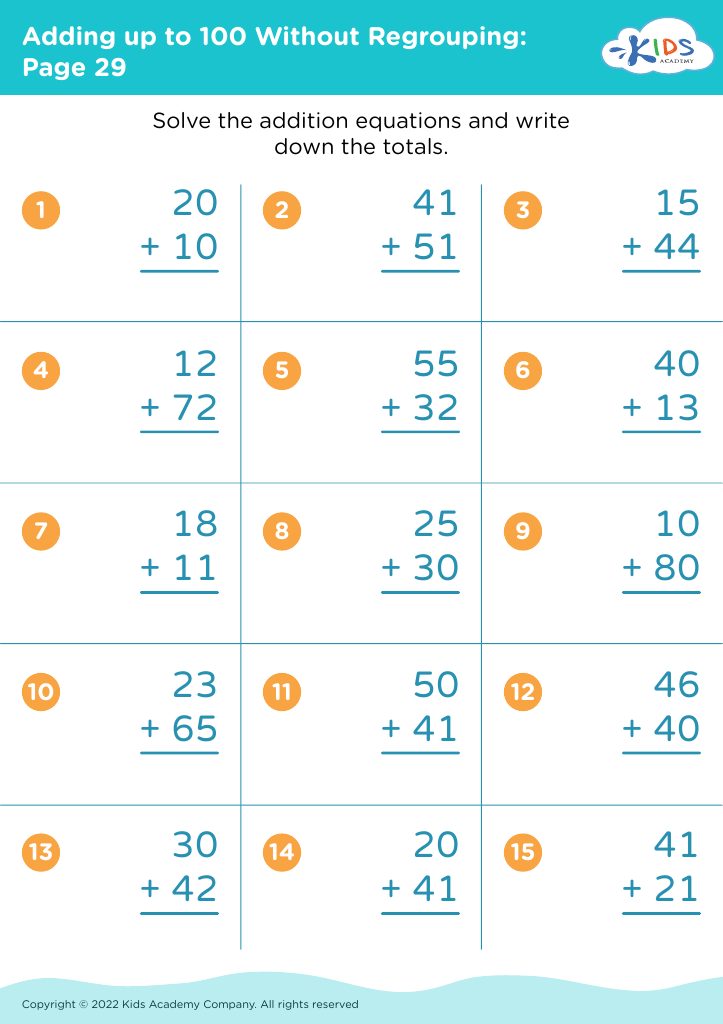
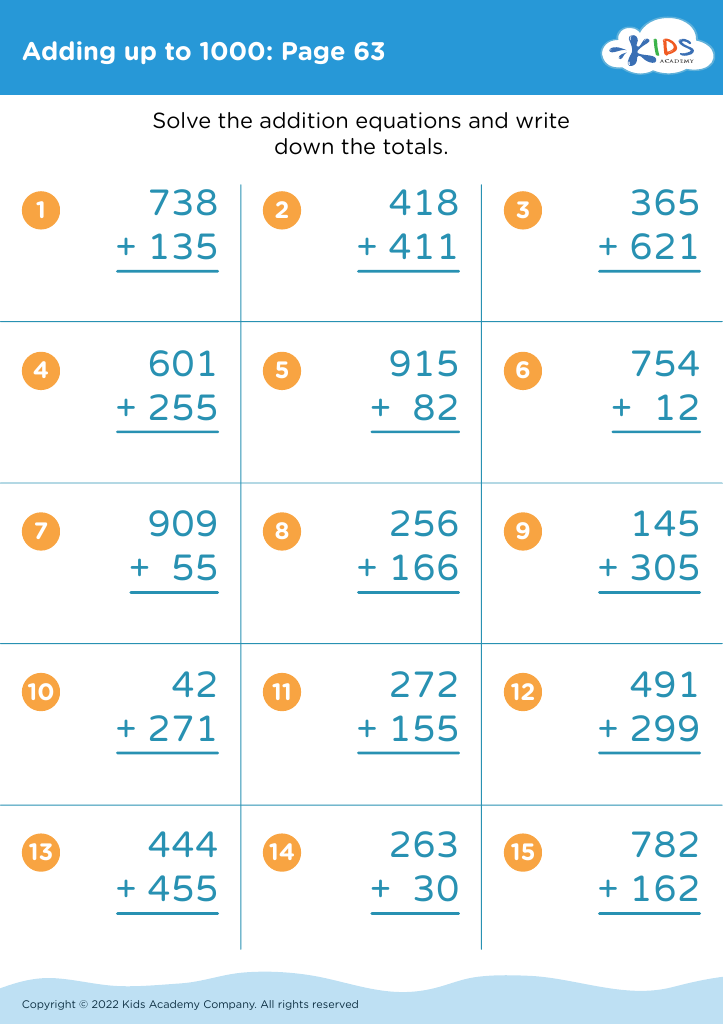
Unlock your child's mathematical potential with our Comparing Numbers Addition Worksheets for Ages 5-9! These engaging and educational printables help students develop essential math skills, including number recognition, counting, and addition, by comparing numbers in a fun and interactive way. Tailored for young learners, our worksheets provide a solid foundation in math basics while encouraging critical thinking and problem-solving. Perfect for classroom activities or at-home practice, these resources make early math learning enjoyable and effective. Help your child build confidence and fluency in math with Kids Academy's expertly designed worksheets!








Parents and teachers should prioritize teaching comparing numbers and addition to children aged 5-9 because these foundational math skills are crucial for their overall cognitive development and academic success. Children in this age group are in a critical period for learning basic arithmetic, which forms the backbone of more advanced math concepts they will encounter later in their education.
Understanding how to compare numbers helps children develop a sense of magnitude and quantity. It enables them to determine which numbers are larger or smaller and fosters critical thinking. This skill directly impacts their ability to solve real-world problems, such as determining the amount of money needed for a purchase or comparing the lengths of different objects.
Addition, on the other hand, is one of the fundamental operations in mathematics. Mastery of addition helps children not only calculate sums but also understand the concept of combining groups of objects, which is essential for solving more complex problems involving multiple steps. Furthermore, proficiency in addition supports other areas of arithmetic like subtraction, multiplication, and division.
Moreover, early success in math can boost a child's confidence and foster a positive attitude towards learning. It equips them with problem-solving skills and analytical thinking that are applicable across various subjects and in everyday life situations. Overall, strong numeracy skills in young children set the stage for future academic achievements and life skills.








