Filters

292 filtered results

Clear all filters
Favorites
With answer key
Interactive

292 filtered results

Difficulty Level

Grade


Check out this FREE Trial Lesson on Addition for age 5-9!

My Family

Favorites
With answer key
Interactive
  • 5-9
  • Counting practice
  • Addition
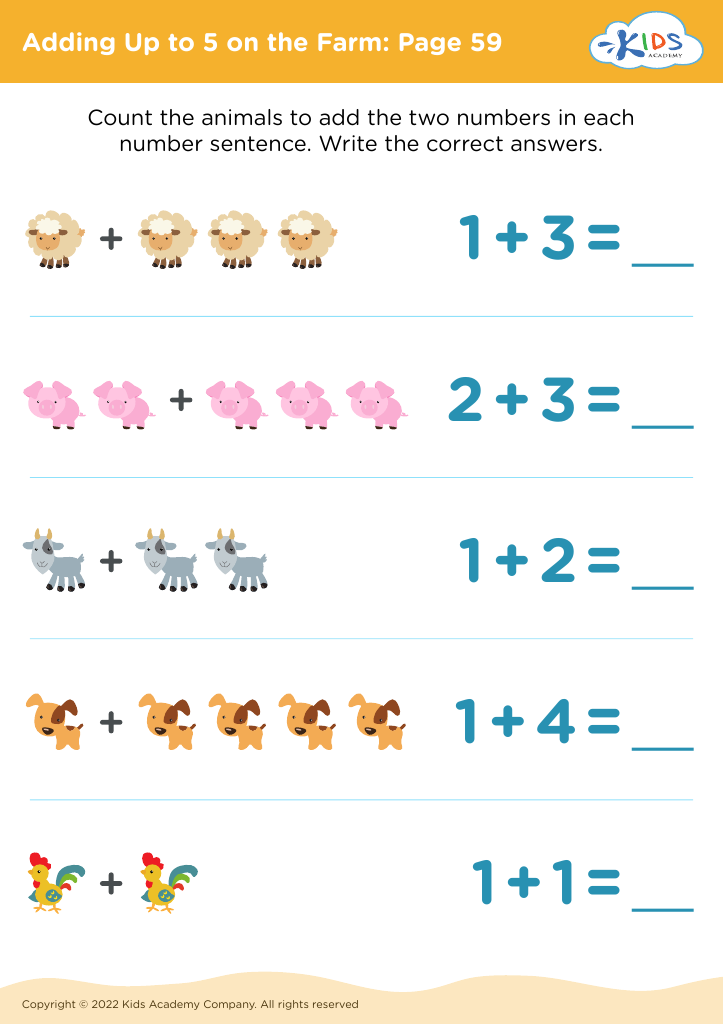
Adding Up to 5 on the Farm: Page 59
Worksheet
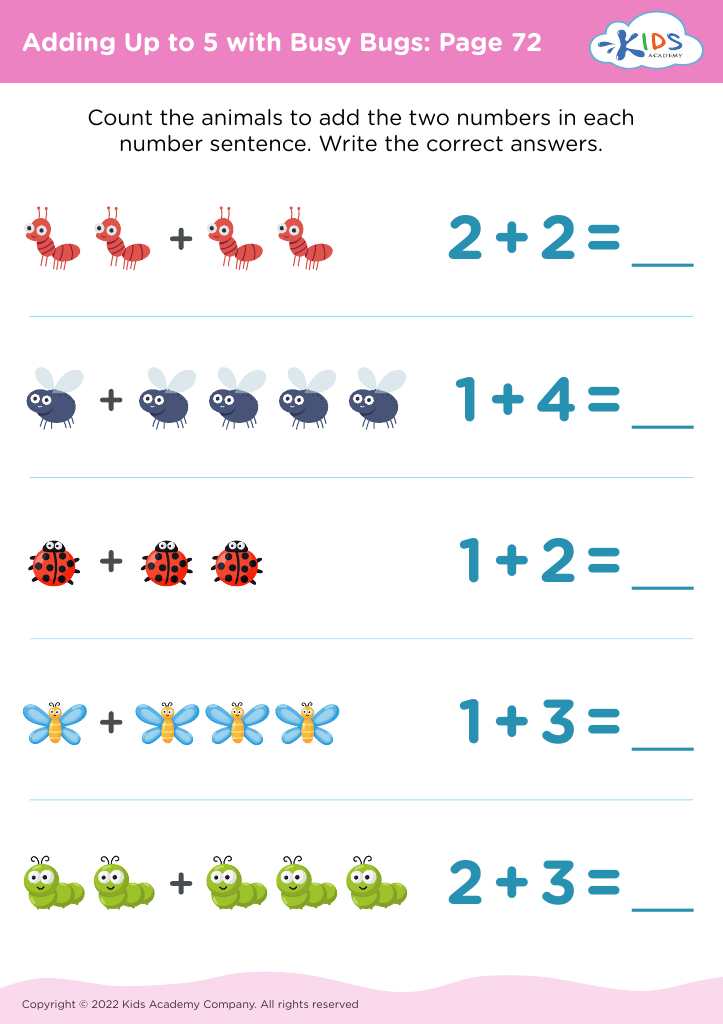
Adding Up to 5 with Busy Bugs: Page 72
Worksheet
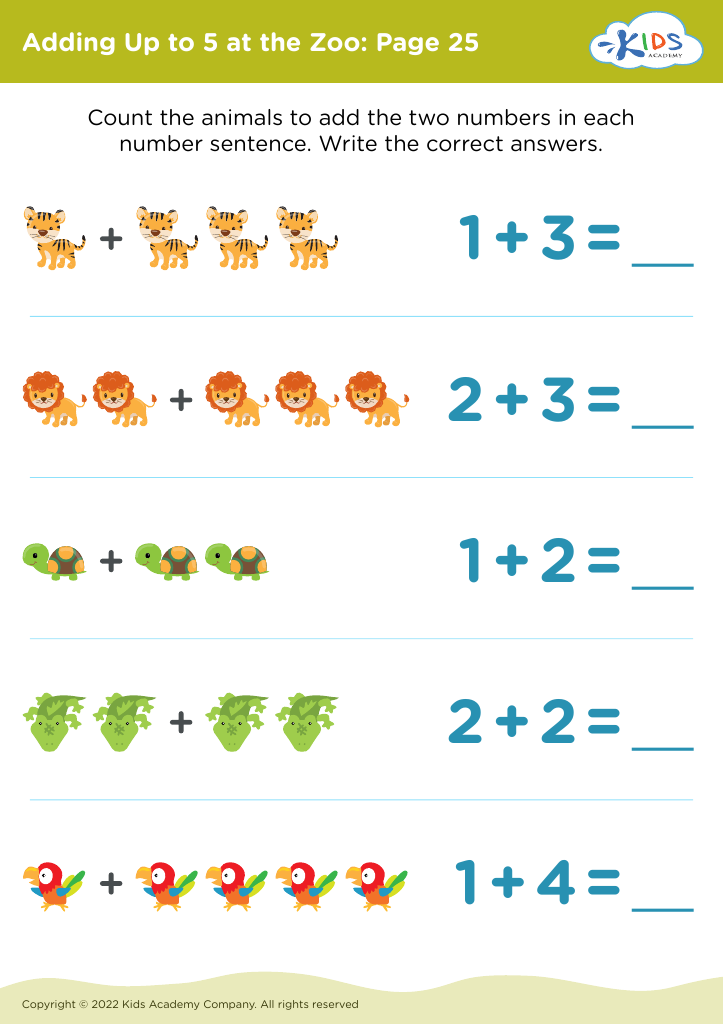
Adding Up to 5 at the Zoo: Page 25
Worksheet
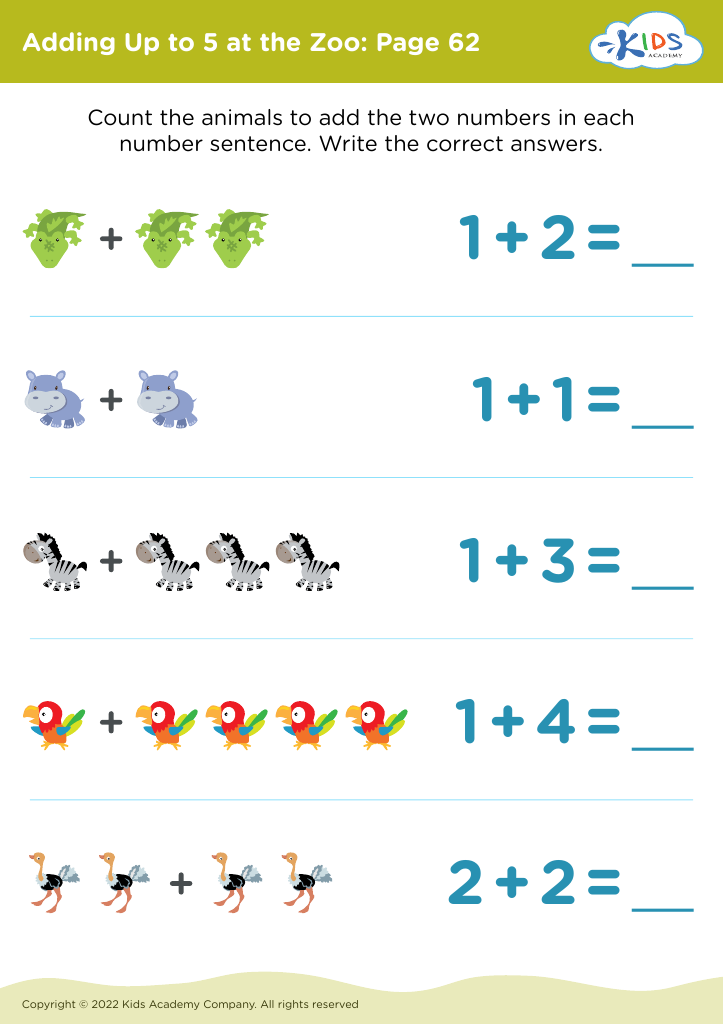
Adding Up to 5 at the Zoo: Page 62
Worksheet
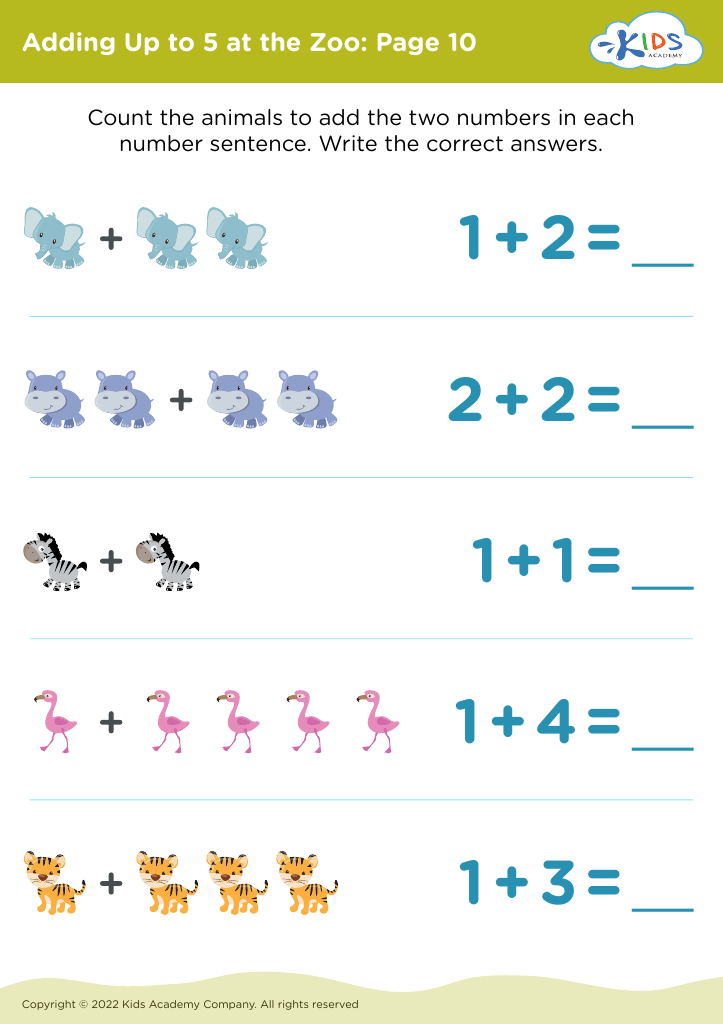
Adding Up to 5 at the Zoo: Page 10
Worksheet
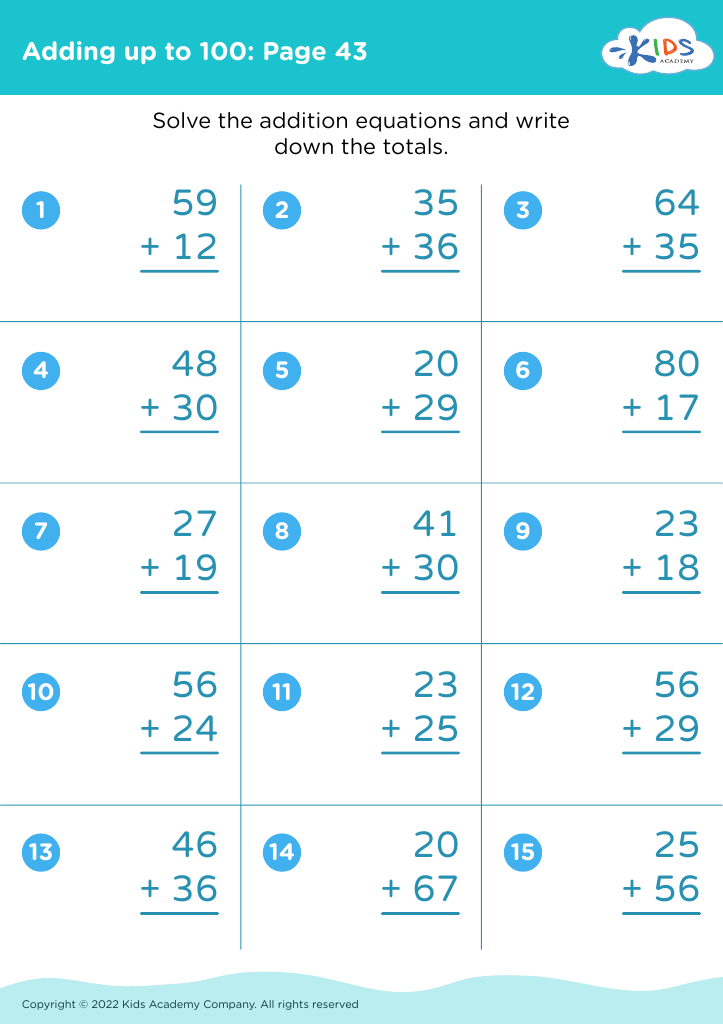
Adding up to 100: Page 43

Adding up to 100: Page 43

Adding up to 100: Page 43
Worksheet
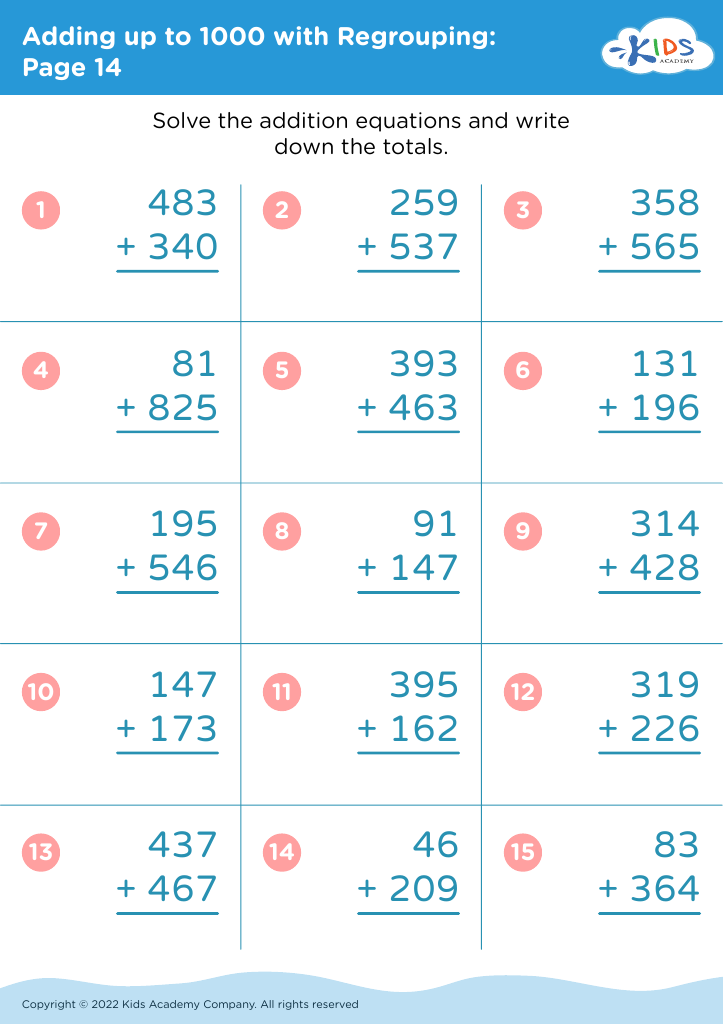
Adding up to 1000 with Regrouping: Page 14
Worksheet
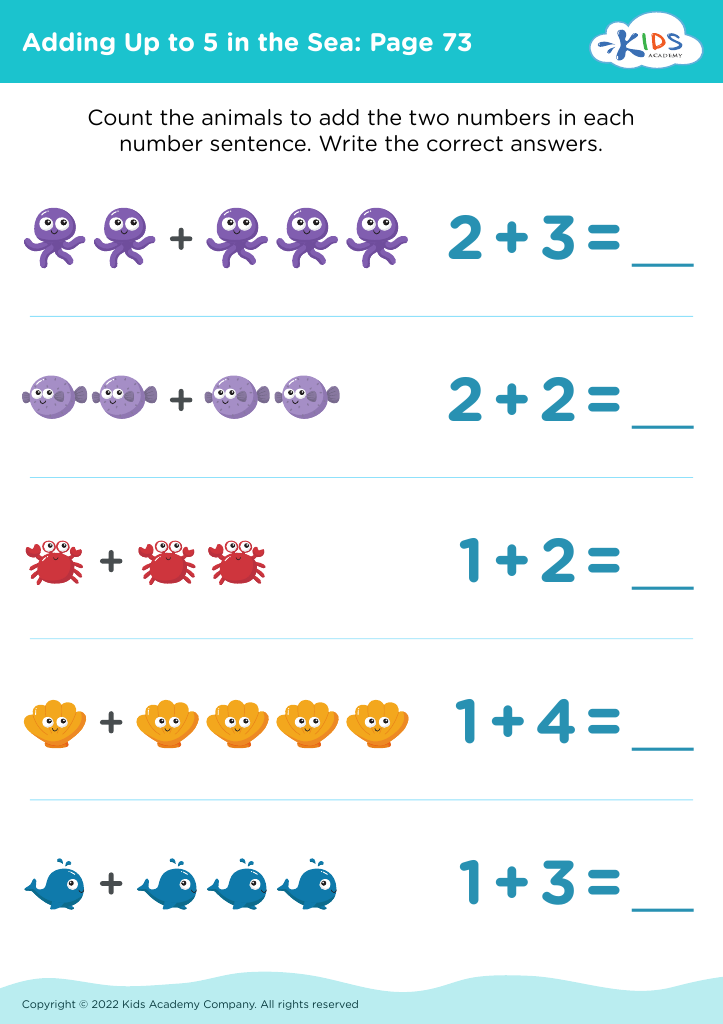
Adding Up to 5 in the Sea: Page 73
Worksheet
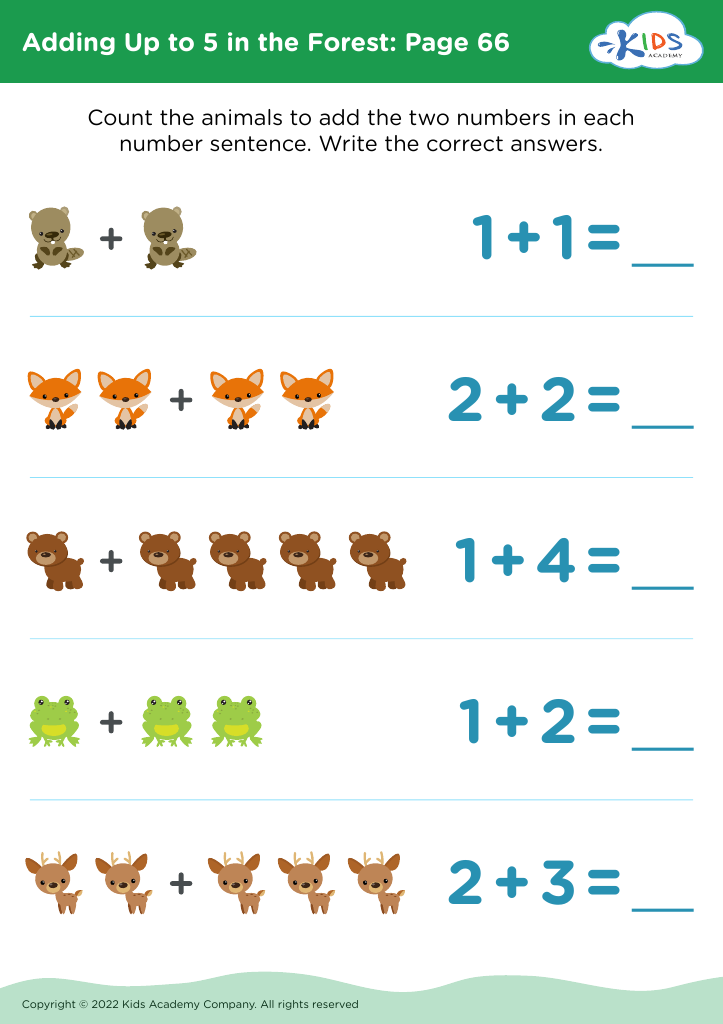
Adding Up to 5 in the Forest: Page 66
Worksheet
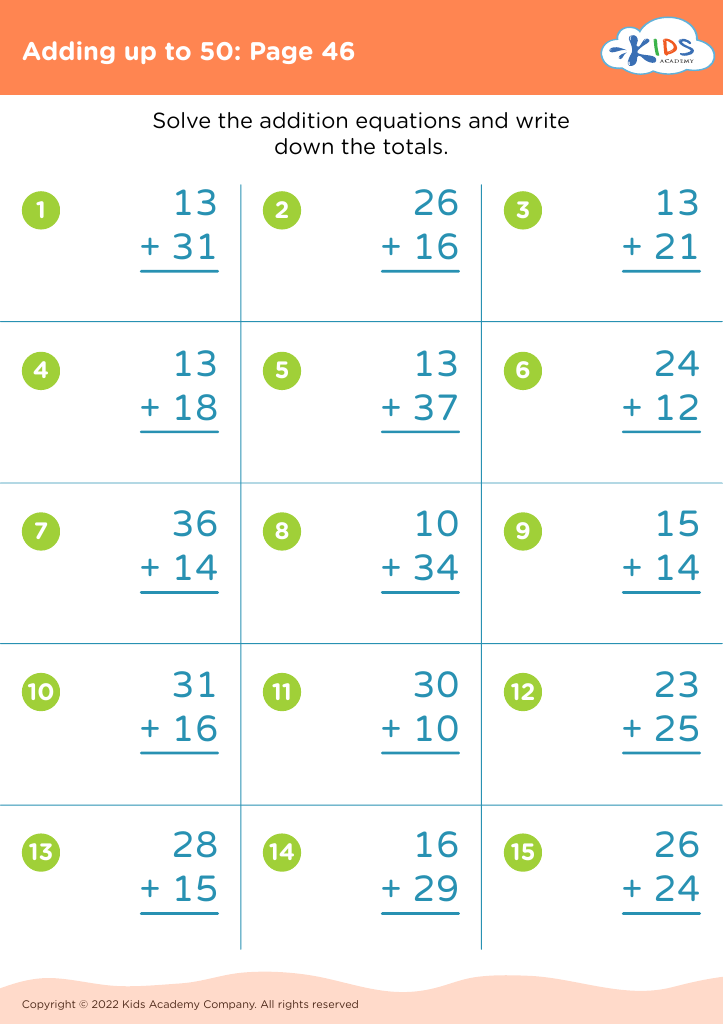
Adding up to 50: Page 46

Adding up to 50: Page 46

Adding up to 50: Page 46
Worksheet
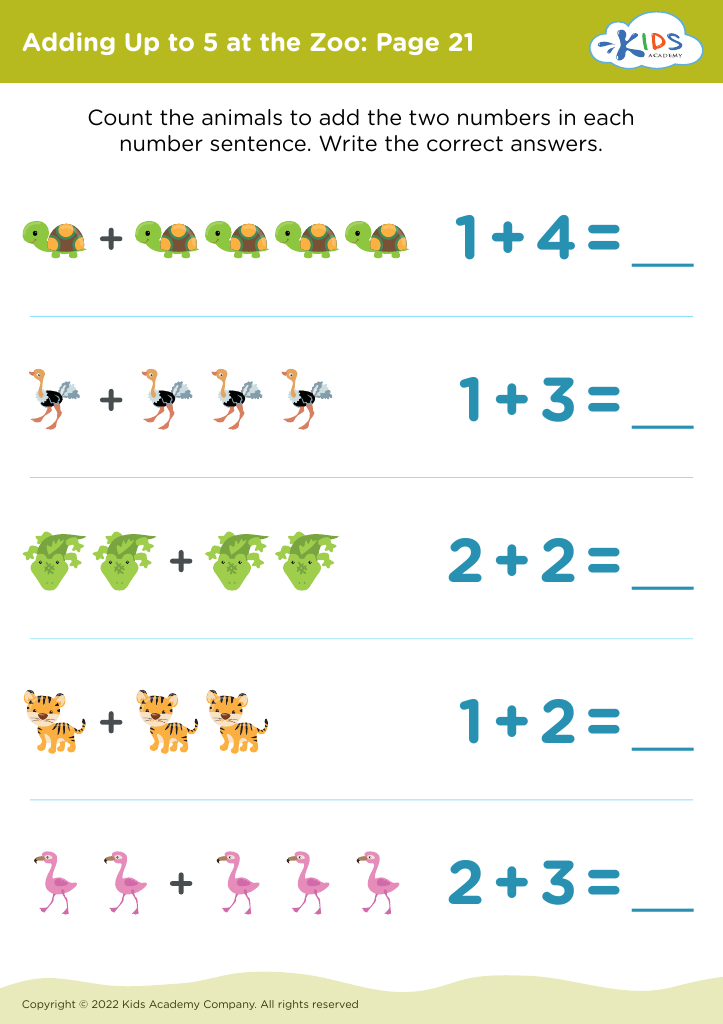
Adding Up to 5 at the Zoo: Page 21
Worksheet
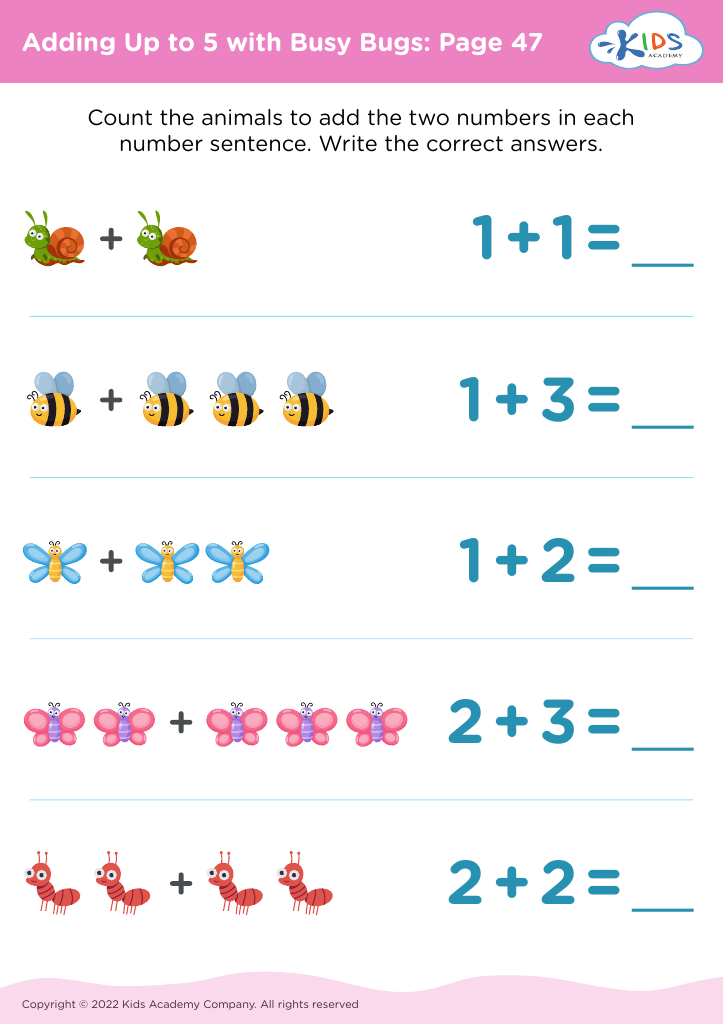
Adding Up to 5 with Busy Bugs: Page 47
Worksheet
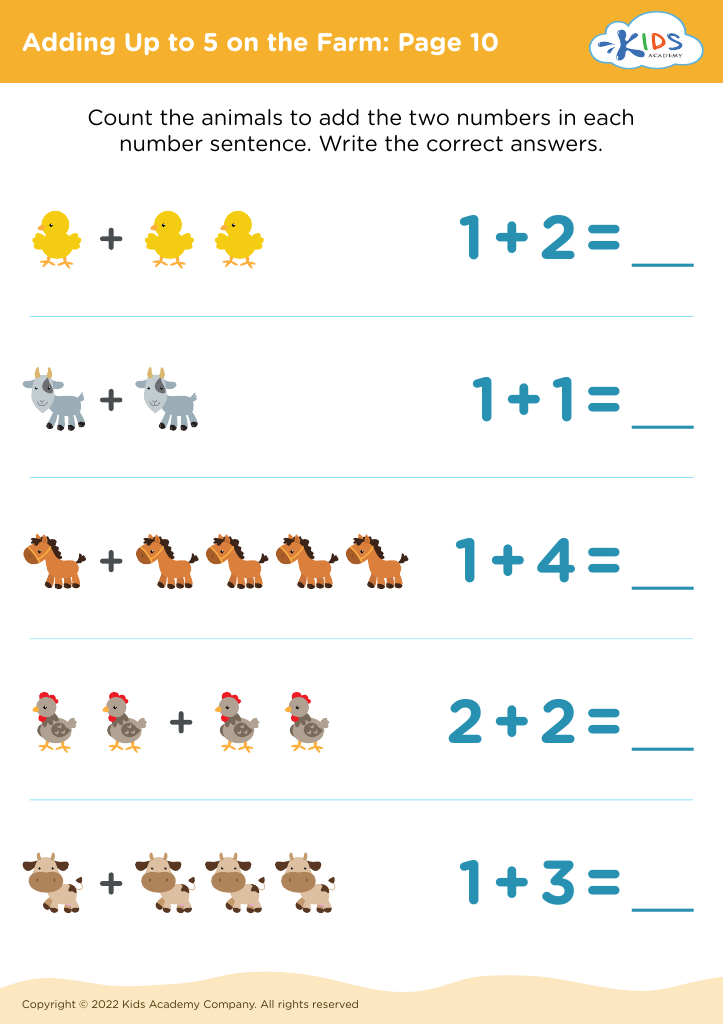
Adding Up to 5 on the Farm: Page 10
Worksheet
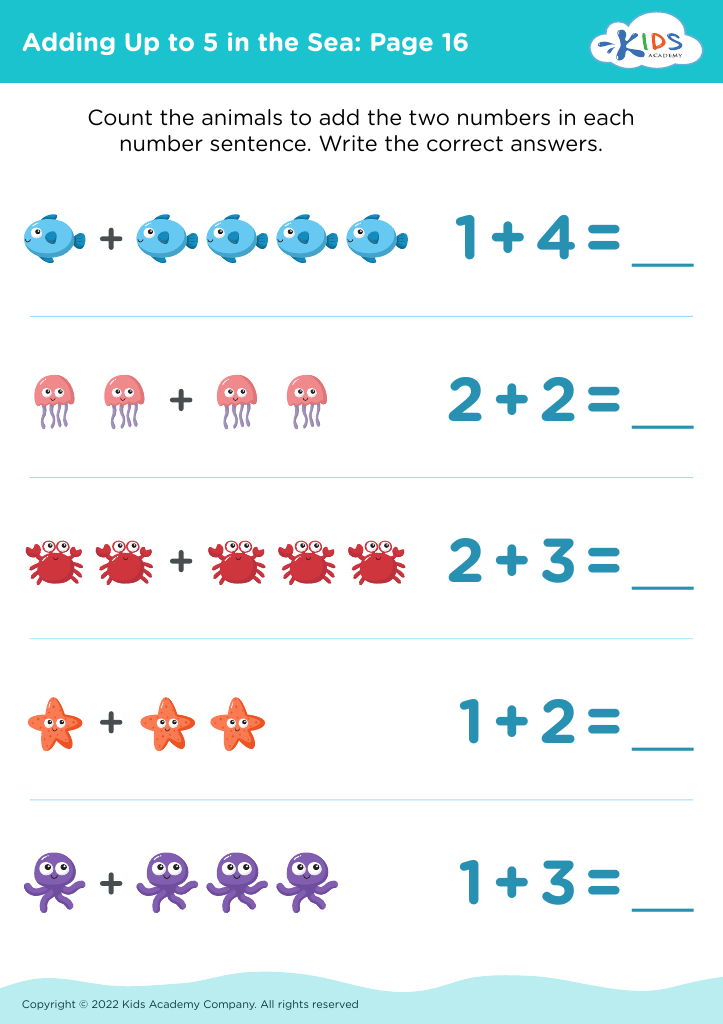
Adding Up to 5 in the Sea: Page 16
Worksheet
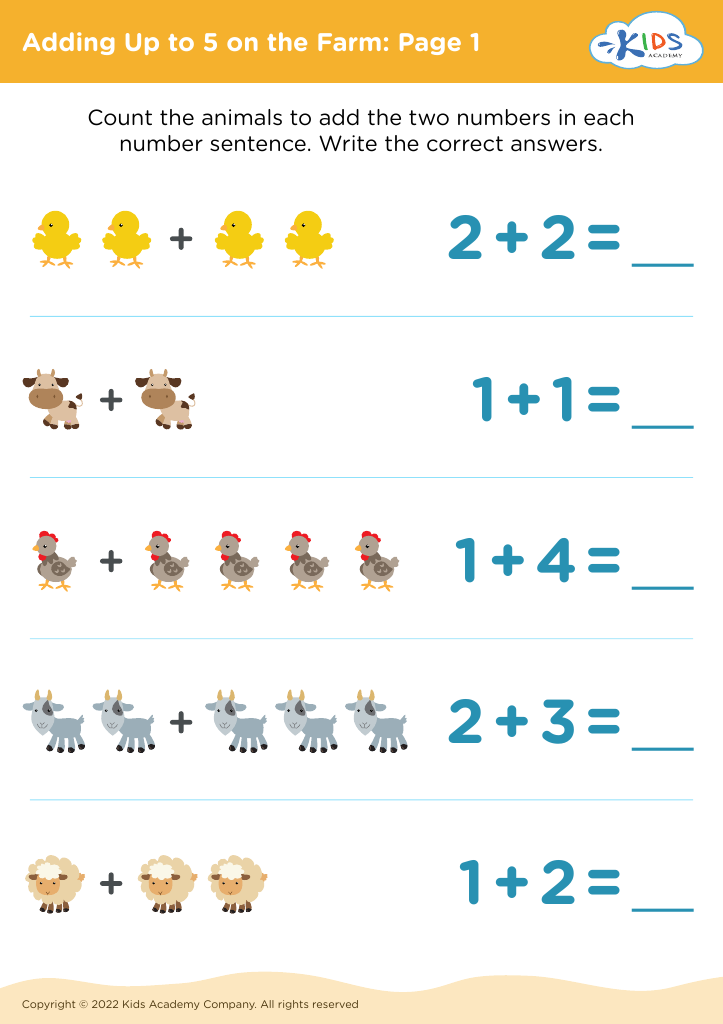
Adding Up to 5 on the Farm: Page 1
Worksheet
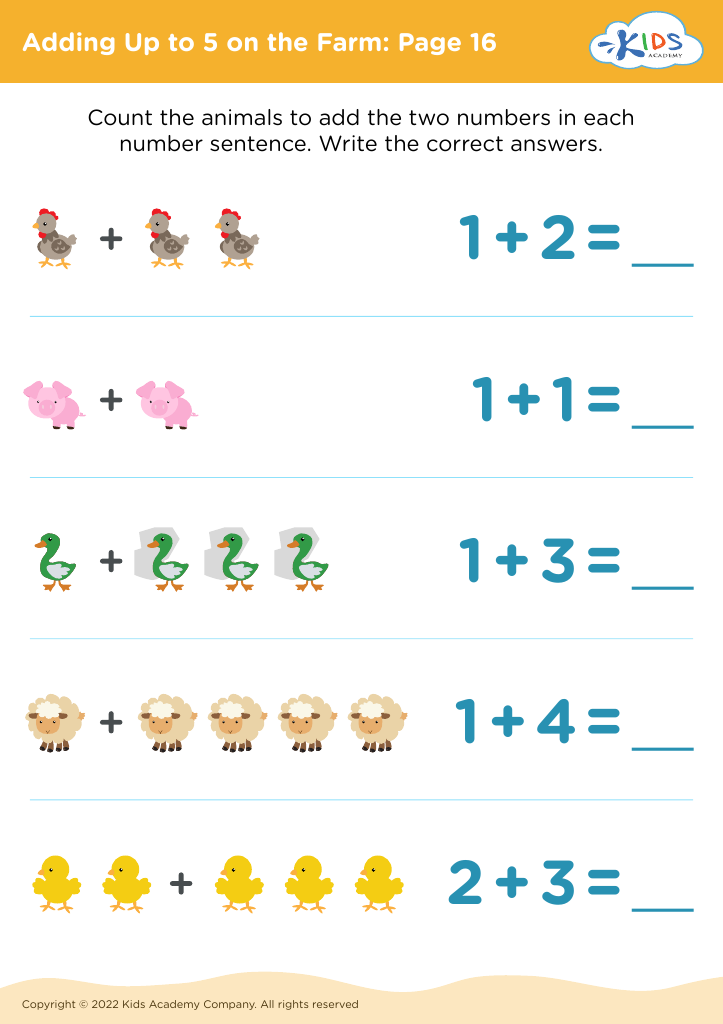
Adding Up to 5 on the Farm: Page 16
Worksheet
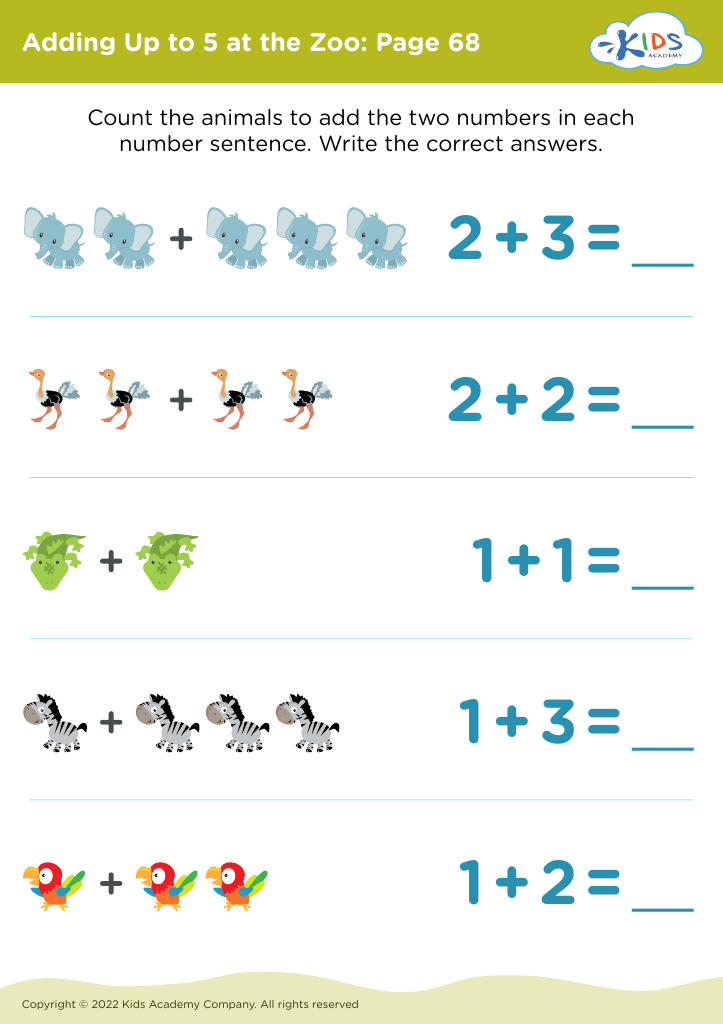
Adding Up to 5 at the Zoo: Page 68
Worksheet
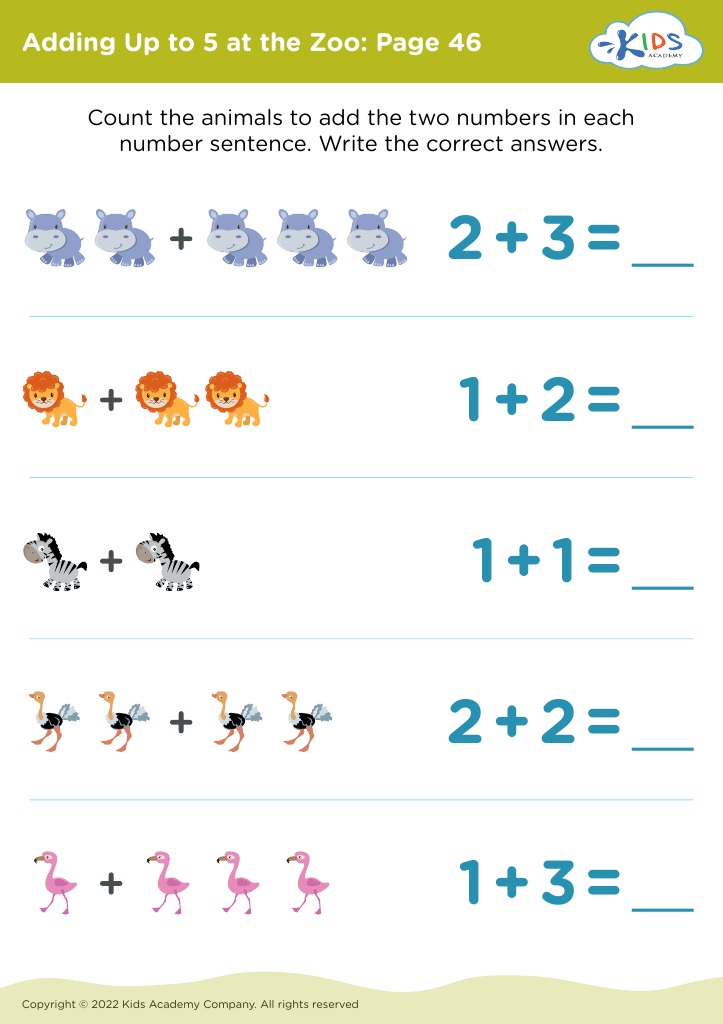
Adding Up to 5 at the Zoo: Page 46
Worksheet
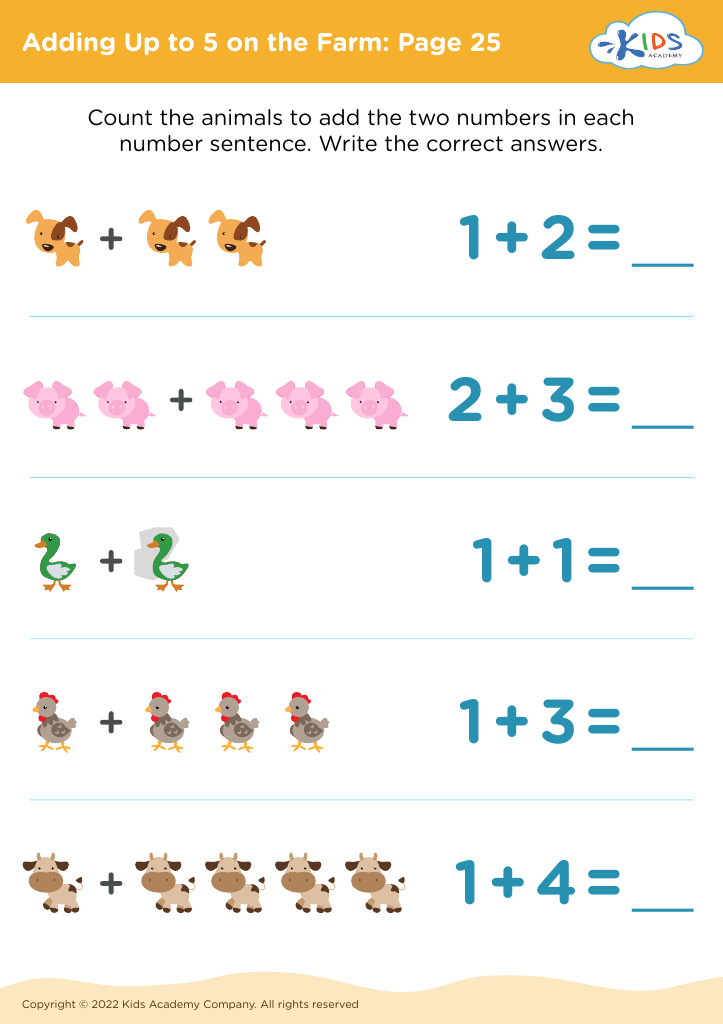
Adding Up to 5 on the Farm: Page 25
Worksheet
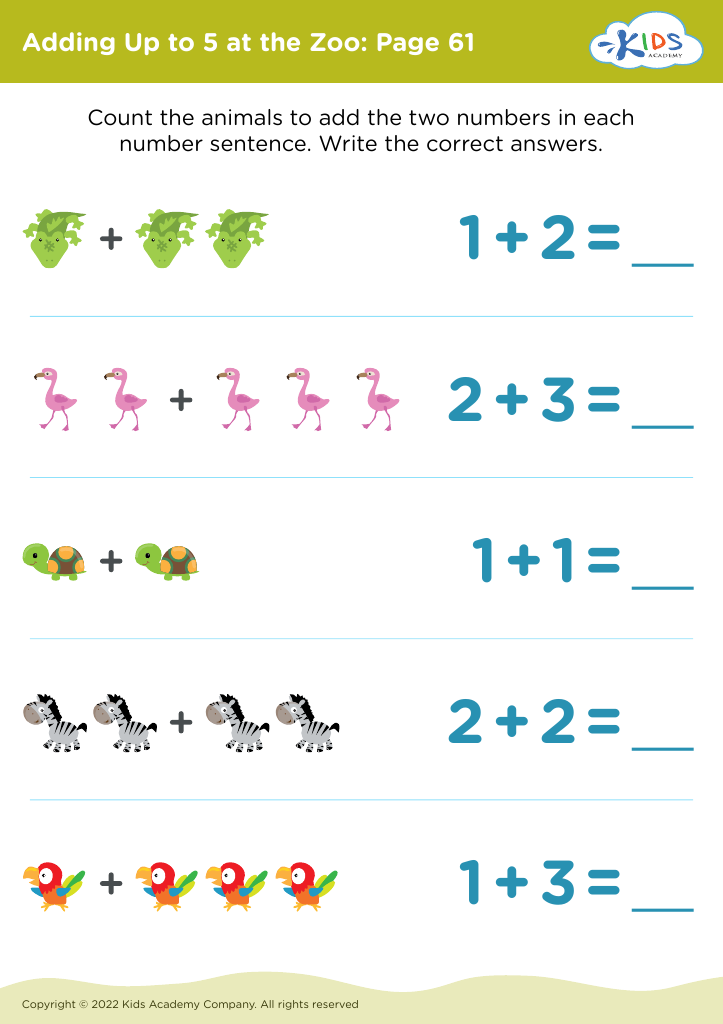
Adding Up to 5 at the Zoo: Page 61
Worksheet
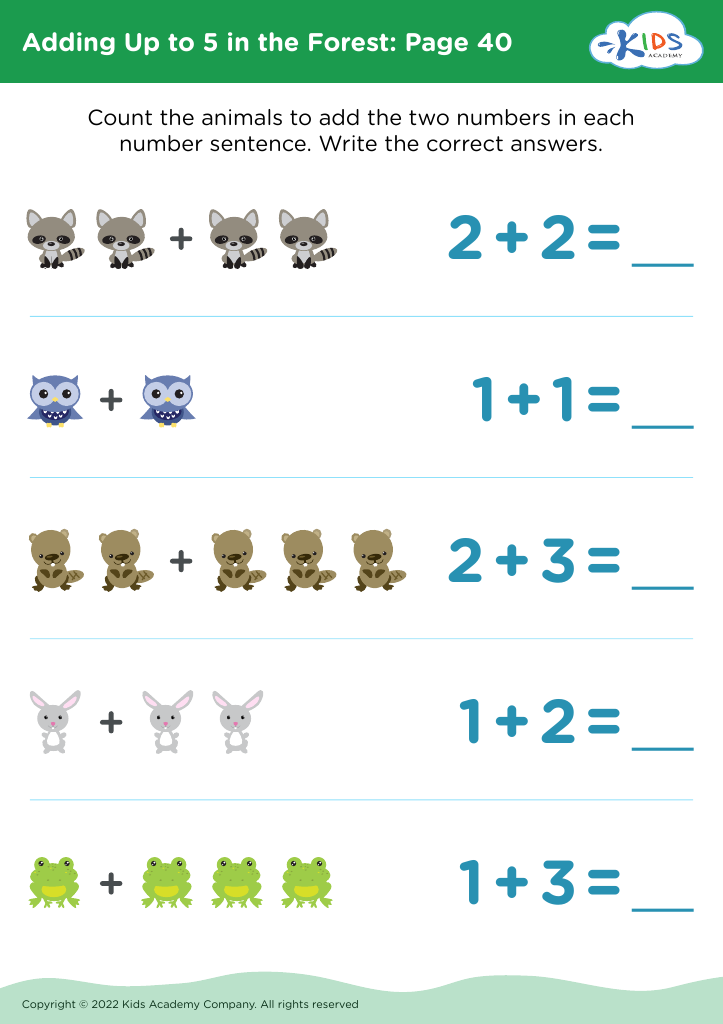
Adding Up to 5 in the Forest: Page 40
Worksheet
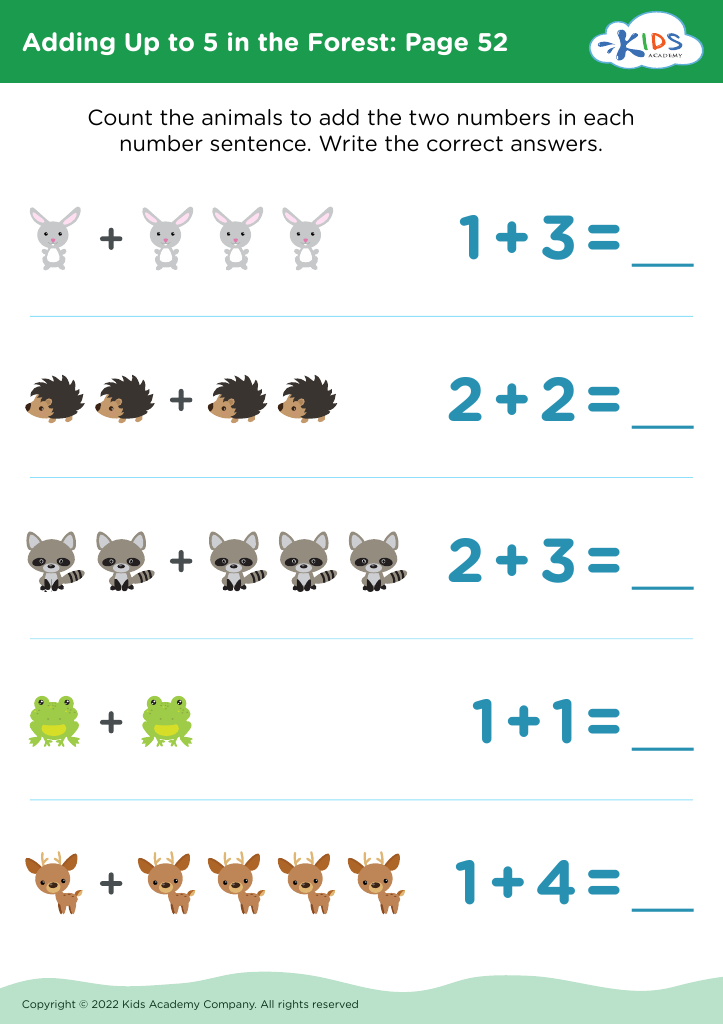
Adding Up to 5 in the Forest: Page 52
Worksheet
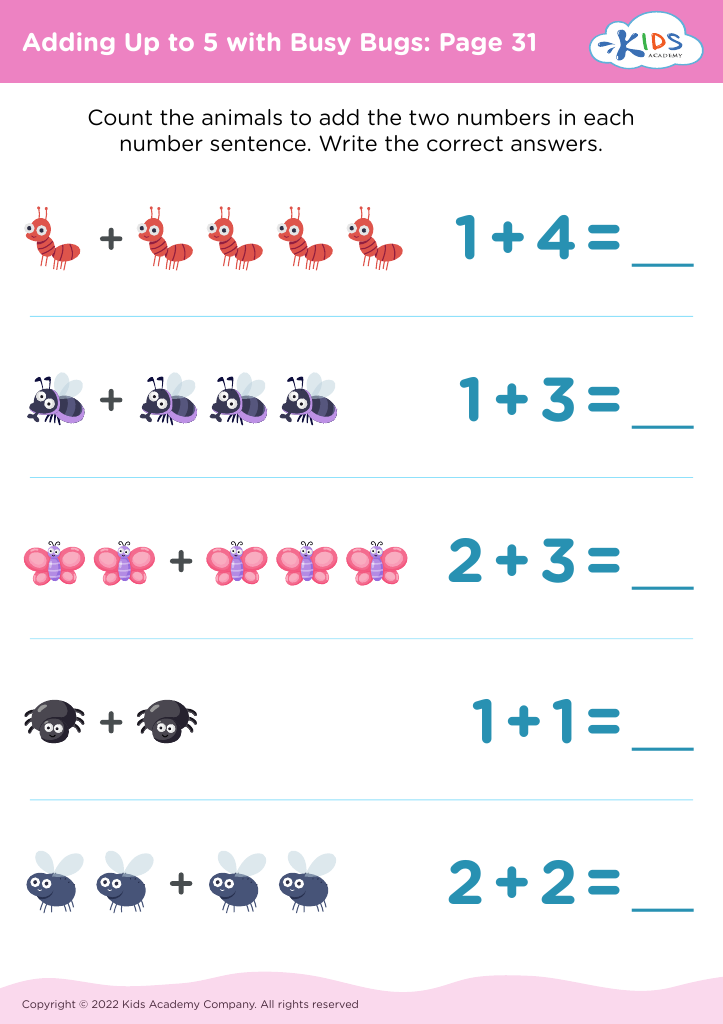
Adding Up to 5 with Busy Bugs: Page 31
Worksheet
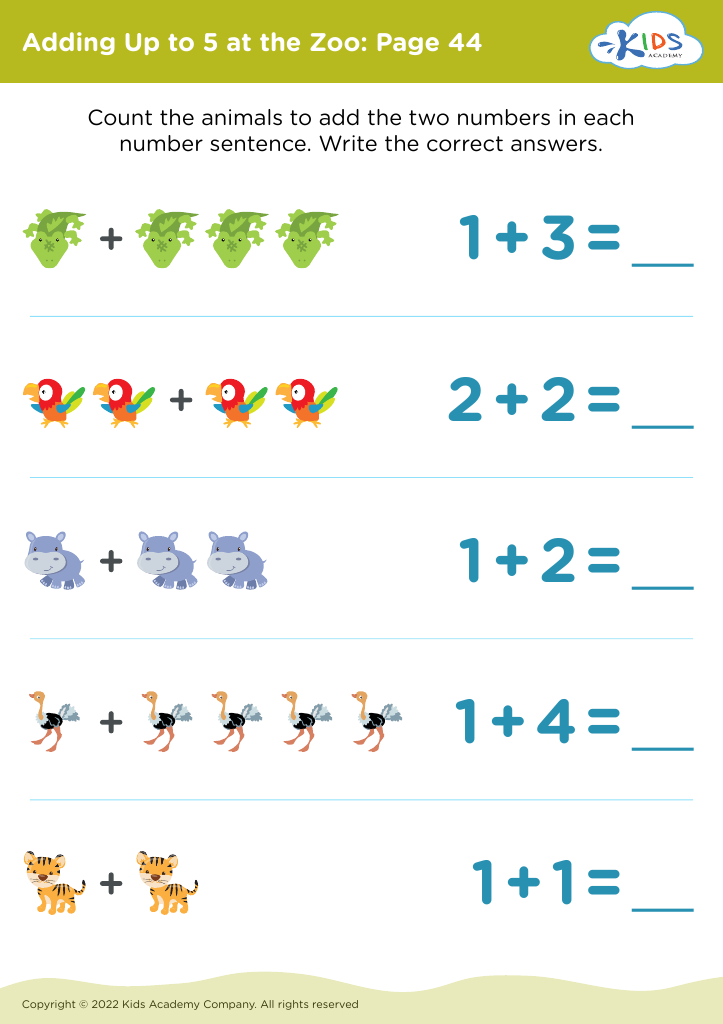
Adding Up to 5 at the Zoo: Page 44
Worksheet


Counting practice and basic addition for children aged 5-9 is foundational for several key reasons. Firstly, early numerical skills are strongly linked to later success in mathematics. When young learners practice counting and simple addition, they build a strong base that facilitates their understanding of more complicated mathematical concepts.

Counting helps children develop number sense, an essential cognitive skill that allows them to understand numbers, their values, and how they relate to one another. These skills are crucial for everyday activities, such as telling time, handling money, and performing measurements. Additionally, engaging in counting practice and addition problems enhances memory and attention to detail, fostering better concentration and persistence.

For parents and teachers, investing time in these practices equips children with problem-solving and critical-thinking skills. As children grasp fundamental math concepts early, they develop greater confidence in their academic abilities, promoting a positive attitude towards learning. This enthusiasm often transfers to other subjects as well.

Moreover, developing these skills through games, songs, and interactive activities can make learning enjoyable, which further reinforces positive educational outcomes. Supportive and consistent practice not only enhances academic performance but also nurtures a child's overall cognitive and emotional development, setting them on a successful educational journey.