Develop analytical thinking Addition Worksheets for Ages 5-9
3 filtered results
-
From - To
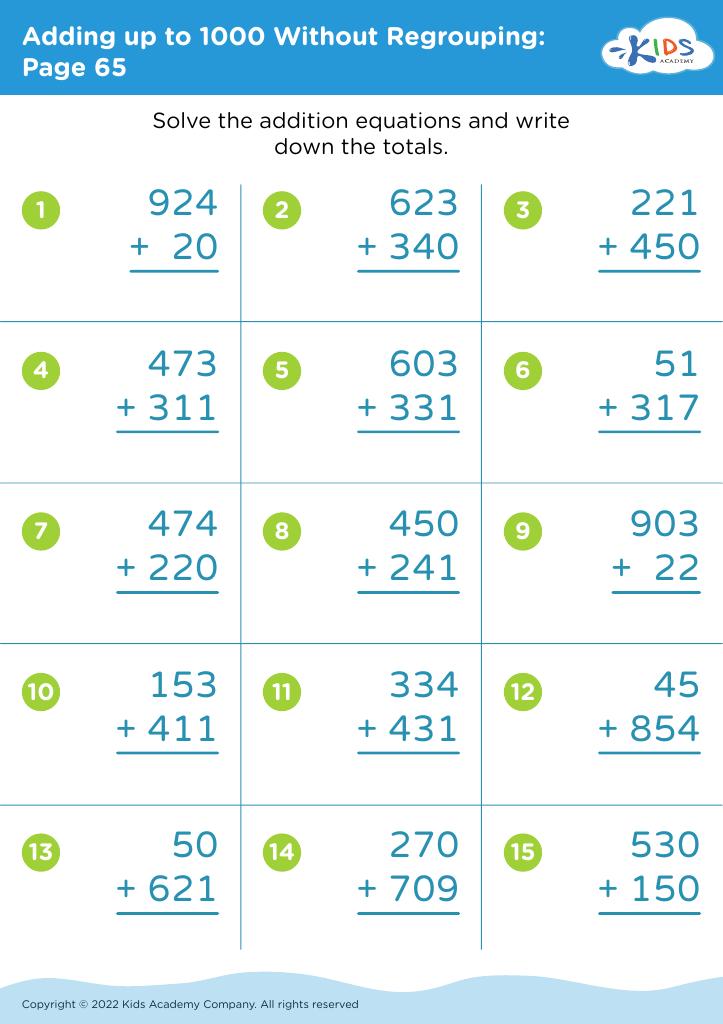
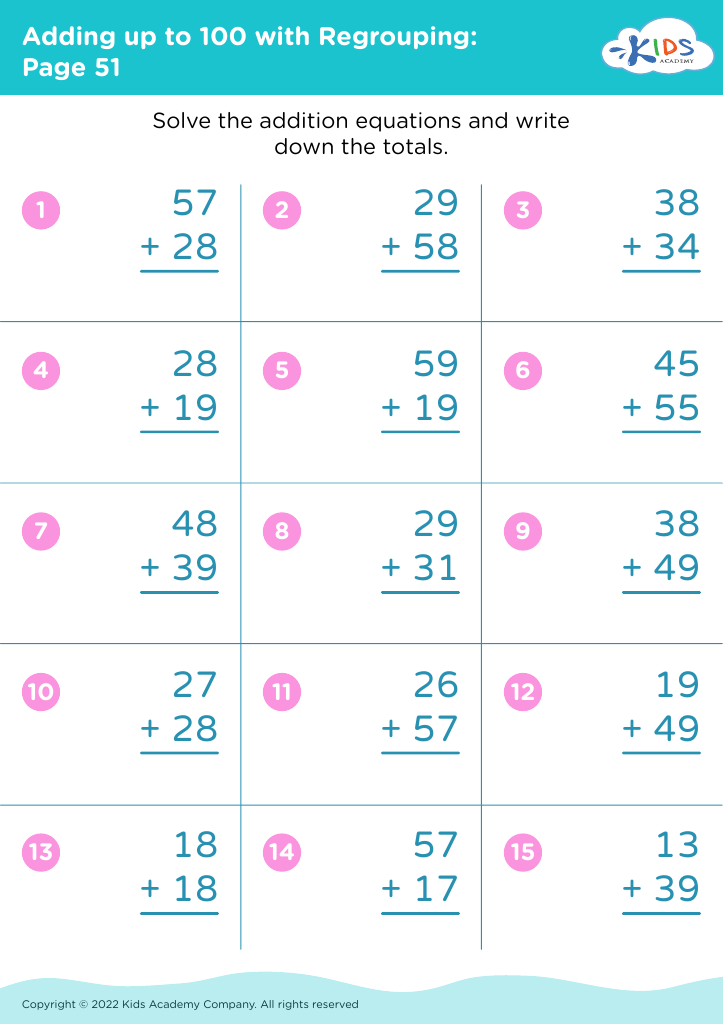
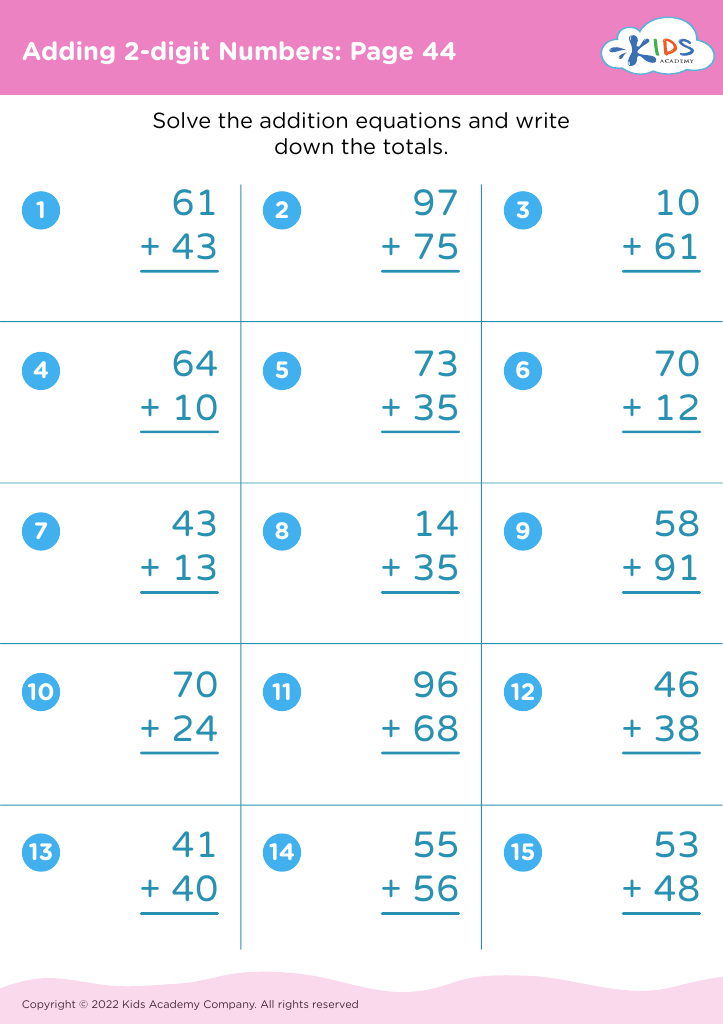
Unlock your child's potential with our engaging "Develop Analytical Thinking Addition Worksheets" for ages 5 to 9. Designed to enhance critical problem-solving skills, these worksheets blend addition practice with fun puzzles and challenging scenarios. Kids will navigate through interesting problems that encourage them to think critically and analytically as they solve math-related tasks. With colorful illustrations and age-appropriate content, these worksheets captivate young learners while reinforcing essential math skills. Perfect for home or classroom use, our materials ensure a delightful learning experience, equipping children with the tools they need for success in math and beyond. Discover the joy of learning today!








Developing analytical thinking skills in young children, specifically in the context of addition for ages 5-9, is essential for their overall cognitive development and future success in mathematics and other subjects. Analytical thinking involves problem-solving, reasoning, and understanding relationships between concepts. By honing these skills early on, children learn to approach problems systematically, breaking them down into manageable parts and identifying patterns.
Additionally, enhancing analytical thinking through addition builds a solid foundation for more complex mathematical concepts. It encourages children to grasp the 'why' behind mathematical operations, not just the 'how.' This deeper understanding fosters confidence and resilience when facing challenging tasks in the future.
Moreover, in today’s world, competencies such as critical thinking and creativity are highly sought after. Engaging children in activities that promote analytical thinking, like using manipulatives or playful reasoning tasks, lays groundwork not just for math, but for literacy and scientific inquiry as well. Parents and teachers play a crucial role in guiding children’s exploration of numbers and equations, ensuring they develop crucial skills that will aid them throughout their education and everyday life. Investments in these early analytical skills will ultimately benefit not only children's academic journeys but their decision-making processes as adults.








