Fine motor skills (writing) Addition Worksheets for Ages 5-9 - Page 2
38 filtered results
-
From - To
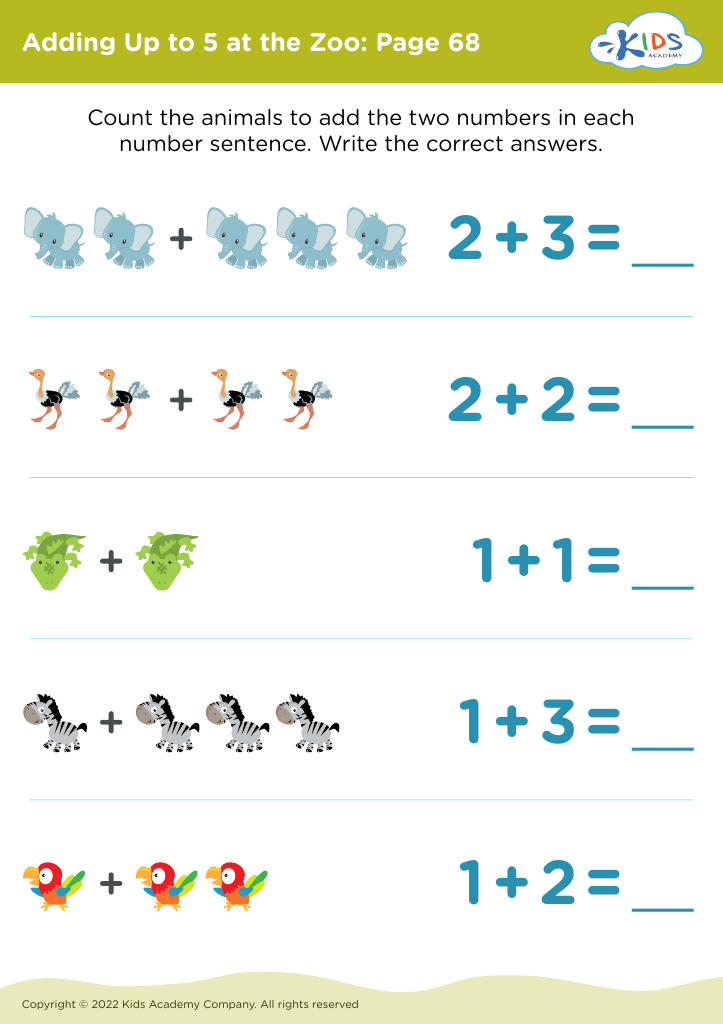
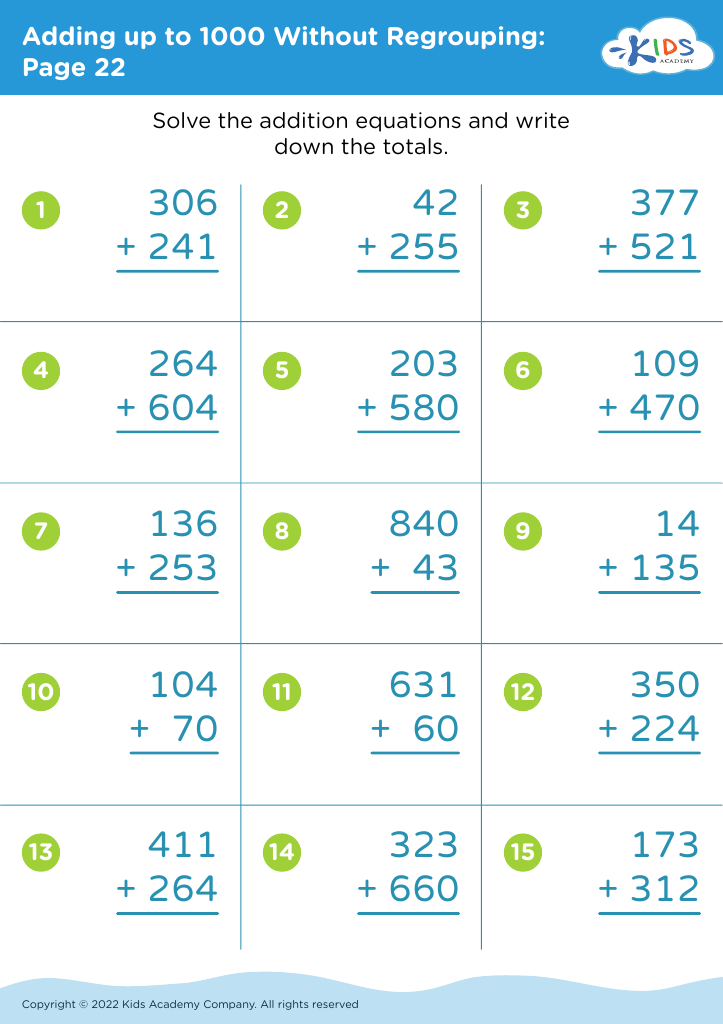
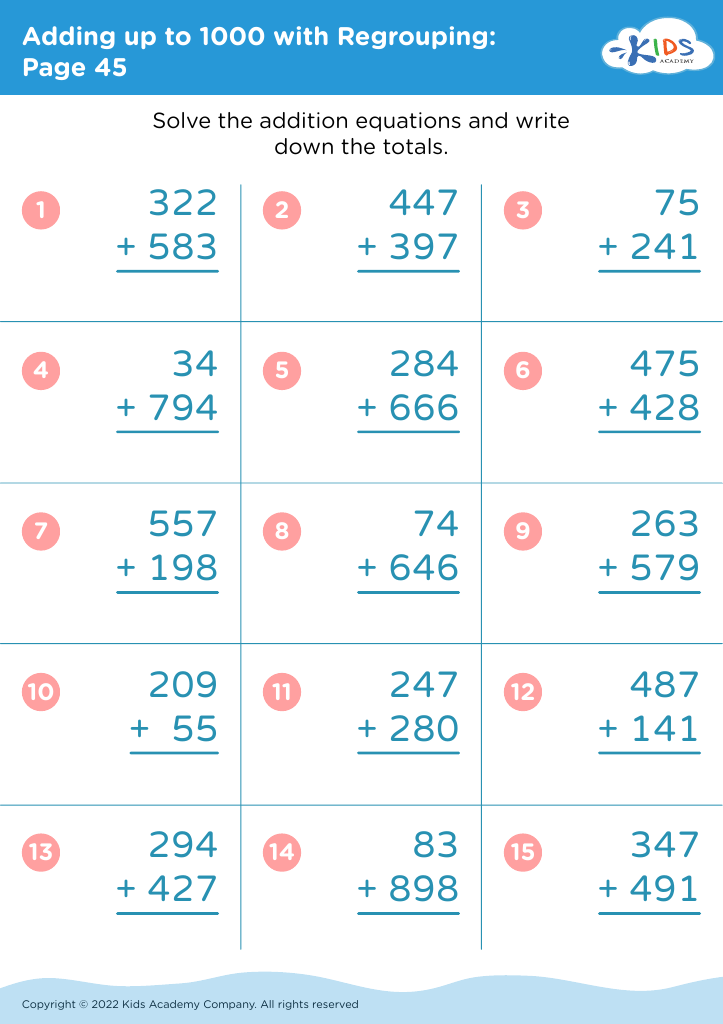
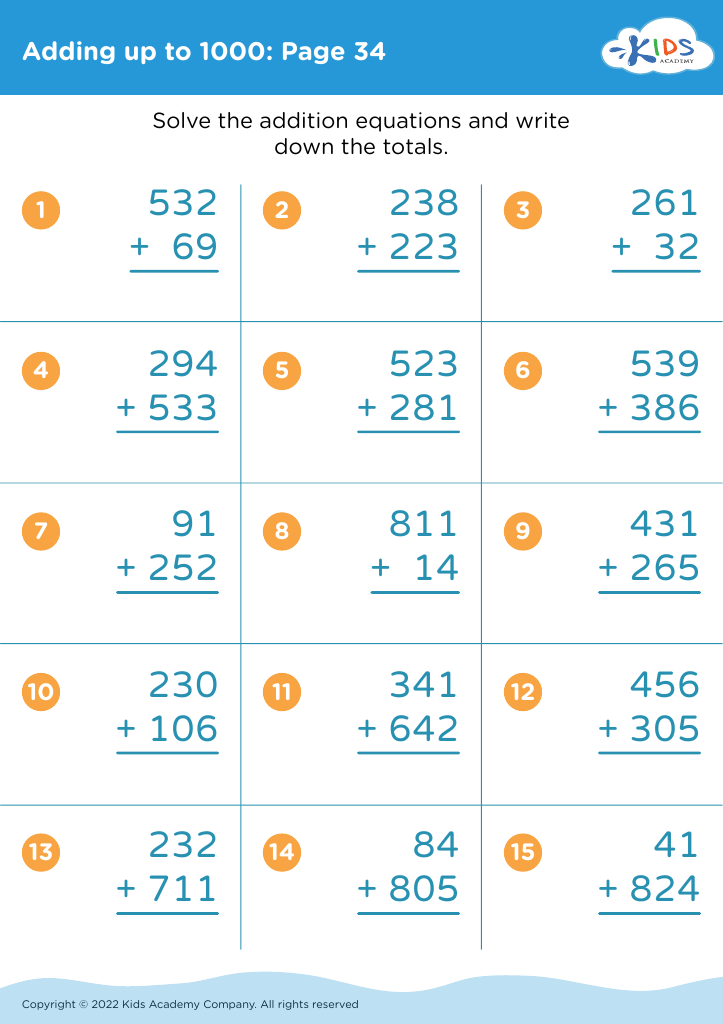
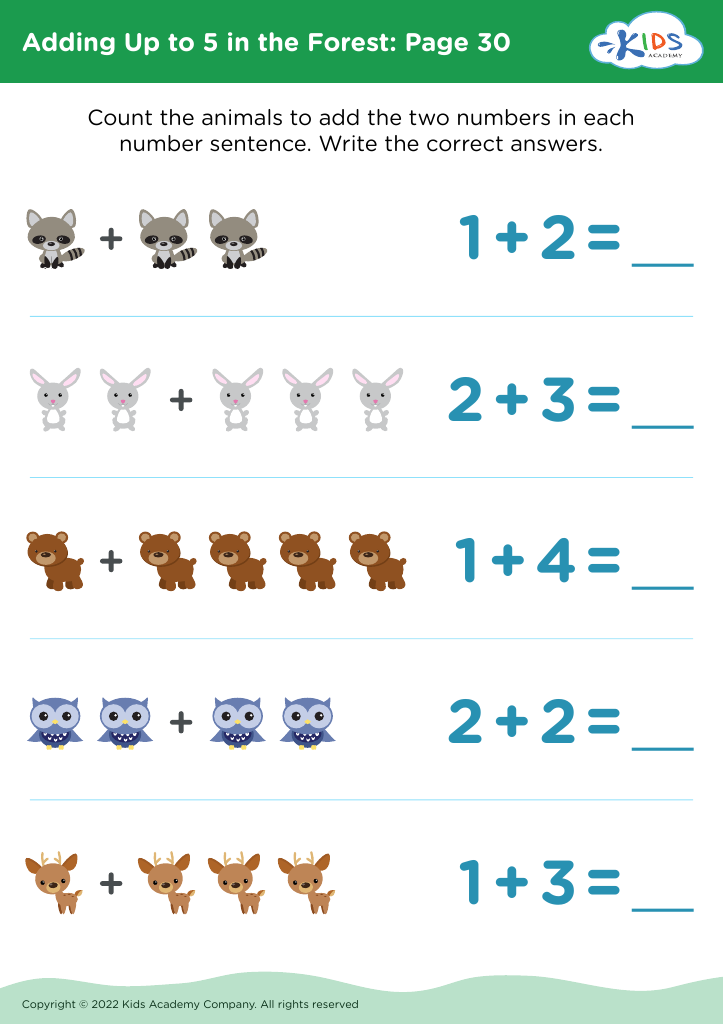
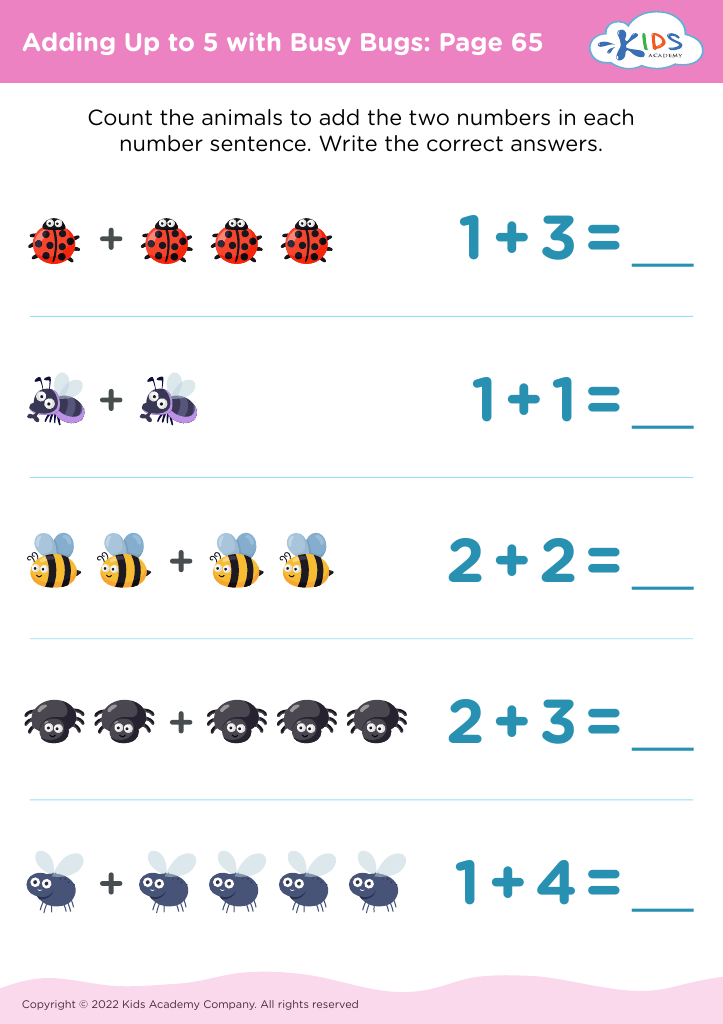








Fine motor skills, particularly those involved in writing, are crucial for children aged 5-9, and both parents and teachers should prioritize their development. During these formative years, children learn to control the small muscles in their hands and fingers, which is not only essential for writing but also for daily tasks such as buttoning a shirt or tying shoelaces.
Improving fine motor skills enhances a child’s writing ability, leading to better accuracy, speed, and legibility. This represents one of the fundamental building blocks of their academic journey, making it easier for them to complete assignments, communicate their ideas on paper, and engage fully in classroom activities. Moreover, the act of writing stimulates brain development, improving cognitive function, memory retention, and coordination.
Beyond academic achievements, strong fine motor skills boost a child’s confidence and independence. As they gain more control over their movements, they become more willing to tackle challenging tasks, contributing to emotional and social development.
Given the multifaceted benefits, parents and teachers should incorporate activities like drawing, tracing, and coloring, which enhance fine motor abilities. Through playful yet purposeful practice, children will gain these essential skills, setting a strong foundation for their educational and personal growth.








