Fraction Addition Addition Worksheets for Ages 5-9
14 filtered results
-
From - To
Discover engaging Fraction Addition Worksheets tailored for children ages 5-9! These fun and educational printables make mastering fraction addition easy and enjoyable. Packed with vibrant illustrations and step-by-step exercises, our worksheets promote critical thinking and mathematical confidence. Ideal for both classroom and at-home learning, they align with educational standards to support your child's growth. Incorporate these worksheets into your child's routine to enhance their fractions skills, build a solid math foundation, and ensure a positive learning experience. Visit Kids Academy for these and more high-quality educational resources today!
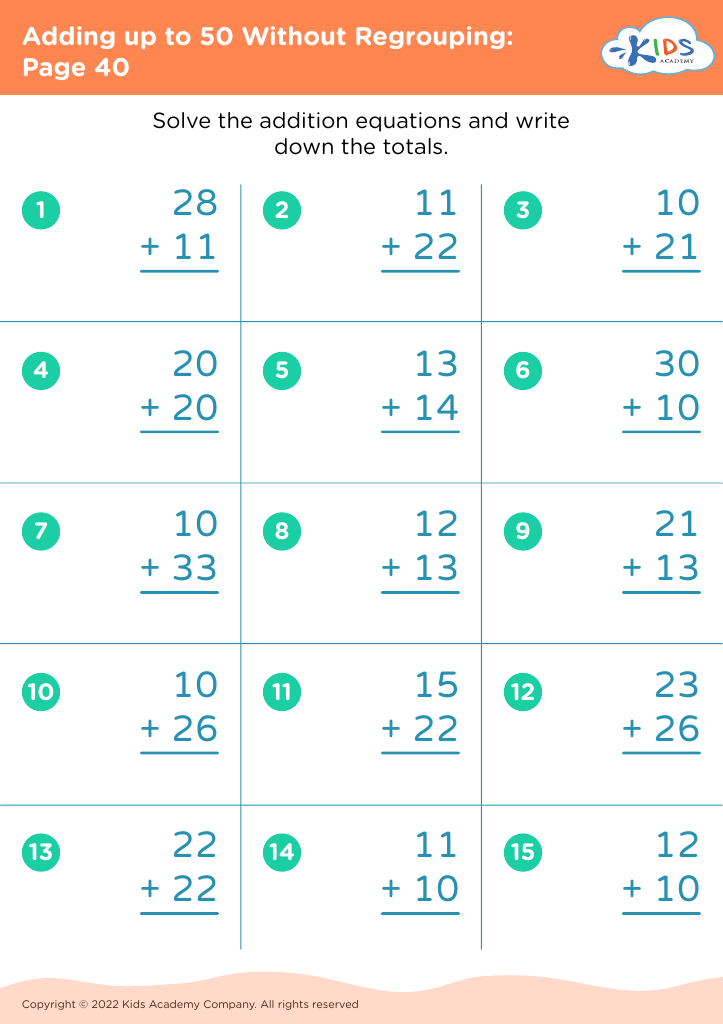
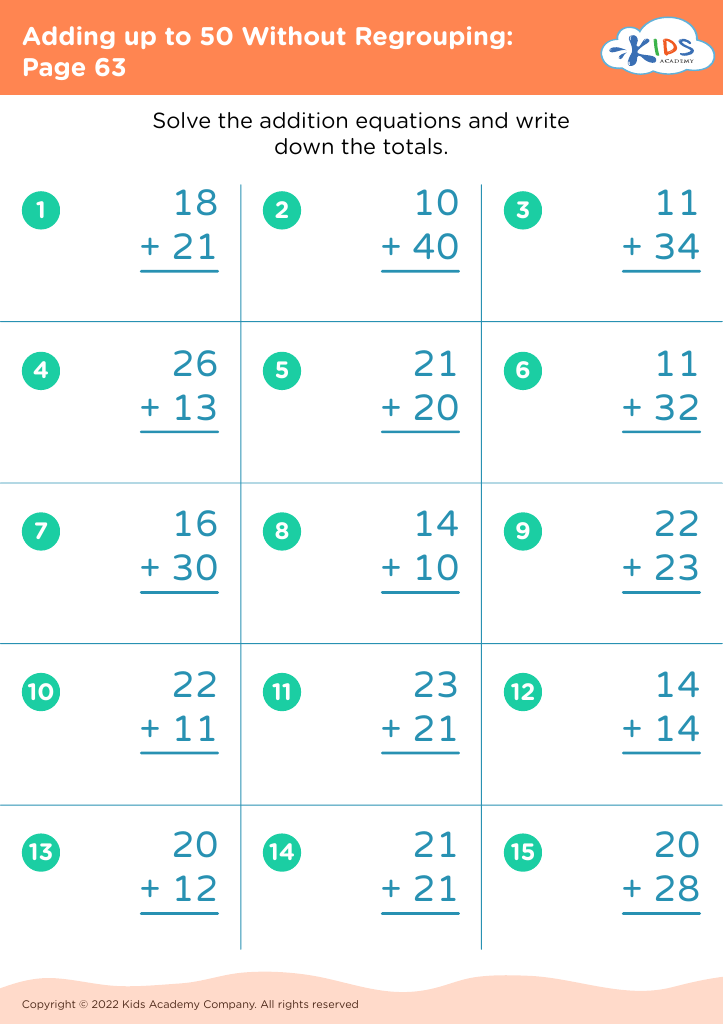
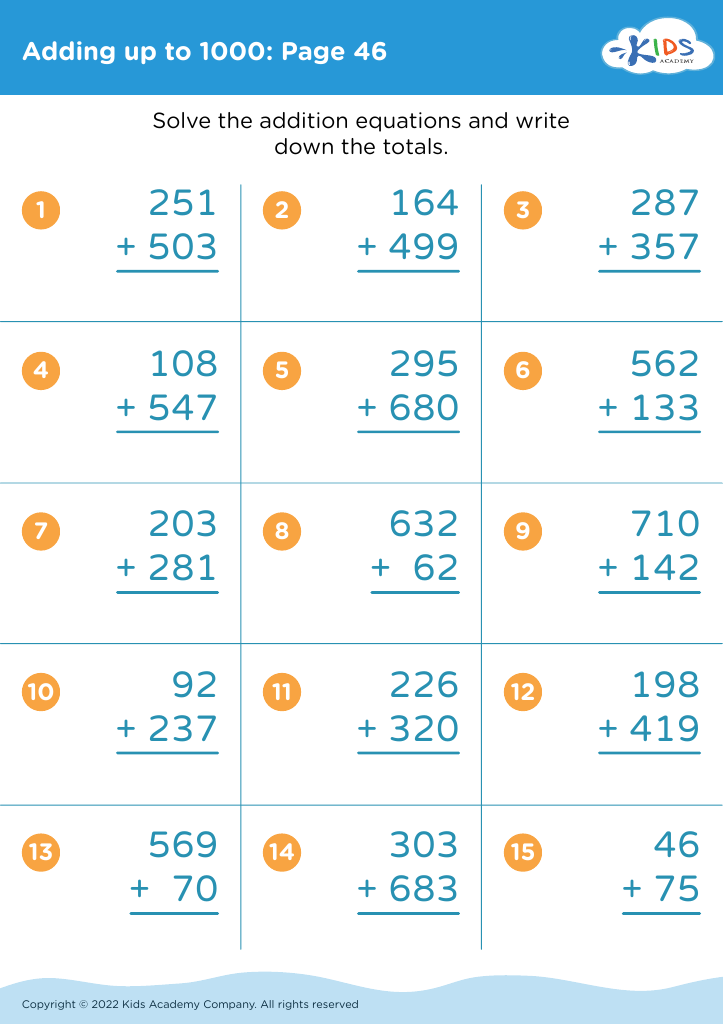
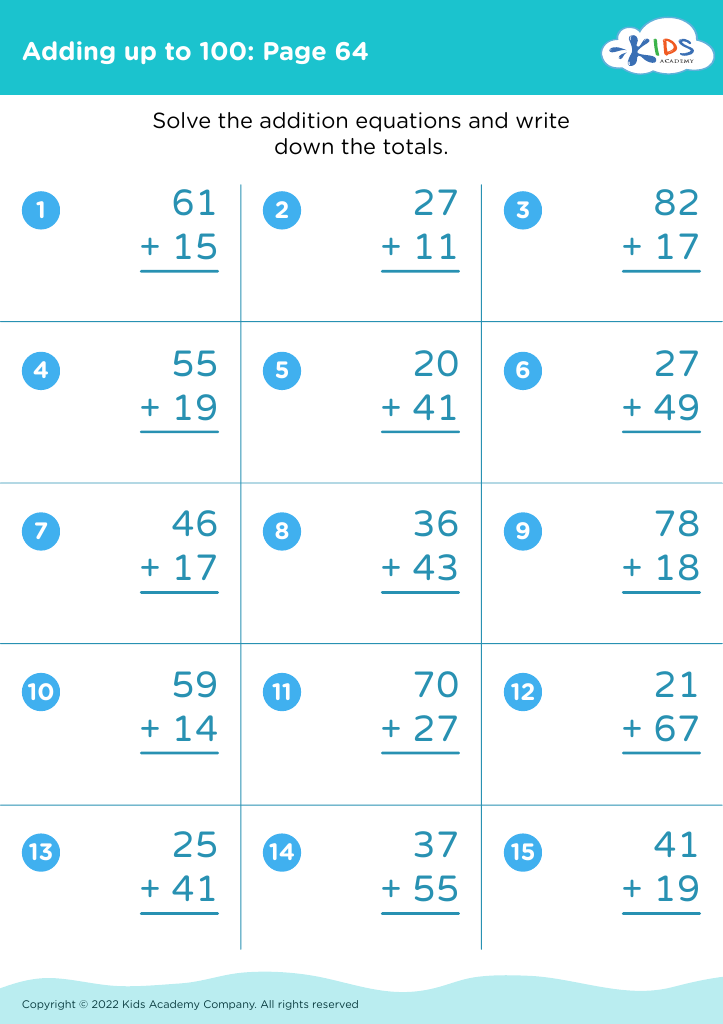
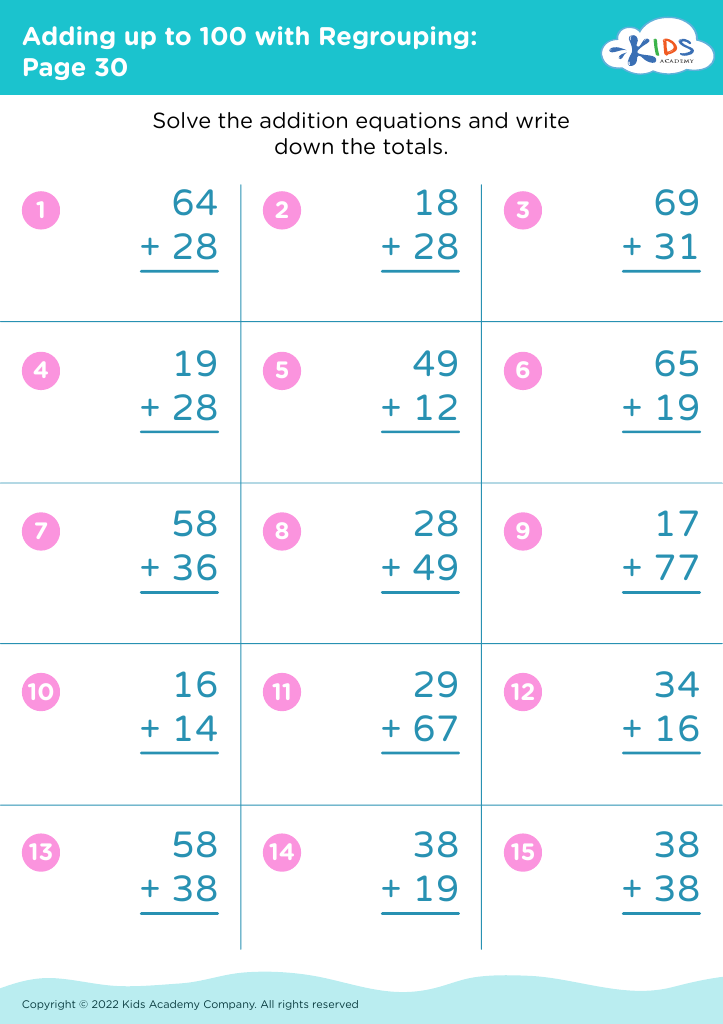
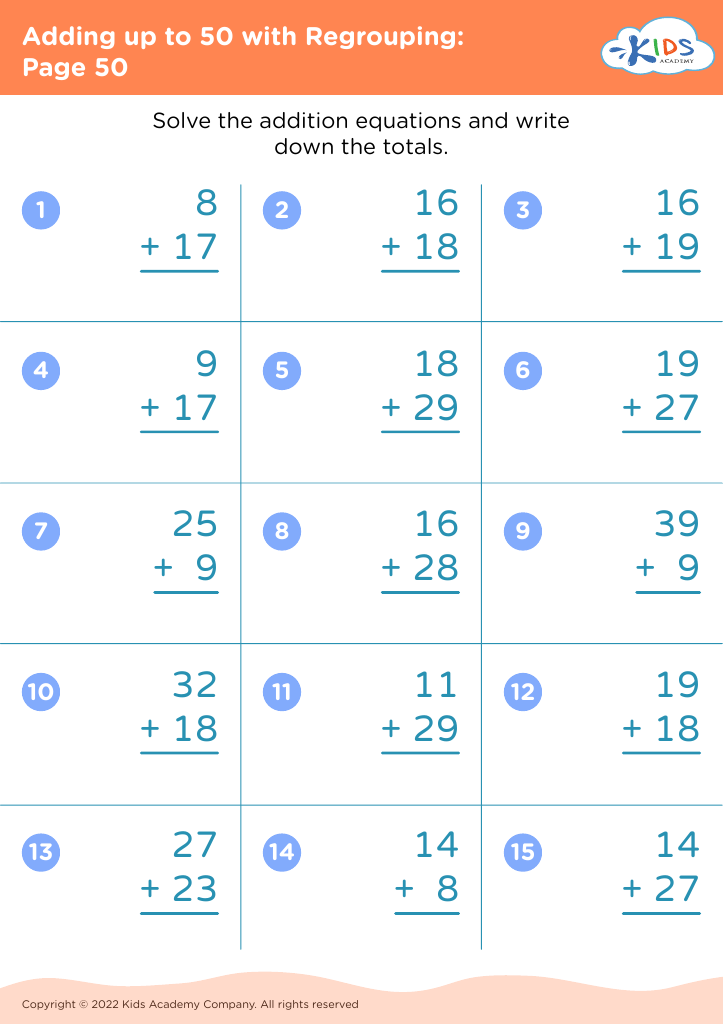
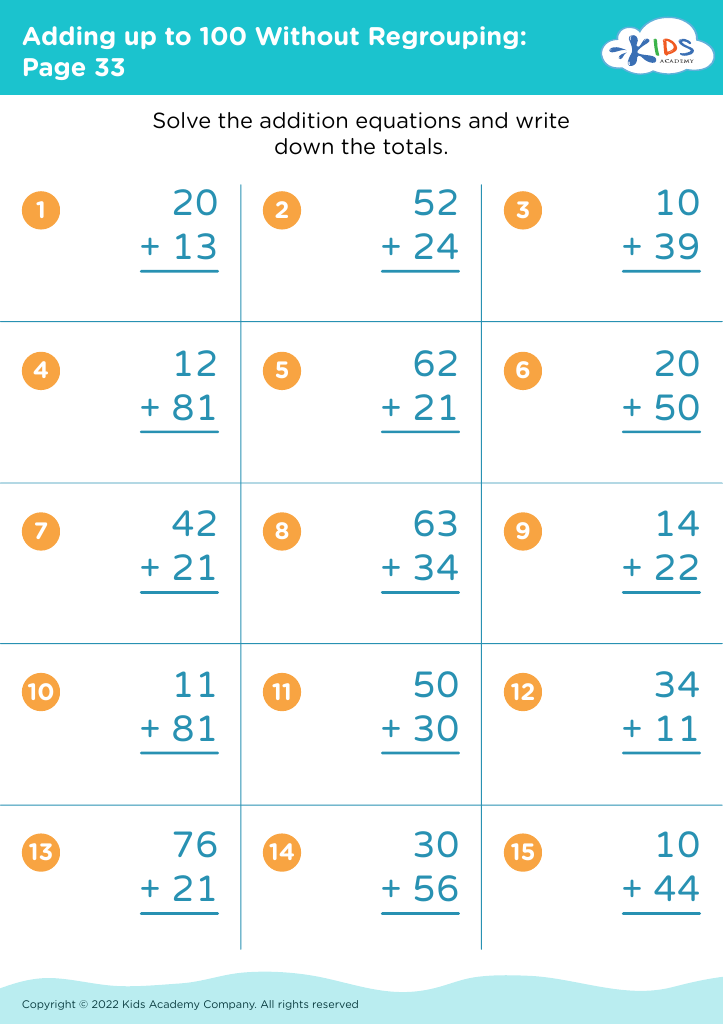
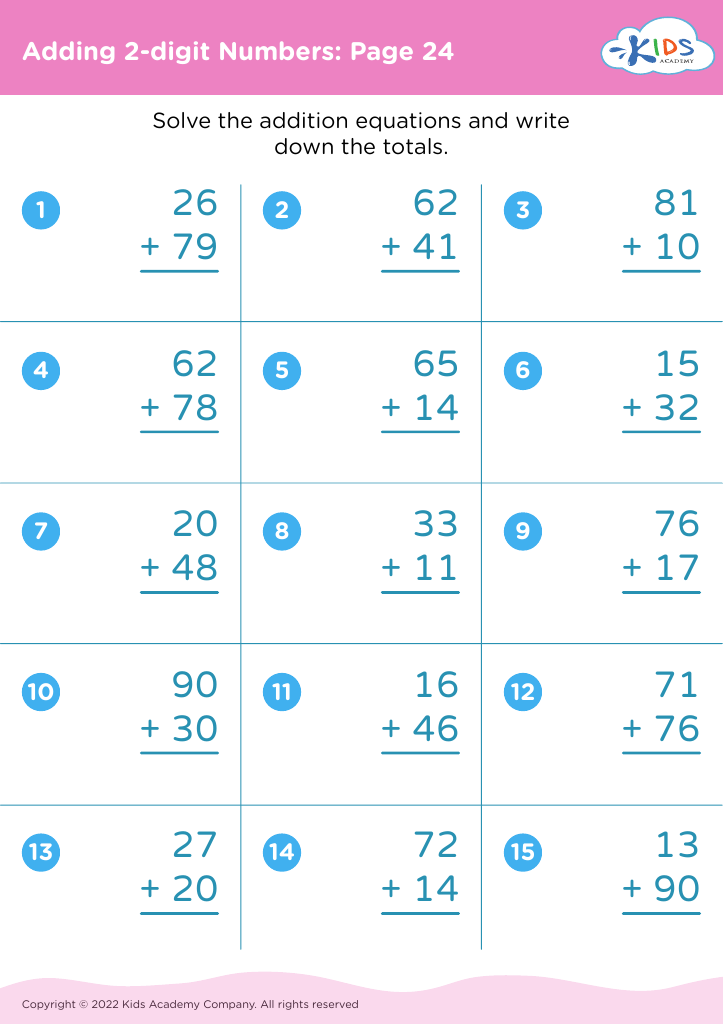
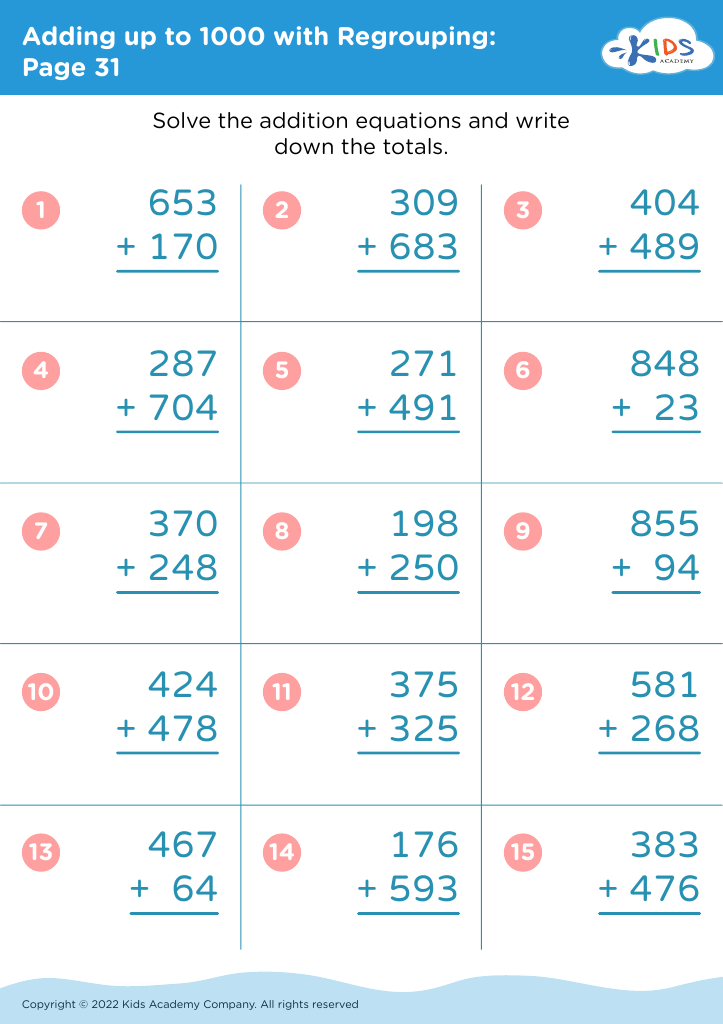
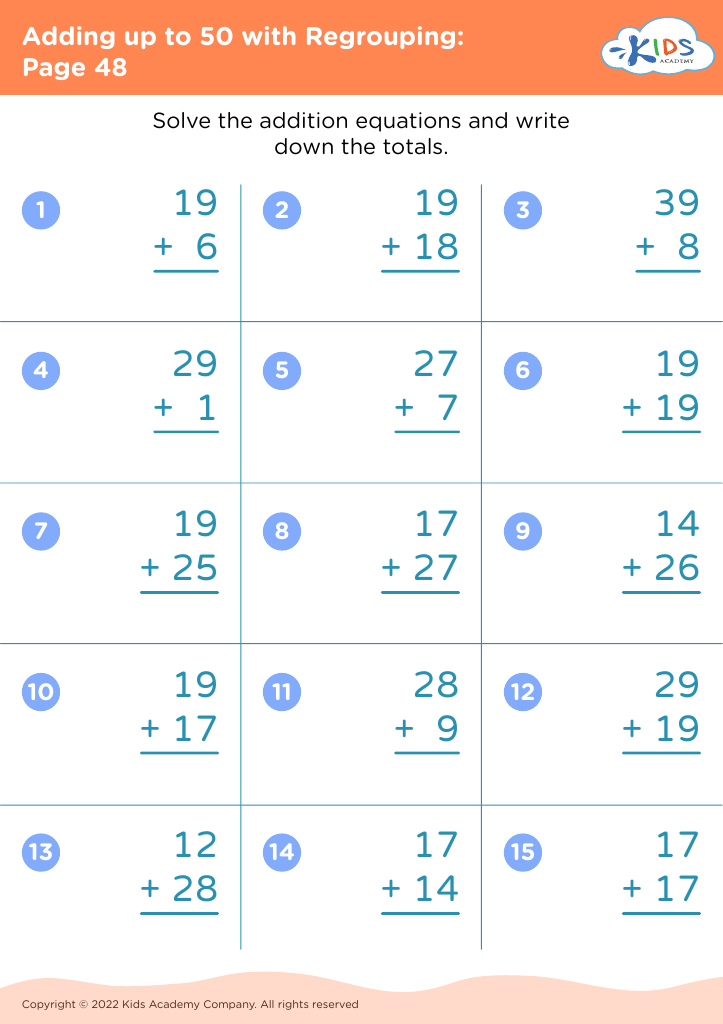
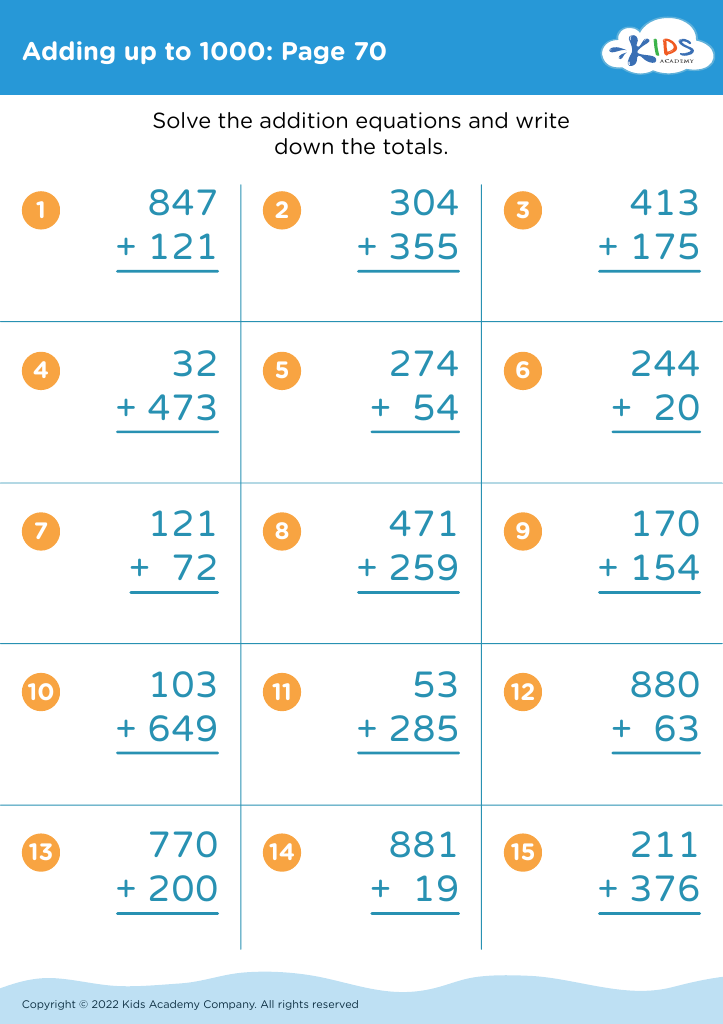
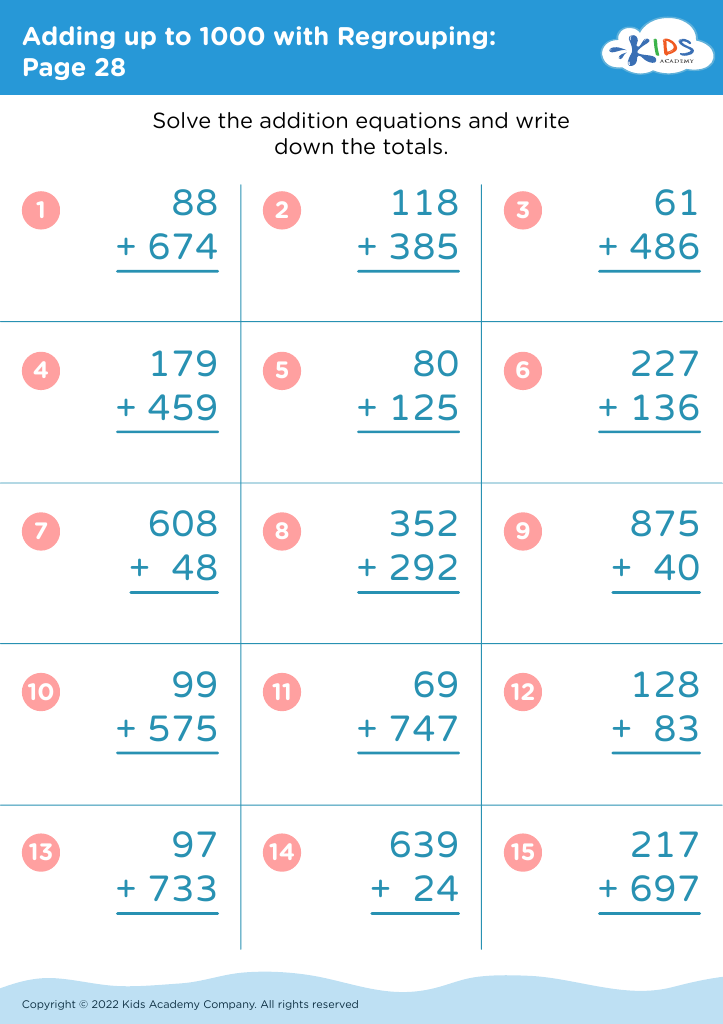








Understanding fraction addition is crucial for children ages 5-9 because it builds a strong mathematical foundation that will benefit them throughout their academic journey and daily life. Early exposure to fraction concepts fosters number sense—an essential skill for grasping more complex Mathematics, such as algebra and geometry, later on. Recognizing how to add fractions promotes logical thinking and problem-solving abilities, enhancing overall cognitive development.
Moreover, fraction addition has practical applications every day. For example, children can use fractions in cooking, when sharing equally (like splitting a pizza or pie), or in understanding portions. Familiarity with fractions also helps children better understand measurements, money, and time, contributing to their ability to navigate and understand the world around them.
Caring about fraction addition instills a growth mindset in children. It teaches them persistence, as mastering fractions often requires practice and patience. When parents and teachers prioritize understanding fractions, it communicates to children that challenging concepts can be mastered through effort and that seeking help is part of learning.
Overall, ensuring children grasp fraction addition at a young age lays the groundwork for their future academic success and equips them with essential life skills. By fostering strong mathematical abilities early on, parents and teachers can pave the way for confident, competent, and motivated learners.








