Fraction simplification Addition Worksheets for Ages 5-9 - Page 3
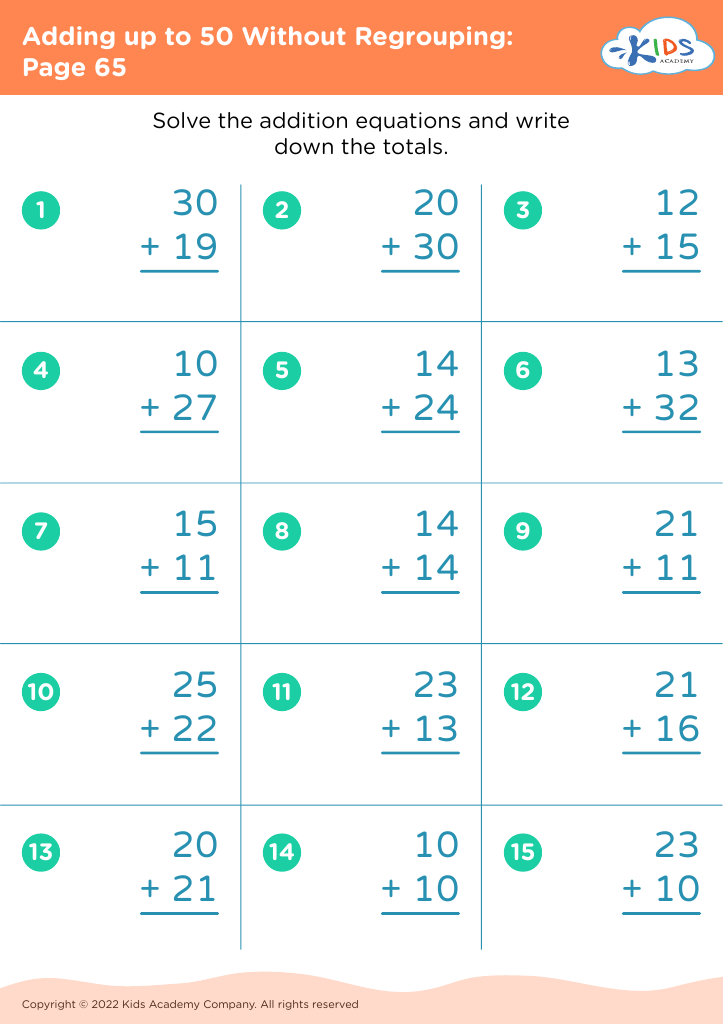
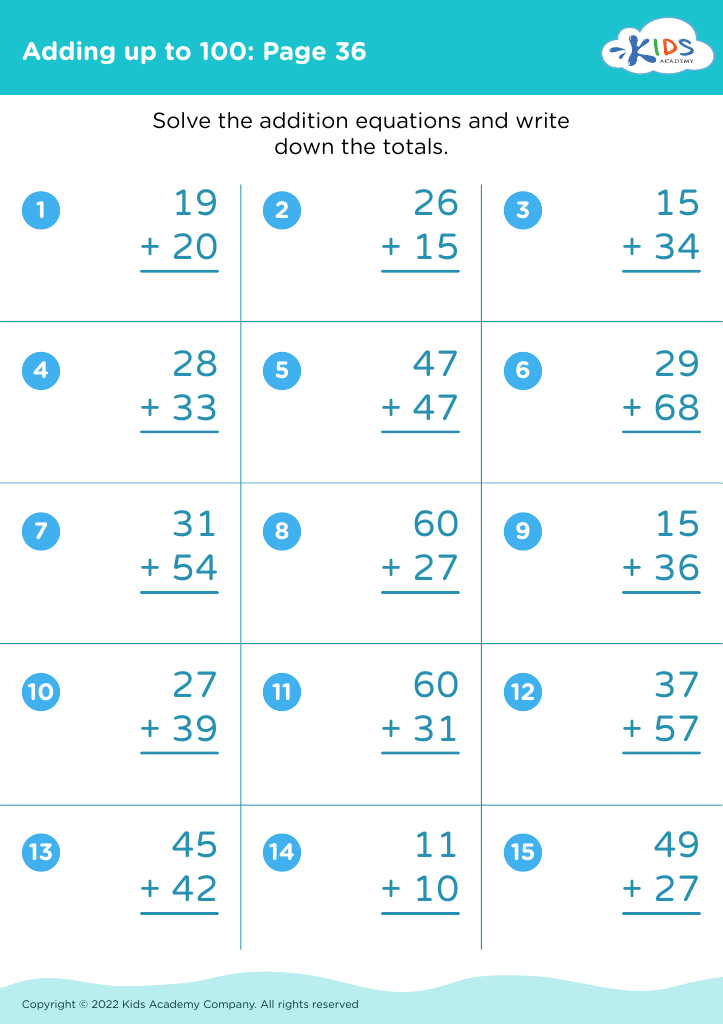
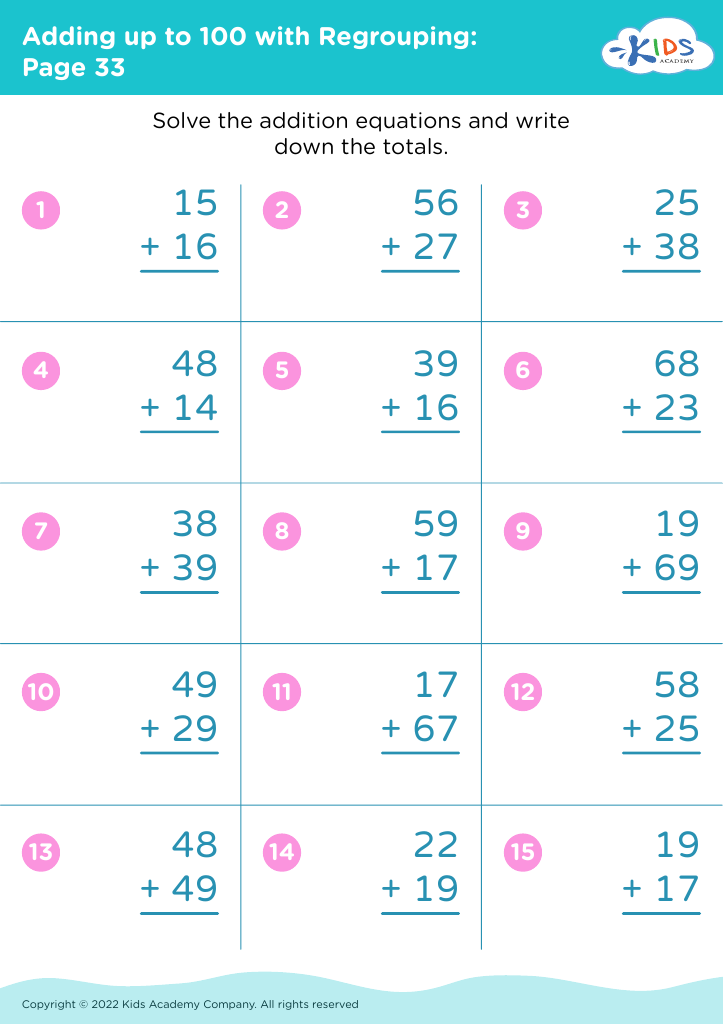
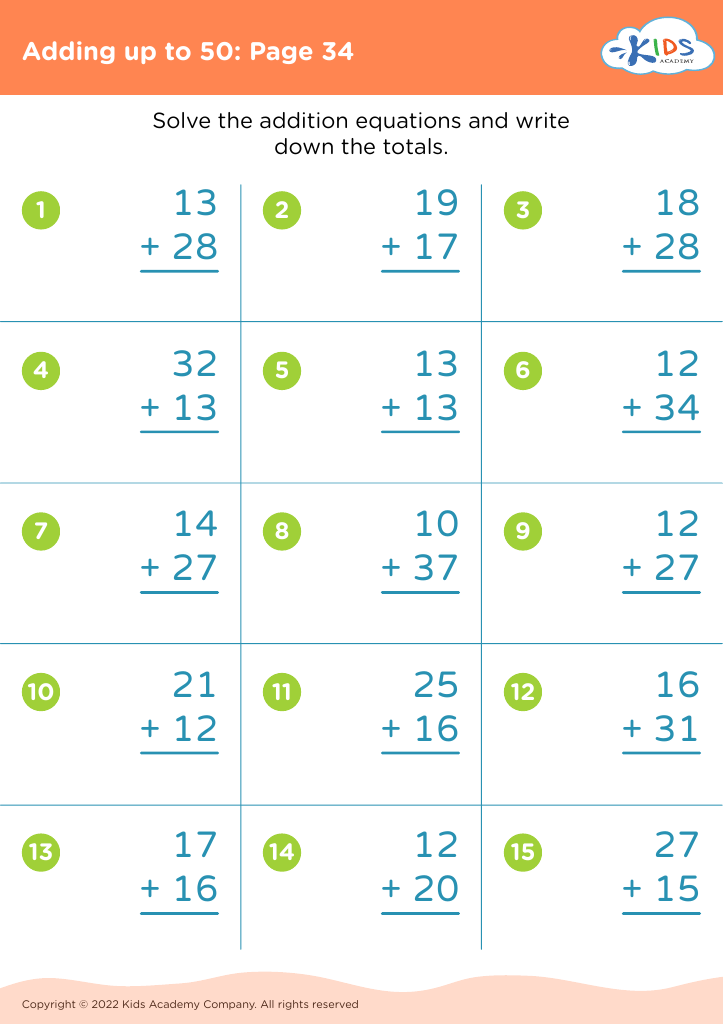








Fraction simplification and addition are fundamental concepts in early mathematics that play a crucial role in a child's cognitive development. For children ages 5-9, understanding these concepts not only builds a strong mathematical foundation but also enhances critical thinking skills. When parents and teachers prioritize fraction simplification and addition, they help children grasp the idea of parts of a whole, which is essential for comprehending more complex mathematical concepts later on.
Learning to simplify fractions reinforces the idea of equivalence, helping children see relationships between numbers. It also promotes problem-solving abilities as they learn to manipulate and combine different fractions. This process can foster a deeper understanding of addition by encouraging kids to find common denominators and work with like terms, making them more proficient in numerical operations.
Moreover, mastering fractions can instill confidence in children. As they succeed in navigating these operations, they build a positive attitude towards math, leading to long-term academic success. In a world increasingly reliant on quantitative skills, ensuring that young learners are well-versed in fractions sets them on a path for future STEM opportunities. Ultimately, investing time in teaching these concepts is essential in nurturing capable and confident learners.








