Improve reading skills Addition Worksheets for Ages 5-9 - Page 2
29 filtered results
-
From - To
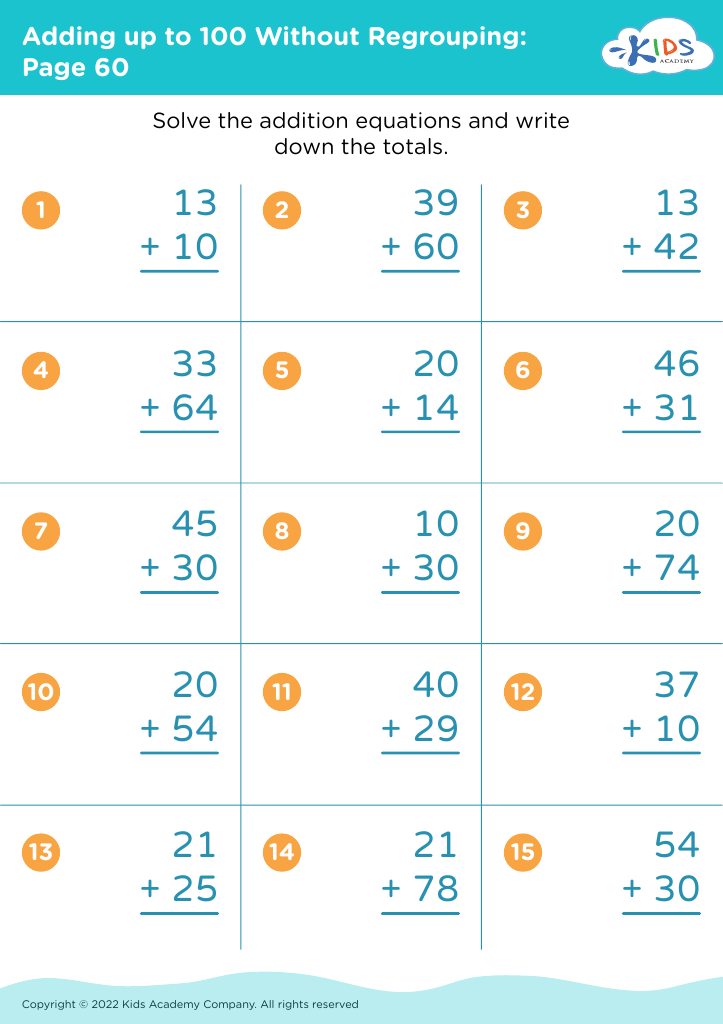



.jpg)




Improving reading skills between the ages of 5 and 9 is crucial for a child's future academic success and overall development. During these formative years, children transition from learning to read to reading to learn. Strong reading abilities lay the foundation for comprehension, critical thinking, and vocabulary acquisition, essential components for mastering other subjects such as mathematics, science, and social studies. When parents and teachers prioritize reading skills, they foster a love for learning and curiosity, which can boost a child's confidence and school engagement.
Moreover, reading proficiency at this age has been linked to long-term educational achievements and socio-emotional development. Early readers tend to perform better academically, exhibit better social skills, and are less likely to experience academic-related anxiety and frustration. When parents invest time reading with their children and teachers incorporate effective literacy programs, they help mitigate learning disparities and establish equitable educational opportunities.
By actively promoting and supporting reading development, parents and teachers lay the groundwork for lifelong learning and equip children with essential tools to navigate and succeed in a complex, information-rich world. The role of adults in this journey is crucial for instilling a positive, proactive approach to education and unlocking a child's full potential.








