Improving reading skills Addition Worksheets for Ages 5-9
4 filtered results
-
From - To
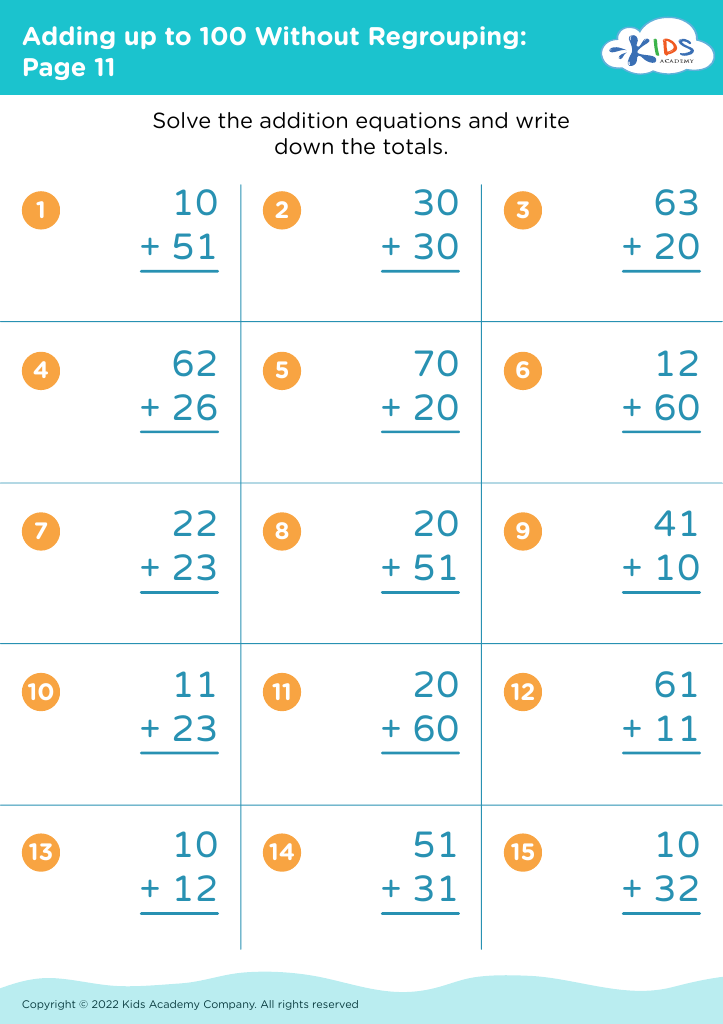
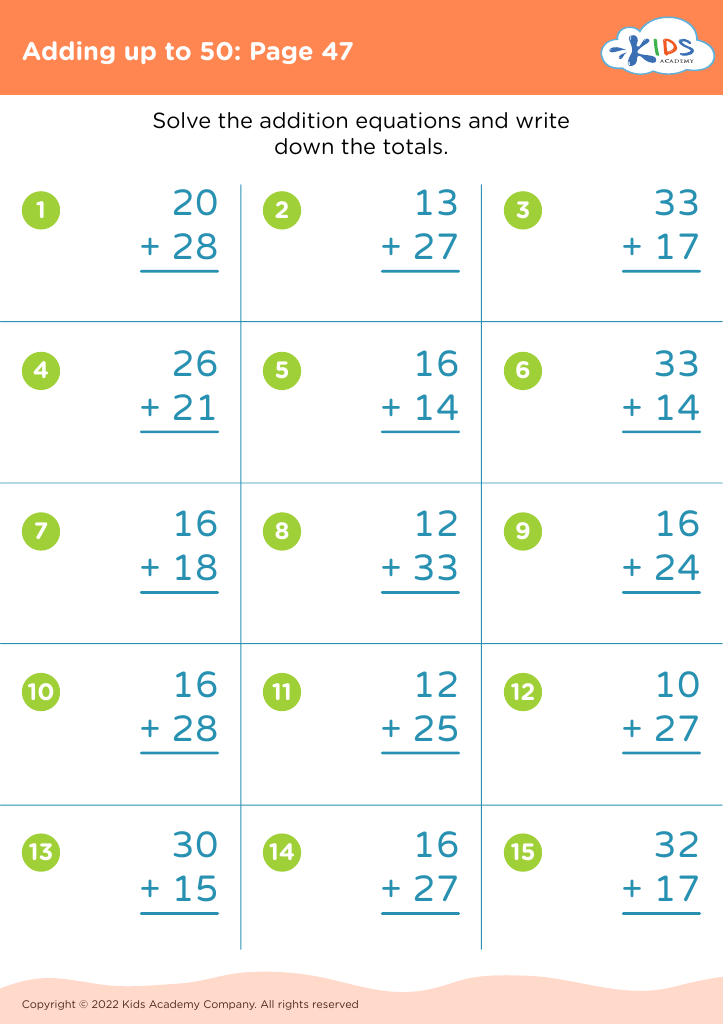
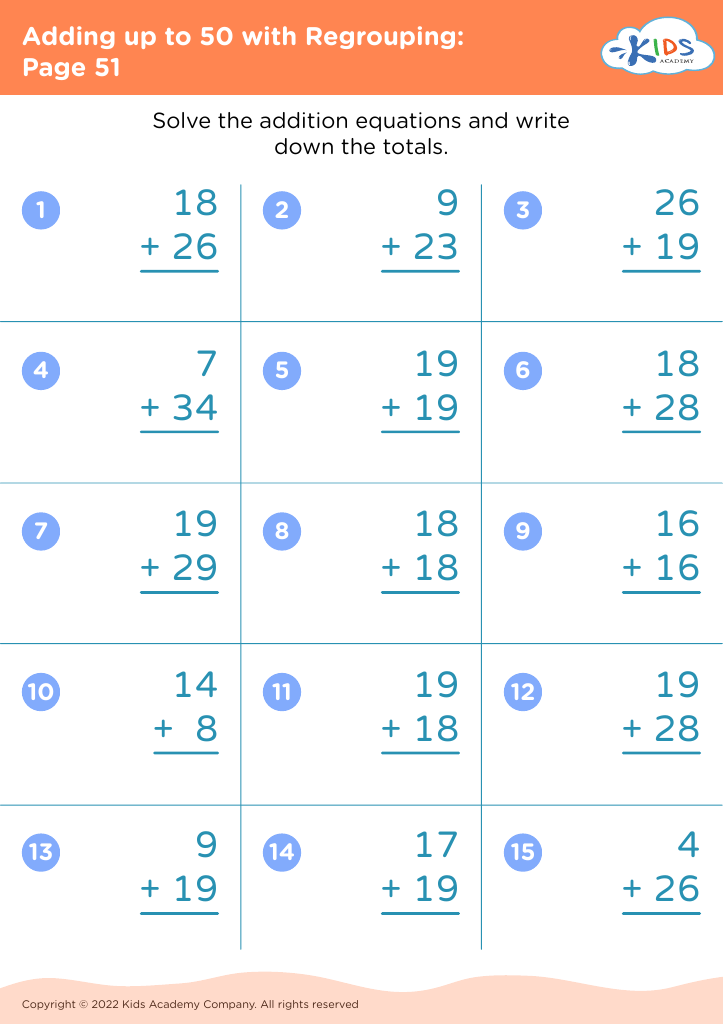
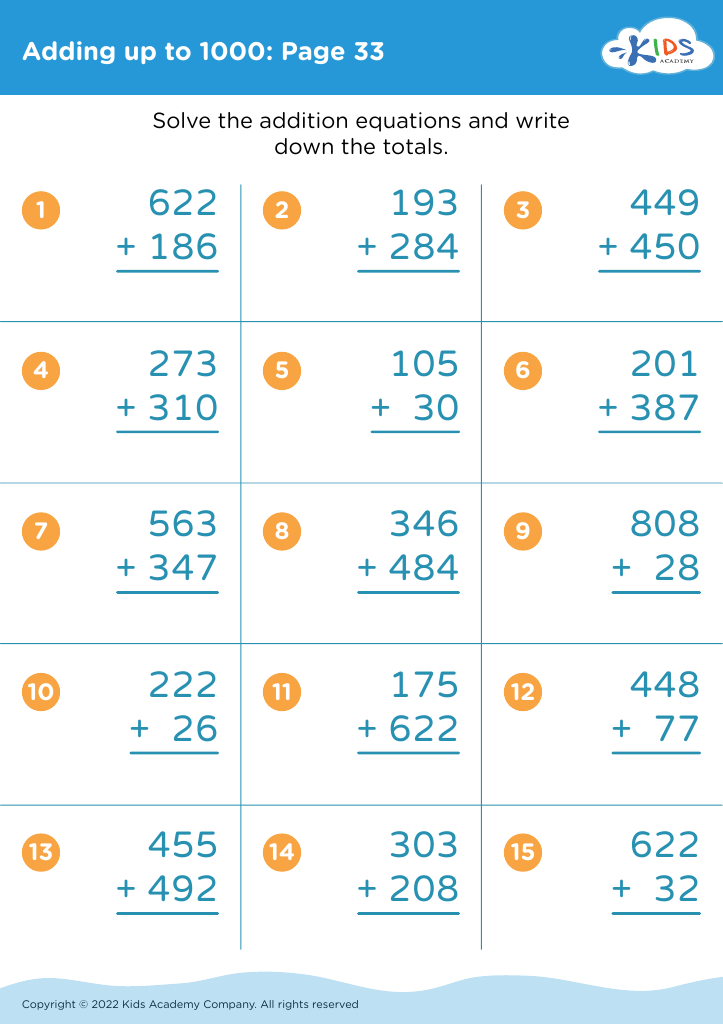
Enhance your child's reading abilities with our engaging "Improving Reading Skills Addition Worksheets" designed for ages 5-9. These worksheets combine essential math concepts with reading practice, promoting a seamless integration of skills. Children will enjoy discovering addition through vibrant illustrations and interactive activities that foster comprehension and critical thinking. Each worksheet encourages word recognition and contextual understanding, making learning fun and effective. Ideal for parents and educators alike, these resources help build confidence in both reading and mathematics. Support your child's educational journey with our thoughtfully crafted worksheets that cater to young learners and set a strong foundation for future academic success!







.jpg)
Improving reading skills and addition for children aged 5-9 is crucial for several reasons. Firstly, reading is the foundation of all learning. Early readers develop skills that not only enhance their literacy but also boost their comprehension and critical thinking abilities. Children who read well tend to perform better in all subjects, as they can understand instructions, grasp new concepts, and connect ideas effectively.
For addition, cultivating early mathematical skills lays the groundwork for future academic success. Strong foundational skills in math lead to better problem-solving abilities and logical reasoning, which are essential in everyday life. Children who struggle with basic addition may find higher-level math concepts more challenging in the future, potentially leading to a lack of confidence and interest in the subject.
Furthermore, reading and math skills developed during ages 5-9 greatly influence a child's self-esteem and motivation. Encouraging progress in these areas fosters a love for learning and sets a positive tone for their educational journey. By investing time and resources in improving these essential skills, parents and teachers can cultivate not just proficient readers and mathematicians but also lifelong learners prepared to face future challenges.








