Introduction to mathematics Addition Worksheets for Ages 5-9
3 filtered results
-
From - To
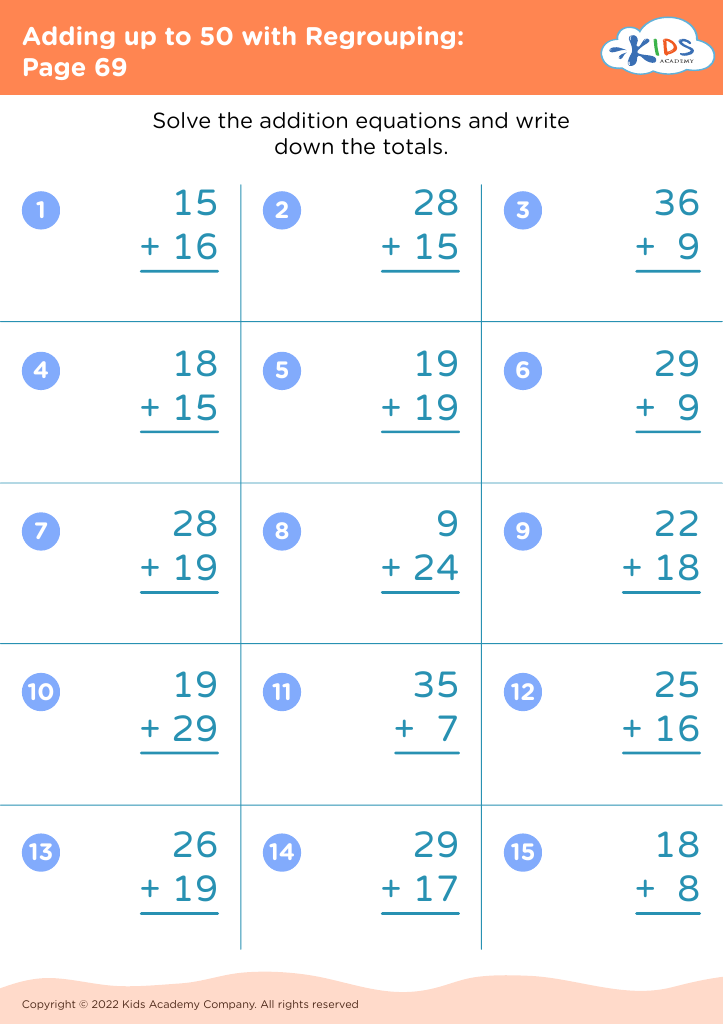
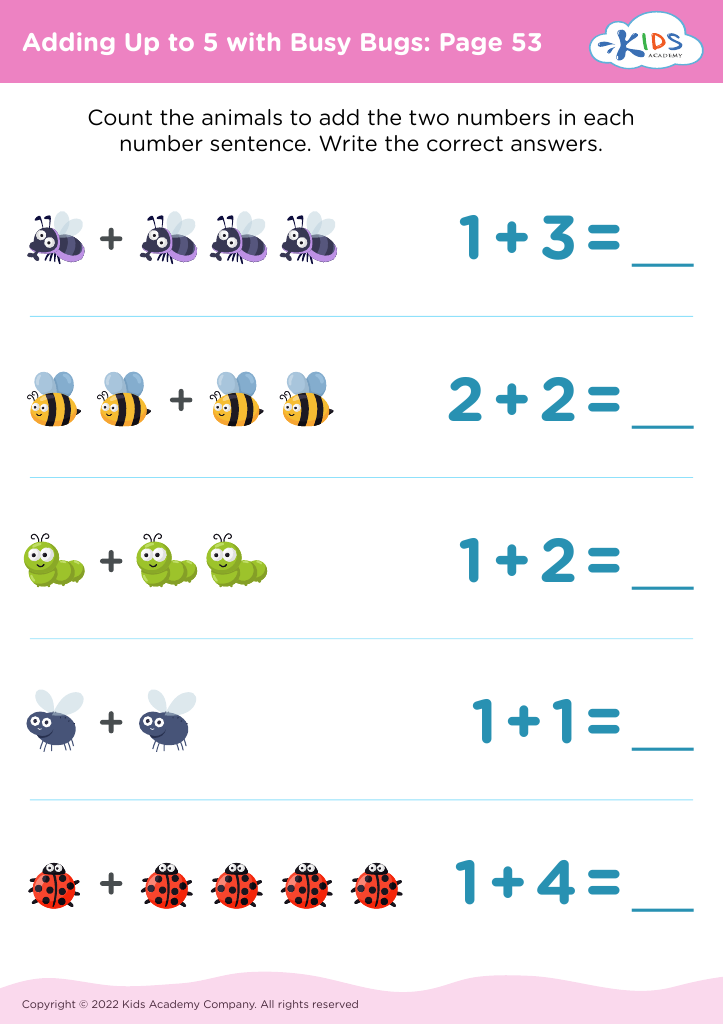
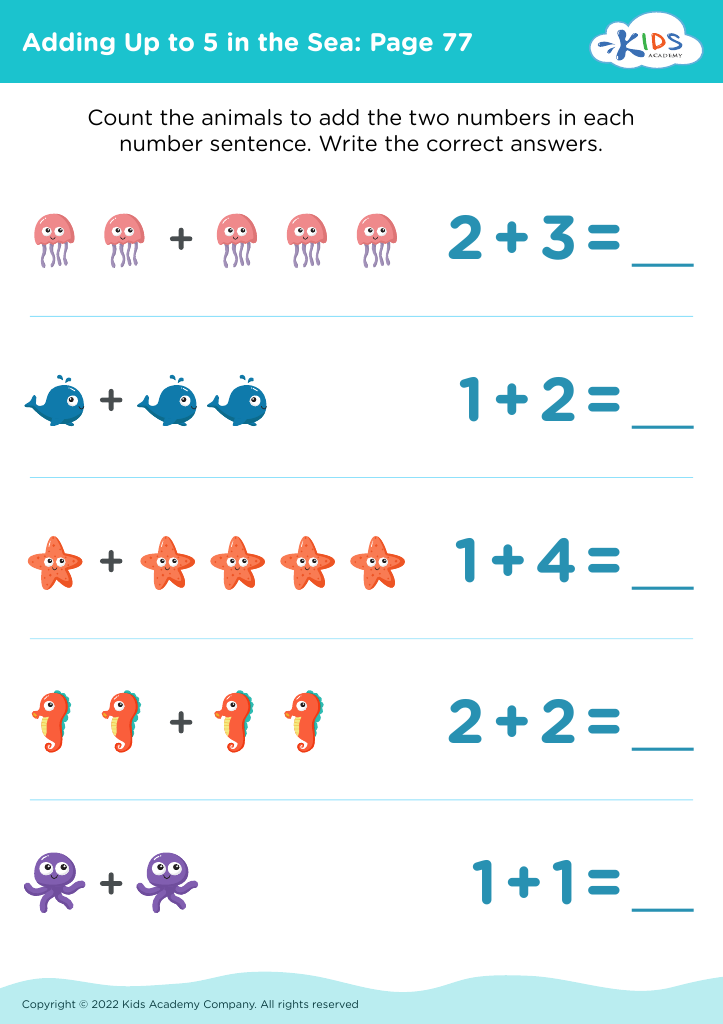
Welcome to our "Introduction to Mathematics Addition Worksheets" page, designed specifically for children aged 5-9! These engaging worksheets provide a fun, interactive way for young learners to grasp the concept of addition. Through colorful illustrations and playful exercises, children will strengthen their basic math skills while experiencing the joy of learning. Explore a variety of problems that promote critical thinking and problem-solving, helping kids gain confidence in their abilities. Perfect for home or classroom use, our materials cater to different learning styles and skill levels. Start your child's mathematical journey today and watch their enthusiasm for math grow!








Introduction to mathematics, particularly the concept of addition, is a crucial foundational skill for children aged 5-9. During these formative years, kids are not only learning numbers but are also developing essential cognitive and social skills. Understanding addition fosters critical thinking, problem-solving, and logical reasoning, which are vital for future mathematical concepts, such as subtraction, multiplication, and division.
Parents and teachers should prioritize early math education because addition serves as the building block for all subsequent mathematical learning. Mastery of addition supports a child's ability to calculate, estimate, and make sense of everyday situations involving numbers, like shopping or sharing food. Furthermore, early exposure to math helps instill a positive attitude toward diverse subjects, making students more open to learning as they grow.
Moreover, positive early math experiences decrease anxiety towards the subject, increasing confidence and academic performance. By engaging in fun and interactive addition exercises, parents and teachers create a rich and supportive learning environment, ultimately leading to improved educational outcomes. As children develop a solid understanding of addition, they are better equipped to tackle higher-level concepts, ensuring academic success in mathematics and beyond. Early mathematics sets the stage for lifelong learning and achievement.








